

Let’s be honest: walking onto a casino floor in 2026 feels a bit like stepping into a high-budget sci-fi flick. Between the immersive digital displays and the seamless mobile integration, the industry has never looked better. But while the house usually wins, there’s a persistent, multi-million-dollar leak that’s been hard to plug: casino marker fraud.
If you’re running a cage or managing risk for a gaming floor, you know the drill. A patron walks up, looks the part, shows a convincing ID, and walks away with a high-denomination marker. By the time that marker bounces or the "patron" vanishes into thin air, you realize you weren’t just played: you were robbed by a ghost.
In the era of AI-generated deepfakes and sophisticated synthetic identity theft, relying on a pit boss’s "gut feeling" or a quick visual glance at a driver's license is like bringing a paper shield to a railgun fight. It’s time to close the loop.
What Is Casino Marker Fraud and Why Is It Exploding in 2026?
Casino marker fraud isn't just about someone "forgetting" to pay a debt. It has evolved into a highly coordinated attack vector. Fraudsters are now using synthetic identities: identities stitched together using real Social Security numbers combined with fake names and addresses: to open accounts and request credit.
The problem is three-fold:
- Identity Theft at the Cage: Stolen, high-quality physical IDs that pass a standard visual check.
- Synthetic IDs: Accounts created under names that don't actually exist, making collection impossible.
- Account Takeover: Real patrons whose credentials have been compromised, allowing a fraudster to "step into their shoes" and request markers.
The result? Millions of dollars disappear before a single collection attempt is even made. Without a way to bind a verified identity to the marker at the exact point of issuance, casinos are left exposed to massive losses, regulatory fines, and a nightmare of chargeback defense disputes.
If you want to see how these identity threats are evolving outside the casino floor, check out our recent post on The Identity Gap.
How Does Forensic ID Validation Stop Casino Fraud?
So, how do you stop a fraudster who looks exactly like the guy on the license? You stop looking at the person and start looking at the data embedded in the document.
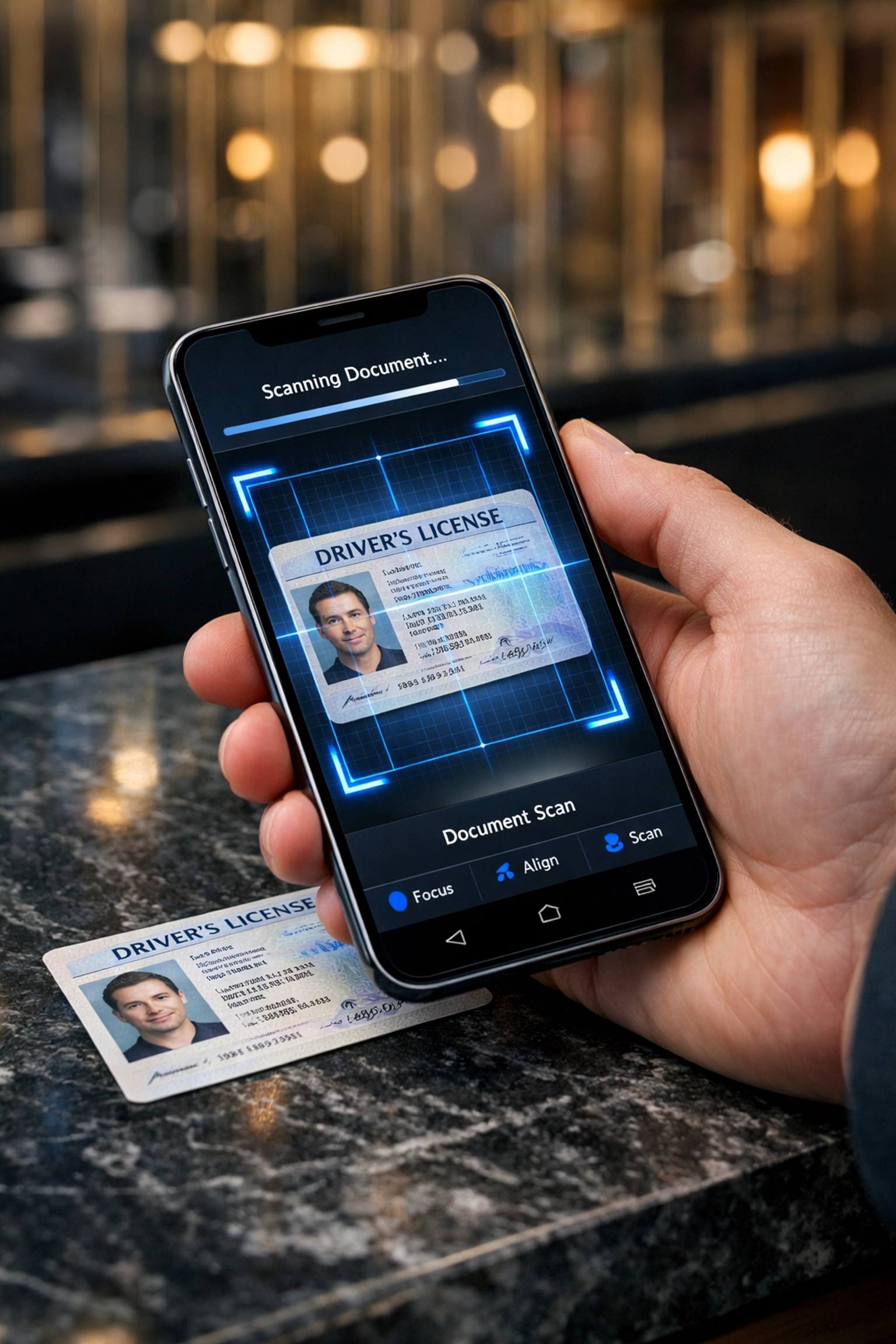
Through our Premier Business Partners, we’ve integrated a solution that moves beyond simple "ID checking" and into the realm of forensic-grade authentication. Instead of a manual log, cage staff can use any standard iOS or Android device to scan a player’s ID.
The Tech Under the Hood:
- AAMVA Barcode Parsing: It doesn't just read the name; it validates the hidden checksums and data structures required by the American Association of Motor Vehicle Administrators.
- ICAO MRZ Validation: Essential for international "whales" using passports. It checks the Machine Readable Zone for tampering.
- Forensic Document Detection: The system looks for AI-generated patterns, relamination, and counterfeit materials that are invisible to the human eye.

Why Human Eyes Can’t Compete with AI in 2026
We’ve all seen it: a busy Friday night, a line at the cage, and a staff member who’s been on their feet for eight hours. They’re tired. The fraudster is calm, professional, and has an ID that cost $500 on the dark web and looks perfect.
This is where identity verification for casinos becomes a game-changer. Our Premier Business Partner’s solution delivers an instant pass/fail result in under five seconds. It’s not subjective; it’s binary. By the time the patron has finished saying "I'd like a ten-thousand dollar marker," the system has already performed forensic document validation and confirmed whether that ID is a legitimate government-issued document or a very expensive piece of plastic.
This level of scrutiny is now a requirement for modern gaming KYC compliance. Regulators are no longer satisfied with "we tried our best." They want to see a systematic, auditable process.
The Power of the "Identity Bind" and Chargeback Defense
One of the biggest headaches in the gaming industry is the dreaded "I never authorized this" claim. A patron plays, loses, and then tells their bank that the marker was fraudulent. Without digital proof, banks almost always side with the consumer.
By using the tools provided by a Premier Business Partner, you create an unassailable audit trail. Every scan is time-stamped and logged. You can produce a record that says: "On March 19th at 10:14 PM, this specific ID was scanned, validated via AAMVA checksums, and bound to this specific marker request."
When you show that to a bank or a regulator, the liability shifts. You aren't just defending a chargeback; you’re ending the argument before it starts.
Zero Hardware, Fast Deployment: The 2026 Standard
One of the biggest hurdles to implementing new tech is the "rip and replace" fear. Nobody wants to install $50,000 worth of specialized scanners at every cage and table.
The good news? The solution we facilitate through our Premier Business Partners requires zero specialized hardware. It runs as a native app on the devices your staff already carries.
- Deployment: Can happen in hours, not months.
- Onboarding: Takes about 15 minutes of training.
- Scalability: Whether you have two windows or two hundred, the system scales instantly.

The Infrastructure Foundation: Connectivity Matters
You can have the best security software in the world, but if your cage staff is staring at a loading circle because the Wi-Fi is spotty, the system fails. To run these forensic checks in under five seconds, you need a rock-solid digital foundation.
At Premier Business Team, we often talk about Network as a Service (NaaS). For a casino, this means ensuring that your security tools have the dedicated bandwidth they need to communicate with verification databases without lag. If your network isn't up to snuff, your fraud prevention will suffer.

FAQ: Frequently Asked Questions About Casino Marker Security
How does forensic ID validation detect synthetic identities?
Synthetic identities often use real data points (like a real SSN) but lack the historical depth or the correct forensic markers on a physical document. A forensic scan detects if the physical ID was tampered with or if the data on the barcode doesn't match the printed information: a common red flag for synthetic fraud.
Does this replace our existing Marker Management System?
No. It works alongside it. Think of it as a security "gate" at the point of issuance. Once the identity is bound and verified, that data can be logged into your existing management system.
Is this compliant with gaming regulations?
Absolutely. In fact, it often exceeds them. The system provides a SOC 2 Type II certified audit trail, which is exactly what gaming regulators look for during audits.
What happens if the system fails a regular patron?
The system detects document authenticity. If a regular patron has a damaged ID or a truly expired one, the system will flag it. This gives your staff the opportunity to ask for a secondary form of ID or update the patron's file, ensuring your records remain clean for KYC compliance.
Stop Guessing, Start Verifying
The stakes in 2026 are too high to rely on outdated methods. Fraudsters are using AI, automation, and sophisticated social engineering to target your cage. If you aren't binding a verified identity to every marker at the point of issuance, you're essentially leaving the vault door unlocked and hoping for the best.
Our advisory services at Premier Business Team are designed to help you navigate this complex landscape. We are vendor-neutral, meaning our goal isn't to sell you a specific "box," but to find the exact Premier Business Partner that fits your workflow and budget.
Best of all? Our consulting and advisory services are often free to the client, as we are compensated by the providers we vet and recommend.
Ready to kill marker fraud and beef up your cage security?
Contact Premier Business Team today for a free Business Tech Assessment. Let’s make sure the only people walking away with your markers are the ones who actually intend to pay them back.
