


Artificial intelligence isn't just the future anymore: it's happening right now. By 2026, experts predict that over 80% of businesses will be using some form of AI to stay competitive. But here's the thing: jumping into AI without the right infrastructure is like trying to run a marathon in flip-flops.
Your business internet and underlying tech infrastructure need to be rock-solid before you can effectively deploy AI solutions. We're seeing too many organizations rush into AI adoption only to hit massive roadblocks because their foundational systems weren't ready.
Let's break down the five critical areas you need to evaluate before making that upgrade.
1. Your Internet Speed and Bandwidth Requirements Are About to Skyrocket

AI applications are bandwidth-hungry beasts. We're not talking about your typical office internet usage anymore: AI workloads can consume 10 to 100 times more data than traditional business applications.
What this means for your business:
- Video AI analysis tools can use 50+ Mbps per stream
- Machine learning model training requires consistent, high-speed uploads to cloud platforms
- Real-time AI customer service tools need ultra-low latency connections
- Cloud-based AI services demand symmetrical upload/download speeds
Before you upgrade: Audit your current bandwidth usage and multiply it by at least 5-10x to accommodate AI workloads. Most businesses running on basic cable internet or DSL connections will need to move to fiber-based business connectivity solutions or dedicated internet access.
Action step: Contact your internet service provider to discuss enterprise-grade connections that can handle sustained high-bandwidth AI applications. Look for guaranteed upload speeds, not just download speeds.
2. Cloud Infrastructure Becomes Non-Negotiable
Your old on-premise server setup won't cut it for serious AI deployment. Cloud services for business aren't optional anymore: they're essential for AI readiness.
AI models require massive computational resources that most businesses can't afford to house on-site. We're talking about GPU clusters, specialized processors, and storage systems that can cost hundreds of thousands of dollars.
What you need to know:
- AI training and inference require scalable cloud computing power
- Data center solutions provide the reliability and redundancy AI applications demand
- Multi-cloud strategies become important for AI workload distribution
- Edge computing capabilities may be necessary for real-time AI applications
Reality check: A single AI model training session can cost thousands of dollars in cloud computing resources. Without proper cloud architecture, you'll either face massive bills or severely limited AI capabilities.
Action step: Evaluate cloud service providers like AWS, Azure, or Google Cloud. Look for providers offering AI-specific services and competitive GPU pricing. Consider hybrid cloud solutions that combine on-premise storage with cloud computing power.
3. Your Data Infrastructure Needs a Complete Overhaul

Here's where most businesses hit their first major wall: data quality and management. AI is only as good as the data you feed it, and most organizations' data is scattered, inconsistent, and poorly organized.
LinkedIn discovered this the hard way when their machine learning algorithms became inefficient because they couldn't quickly find and utilize relevant data. They had to implement advanced metadata management tools with automatic tagging just to make their AI systems functional.
Common data infrastructure problems:
- Information stored in multiple, incompatible systems
- Inconsistent data formats and naming conventions
- No centralized data management strategy
- Poor data backup and recovery systems
- Inadequate data security and access controls
What needs to happen: Your data needs to be properly organized, tagged, and accessible across your entire organization. This often means implementing new data management platforms, establishing data governance policies, and potentially migrating years of legacy data.
Action step: Conduct a data audit to identify where your critical business information lives and how it's formatted. Budget for data management tools and potentially hiring data management expertise.
4. Legacy Systems Will Become Your Biggest Bottleneck
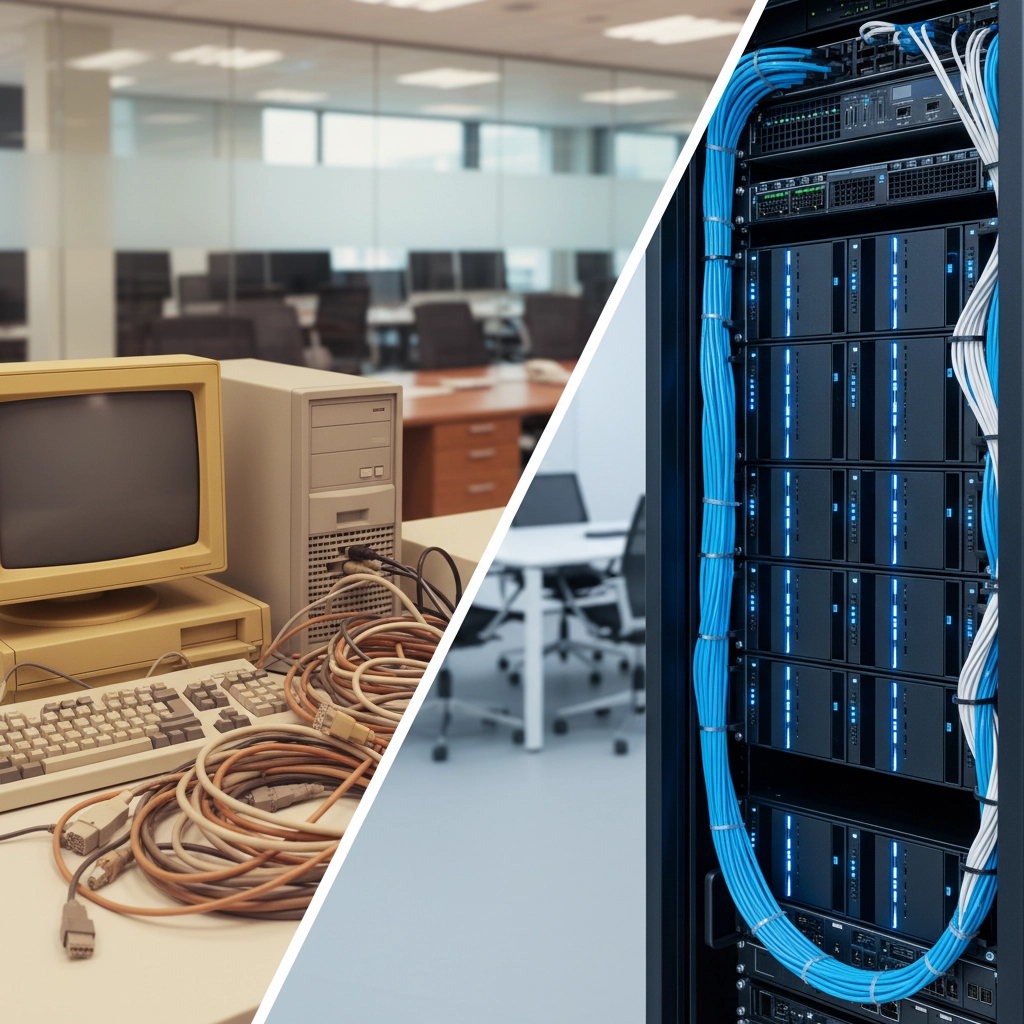
If your business is still running on systems from 2015 or earlier, AI integration is going to be painful. Legacy IT systems lack the flexibility and connectivity that modern AI solutions require.
Netflix provides a perfect example of this challenge. They switched from a monolithic system to a microservice-based architecture specifically to achieve the flexibility needed for advanced analytics and AI deployment.
Legacy system warning signs:
- Software that requires manual updates or patches
- Systems that don't integrate well with modern cloud services
- Database structures that can't handle real-time data processing
- Network infrastructure that wasn't designed for cloud connectivity
- Security systems that don't support modern authentication methods
The modernization reality: Most businesses need comprehensive IT infrastructure updates before AI becomes truly effective. This isn't just about buying new software: it's about rebuilding your entire technology foundation.
Action step: Schedule an IT infrastructure assessment to identify systems that need upgrading or replacement. Budget for potential complete system overhauls, not just minor updates.
5. Your Team's Digital Skills Gap Is Bigger Than You Think
Even with perfect infrastructure, AI implementation fails if your team isn't prepared. We're seeing organizations spend hundreds of thousands on AI tools only to have them sit unused because staff don't know how to operate them effectively.
Organizational readiness assessment:
- AI adoption: How well are current digital tools integrated across departments?
- AI architecture: Is your digital infrastructure standardized and data-accessible?
- AI capability: Does your team have the skills to develop, deploy, and maintain AI solutions?
Training requirements you probably haven't considered:
- Data analysis and interpretation skills
- Understanding of AI tool limitations and biases
- Integration of AI outputs with existing workflows
- AI governance and compliance knowledge
- Change management for AI-transformed processes
Action step: Evaluate your team's current digital literacy and create a comprehensive training plan. Consider hiring AI-experienced staff or partnering with consultants for initial implementation.
The 2026 AI Infrastructure Reality Check
By 2026, businesses without AI-ready infrastructure won't just be behind: they'll be obsolete. Your competitors are making these upgrades right now. The question isn't whether you need AI-ready infrastructure, but how quickly you can implement it.
Start with your foundation: Ensure your business internet can handle the bandwidth demands of AI applications. Move to cloud services for business that provide the scalability you'll need. Implement data center solutions that offer the reliability AI systems require.
Don't go it alone. AI infrastructure planning is complex, expensive, and full of potential pitfalls. The businesses that succeed work with experienced IT partners who understand both current technology requirements and future AI trends.
Ready to Future-Proof Your Business Infrastructure?
Premier Business Team specializes in helping organizations build AI-ready infrastructure without the costly mistakes. We've helped dozens of businesses upgrade their business connectivity solutions, implement scalable cloud architectures, and prepare their teams for successful AI adoption.
Get started with a free infrastructure assessment. We'll evaluate your current systems, identify gaps, and create a roadmap for AI readiness that fits your budget and timeline.
Don't let inadequate infrastructure hold your business back in 2026. Contact Premier Business Team today to schedule your AI readiness consultation.
Call us at [phone number] or visit premierbusinessteam.com/ to learn more about our comprehensive IT and telecommunications solutions.
Ready to upgrade your cybersecurity along with your AI infrastructure? Check out our guide on Top 5 IT Cybersecurity Challenges for Whatcom SMBs in 2025 for essential security considerations.