Here's the uncomfortable truth: cybersecurity isn't something you can buy once and forget about. It's not a product, it's a process. And in 2026, with ransomware attacks costing businesses an average of $4.35 million per breach, the process better be airtight.
The good news? You don't need to become a cybersecurity expert overnight. You just need a strategic framework and a partner who knows how to navigate the 330+ security providers flooding the market with promises, buzzwords, and conflicting solutions.
That's where Premier Business Team comes in. We don't sell you the most expensive firewall or the flashiest endpoint protection platform. We help you build a risk management strategy tailored to your actual threats, your actual budget, and your actual business operations, using the proven NIST Cybersecurity Framework as our foundation.
What Is the NIST Cybersecurity Framework?
The NIST Cybersecurity Framework is a set of voluntary guidelines developed by the National Institute of Standards and Technology to help organizations manage and reduce cybersecurity risk. It's built around five core functions: Identify, Protect, Detect, Respond, and Recover.
Think of it as the blueprint for building a resilient business, one that doesn't just survive a cyberattack, but bounces back quickly and learns from it.
Unlike compliance checklists that focus on checking boxes, NIST is outcome-driven. It forces you to ask the right questions: What are we protecting? Who has access? How quickly can we detect an intrusion? What happens if our backups fail?
These aren't hypothetical questions. They're the difference between a minor security incident and a company-killing catastrophe.

The Five Pillars of Cybersecurity Risk Management
1. Identify: Know What You're Protecting Before You Protect It
You can't defend what you don't understand. The Identify phase is all about taking inventory of your digital ecosystem, every application, every database, every connected device, and every third-party integration.
This includes:
- Hardware and network infrastructure (routers, switches, servers, endpoints)
- Critical business applications and data repositories (CRM, ERP, financial systems)
- Third-party systems and APIs (cloud services, SaaS platforms, vendor portals)
- People and processes (who has admin access? What permissions do employees have?)
Once you've mapped your digital landscape, you need to classify assets based on business criticality. Not all data is created equal. Your customer database deserves Fort Knox-level protection. Your internal meme archive? Not so much.
This classification becomes the foundation for every decision you make downstream, from budget allocation to incident response prioritization.
2. Protect: Build Your Digital Perimeter (Without Slowing Down Your Business)
The Protect function is where theory meets execution. This is where you establish access controls, deploy data encryption, configure firewalls, and, most importantly, train your employees not to click on phishing emails.
Here's what protection looks like in practice:
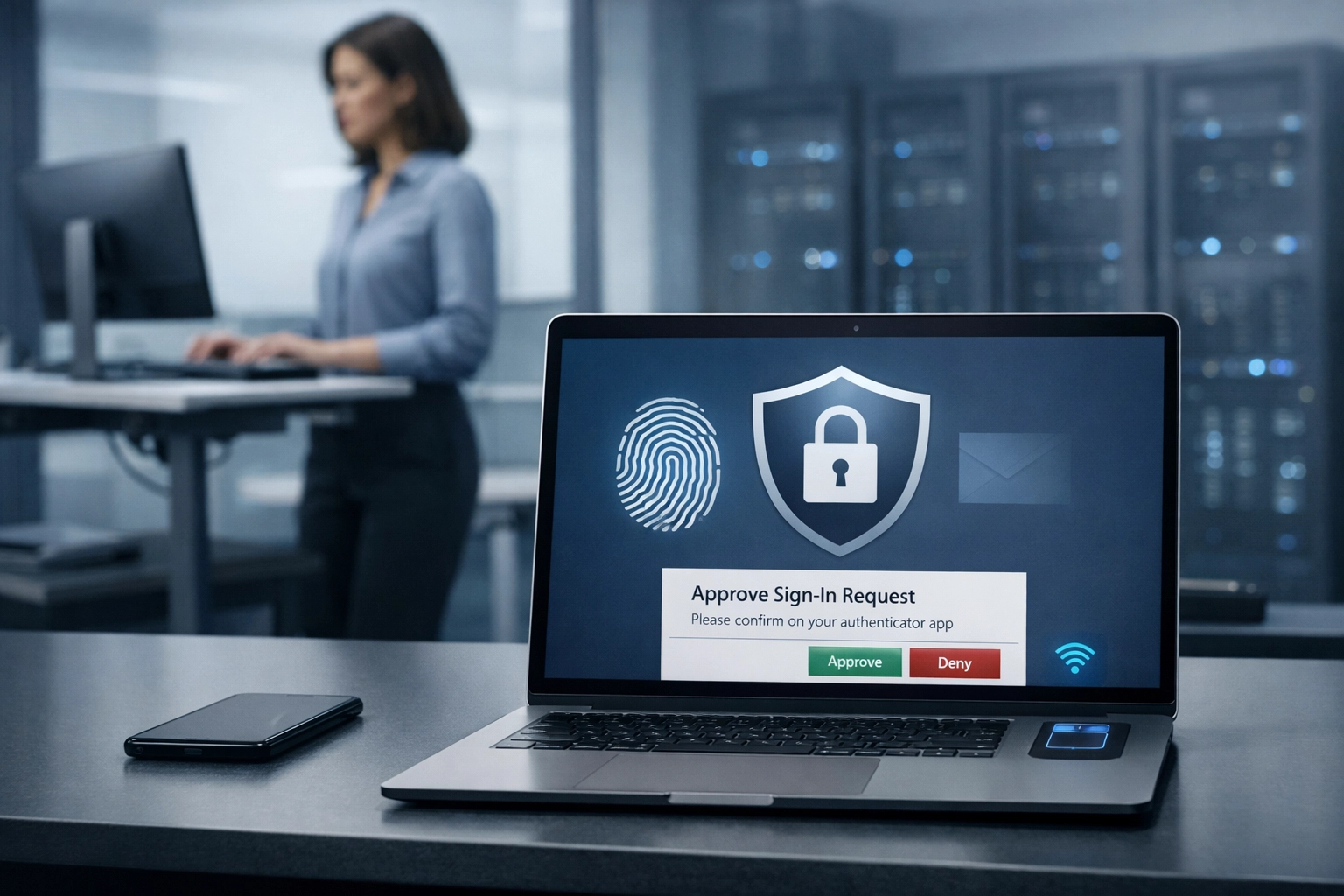
- Access control and identity management: Implement multi-factor authentication (MFA), role-based access control (RBAC), and principle of least privilege. If someone doesn't need access to payroll data, they shouldn't have it.
- Data security: Encrypt sensitive data both in transit and at rest. Use secure file-sharing platforms. Establish clear data retention and disposal policies.
- Security awareness training: Your employees are either your strongest defense or your biggest vulnerability. Regular training turns them into human firewalls. (And yes, this includes teaching them how to spot deepfake scams in 2026.)
- Endpoint and network protection: Deploy firewalls, intrusion prevention systems, and endpoint detection and response (EDR) tools that actually work together instead of creating alert fatigue.
At Premier Business Team, we don't just recommend the most expensive solution or the one with the slickest sales pitch. We represent 330+ pre-vetted security providers, which means we find the protection strategy that fits your business: not the one that pays us the highest commission. Learn more about our approach in The Premier Advantage.
3. Detect: Catch the Bad Guys Before They Settle In
Even with Fort Knox-level protection, threats will slip through. The question isn't if an attacker will attempt to breach your network: it's when. And when they do, speed matters.
The Detect function focuses on continuous monitoring and anomaly detection:
- Real-time monitoring: Deploy Security Information and Event Management (SIEM) tools that aggregate logs, analyze traffic patterns, and flag suspicious activity before it escalates.
- Threat intelligence: Stay informed about emerging threats, zero-day vulnerabilities, and industry-specific attack vectors. Context matters.
- Behavioral analytics: Modern detection systems use AI and machine learning to identify deviations from normal behavior: like a user suddenly downloading 50GB of data at 3 a.m.
The faster you detect an intrusion, the less damage an attacker can do. Businesses that detect breaches within minutes contain them. Those that take weeks? They make headlines for all the wrong reasons.
4. Respond: What Happens When the Alarm Goes Off
Detecting a threat is only half the battle. The Respond function is your game plan for when things go sideways.
A solid incident response plan includes:
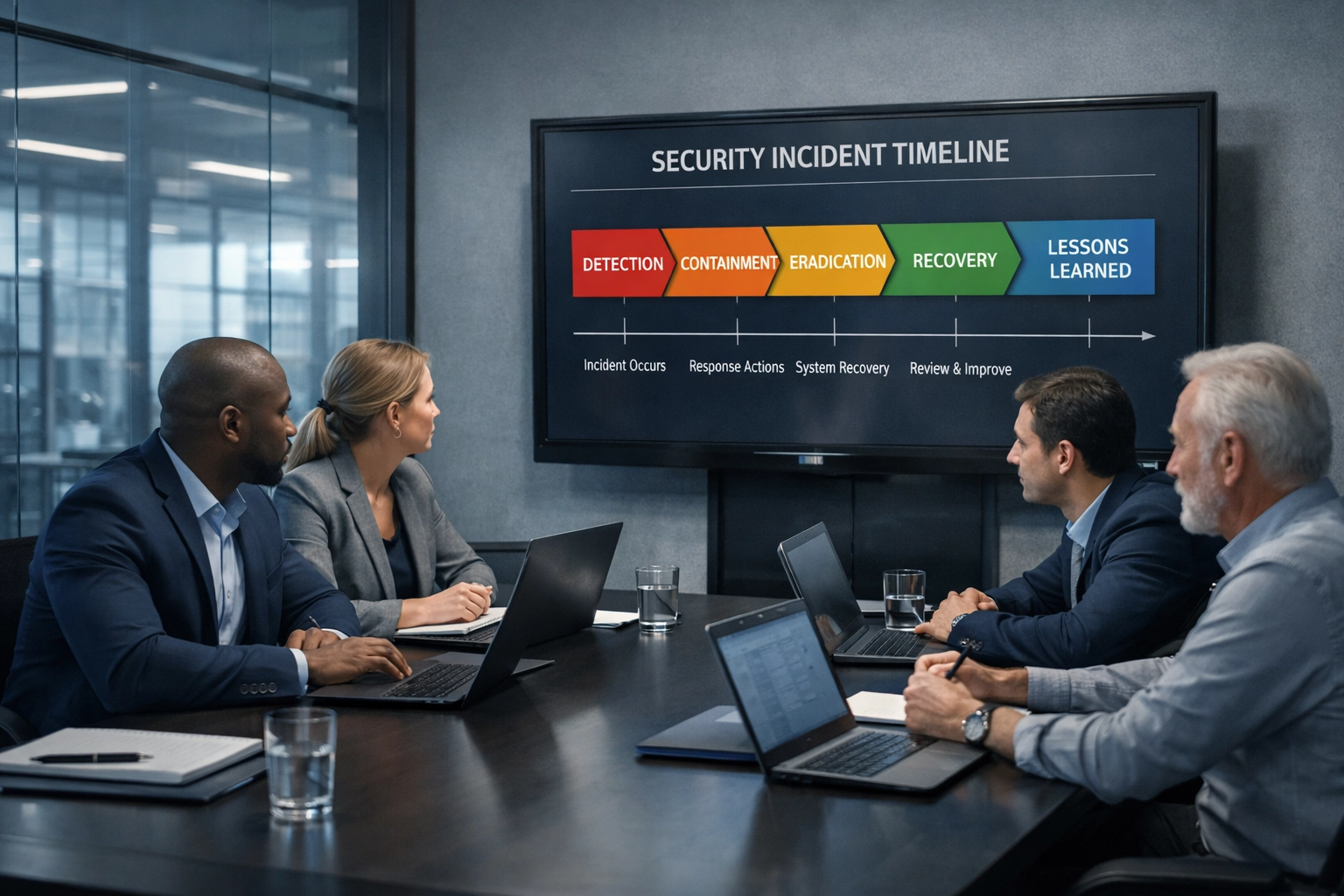
- Preparation: Pre-assign roles and responsibilities. Who leads the response? Who communicates with customers? Who contacts law enforcement?
- Containment: Isolate affected systems immediately to prevent lateral movement across your network.
- Eradication: Remove the threat from your environment: whether it's malware, compromised credentials, or an insider threat.
- Analysis and lessons learned: Conduct a post-incident review. What went wrong? How did the attacker get in? What controls failed? Update your defenses accordingly.
Response isn't just about damage control: it's about minimizing downtime and preserving customer trust. A well-executed response can turn a potential PR disaster into a case study in resilience.

5. Recover: Getting Back to Business as Usual
The Recover function is where business continuity meets cybersecurity. It's not enough to remove the threat: you need to restore operations quickly and ensure it doesn't happen again.
Key recovery strategies include:
- Backup and disaster recovery: Implement the 3-2-1 backup rule (3 copies of data, 2 different media types, 1 offsite). Test your backups regularly. A backup you've never restored is just wishful thinking.
- Resilience planning: Identify critical business processes and establish recovery time objectives (RTO) and recovery point objectives (RPO) for each.
- Communication protocols: Keep employees, customers, and stakeholders informed throughout the recovery process. Transparency builds trust.
Recovery isn't a one-time event. It's an ongoing commitment to learning, adapting, and improving your defenses based on real-world experience.
The Premier Business Team Approach: Strategic Risk Management, Not Security Theater
Here's what makes our cybersecurity consulting different:
We're vendor-neutral. We don't have quotas to hit or kickbacks to collect. Our only incentive is finding the right solution for your business: whether that's a best-in-class enterprise platform or a cost-effective SMB solution.
We follow a proven 5-step process:
- Design: We assess your current security posture, map your risk landscape, and identify gaps.
- Proposal: We present tailored recommendations with transparent pricing and expected outcomes.
- Selection: We help you evaluate options and choose solutions that align with your business goals.
- Implementation: We coordinate deployment, minimize disruption, and ensure everything works as promised.
- Support: We provide ongoing monitoring, optimization, and strategic guidance as threats evolve.
We integrate cybersecurity into your broader digital transformation strategy. Security isn't a silo: it's a foundational element of network agility, cloud adoption, and customer experience.
And perhaps most importantly, we translate technical jargon into business language. You don't need to understand the difference between a zero-trust architecture and a SASE framework: you just need to know your business is protected.
How Do I Handle Cybersecurity Risks?
To handle cybersecurity risks effectively, follow a structured framework: identify your critical assets, protect them with layered defenses, continuously monitor for threats, respond quickly when incidents occur, and maintain recovery plans to ensure business continuity.
The key is treating cybersecurity as a strategic business priority: not an IT problem. That means:
- Involving leadership in risk decisions
- Aligning security investments with business objectives
- Measuring effectiveness with clear metrics
- Adapting as threats and business needs evolve
At Premier Business Team, we don't just hand you a security checklist and walk away. We become your strategic advisor: helping you navigate vendor complexity, make informed decisions, and build a resilient organization from the ground up.
Stop Guessing. Start Protecting.
Cybersecurity risk management doesn't have to be overwhelming. With the right framework, the right partner, and a vendor-neutral approach, you can build a defense strategy that protects your business without breaking the bank or grinding operations to a halt.
Ready to stop playing cybersecurity roulette?
Schedule a free Cybersecurity Strategy Session with Premier Business Team. We'll assess your current posture, identify gaps, and provide a roadmap for reducing risk without the sales pitch.
👉 Contact us today and let's build a cybersecurity strategy that actually works.