

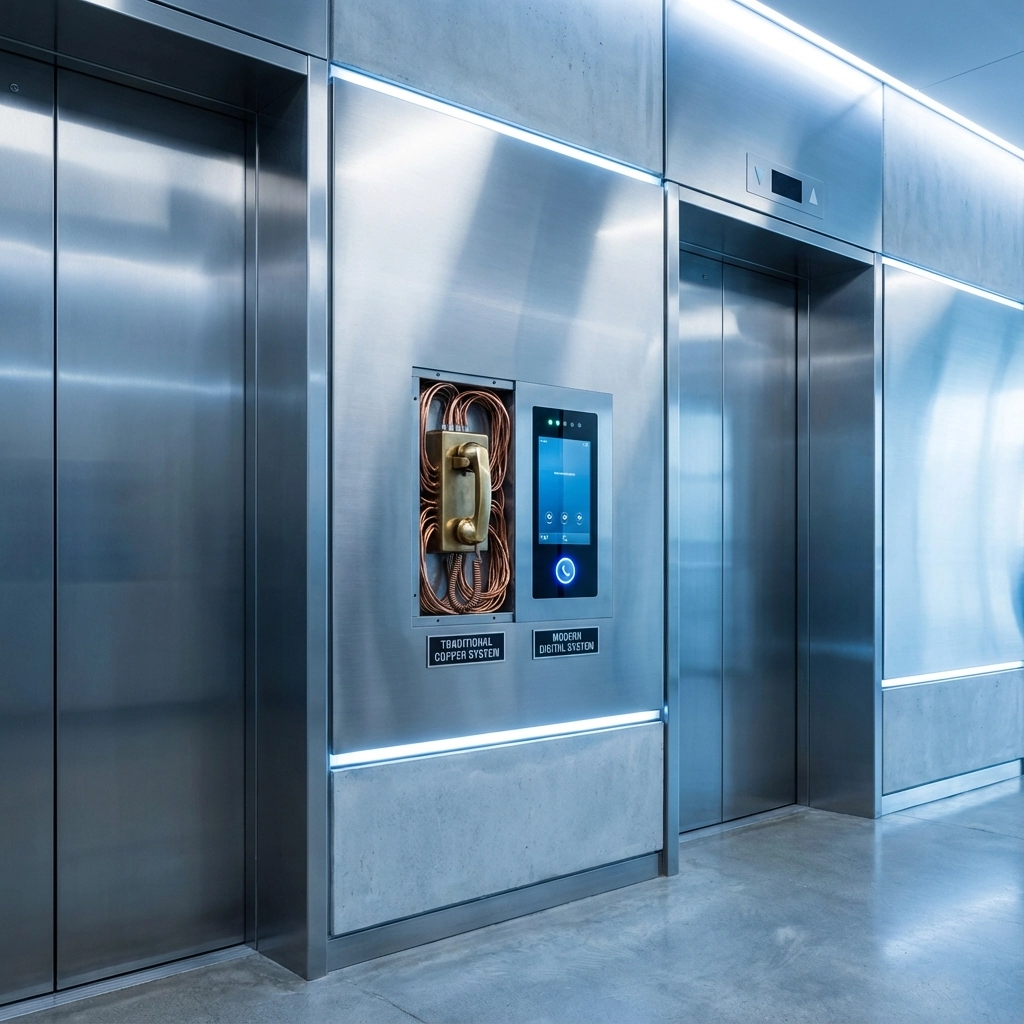
Plain Old Telephone Service (POTS) lines have quietly powered critical safety systems in buildings across America for decades. While most businesses have already transitioned their main phone systems to modern VoIP solutions, many still rely on copper telephone lines for essential safety equipment: elevator emergency phones, fire alarm systems, and security monitoring devices.
The problem? Telecommunications companies are rapidly decommissioning the infrastructure that supports these legacy copper lines. By 2026, businesses face an urgent deadline to replace POTS lines or risk losing connectivity for their most critical safety systems.
Why POTS Lines Are Disappearing Fast
The telecommunications landscape is undergoing a massive transformation. Major carriers including AT&T, Verizon, and others are systematically shutting down local central offices that support POTS infrastructure. The Federal Communications Commission (FCC) has approved this transition, recognizing that maintaining decades-old copper networks is no longer economically viable.
For most business communications, this transition presents opportunities to upgrade to modern phone systems with enhanced features and cost savings. However, for safety-critical systems, the stakes are much higher.
Unlike your main business phone line, elevator phones and fire alarm systems often operate silently in the background: until an emergency occurs. When these systems fail, the consequences can be severe: regulatory violations, insurance liability, and most importantly, compromised building safety.
The Critical Importance of Elevator and Fire Safety Lines
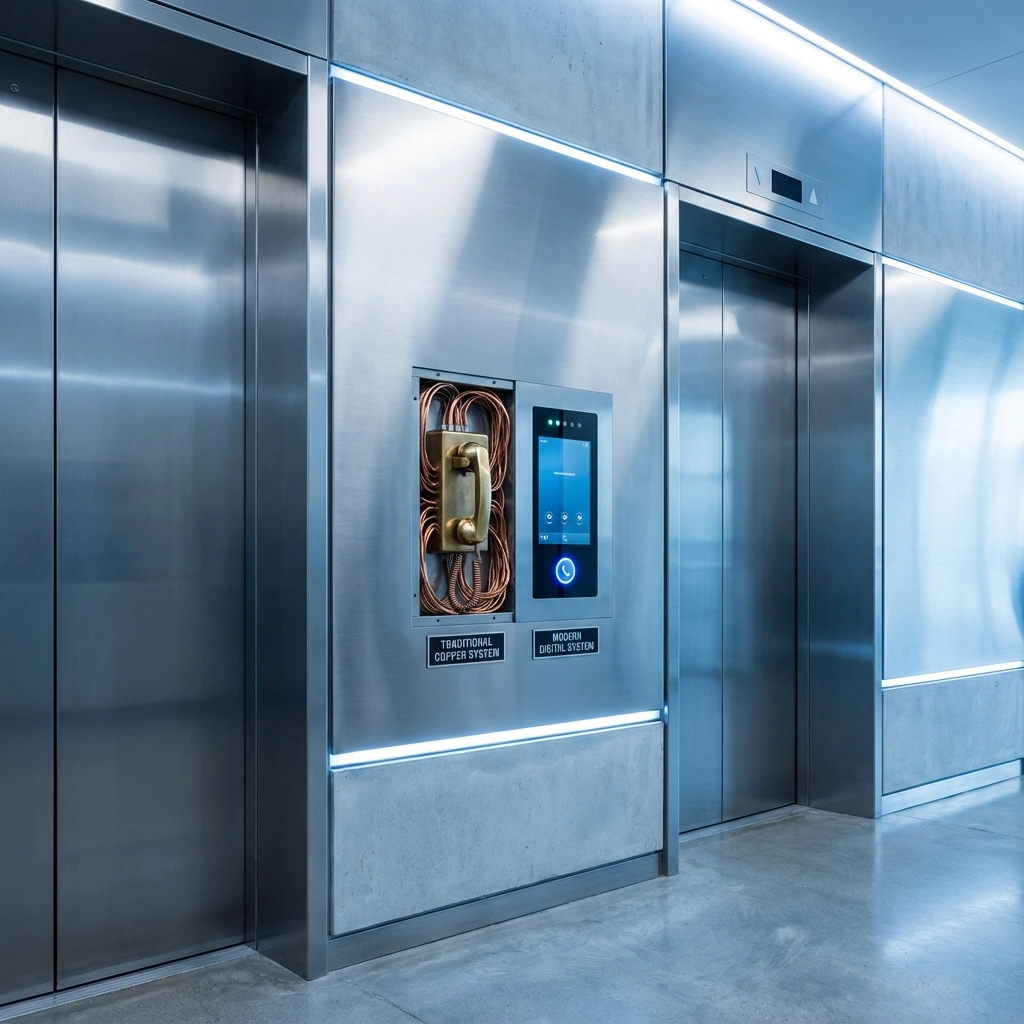
Elevator emergency phones and fire alarm monitoring systems represent some of the most mission-critical applications of POTS technology in commercial buildings. These systems must function 24/7, even during internet outages, power failures, or other infrastructure disruptions.
Regulatory Compliance Requirements
Safety phone systems must meet strict regulatory standards:
- NFPA 72: National Fire Protection Association codes for fire alarm and emergency communication systems
- ASME A17.1: American Society of Mechanical Engineers safety code for elevators and escalators
- UL Standards: Underwriters Laboratories requirements for fire protection equipment
- ADA Compliance: Americans with Disabilities Act accessibility requirements
- Local Building Codes: Municipality-specific inspection and safety requirements
Non-compliance with these standards can result in failed inspections, insurance claim denials, and significant legal liability during emergencies.
Why Standard Internet-Based Solutions Fall Short
Many businesses initially consider replacing POTS lines with standard VoIP solutions connected to their existing internet service. However, this approach creates critical vulnerabilities for safety systems:
- Internet dependency: Standard VoIP requires active internet connectivity, which can fail during emergencies
- Power requirements: Internet-based solutions typically lack sufficient battery backup for extended outages
- Latency issues: Network congestion can interfere with emergency communications
- Complexity: Managing emergency systems through general IT infrastructure adds unnecessary failure points
Essential Requirements for POTS Replacement Solutions
An effective POTS replacement for safety systems must satisfy several non-negotiable requirements:
Analog Compatibility
The solution must work seamlessly with existing elevator phones, fire alarm panels, and security monitoring equipment without requiring expensive hardware replacements.
Continuous Uptime
Safety systems require 99.9%+ availability, including during internet disruptions, power outages, and network maintenance. Battery backup and automatic failover capabilities are essential.
Regulatory Compliance
Solutions must meet or exceed all applicable NFPA, UL, ASME, and local regulatory requirements. This includes proper documentation for inspection purposes.
Remote Monitoring
The ability to monitor system status remotely and receive alerts about potential issues prevents silent failures that could compromise safety.
Professional Support
24/7 technical support from providers experienced in safety-critical applications ensures rapid response during emergencies.
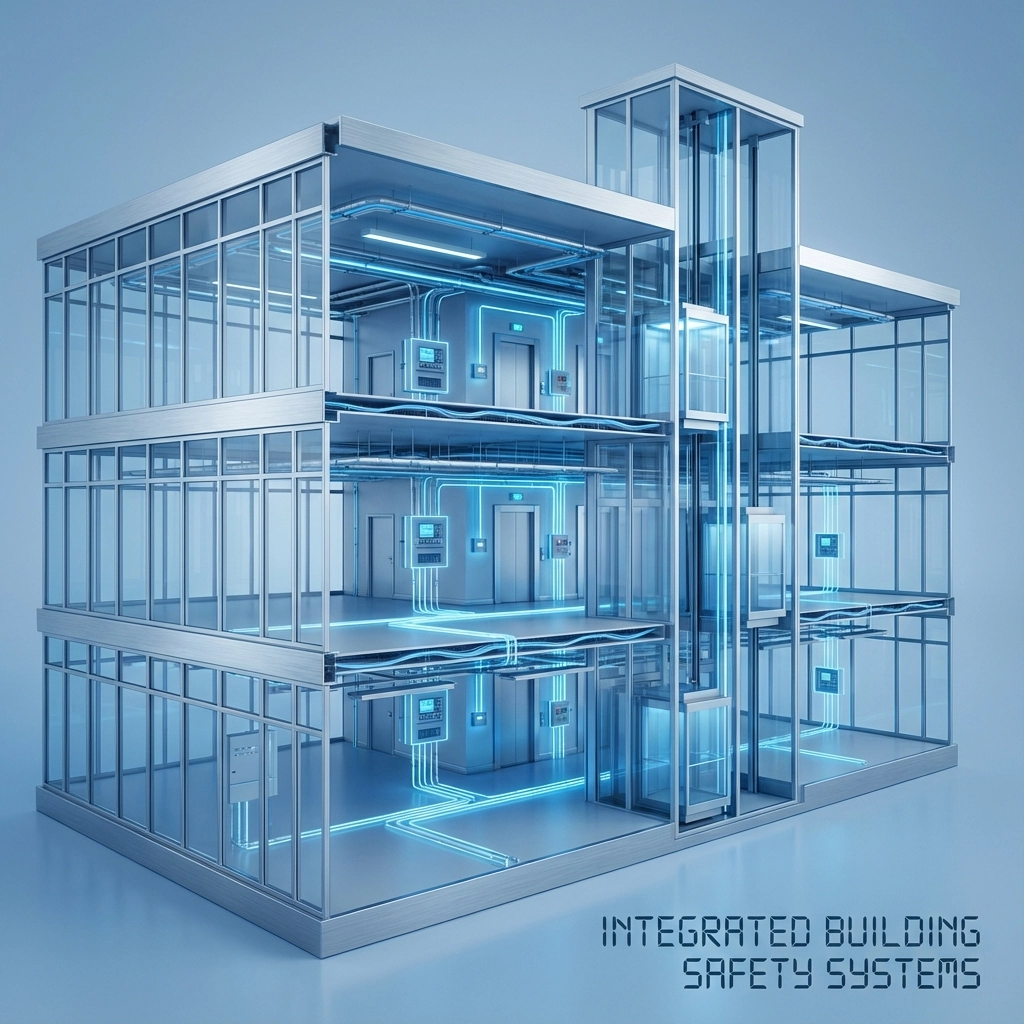
POTS Replacement Options for Safety Systems
Cellular/LTE-Based Solutions
For safety-critical applications, cellular-based POTS replacement offers the highest reliability. These solutions use dedicated LTE connections that operate independently of your building's internet infrastructure.
Key advantages:
- Independent connectivity that doesn't rely on internet service
- Built-in battery backup systems with 24+ hour capacity
- Automatic failover between cellular carriers
- Full compliance with NFPA 72 and ASME standards
- Remote monitoring and alert capabilities
Best for: Elevator phones, fire alarm monitoring, security systems, and other mission-critical applications where downtime is not acceptable.
Cloud-Based POTS Solutions
Comprehensive platforms that combine hardware, connectivity, and monitoring services into a single managed solution. These systems maintain analog compatibility while providing modern management features.
Key features:
- Web-based monitoring portals
- Automated compliance reporting
- Integration with existing building management systems
- Scalable for multi-location deployments
- Professional installation and ongoing support
Hybrid Solutions
For organizations with mixed requirements, hybrid approaches combine cellular backup for critical systems with internet-based solutions for general communications needs.
The Migration Process: Step-by-Step Guide
Phase 1: Assessment and Planning
Inventory existing POTS lines: Document all current copper line connections, including:
- Elevator emergency phones
- Fire alarm monitoring panels
- Security system connections
- Fax machines and credit card terminals
- Any other analog devices
Identify critical vs. non-critical systems: Prioritize safety systems that require the highest reliability standards.
Evaluate compliance requirements: Review current inspection reports and regulatory requirements for your specific building type and location.
Phase 2: Solution Selection
Choose appropriate replacement technology based on:
- System criticality level
- Regulatory requirements
- Budget considerations
- Scalability needs
- Integration requirements
Verify compliance: Ensure selected solutions meet all applicable regulatory standards and can provide proper documentation for inspections.
Phase 3: Professional Installation
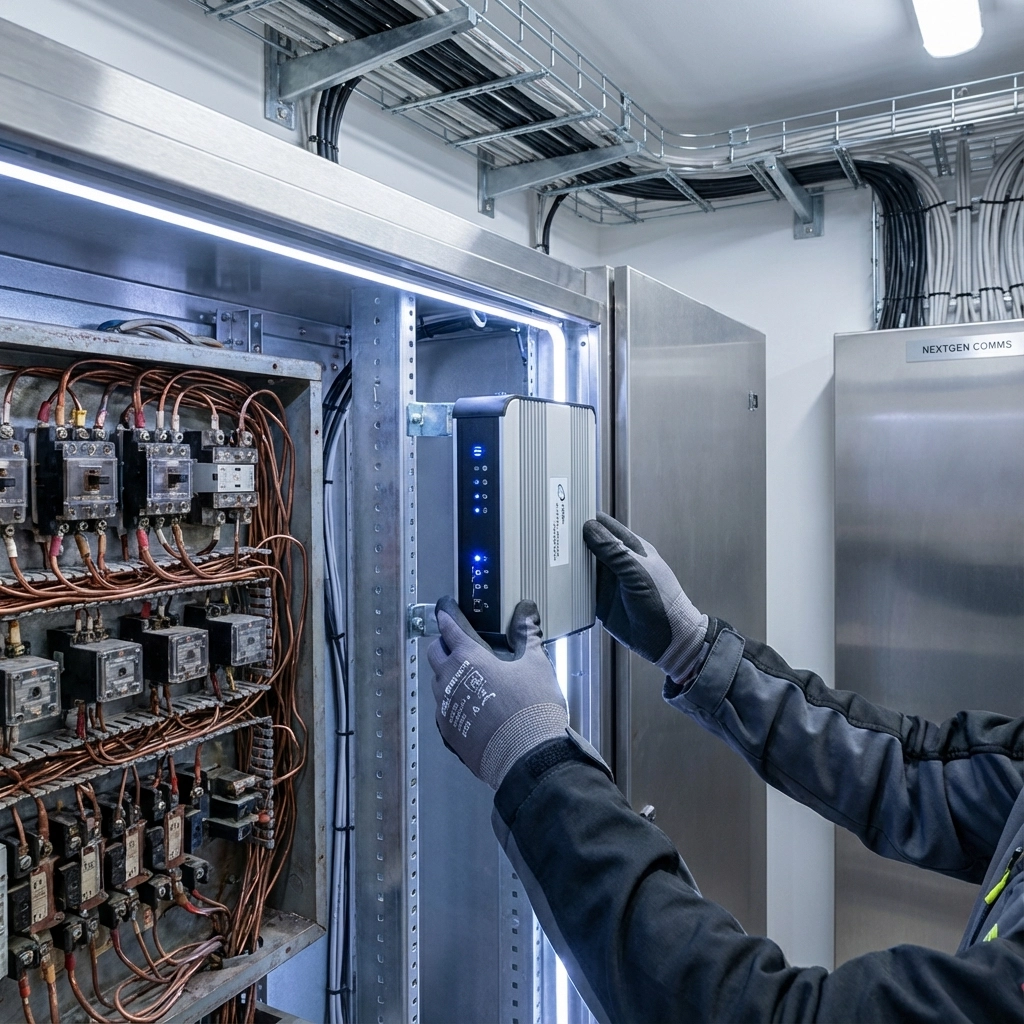
Site survey and preparation: Qualified technicians assess your existing infrastructure and plan optimal equipment placement.
Phased deployment: Install new systems alongside existing POTS lines initially, allowing for thorough testing before cutover.
Testing and certification: Comprehensive testing ensures all systems function properly and meet regulatory requirements.
Documentation and training: Provide facility staff with system documentation and basic operational training.
Frequently Asked Questions
How much time do we have before POTS lines are completely unavailable?
The timeline varies by location, but most areas will see POTS service discontinuation by late 2026 or early 2027. However, service quality is already degrading in many areas as carriers reduce infrastructure investment.
Can we use our existing internet connection for elevator phones?
While technically possible, using shared internet infrastructure for safety-critical systems creates compliance and reliability issues. Cellular-based solutions provide the independence and redundancy required for safety applications.
What happens during a power outage?
Proper POTS replacement solutions include battery backup systems that can maintain operation for 24+ hours during power outages. This exceeds the backup capacity of most traditional POTS installations.
How do we ensure regulatory compliance during the transition?
Work with experienced providers who understand safety system requirements and can provide proper documentation for inspection purposes. Many solutions include automated compliance reporting features.
What's the typical cost compared to existing POTS lines?
While monthly costs vary by solution type and features, most organizations see cost savings within 12-18 months due to elimination of POTS line fees and improved reliability reducing maintenance costs.
Why Immediate Action Is Critical
Delaying POTS replacement creates escalating risks for building safety and regulatory compliance. As telecommunications infrastructure continues to deteriorate, the quality and reliability of remaining POTS connections will decline. Once your local central office is decommissioned, there's no fallback option: your safety systems simply lose connectivity.
The transition also represents an opportunity to modernize your building's communication infrastructure while ensuring compliance with current safety standards. Modern POTS replacement solutions often provide better reliability and features than the original copper lines they replace.
Don't wait until your elevator phone fails during an emergency or your fire alarm system can't communicate with monitoring centers. The time to act is now, while you can plan and execute a proper transition that maintains safety and compliance throughout the process.
Ready to ensure your building's safety systems remain operational and compliant? Contact Premier Business Team today for a comprehensive POTS replacement assessment and customized migration plan. Our experienced team specializes in safety-critical telecommunications solutions that keep your building safe and compliant while reducing long-term costs. Schedule your consultation now to protect your most important communications infrastructure.