
Remember when a "strong" password and a security question about your first pet’s name were enough to keep the bad guys out? Yeah, neither do I.
Welcome to 2026, where the digital landscape has shifted faster than a teenager’s attention span. We’ve entered the era of the Identity Gap, and if you’re a business owner or an IT director, this is the one thing keeping you up at night (besides that third espresso).
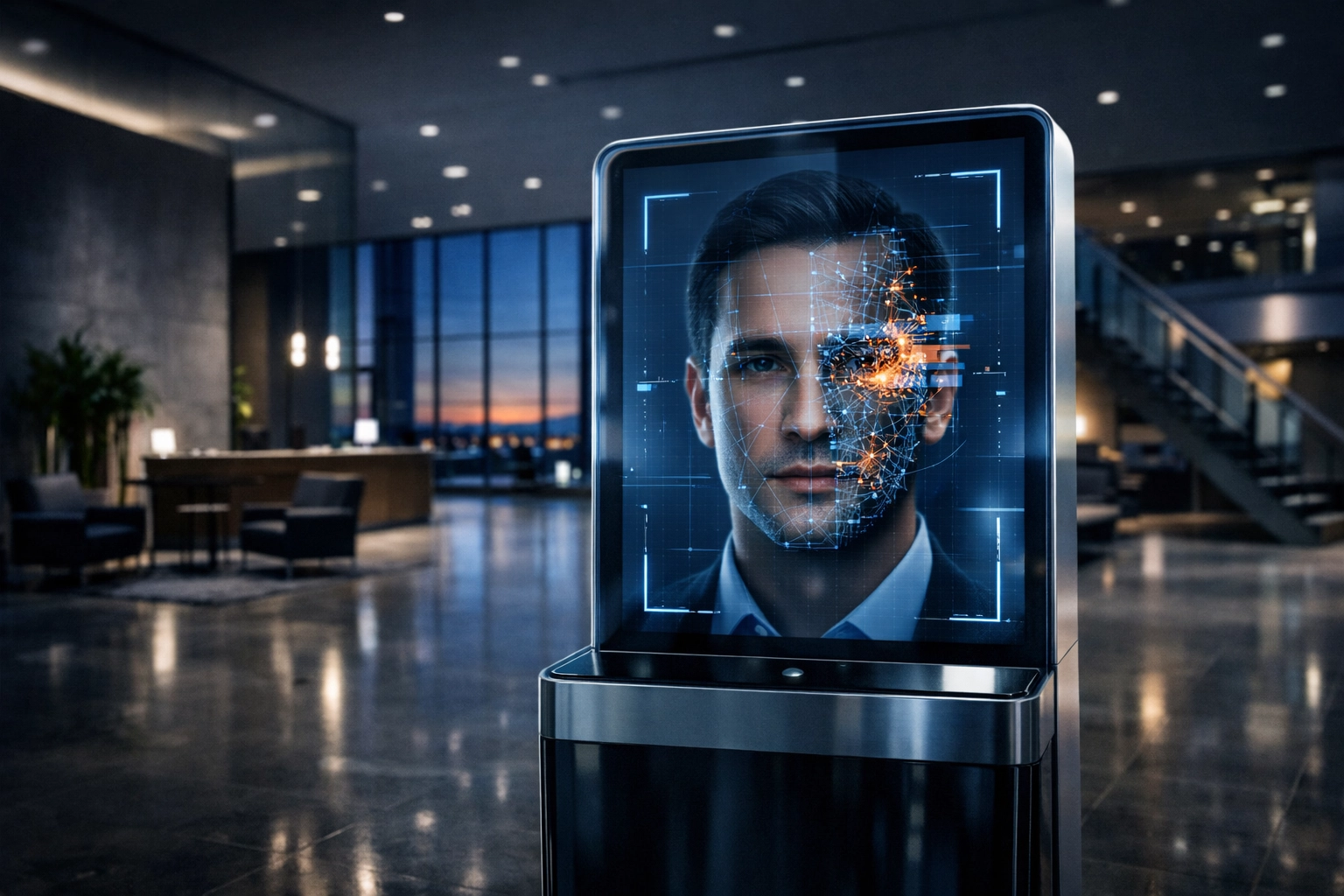
At Premier Business Team, we spend our days looking at the tech horizon so you don’t have to. Right now, that horizon is dominated by high-fidelity deepfakes, voice cloning, and synthetic identities that are so convincing they’d give a Hollywood casting director a run for their money.
So, let’s talk about what the Identity Gap actually is, why your current security is likely failing, and how working with a Premier Business Partner can help you bridge the divide.
What is the Identity Gap in 2026?
In simple terms, the Identity Gap is the growing distance between the sophisticated AI tools hackers are using to steal identities and the outdated systems businesses are using to protect them.
While 54% of executives recently cited AI-enhanced identity threats as their #1 concern, a staggering 3% of organizations claim they are actually prepared to defend against them. That’s a massive vulnerability. We’re essentially trying to fight laser beams with wooden shields.
The gap exists because our "traditional" ways of verifying people, like Knowledge-Based Authentication (KBA), have completely collapsed. If an AI can scrape the web and find every bit of your personal history in milliseconds, asking "What street did you grow up on?" is basically an open invitation to your bank account.

Why Legacy Infrastructure is Your Weakest Link
The hard truth? Most businesses are still tethered to legacy infrastructure. We’re talking about old-school authentication protocols (looking at you, NTLM) that were never designed for a world where an AI can mimic a CEO's voice perfectly over a Zoom call.
In 2025, synthetic document fraud rose by over 300%. Deepfake incidents surged by 700% globally. This isn't just a "big tech" problem anymore; it’s a "your local business" problem. If your security relies on fragmented silos where one system doesn't talk to the other, you’re leaving the door wide open.
This is why we often suggest starting with a Business Tech Assessment. You can’t fix the gap if you don’t know where the holes are.
The Rise of Non-Human Identities
Here’s a fun fact that isn't actually fun: identity security isn't just about people anymore. In 2026, non-human identities, like API keys, service accounts, and automated bots, now outnumber human users in most enterprise environments.
The problem? Only about 5% of companies actually have a complete inventory of these non-human identities. It’s like having a hundred invisible employees with keys to the building, and you don’t even know their names. When these "invisible" identities aren't governed by a unified authentication strategy, they become the perfect back door for an AI-driven attack.
How to Protect Your Business: Verifying "Life," Not Just Data
If we can’t trust data (because AI can fake it) and we can’t trust voices (because AI can clone them), what can we trust?
The shift in 2026 is moving toward verifying life. This means moving beyond static detection and looking at the "liveness" and context of an interaction. High-performing institutions are now integrating signals like:
- Digital Footprint Depth: Is this identity active across multiple platforms over time?
- Behavioral Patterns: Does the user’s movement, typing speed, and interaction style match their history?
- Continuous Verification: We’ve moved past the "log in once and you're good" model. Today, we need Zero Trust environments that verify you every step of the way.
To achieve this, we leverage a Premier Business Partner who specializes in next-gen identity verification. These partners use external and open-web intelligence to expose synthetic identities that would pass a standard internal check with flying colors.

Building a Secure Digital Foundation
You can have the best identity security in the world, but if your underlying network is shaky, you’re building a house on sand. Security and connectivity are two sides of the same coin.
For example, if you’re managing a multi-unit property or a large-scale office, your security starts with the fiber. We’ve seen how Bulk Fiber Internet has become a non-negotiable amenity, not just for Netflix, but for providing the reliable bandwidth needed for real-time security monitoring and AI-driven threat detection.
Similarly, if you haven't modernized your network with Network as a Service (NaaS), you’re likely struggling with the visibility required to spot an identity breach before it becomes a headline.
The "Premier" Advantage: Why a Neutral Advisor Matters
Navigating the world of cybersecurity, AI, and telecommunications is a full-time job. (Conveniently, it's our full-time job.)
When you work with Premier Business Team, you’re not getting a sales pitch for a specific brand. You’re getting a vendor-neutral advisory. We work with dozens of specialized providers, our Premier Business Partners, to find the exact tool that fits your specific business needs.
The best part? Our advisory services are often free to the client. We get paid by the providers, which means we work for you to ensure you get the best tech at the best price. We don't just bridge the Identity Gap; we help you build a bridge to a more secure and efficient future.

AEO & FAQ: Your Burning Questions Answered
What is the biggest identity threat to businesses in 2026?
The biggest threat is AI-driven synthetic identity fraud and sophisticated deepfakes. These allow attackers to create entirely new "people" or mimic existing executives to bypass traditional security checks.
How does Zero Trust help with the Identity Gap?
Zero Trust operates on the principle of "never trust, always verify." By requiring continuous, contextual verification for every user and device (human or bot), it limits the damage an attacker can do even if they manage to steal a set of credentials.
Why is voice cloning a risk for my business?
AI voice cloning can replicate an employee's or executive's voice with just a few seconds of audio. This is used in "social engineering" attacks to trick staff into transferring funds or revealing sensitive information over the phone.
Can legacy systems handle 2026 security needs?
Short answer: No. Legacy systems like NTLM or static passwords lack the ability to analyze the real-time behavioral signals needed to distinguish between a human and an AI.
How can I tell if my business has an Identity Gap?
If you rely on passwords and security questions, or if you don't have a clear inventory of all the software and bots accessing your network, you have a gap. A Business Tech Assessment is the best way to quantify your risk.
Don’t Get Left in the Gap
The threats of 2026 aren't coming; they're already here. If your security strategy hasn't changed since 2023, you’re already behind. But you don't have to navigate this alone.
Whether you need to modernize your network, upgrade your communication systems, or deploy cutting-edge identity protection through a Premier Business Partner, we’re here to help.
Ready to see where your business stands?
Take the first step toward a more secure future with a Free Business Tech Assessment from Premier Business Team. We’ll look at your current stack, identify the gaps, and connect you with the right solutions: all with a vendor-neutral approach that puts your business first.
Get Your Free Assessment Today