

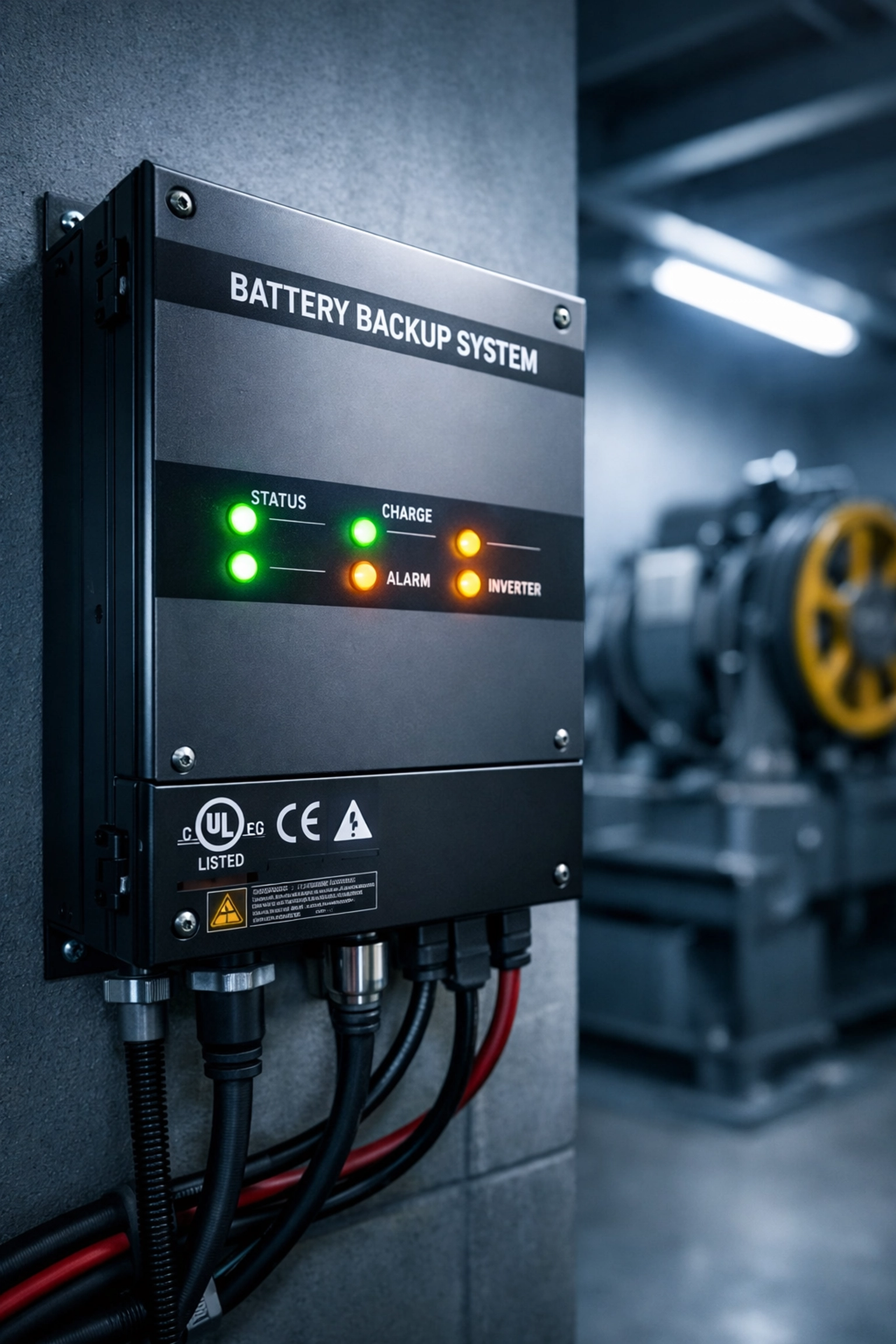
You're managing 15 properties across three states. Your local carrier just sent the final POTS line shutdown notice. You found a cheap VoIP replacement online, ordered battery backup units, and thought you were done. Then the fire marshal shows up for your annual inspection and fails three of your buildings because your elevator phone batteries don't meet NFPA 72 requirements.
Here's the reality: most multi-site property owners are making critical battery backup mistakes that leave them exposed to code violations, failed inspections, and liability nightmares. And if you think a standard 48-hour battery backup unit from Amazon will keep you compliant, you're setting yourself up for an expensive lesson in building codes.
Let's break down the seven most common (and costly) mistakes property managers make when replacing POTS lines, with a laser focus on the battery backup requirements that inspectors actually care about.
Mistake #1: Assuming All Battery Backup Systems Are Created Equal
Not all battery backup units meet commercial building codes. That residential UPS from your local electronics store? It's designed to keep your home router running during a brief power outage, not to sustain a life-safety elevator emergency line for 24-72 hours under NFPA 72 compliance standards.
The problem: NFPA 72 (National Fire Alarm and Signaling Code) specifically requires that emergency communication systems maintain 24 hours of standby power plus 5 hours of emergency operation. For elevator phone lines, ASME A17.1 safety codes can require even longer backup durations depending on your jurisdiction.
Basic residential battery backups typically provide 2-8 hours of runtime, nowhere near the 29-hour minimum that code enforcement expects. When inspectors test your system during annual certifications, they're looking for documented battery capacity, not Amazon product descriptions.

Mistake #2: Not Testing Battery Performance Under Load Conditions
You installed the backup battery. It shows a green light. You're good, right? Wrong.
Multi-site owners often fail to test their battery backup systems under actual load conditions. A battery might hold 48 hours of charge when idle, but when it's actually powering a cellular POTS replacement device that's transmitting voice data during an emergency, runtime drops dramatically.
What you need to do:
- Conduct quarterly load tests that simulate a real emergency call scenario
- Document battery runtime while the system is actively transmitting
- Replace batteries every 2-3 years, even if they appear functional
- Keep detailed testing logs for inspectors (they will ask)
Most code violations happen because the battery "worked" during installation but degraded over time without anyone noticing.
Mistake #3: Choosing POTS Replacement Based on Price Instead of Certification
When you're replacing elevator phone lines across multiple properties, it's tempting to go with the cheapest cellular gateway you can find. But here's where multi-site owners get burned: not all POTS replacement devices are certified for life-safety applications.
Look for these specific certifications:
- UL 2572 certification for elevator emergency phones
- NFPA 72 compliance documentation
- ASME A17.1 approval for elevator communication systems
- ADA compliance for two-way voice communication clarity
A $200 generic cellular adapter might make phone calls, but if it's not certified for life-safety use, your building fails inspection. Period.
The POTS replacement guide from Premier Business Team specifically addresses certification requirements that property managers need to verify before purchasing equipment.
Mistake #4: Failing to Account for Extended Power Outages in Your Region
Here's the uncomfortable question: How long do power outages typically last in your area?
If you're managing properties in regions prone to severe weather, wildfires, or aging electrical infrastructure, a 48-hour battery backup isn't just insufficient, it's negligent. California's wildfire season routinely causes 3-5 day power shutoffs. Hurricane-prone regions along the Gulf Coast can lose power for a week or more.
Why this matters for elevator phone lines: When someone gets trapped in an elevator during a regional emergency (when power is already out), your battery backup is the only thing keeping that emergency line operational. If your battery dies at hour 49 of a 96-hour outage, you've got a life-safety failure and potential lawsuit on your hands.
Multi-site owners should:
- Map their properties by regional power reliability
- Install 72-96 hour battery systems in high-risk locations
- Consider solar + battery combinations for properties in disaster-prone areas
- Have rapid-response battery swap protocols in place

Mistake #5: Not Monitoring Battery Health Across Multiple Locations
You've installed proper battery backup systems at all 15 properties. Excellent. But who's monitoring them?
The biggest operational mistake multi-site owners make is treating battery backup as "set it and forget it" infrastructure. Without remote monitoring, you won't know that the battery at your Phoenix property failed until a tenant gets stuck in the elevator and the emergency line is dead.
Modern POTS replacement solutions should offer:
- Remote battery health monitoring with low-charge alerts
- Automated testing that simulates power failures monthly
- Cellular connectivity status verification (because what good is battery backup if the cellular gateway itself isn't working?)
- Centralized dashboard for multi-property management
This is where multi-site operations differ dramatically from single-building management. You need visibility across your entire portfolio, not piecemeal systems you have to manually check.
Mistake #6: Ignoring Environmental Factors That Kill Batteries Faster
Battery backup runtime isn't just about capacity, it's about environment. And multi-site owners often make the mistake of installing identical systems across all properties without accounting for local conditions.
Temperature kills batteries. A battery backup unit installed in a non-climate-controlled elevator machine room in Phoenix will degrade 40-60% faster than the same unit in a climate-controlled building in Seattle. Similarly, high humidity environments accelerate battery corrosion.
For multi-site portfolios:
- Audit the installation environment at each location
- Use sealed AGM or lithium batteries in harsh environments
- Budget for more frequent battery replacement in extreme climate zones
- Consider active cooling solutions for equipment rooms in hot climates
Your "standard" approach across all properties is costing you money and creating compliance gaps.

Mistake #7: Not Having a Documented Preventive Maintenance Plan
Fire marshals and elevator inspectors don't just test your equipment, they review your maintenance documentation. And here's where most multi-site owners fail spectacularly: they don't have a documented, executed preventive maintenance plan for their POTS replacement battery systems.
What inspectors want to see:
- Quarterly battery load testing logs
- Annual full-discharge testing records
- Battery replacement schedules and receipts
- Emergency response drill documentation
- Vendor service agreements for 24/7 support
Here's the hard truth: Even if your battery backup works perfectly during an inspection, you can still fail if you can't produce maintenance records showing consistent testing and care. This is especially critical for multi-site owners who need to demonstrate corporate-level compliance protocols.
Create a centralized maintenance database that tracks:
- Last test date for every property
- Battery installation dates and expected replacement dates
- Inspection results and corrective actions
- Vendor contact information and SLA terms
This documentation protects you legally and makes your life dramatically easier during code enforcement audits.
Why 48 Hours Isn't Enough: The Real Math Behind Battery Requirements
Let's settle this question: How long does an elevator phone battery need to last?
The minimum legal requirement under NFPA 72 is 24 hours of standby plus 5 hours of active use (29 total hours). But that's a minimum designed for normal conditions, not regional emergencies.
Here's the real-world calculation multi-site owners should use:
Minimum Required Runtime = Average Regional Power Outage Duration + 50% Safety Buffer
If your region averages 36-hour outages during severe weather, you need a 54-hour battery minimum. For disaster-prone areas with 72-hour outage histories, you're looking at 108-hour (4.5 day) battery capacity.
Yes, that's expensive. But it's far cheaper than defending a wrongful death lawsuit when your elevator phone dies during an extended emergency.
FAQ: POTS Replacement Battery Backup for Multi-Site Properties
Q: How long does an elevator phone battery need to last to meet code?
A: NFPA 72 requires a minimum of 24 hours standby power plus 5 hours of emergency operation (29 hours total). However, many jurisdictions and insurance carriers require 48-72 hours for multi-story buildings or properties in disaster-prone regions.
Q: Can I use standard UPS battery backups for elevator emergency phone lines?
A: No. Standard residential UPS units are not certified for life-safety applications. You need battery backup systems specifically rated for NFPA 72 and ASME A17.1 compliance, with proper documentation and certifications.
Q: How often should battery backup systems be tested?
A: NFPA 72 requires annual testing, but best practice for multi-site property management is quarterly load testing with documented results. Batteries should be replaced every 2-3 years regardless of apparent functionality.
Q: What happens if my elevator phone battery dies during an emergency?
A: You face potential code violations, fines, failed inspections, insurance claim denials, and significant liability exposure if someone is injured. This is why proper battery capacity and maintenance is critical.
Q: Do cellular POTS replacements use more battery power than traditional phone lines?
A: Yes. Traditional copper POTS lines were powered by the telephone company's central office. Cellular replacements require local power and battery backup, which is why proper capacity planning is essential.
Stop Gambling with Life-Safety Compliance
If you're managing multiple properties and making any of these seven battery backup mistakes, you're not just risking failed inspections: you're risking lives and facing potential legal catastrophe.
The 2026 POTS sunset isn't a suggestion. It's happening. And the time to get your battery backup infrastructure right is now, before your carriers pull the plug and you're scrambling with emergency installations.
Premier Business Team specializes in multi-site POTS replacement solutions with proper battery backup design, NFPA 72 compliance documentation, and remote monitoring across your entire property portfolio. We help property managers avoid these costly mistakes and maintain continuous code compliance.
Contact Premier Business Team today for a multi-site battery backup assessment and get a compliance roadmap before your next fire marshal inspection. Because when it comes to life-safety systems, "close enough" isn't good enough.
