

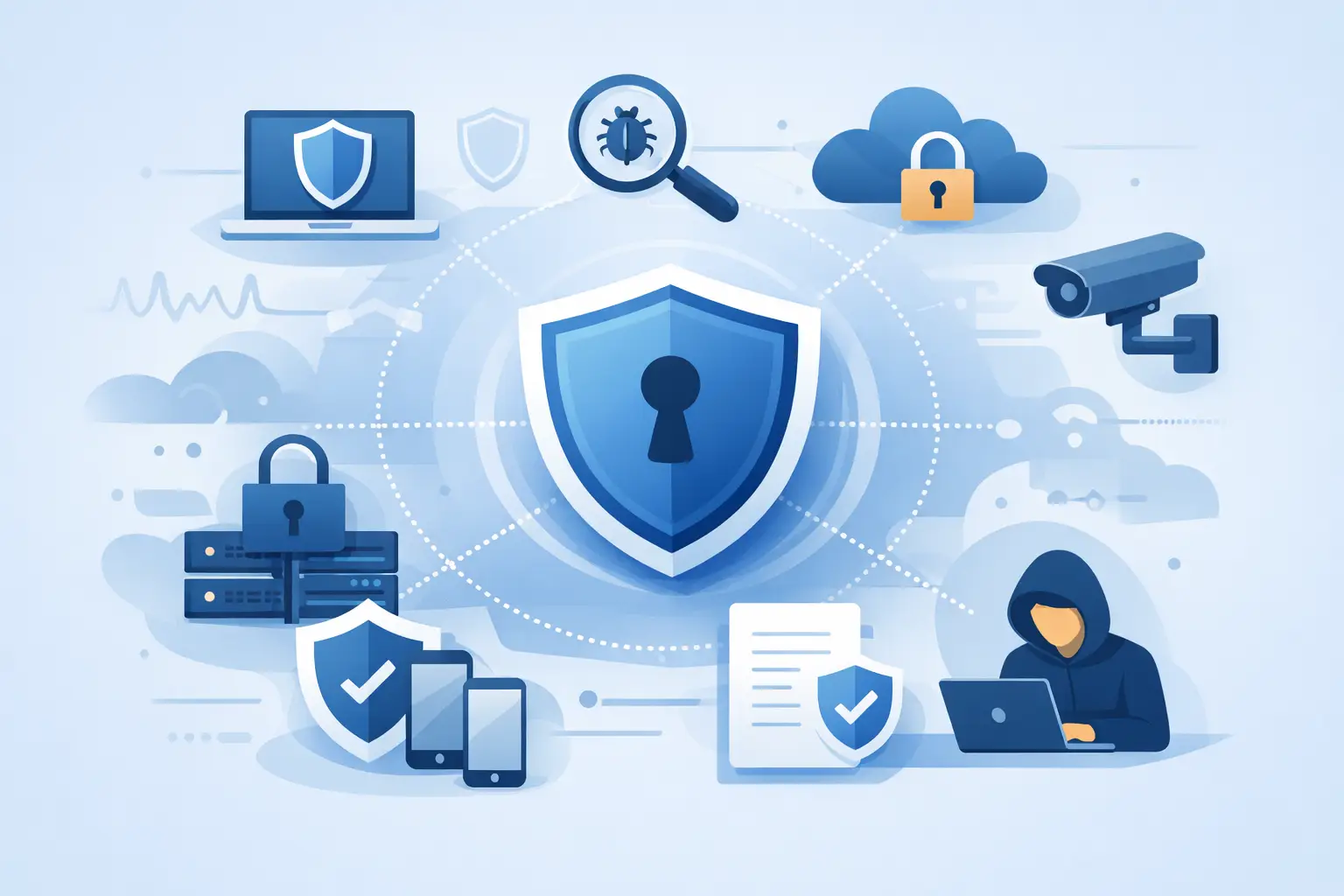
A single antivirus license will not protect a growing business with cloud apps, remote users, mobile devices, and vendor access. When leaders ask about the types of cyber security protection they need, the real question is usually broader: which controls will reduce risk without creating unnecessary cost or complexity?
That is the right way to look at cybersecurity. For most small and mid-sized organizations, the goal is not to buy every available tool. It is to build a practical security model that fits the way the business actually operates, supports compliance requirements, and stays manageable over time.
Why the types of cyber security protection matter
Cybersecurity decisions affect more than IT. They affect uptime, customer trust, insurance readiness, employee productivity, and budget planning. A business that chooses the wrong mix of protection may overspend on overlapping tools while still leaving critical gaps in email security, access control, or backup recovery.
The better approach is to understand the major protection categories first. Once those are clear, it becomes easier to evaluate vendors, compare managed services, and decide which controls belong in-house and which should be outsourced.
The main types of cyber security protection
1. Network security
Network security protects the traffic moving between users, devices, applications, and internet connections. This category includes firewalls, intrusion prevention, secure web gateways, network segmentation, and virtual private network controls.
For many businesses, network security is still foundational, but it is no longer enough on its own. If your team works from multiple locations or relies heavily on cloud platforms, a traditional perimeter model has limits. You still need strong edge protection, but it should be paired with identity and endpoint controls.
2. Endpoint protection
Endpoints include laptops, desktops, smartphones, tablets, and servers. These devices are common entry points for malware, ransomware, and unauthorized access, especially when users work remotely or connect from unmanaged networks.
Modern endpoint protection goes beyond basic antivirus. It often includes endpoint detection and response, device monitoring, behavioral analysis, patch visibility, and isolation capabilities when suspicious activity is detected. The trade-off is management. Stronger endpoint protection gives better visibility, but it also requires policy tuning and active oversight to avoid alert fatigue.
3. Email security
Email remains one of the most frequent attack channels because it is simple, familiar, and easy to exploit through phishing, spoofing, malicious attachments, and fraudulent payment requests. Businesses often underestimate how much risk sits in the inbox until a single compromised account disrupts finance, HR, or executive communications.
Email security typically includes spam filtering, attachment scanning, link protection, domain authentication, and impersonation detection. In some environments, user awareness training should be considered part of this layer because technical controls alone will not stop every socially engineered attack.
4. Identity and access management
If an attacker gets valid login credentials, they can bypass many traditional defenses. That is why identity and access management has become one of the most important types of cyber security protection for modern businesses.
This category includes multi-factor authentication, single sign-on, role-based access controls, password policies, privileged access management, and conditional access rules. The purpose is straightforward: verify who is requesting access and limit what they can do once inside.
There is a balance to strike here. Tighter access controls improve security, but if they are implemented poorly, they can frustrate users and slow operations. The right design protects critical systems without making everyday work harder than it needs to be.
5. Cloud security
As more workloads move into Microsoft 365, Google Workspace, public cloud platforms, and SaaS applications, cloud security has become a separate planning category. Many business leaders assume cloud providers handle everything. In reality, security responsibility is shared.
Cloud security can include configuration management, tenant hardening, access policies, data loss prevention, encryption, workload monitoring, and cloud application visibility. Misconfigurations are a common problem. A business may have invested in a reputable cloud platform and still leave data exposed because permissions, retention settings, or sharing controls were never properly reviewed.
6. Data protection and backup
Not every cyber event begins with theft. Sometimes the immediate business impact is lost access to critical files, systems, or customer records. Data protection focuses on preserving confidentiality, integrity, and availability.
This category often includes encryption, data classification, data loss prevention, backup systems, disaster recovery planning, and immutable or isolated backup storage. It is one of the clearest examples of where business priorities matter. A company that can tolerate one day of downtime needs a different recovery strategy than one that cannot afford even one hour.
Good backup is not the same as good recovery. Many organizations have backups, but they have never tested whether they can restore systems quickly under pressure. That gap only becomes visible during an incident, which is the worst time to find it.
7. Application security
Businesses depend on applications for finance, operations, customer service, and internal workflows. If those applications are vulnerable, attackers may gain access through weak code, outdated components, insecure integrations, or poor authentication design.
Application security includes secure development practices, code reviews, vulnerability scanning, patch management, web application firewalls, and ongoing testing. For organizations using custom applications, this area deserves special attention. Fast development can support growth, but speed without security review can introduce avoidable risk.
For companies using mostly third-party software, application security still matters. Vendor due diligence, update discipline, and integration oversight are part of protecting the environment.
8. Security monitoring and incident response
Prevention matters, but no control set is perfect. Security monitoring and incident response help businesses detect threats quickly, investigate suspicious behavior, and contain damage before it spreads.
This category can include log collection, security information and event management platforms, managed detection and response, alert triage, threat hunting, incident playbooks, and forensic support. For many small and mid-sized businesses, this is where outside support makes the biggest difference. The tools may be available, but internal teams often lack the time to monitor them around the clock.
The key question is not whether monitoring is valuable. It is whether your organization can realistically maintain it with the speed and consistency required.
How to choose the right types of cyber security protection
The right mix depends on your environment, not a generic checklist. A professional services firm with remote staff and client data will prioritize identity, email, endpoint, and cloud controls differently than a manufacturer with connected equipment, multiple sites, and operational technology concerns.
Start with three practical questions. What systems are most critical to revenue and operations? Where is your data stored and who can access it? Which risks would create the most financial or operational damage if they materialized? Those answers will point to the protection layers that deserve immediate investment.
It also helps to look at cybersecurity through an operational lens. Some tools are powerful but require significant management overhead. Others may be easier to maintain but offer less control or visibility. That is why vendor-neutral guidance matters. The best solution is not always the biggest platform or the most recognizable brand. It is the option that fits your risk profile, internal resources, and budget without creating a patchwork you cannot manage.
Common mistakes businesses make
One common mistake is buying isolated tools in response to isolated problems. A phishing incident leads to an email filter. An audit finding leads to MFA. A ransomware headline leads to a backup purchase. Each decision may be reasonable on its own, but together they can produce a fragmented environment with overlapping costs and no clear security strategy.
Another mistake is assuming compliance equals protection. Meeting a baseline framework or insurance requirement can help, but it does not guarantee operational resilience. Attackers do not care whether your documentation is complete. They care whether your controls are weak, outdated, or inconsistently enforced.
The third mistake is treating cybersecurity as a one-time project. Threats change, business systems change, and user behavior changes. Protection has to evolve with the business.
Build for resilience, not just prevention
The strongest security posture is usually layered. It combines preventive controls, visibility, recovery capability, and clear accountability. That does not mean every business needs enterprise-level complexity. It means the protection strategy should reflect how your company works and what it cannot afford to lose.
For organizations trying to simplify vendor decisions while improving protection, a consultative approach is often the most efficient path. Premier Business Team helps companies evaluate options across security, network, cloud, and managed services so technology decisions stay aligned with business goals, not just product marketing.
The most useful cybersecurity plan is the one your business can sustain – one that reduces risk, supports growth, and still makes operational sense a year from now.