

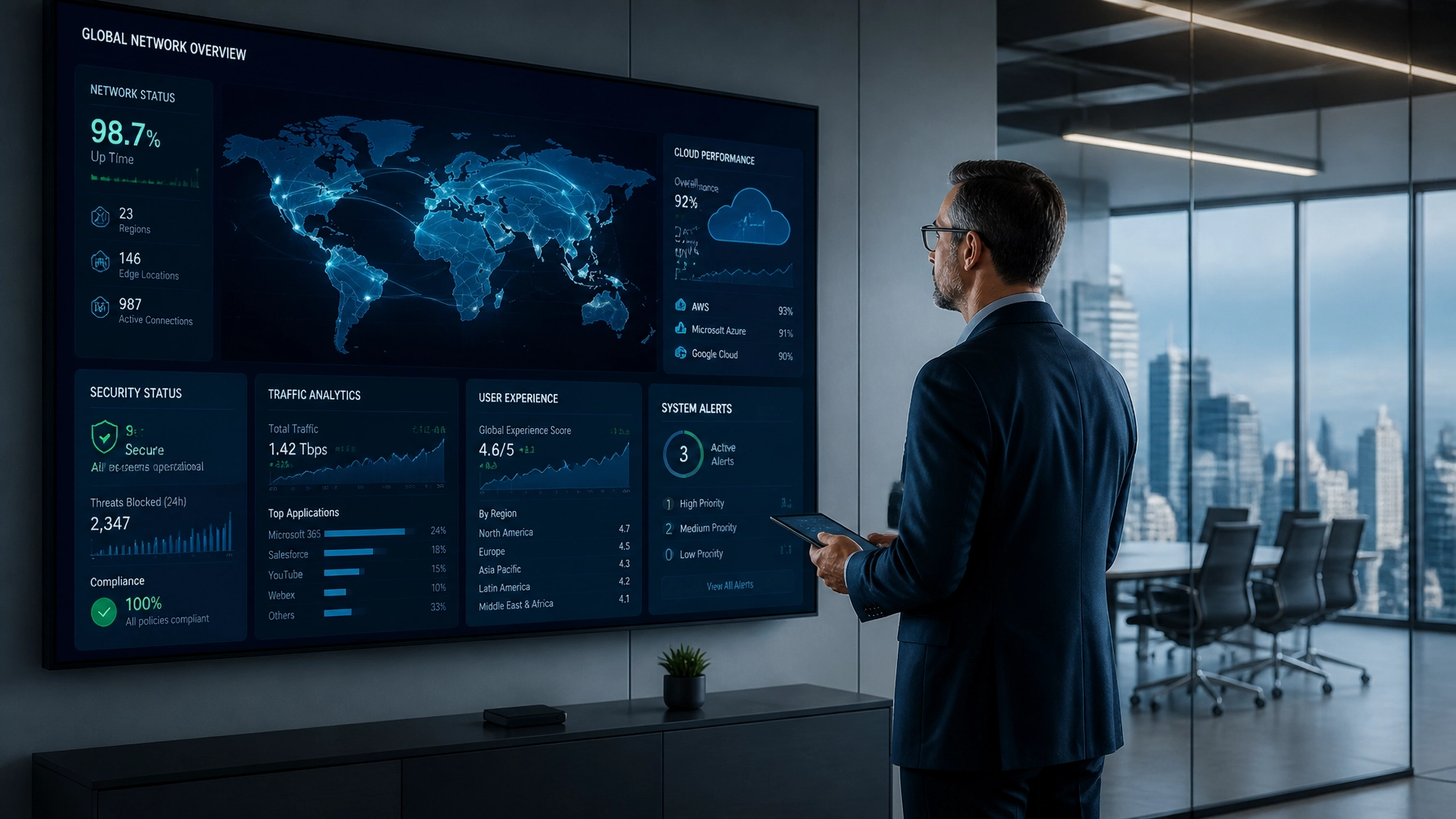
For IT Directors and VPs of Operations at mid-market companies, the dawn of 2026 has brought a familiar but intensified pressure. If you are managing a team for a 1,000+ employee organization, you likely feel like David Martinez: your budget is under a microscope, your team is stretched thin across legacy systems and new AI initiatives, and your "vendor list" has grown into a sprawling, unmanageable web of monthly invoices.
In the mid-market space, the challenge isn't just finding technology: it’s finding the right technology at a price point that doesn't erode your margins. The 2026 landscape for managed IT services is no longer just about outsourcing your help desk; it’s about strategic vendor consolidation, AI-driven automation, and a co-managed model that allows you to maintain control while offloading the operational "noise."
At Premier Business Team, we specialize in helping overwhelmed IT leaders navigate this complexity. This guide explores how to optimize your infrastructure for 2026 while significantly reducing your overhead.
The Cost-Saving Paradox: Why Mid-Market Companies Overpay
Most mid-market companies are currently paying a "fragmentation tax." This occurs when you have separate vendors for your Business Internet, another for cybersecurity, a third for cloud hosting, and a fourth for unified communications.
Each niche vendor adds a layer of management overhead and integration complexity. By the time you reach 1,000 employees, these inefficiencies can account for up to 30% of your total IT spend. The goal for 2026 is simple: Vendor Consolidation.

How to Consolidate Without Risk
Consolidating doesn't mean putting all your eggs in one basket with a single "do-it-all" provider who might be mediocre at everything. Instead, it means working with a technology advisor to identify a core "managed service platform" that integrates your most critical functions.
By streamlining your stack, you achieve:
- Volume Pricing: Better rates for bundled services.
- Reduced MTTR: AI-native managed services in 2026 can reduce Mean Time to Resolution by 40-60%.
- Audit Simplicity: One point of contact for compliance and billing.
The 2026 Co-Managed IT Model: Strategy In-House, Operations Out-House
One of the biggest shifts we’ve seen this year is the move toward Co-Managed IT. In the past, companies either did everything in-house or outsourced everything. Neither model works perfectly for the 1,000+ employee tier.
A co-managed approach allows your internal team to focus on high-value projects: like digital transformation and AI integration: while a managed IT service provider handles the 24/7 "keep the lights on" tasks:
- Patch management and POTS migration.
- Real-time security monitoring (SOC-as-a-Service).
- Cloud cost optimization (FinOps).
This model provides the scale of a global enterprise without the massive internal headcount costs.
Securing the Perimeter in the Age of AI
Cybersecurity is no longer a "plugin" service; it is the core of your infrastructure. In 2026, mid-market companies are primary targets for AI-driven phishing and identity fraud.
Your managed IT services must include identity-focused security and proactive threat hunting. Working with a provider that integrates security into the connectivity layer: often referred to as SASE (Secure Access Service Edge): is the most cost-effective way to protect a distributed workforce.

The "Free Consulting" Advantage: Our Vendor-Neutral Approach
Most IT directors avoid consultants because of the high hourly fees. Premier Business Team operates on a different model. Our consulting and sourcing services are generally free to you.
We are paid by the providers we represent, but our loyalty remains with you. Because we are vendor-neutral, we don’t have a quota to sell you a specific "brand name" solution. Our only goal is to find the provider that fits your technical requirements and budget.
Whether you are looking to consolidate technology vendors or upgrade your enterprise cybersecurity, we act as your single point of contact. We handle the sourcing, the RFP process, and the price negotiations, saving you dozens of hours of administrative labor.

Managed IT FAQ for 2026
What is the average cost of managed IT services for mid-market companies in 2026?
Pricing has shifted toward a per-user or outcome-based model. For comprehensive managed services: including security, help desk, and cloud management: mid-market companies typically see costs ranging from $125 to $300 per user per month.
How can managed IT services help reduce our cloud spend?
In 2026, most MSPs use FinOps (Cloud Financial Management) tools to identify underutilized resources. On average, companies waste about 27% of their cloud budget; a managed provider can often recoup this cost within the first 90 days.
Why should we use a technology advisor instead of going direct to a carrier?
Going direct limits you to one company’s portfolio. A technology advisor like Premier Business Team provides a vendor-neutral view, comparing dozens of carriers and service providers simultaneously to find the best fit and price.
What is the "Copper Sunset" and how does it affect our costs?
The 2026 sunsetting of traditional copper phone lines (POTS) means that legacy systems are becoming exponentially more expensive to maintain. Migrating to modern digital connectivity is one of the quickest ways to realize immediate cost savings. You can learn more in our 2026 POTS migration guide.
Take the Stress Out of Your 2026 IT Strategy
You don't have to navigate the complex world of vendors and infrastructure alone. David Martinez and IT leaders like him are finding that the "secret weapon" to meeting budget goals isn't cutting staff: it's optimizing the supply chain of their technology.
Let Premier Business Team handle the heavy lifting. We’ll evaluate your current spend, identify redundancies, and source the perfect managed IT solutions for your specific needs: all at no cost to your organization.