


If your business is still using traditional phone lines, you're sitting on a ticking time bomb. Major telecommunications companies are aggressively phasing out legacy phone systems, and 2026 is the year many of these changes hit hard.
We're not talking about a gradual transition anymore. This is happening now, and businesses that wait too long will face service disruptions, skyrocketing costs, and emergency migrations when demand peaks.
What Exactly Is Being Phased Out?
POTS Lines Are Going Extinct
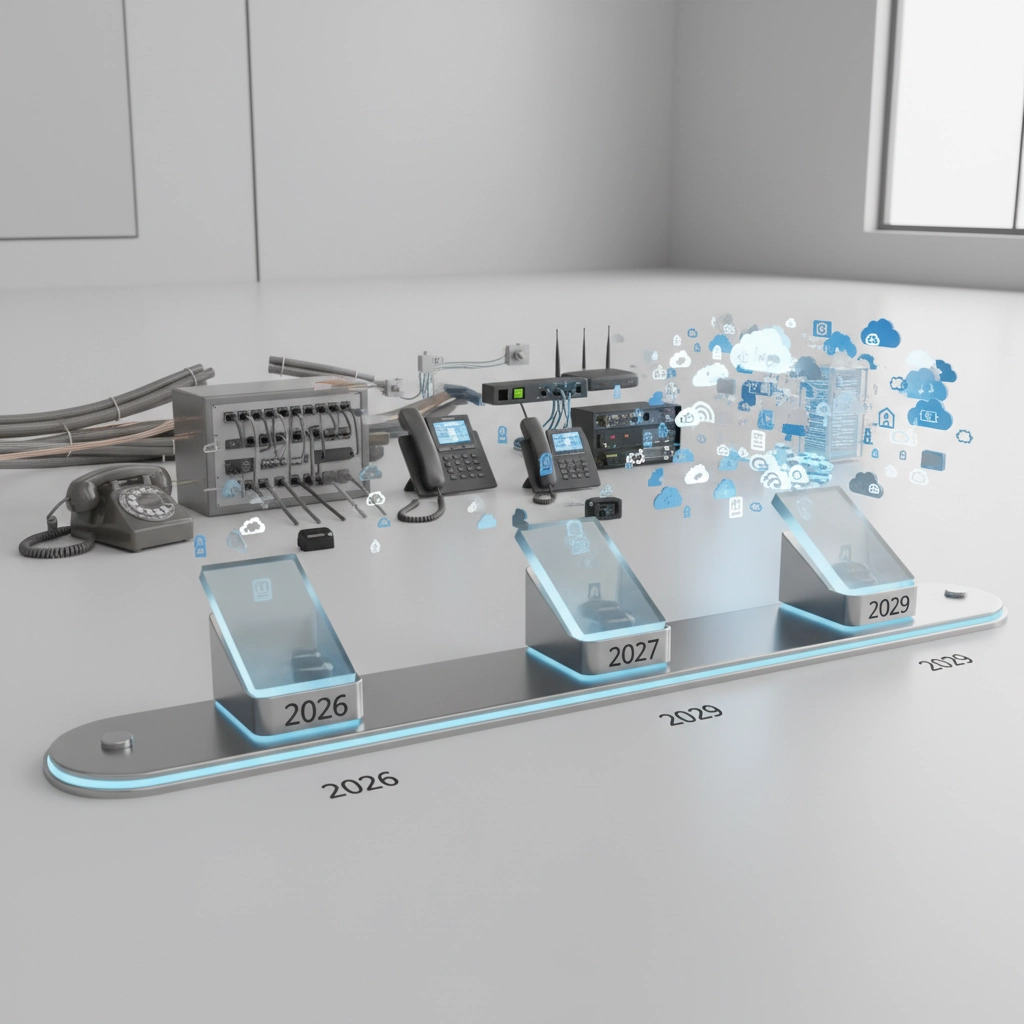
Plain Old Telephone Service (POTS) lines: those copper-based phone lines that have powered business communications for decades: are being retired across the board. AT&T and Verizon have set aggressive timelines to eliminate their copper networks by 2026-2029.
This isn't just about your desk phone. POTS lines power critical business systems including fax machines, alarm systems, elevator emergency phones, fire alarms, and door access controls. When the lines go dark, all of these systems need alternatives.

Enterprise Phone Systems Getting the Axe
NEC, one of the biggest names in business phone systems, announced they're discontinuing on-premises business phone systems effective March 2026. They're completely withdrawing from the on-premises Unified Communications industry.
If you're running an older PBX system, your manufacturer support and replacement parts are about to become very expensive: or disappear entirely.
Regional Networks Shutting Down
The timeline varies by region, but it's accelerating everywhere. In the UK, the entire Public Switched Telephone Network (PSTN) shuts off in January 2027. Here in the US, different carriers are moving at different speeds, but the direction is clear.
The Timeline: What's Happening When
Right Now Through 2026
AT&T is targeting a 50% reduction in copper lines this year. Verizon expects all POTS customers transitioned to fiber or wireless by 2026-2027. NEC's phase-out becomes official in March 2026.
2027 and Beyond
Complete network retirements continue rolling out. AT&T's full copper network retirement is targeted for 2029, but expect service degradation and cost increases well before then.
The reality? If you're still on traditional phone lines by mid-2026, you're going to face serious problems.
Why This Is Happening (And Why It Won't Stop)
The Economics Don't Work
POTS line maintenance currently costs $65-100 per line monthly. After the sunset, prices could spike to thousands of dollars monthly for remaining lines. The workforce that knows how to maintain these systems is retiring faster than new technicians are being trained.
Technology Has Moved On
Legacy phone systems can't compete with modern digital alternatives. They offer limited features, poor scalability, and integration challenges that modern businesses simply can't accept.
What This Means for Your Business
Immediate Operational Risks
As carriers reduce copper network support, you're facing higher maintenance costs, fewer repair options, declining reliability, and potential service disruptions. When something breaks, getting it fixed becomes increasingly difficult and expensive.
Equipment Obsolescence
Your existing copper-line phones won't work after the switch-off. You'll need VoIP-compatible equipment or adapters to maintain connectivity. As demand spikes in 2026, equipment shortages are likely.
Hidden System Dependencies
Many businesses discover they have more systems dependent on POTS lines than they realized. Credit card processing terminals, security systems, and building management systems often rely on these connections.
Your Modern Alternatives
VoIP: The Primary Replacement
Voice over Internet Protocol (VoIP) routes calls over fiber-optic lines, cellular networks like 4G/5G, or other modern infrastructure. Our hosted voice solutions offer enhanced features, better reliability, and lower long-term costs compared to aging copper infrastructure.
Cloud-Based Phone Systems
Modern UCaaS IP phone systems provide enterprise-level features through cloud platforms. You get advanced call routing, mobile integration, video conferencing, and unified communications: all without maintaining on-premises hardware.
Fiber and Wireless Solutions
These technologies provide more reliable service and better support infrastructure than aging copper networks. Many businesses find their call quality actually improves after the transition.

What You Need to Do Right Now
Don't Wait for Emergency Mode
Delays could result in service disruptions and force you into emergency migrations when demand peaks. Companies that wait until 2026 will face equipment shortages, higher costs, and rushed implementations.
Audit Your Current Setup
Identify all systems using traditional phone lines: business phones, fax machines, alarm systems, and any equipment relying on POTS infrastructure. Many businesses are surprised by how many systems depend on these connections.
Evaluate Your Options
Research VoIP providers and digital alternatives that fit your specific needs. Consider reliability, features, support quality, and total cost of ownership. Our office phone systems are designed specifically for small business productivity and efficiency.
Plan Equipment Upgrades
Budget for VoIP-compatible phones, routers, and necessary infrastructure improvements. Order equipment early to avoid shortages as transition deadlines approach.
Develop a Migration Strategy
Create a phased implementation plan that minimizes business disruption. Coordinate with your provider to schedule the cutover well before your carrier's retirement deadline.

The Hidden Costs of Waiting
Emergency Migration Expenses
Businesses forced into last-minute transitions pay premium prices for rushed installations, overtime labor, and expedited equipment shipping. Emergency migrations typically cost 2-3 times more than planned transitions.
Service Disruption Risks
As carriers reduce support for legacy systems, unexpected outages become more common and take longer to resolve. Can your business afford to be unreachable for days while waiting for obsolete equipment repairs?
Competitive Disadvantage
While you're dealing with reliability issues and limited features, your competitors who've already transitioned are enjoying improved communications, better customer service capabilities, and lower operating costs.
Making the Transition Smooth
Choose the Right Partner
Work with a provider who understands both legacy systems and modern alternatives. Premier Business Team specializes in POTS replacement services and can handle complex migrations without service interruption.
Test Before You Switch
Run parallel systems during the transition to ensure everything works properly before disconnecting old lines. This approach minimizes risk and allows you to address issues before they impact operations.
Train Your Team
Modern phone systems offer more features than traditional lines, but your team needs to know how to use them. Plan for training sessions to maximize your investment.

The Bottom Line
The transition from legacy phone systems isn't optional: it's inevitable. The question isn't whether you'll need to switch, but whether you'll do it on your terms or be forced into an emergency migration.
Smart business owners are making this transition now, while they have time to plan, compare options, and implement solutions properly. They're also discovering that modern alternatives offer significant advantages over the old systems they're replacing.
Ready to Future-Proof Your Communications?
Don't get caught scrambling when your phone lines go dark. Our team at Premier Business Team helps businesses across the region transition to reliable, feature-rich communication systems without the stress and disruption.
We'll assess your current setup, recommend the best alternatives for your specific needs, and handle the entire migration process. You'll get better service, more features, and lower long-term costs: all while avoiding the risks of waiting too long.
Contact us today to schedule your consultation and learn how we can help your business stay connected as the telecommunications landscape evolves. Your competitors who wait will wish they'd acted sooner.
