

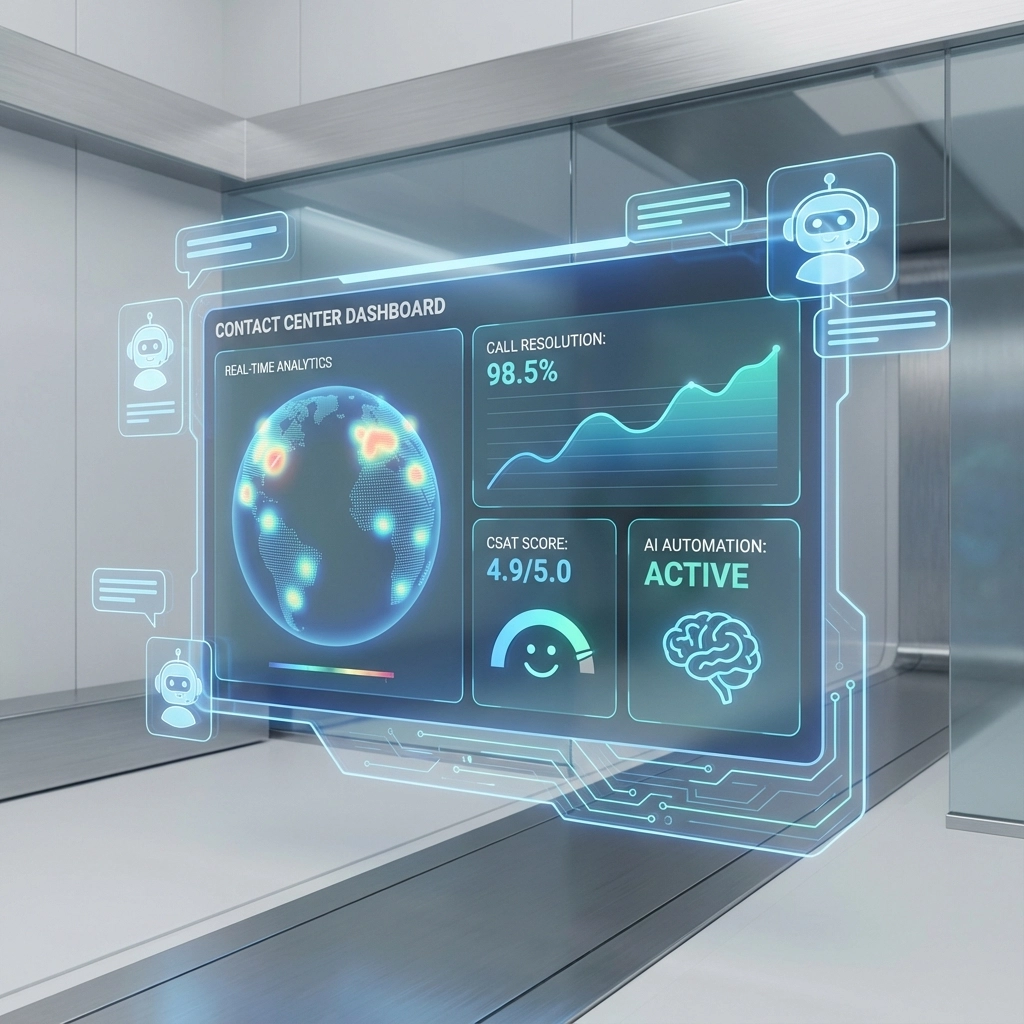
The customer service landscape has fundamentally shifted in 2026, and businesses face a critical decision: stick with traditional call systems or embrace AI-powered contact centers. While both approaches can improve customer experience, they excel in dramatically different ways. The data tells a compelling story: AI-powered systems achieve 85% customer satisfaction rates compared to traditional systems, but the real answer depends on what type of customer interactions your business handles most.
AI-Powered Contact Centers: The Efficiency Revolution
AI-powered contact centers represent a fundamental reimagining of customer service operations. These systems leverage artificial intelligence, machine learning, and natural language processing to handle customer interactions with unprecedented speed and accuracy.
Core Strengths and Performance Metrics
The performance advantages of AI systems are striking. AI-powered contact centers achieve a 65% First Call Resolution (FCR) rate for complex queries, compared to just 25% for traditional systems. This means customers get their problems solved on the first try, eliminating the frustration of multiple callbacks and endless transfers.
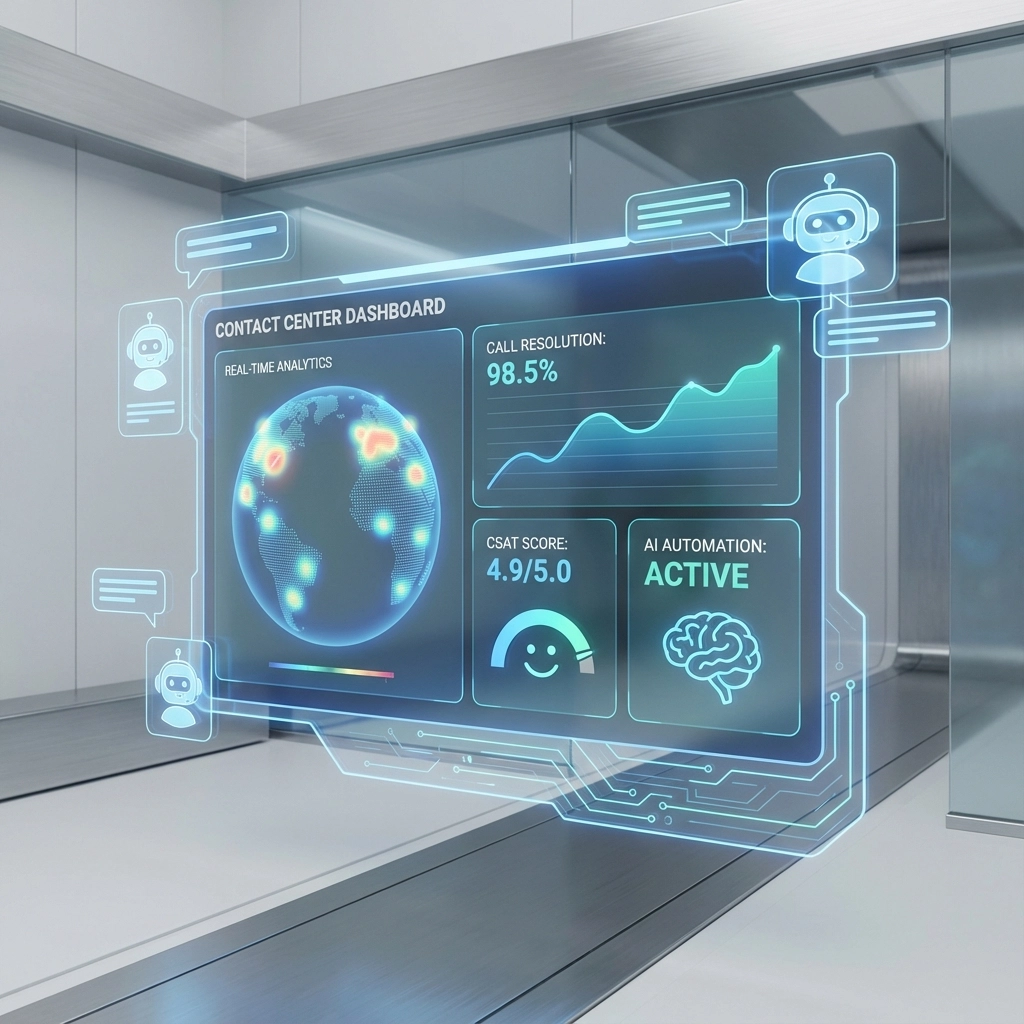
Average Handle Time (AHT) drops to an impressive 3.8 minutes with AI systems, representing a 35% reduction in call handling time compared to traditional approaches. This efficiency translates directly into better customer experience: nobody enjoys being on hold or repeating their story multiple times.
Perhaps most importantly, AI systems operate 24/7 without breaks, holidays, or shift changes. Customers can get support whenever they need it, whether it’s 2 PM or 2 AM. This availability eliminates one of the biggest pain points in traditional customer service: being forced to wait until business hours to resolve urgent issues.
Cost efficiency is another major advantage. AI operates at approximately $0.08-$0.09 per minute versus substantially higher human agent costs, enabling businesses to provide premium support without premium pricing. This cost structure allows companies to scale their support operations without proportional budget increases.
Advanced AI Capabilities
Modern AI systems go far beyond simple chatbots. They can predict the reason for 80% of incoming calls before customers even speak, allowing for intelligent routing and pre-loaded information. Sentiment analysis helps identify frustrated customers and route them to specialized agents immediately.
AI also excels at handling routine but complex tasks like appointment scheduling, account lookups, billing inquiries, and technical troubleshooting. These systems access customer data instantly, providing immediate answers without the delays associated with human agents navigating multiple systems.
Limitations of AI Systems
The primary limitation of AI-powered systems is their reduced capacity for empathy and emotional intelligence. While AI can recognize emotional cues through sentiment analysis, it cannot provide the genuine human understanding that some customers need, particularly in sensitive or highly complex situations.
AI systems also struggle with scenarios that fall outside their training parameters. Novel problems or situations requiring subjective judgment may frustrate customers who need creative problem-solving rather than algorithmic responses.
Traditional Call Systems: The Human Touch Advantage
Traditional call centers, staffed by human agents, remain the gold standard for personalized customer service. These systems leverage human empathy, creativity, and judgment to handle complex customer interactions.
Core Strengths
Human agents excel at reading between the lines, understanding context, and providing emotional support during difficult situations. They can adapt their communication style in real-time, show genuine empathy, and build meaningful relationships with customers.

Traditional systems shine when handling nuanced problems that require interpretation, creative solutions, or emotional intelligence. Experienced agents can navigate gray areas, make judgment calls, and provide context-dependent advice that enhances the customer experience beyond simple problem resolution.
For businesses where customer relationships and loyalty are built on personal connection, human agents create the trust and rapport that drives long-term customer retention.
Performance Considerations
Traditional call centers face significant operational constraints that impact customer experience. They resolve only 25% of complex queries on first call, often requiring multiple interactions to fully address customer needs. This creates frustration and inefficiency for customers who must explain their problems repeatedly.
Limited operating hours mean customers cannot reach support outside business hours, leaving urgent issues unresolved and creating customer dissatisfaction. Queue times during peak hours can be substantial, testing customer patience.
Human performance also varies based on factors like agent experience, training quality, workload, and individual capabilities. This inconsistency can create unpredictable customer experiences.
Cost and Scalability Challenges
Traditional systems require substantial ongoing investment in salaries, benefits, training, and facility costs. Scaling operations means recruiting, hiring, and training new staff: a time-intensive process that cannot match the instant scalability of AI systems.
High agent turnover in the call center industry (often 30-50% annually) creates additional costs and service consistency challenges as new agents learn systems and develop expertise.
Head-to-Head Comparison
| Factor | AI-Powered Systems | Traditional Systems |
|---|---|---|
| First Call Resolution | 65% for complex queries | 25% for complex queries |
| Customer Satisfaction | 85% CSAT | Variable, typically lower |
| Availability | 24/7 operation | Business hours only |
| Average Handle Time | 3.8 minutes | Significantly longer |
| Cost Per Interaction | $0.08-$0.09/minute | 5-10x higher |
| Scalability | Instant | Requires recruitment/training |
| Consistency | Highly consistent | Variable by agent |
| Empathy | Limited emotional intelligence | Strong emotional connection |
| Complex Problem Solving | Excellent for routine complexity | Superior for novel situations |
| Wait Times | Minimal to none | Can be substantial |
As highlighted in our analysis of agentic AI transforming contact centers, the performance improvements with AI implementation are measurable and significant across multiple customer experience metrics.
Strategic Recommendations for 2026
Choose AI-Powered Systems When:
Your business handles high call volumes with routine inquiries like appointment scheduling, account management, billing questions, or technical support. AI systems are ideal for companies requiring 24/7 support availability or those experiencing rapid growth requiring scalable customer service without proportional cost increases.
Startups and growing businesses with limited budgets benefit significantly from AI’s cost efficiency while still providing premium customer service. E-commerce companies, SaaS providers, and subscription-based businesses often see dramatic improvements in customer satisfaction with AI implementation.
Choose Traditional Systems When:
Your primary customer interactions are highly complex, emotionally sensitive, or require nuanced judgment. Industries like healthcare, legal services, financial planning, or crisis counseling benefit from human empathy and contextual understanding.
Businesses where customer relationships and loyalty depend on personal connection should maintain human-centered approaches. Luxury brands and high-touch service providers often find that customers explicitly prefer and expect human interaction.
The Hybrid Approach: Best of Both Worlds
The highest customer satisfaction typically comes from combining both systems strategically. AI handles routine tasks, provides 24/7 availability for simple inquiries, and serves as an intelligent first filter for customer contacts.
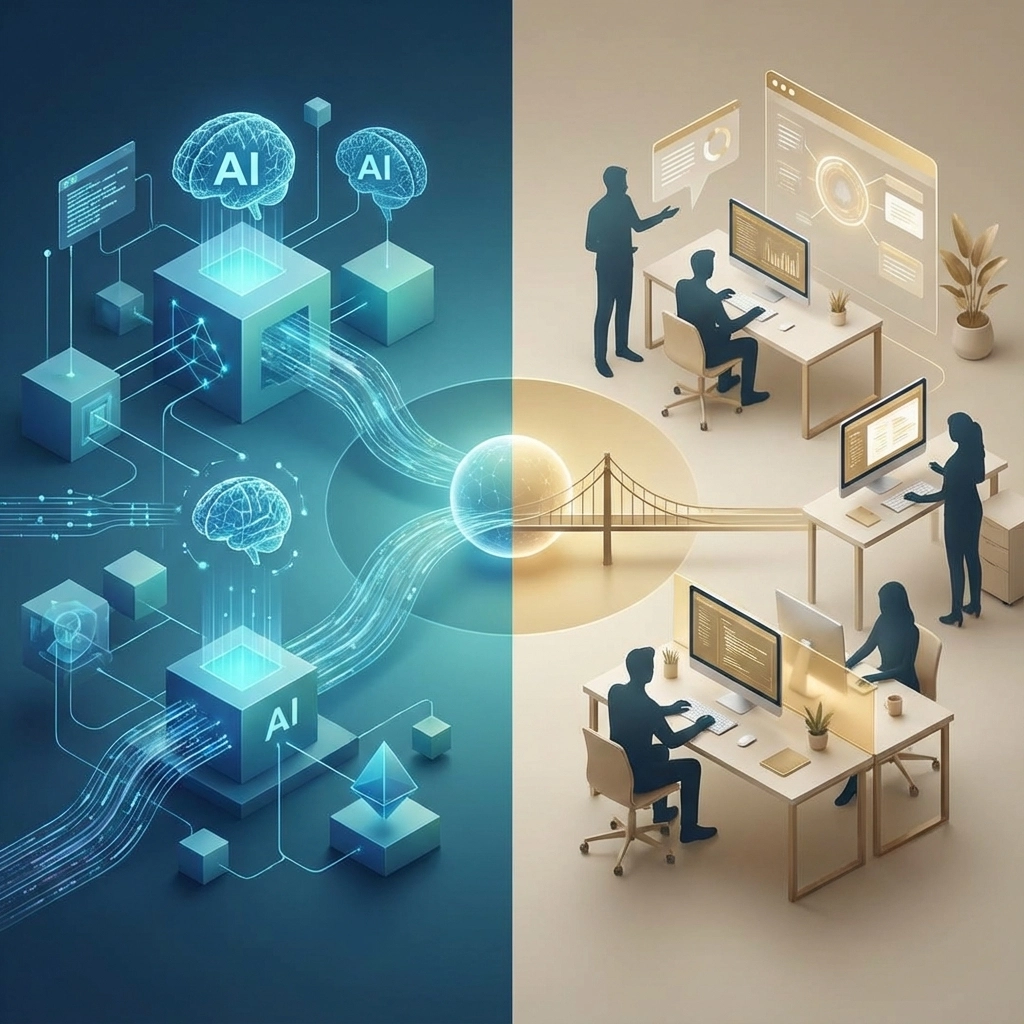
Complex issues escalate seamlessly to human agents who receive full context from the AI interaction, eliminating customer frustration and enabling faster resolution. This approach delivers AI’s efficiency and availability while preserving human empathy and problem-solving capability for situations that require it.
Many businesses implementing this hybrid model report the highest customer satisfaction scores, combining the benefits of both approaches while minimizing their respective limitations.
Implementation Considerations for 2026
When evaluating these options, consider your customer demographics, interaction types, budget constraints, and growth projections. The technology landscape continues evolving rapidly, and the gap between AI capabilities and human performance is narrowing in many areas.
Integration with existing systems is crucial for either approach. Modern contact center solutions should seamlessly connect with your CRM, helpdesk software, and other business tools. This integration ensures consistent customer experiences regardless of the service delivery method.
For businesses considering this transition, Premier Business Team specializes in helping companies evaluate, implement, and optimize customer service technology solutions. Our experience with both AI-powered and traditional systems enables us to recommend the approach that best serves your specific customer base and business objectives.
Ready to transform your customer service operations? Contact Premier Business Team today for a comprehensive assessment of your current customer service capabilities and a customized recommendation for improving customer experience in 2026. Our technology experts will help you choose and implement the solution that delivers measurable improvements in customer satisfaction while optimizing operational efficiency.