

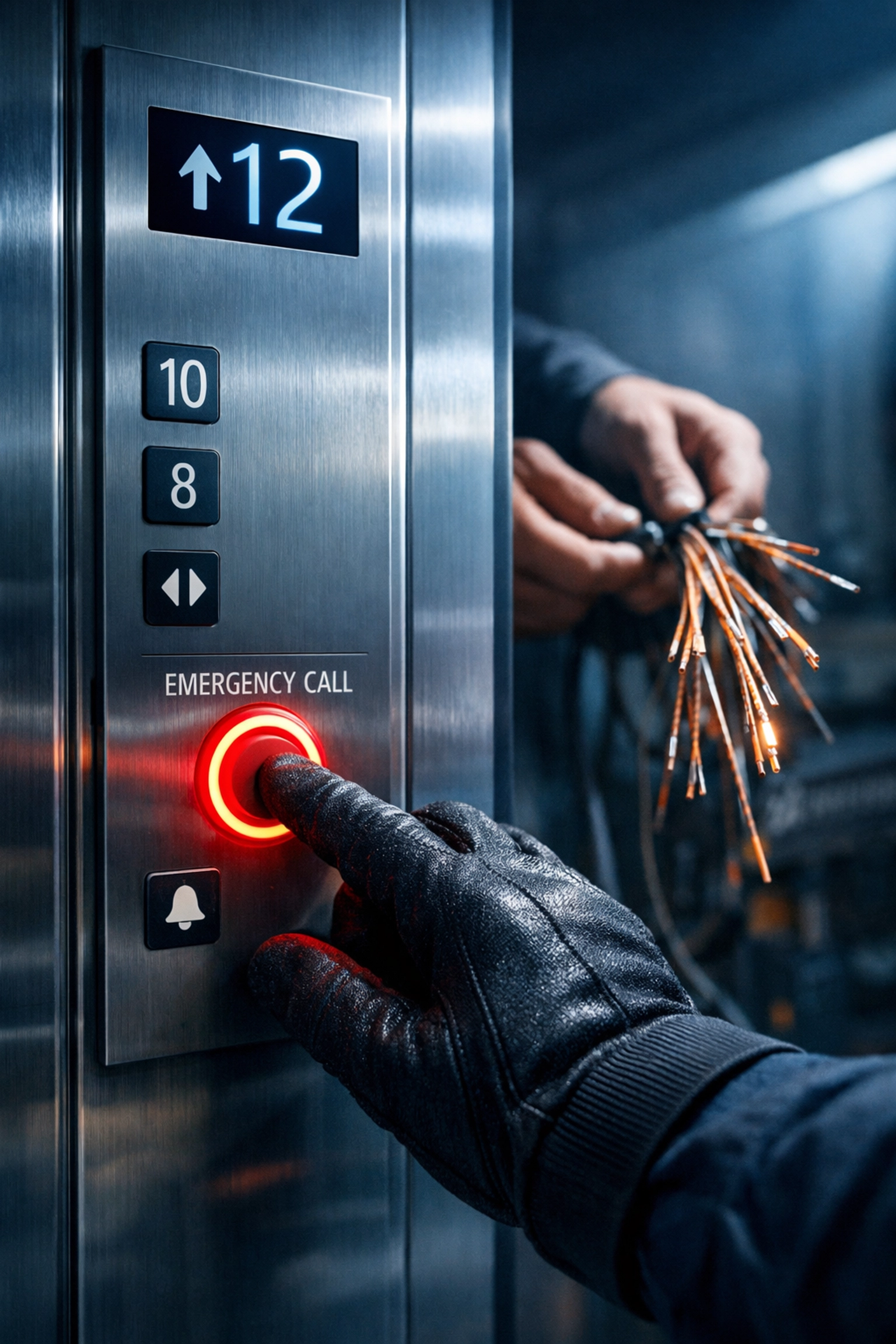
You pressed the emergency button in your elevator last week. Did anyone answer?
If you didn't test it, or worse, if you did and nothing happened, you're not alone. Nearly half of all commercial property managers discover their elevator phone lines are non-functional only during an emergency, inspection, or the dreaded phone call from a tenant trapped between floors.
Here's the problem: your elevator phone line probably runs on a copper POTS (Plain Old Telephone Service) line. And those lines? They're disappearing in 2026.
Telecom carriers across the country are actively retiring copper infrastructure, and they're not waiting for you to upgrade. If you haven't audited your emergency communication systems yet, now's the time, because the 2026 copper sunset isn't coming. It's already here.
What Is the 2026 Copper Sunset (And Why Should You Care)?
The "copper sunset" refers to the nationwide phase-out of traditional copper-based telephone lines. For decades, POTS lines were the gold standard for reliable voice communication, especially for life-safety systems like elevator phones, fire alarms, and door entry systems.
But copper infrastructure is expensive to maintain, and carriers like AT&T, Verizon, and Lumen have been quietly decommissioning copper networks for years. The FCC reduced regulatory requirements that once required carriers to give advance notice before discontinuing copper service, which means shorter transition windows and zero guarantees that your building's emergency lines will keep working.

Here's what's happening right now:
- Price hikes: Some POTS lines now cost $300–$500 per month (up from $40–$60 just a few years ago). Some businesses have reported increases as high as 648%.
- Service degradation: Carriers aren't maintaining copper networks, leading to frequent outages, static, and dropped calls.
- Forced migrations: Buildings are being moved to fiber or cellular alternatives without consultation, and not all of those alternatives are code-compliant.
If your elevator phone line still depends on copper, you're on borrowed time.
Why Elevator Phone Lines Are Different (And Why You Can't Just Swap in VoIP)
Elevator phones aren't like office desk phones. They're life-safety devices governed by strict building codes, including ASME A17.1 and local fire safety regulations. That means they need to:
- Work during power outages
- Provide two-way communication to emergency services
- Function reliably 24/7 with minimal latency
- Pass annual inspections by your Authority Having Jurisdiction (AHJ)
Standard VoIP won't cut it. Most VoIP systems rely on internet connections and power, both of which can fail during emergencies. That's why elevator phones historically used POTS lines, they were powered by the phone line itself and worked even when the building lost power.
But now that copper is going away, you need a POTS replacement solution that maintains the same reliability and meets code requirements. The problem? Most property managers don't realize their lines are failing until it's too late.
How to Test Your Elevator Phone Lines (Before Someone Gets Stuck)
You don't need to wait for an inspector or an emergency to find out if your elevator phone lines are still working. Here's a simple 5-minute test you can run right now:
Step 1: Locate the Emergency Phone in Each Elevator
Most elevators have a clearly marked emergency button or handset. If you manage multiple buildings or properties, make a checklist and test every elevator individually.
Step 2: Press the Emergency Button (Or Lift the Handset)
You should hear a dial tone immediately. If you don't hear a tone, or if there's heavy static, crackling, or a delay, that's a red flag.
Step 3: Confirm the Call Connects to a Live Person
Most elevator emergency lines should connect to a 24/7 monitoring service or a designated emergency contact. If the call doesn't connect, or if it rings indefinitely, you have a problem.
Step 4: Test from Inside and Outside the Elevator
Some systems only work when the elevator is moving or when the doors are closed. Test in multiple scenarios:
- Elevator stationary with doors open
- Elevator stationary with doors closed
- Elevator moving between floors
Step 5: Document the Results
Write down the date, time, and outcome of each test. If you're preparing for an inspection or dealing with an insurance claim, this documentation is critical.

What to Do If Your Lines Are Failing (Or You're Not Sure)
If your elevator phone lines didn't pass the test, or if you're not confident in the results, here's your action plan:
1. Contact Your Current Phone Service Provider
Ask them directly:
- Is this line running on copper POTS?
- Are there any planned service changes or discontinuations?
- What's the monthly cost, and has it increased recently?
If they confirm you're on copper, or if they've already raised your rates significantly, it's time to explore elevator phone line replacement options.
2. Get a Free Line Audit
At Premier Business Team, we're vendor-neutral advisors, which means we're not trying to sell you a specific solution. We'll audit your existing lines, test them for reliability, and recommend the best POTS replacement options based on your building's needs and local code requirements.
Our audits are free, and we'll tell you exactly what you need to pass your next inspection.
3. Prioritize Compliance Over Cost
The cheapest replacement isn't always the right one. Some cellular-based POTS alternatives work great for elevator phones but won't pass fire alarm inspections. Others meet code requirements but have poor call quality or high latency.
We help property managers compare options like:
- Cellular POTS replacements (Ooma AirDial, Phonism, etc.)
- Fiber-based voice lines with battery backup
- Hybrid solutions that combine cellular and landline failover

4. Schedule the Upgrade Before the Inspector Finds Out
Annual elevator inspections are getting stricter, and AHJs are starting to flag non-functional emergency lines as critical violations. If you fail an inspection, you could face fines, tenant complaints, or worse, liability if someone gets trapped and can't call for help.
Don't wait for the inspector to find the problem. Schedule your upgrade now, and make sure the new system is tested and documented before your next inspection.
POTS Replacement Checklist for Property Managers
Use this checklist to stay ahead of the 2026 copper sunset:
- Test all elevator emergency phone lines in every building
- Contact your phone service provider to confirm if lines are copper-based
- Document current monthly costs and any recent price increases
- Schedule a free line audit with a vendor-neutral advisor
- Compare POTS replacement options (cellular, fiber, hybrid)
- Verify new solutions meet local building codes and ASME A17.1 requirements
- Install and test replacement systems before your next inspection
- Update emergency contact procedures with building staff and tenants
Frequently Asked Questions
Q: How do I know if my elevator phone line is on copper POTS?
A: Call your telecom provider and ask directly. You can also check your monthly bill, if you see line items like "Business Line" or "POTS Line," you're likely on copper. If the cost is significantly higher than it was a few years ago, that's another indicator.
Q: Can I just replace my elevator phone line with VoIP?
A: In most cases, no. Standard VoIP doesn't meet life-safety requirements because it depends on internet connectivity and building power. You need a POTS replacement solution designed specifically for emergency systems, like cellular-based devices or fiber lines with battery backup.
Q: What happens if my elevator phone line fails during an inspection?
A: You'll likely receive a violation notice and be required to fix the issue before the next inspection. In some jurisdictions, continued non-compliance can result in fines or restrictions on building occupancy.
Q: How much does elevator phone line replacement cost?
A: It depends on the solution. Cellular POTS replacements typically range from $30–$80 per month per line. Fiber-based solutions may have higher upfront installation costs but lower monthly fees. The key is choosing a solution that meets your code requirements: not just the cheapest option.
Q: How long does it take to replace an elevator phone line?
A: Most installations can be completed in 1–2 days, depending on the complexity of your building and the solution you choose. Testing and inspection coordination may add a few additional days.
Don't Wait for the Copper Sunset: Act Now
If you're reading this and thinking, "I should probably test our elevator phone lines," you're already ahead of 50% of property managers. But thinking about it isn't enough.
The 2026 copper sunset is forcing buildings nationwide to upgrade critical infrastructure: and the longer you wait, the fewer options (and higher costs) you'll face. Your tenants, your inspectors, and your insurance company are all counting on those emergency lines to work when it matters most.
Ready to test your lines and explore POTS replacement options? Contact Premier Business Team today for a free elevator phone line audit. We're vendor-neutral advisors who specialize in helping property managers navigate the copper sunset without overpaying or choosing the wrong solution.
Contact Premier Business Team for a Free Line Audit
Because the best time to fix your elevator phone lines is before someone needs to use them.
