

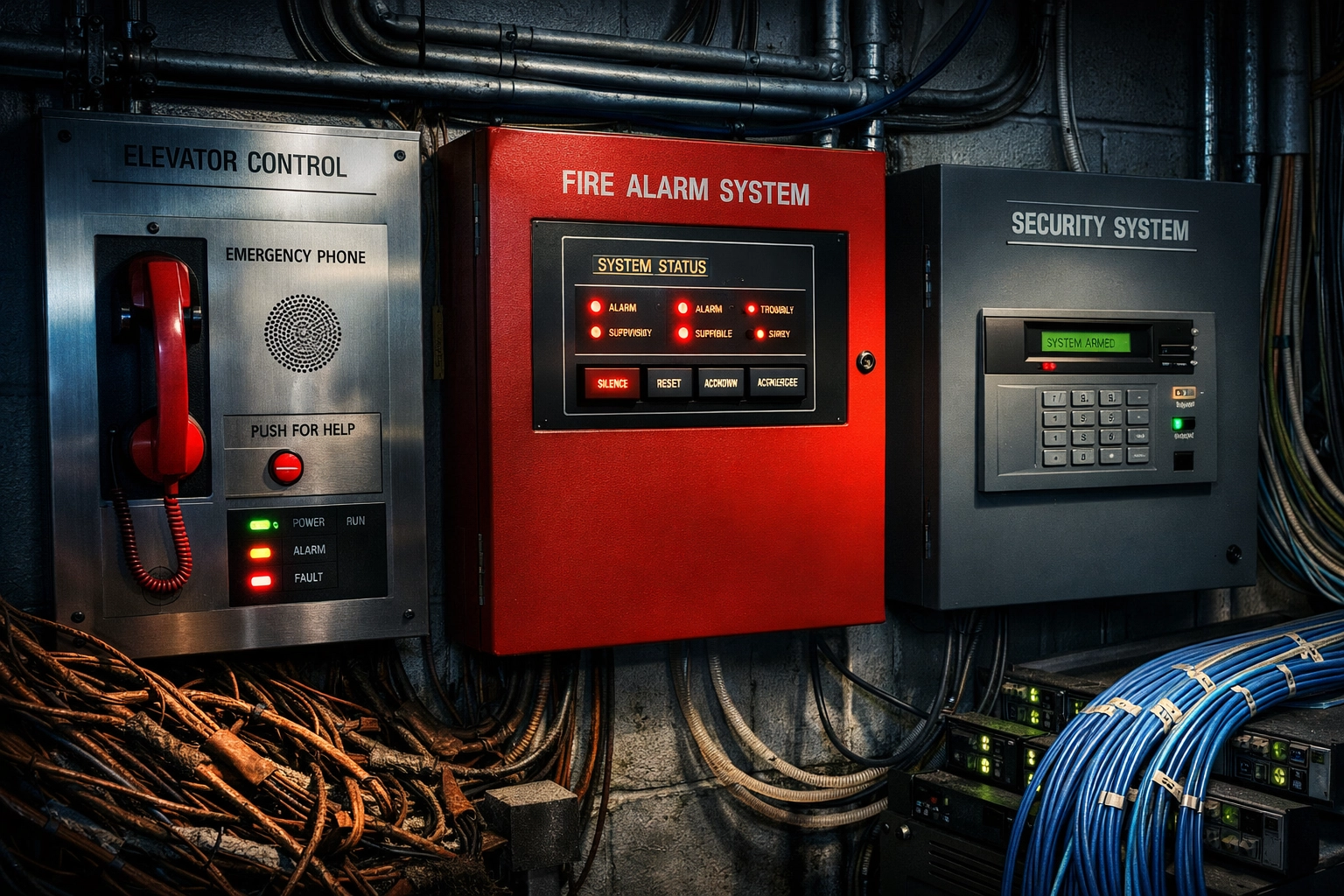
Here's the uncomfortable truth: there isn't a separate deadline for your elevator phones, fire alarms, and security systems. They're all riding the same sinking ship, the POTS (Plain Old Telephone Service) copper network that's being systematically decommissioned nationwide.
The real question isn't "which deadline hits first?" It's "which failure are you willing to risk?"
Let's break down the actual timeline, the priority matrix you should be using, and why some property managers are about to learn very expensive lessons about life safety compliance.
The Copper Sunset Timeline: No Special Treatment Here
If you've been banking on different retirement schedules for different critical systems, we've got bad news. AT&T issued a grandfathering notice on October 15, 2025, covering all wire centers across 18 states and halting acceptance of new POTS and specialty line orders. That deadline has already passed.
The next major domino falls in June 2026, when AT&T begins decommissioning copper facilities in approximately 500 wire centers, roughly 10% of their national footprint. Other major carriers are following similar timelines between now and 2029.

Here's what makes this particularly gnarly: your elevator phones, fire alarm lines, and security systems are all treated the same by the carriers. They don't care that one is life-critical and another is just convenience. When the copper network in your area gets sunset, everything goes dark simultaneously.
But consequences? Those are wildly different depending on which system fails.
The Life Safety Priority Matrix: What Keeps You Out of Jail
Let's be blunt about the hierarchy of "oh crap" moments when these systems go down:
Priority 1: Fire Alarm Phone Line Replacement (The Non-Negotiable)
Fire alarm systems with phone line monitoring fall under life safety codes that carry serious legal weight. We're talking:
- NFPA 72 compliance requirements for monitored fire alarm systems
- State and local fire marshal enforcement with inspection authority
- Potential criminal liability if a fire alarm failure contributes to injury or death
- Insurance policy violations that could void coverage after an incident
When your fire alarm phone line goes down, you're not just risking a fine, you're risking lives and your entire business. Property managers have faced felony charges when fire safety systems failed during emergencies.
Failure consequence: Immediate life safety violation, potential criminal charges, complete insurance invalidation.
Priority 2: Elevator Phone Line Replacement (The Legal Minefield)
Elevator emergency phones are mandated by the ASME A17.1 Safety Code and enforced through state elevator inspections. The consequences stack up fast:
- Failed elevator inspections that shut down service until resolved
- ADA compliance violations (federal law, not just state codes)
- Liability exposure if someone gets trapped and can't call for help
- Daily fines in many jurisdictions for operating elevators without functional emergency phones
An elderly resident trapped for hours in a broken elevator because the emergency phone didn't work? That's a lawsuit with your name on it, plus regulatory penalties.
We've covered the complete elevator phone replacement process in detail, but the priority here is clear: this is immediate safety infrastructure.
Failure consequence: Building code violations, ADA non-compliance, massive liability exposure, elevator shutdowns.

Priority 3: Security System Migration (The Insurance Problem)
Security systems and door entry phones are critical for property protection, but they don't carry the same immediate life safety weight. That said:
- Insurance requirements often mandate monitored security systems
- Premium increases or coverage denial if security systems are non-functional
- Tenant lease obligations might specifically promise working security systems
- Property value impact when security infrastructure is outdated or non-functional
Failure consequence: Insurance complications, tenant disputes, property security gaps, but typically not life safety violations.
Priority 4: Fax Lines and Legacy Systems (The Inconvenience)
Medical offices still faxing patient records. Law firms with fax-dependent workflows. Property management companies receiving maintenance requests by fax in 2026 (yes, they exist).
These are business continuity issues, not safety issues. Annoying? Absolutely. Going to land you in court? Probably not.
Failure consequence: Workflow disruption, customer complaints, operational inefficiency.
Why Some Systems "Fail" Before the Official Deadline
Here's where it gets technical, and frankly, where a lot of property managers get caught off guard.
Even if your area isn't scheduled for copper decommissioning until 2027 or 2028, your critical systems might start failing months or even years earlier. Why?
Maintenance Abandonment
Carriers are no longer maintaining copper infrastructure in most markets. When a line goes down due to weather, vandalism, or simple degradation, repair times stretch from hours to weeks, or never.
Your elevator phone might be "technically connected" but haven't actually worked for six months because the carrier deprioritized the repair ticket.
Parts Scarcity
The specialized equipment that keeps copper networks running, switching gear, amplifiers, line cards, isn't being manufactured anymore. When something breaks, carriers are cannibalizing parts from other decommissioned networks. Eventually, they run out.
Quality Degradation
As copper networks age without maintenance, line quality degrades. Fire alarm panels start throwing communication errors. Elevator phones develop static that makes them unusable. Security systems lose connection randomly.
You're paying for service, but you're not getting reliable service.

The Geographic Wildcard: Your Location Matters More Than Your System Type
Remember when we said the deadline is the same for all systems? That's true within a specific wire center. But the retirement schedule is rolling out geographically, and that creates some weird situations.
AT&T's June 2026 decommissioning targets approximately 500 wire centers, but which ones? The carrier has been frustratingly vague about publishing complete lists.
Property managers in some areas might have until 2028. Others might discover they're in a June 2026 wire center and have less than four months to migrate all their critical systems.
Pro tip: Don't wait to find out. Contact your carrier NOW and ask specifically about your wire center's retirement schedule. If they can't (or won't) give you a clear answer, assume you're in the early retirement group and plan accordingly.
The Migration Strategy: What Actually Works
You've got three basic options for replacing these copper-dependent systems:
1. Cellular Backup Solutions
Modern elevator phones and fire alarm communicators can use LTE cellular connections instead of traditional phone lines. Reliable, widely deployed, but subject to cell tower coverage issues in some buildings.
2. VoIP Over Broadband
Cloud-based business phone systems can handle emergency phones, but require robust network infrastructure with power backup and quality-of-service configurations to ensure reliability.
3. Dedicated Fiber Circuits
For large commercial properties with multiple critical systems, dedicated fiber connections provide the reliability and bandwidth to support everything from fire alarms to business internet connectivity.
The right solution depends on your property type, existing infrastructure, and budget, but waiting to decide is the worst strategy.
FAQ: Which Phone Lines Need to Be Replaced First?
Q: Are fire alarm phone lines and elevator phone lines on different copper sunset schedules?
A: No. All POTS-dependent systems: fire alarms, elevator phones, security systems, and fax lines: are subject to the same carrier-wide copper retirement timeline. The difference is in the consequences of failure and regulatory requirements, not the decommissioning schedule.
Q: Which system should I replace first if I can't do them all at once?
A: Prioritize in this order: (1) Fire alarm monitoring lines, (2) Elevator emergency phones, (3) Security/access control systems, (4) Fax and other business systems. Life safety compliance always comes first.
Q: Can I wait until my carrier notifies me about copper retirement?
A: Technically yes, but practically no. Carriers are providing minimal notice periods (often just 90-180 days), and installation lead times for replacement systems can exceed that. Many properties are discovering their lines have degraded to unusable quality long before official retirement.
Q: How much time do I have to replace these systems?
A: It depends entirely on your geographic location and wire center. Some areas face June 2026 decommissioning (less than four months away), while others might have until 2028-2029. Contact your carrier immediately for your specific timeline.
Q: Will my insurance still cover me if my fire alarm system stops working due to copper retirement?
A: Most insurance policies require functional, monitored fire alarm systems. If your system fails due to copper line retirement and you haven't migrated to a replacement solution, you could face coverage denial or policy cancellation.
Don't Wait for the Deadline to Find You
The copper sunset isn't a single event: it's a rolling disaster that's hitting different properties at different times. But one thing is consistent: property managers who wait until they receive a disconnection notice are already too late.
The lead times for quality installations, the availability of qualified technicians, and the complexity of testing life safety systems all mean you need to start planning now, not when your elevator phone stops working.
Ready to build a migration plan that prioritizes life safety and keeps you compliant? Premier Business Team specializes in critical infrastructure transitions for commercial properties. We'll assess your current systems, identify your specific wire center timeline, and design a replacement strategy that keeps you operational: and legal.
Contact us today for a free copper sunset impact assessment and stop wondering which deadline will hit you first.
