

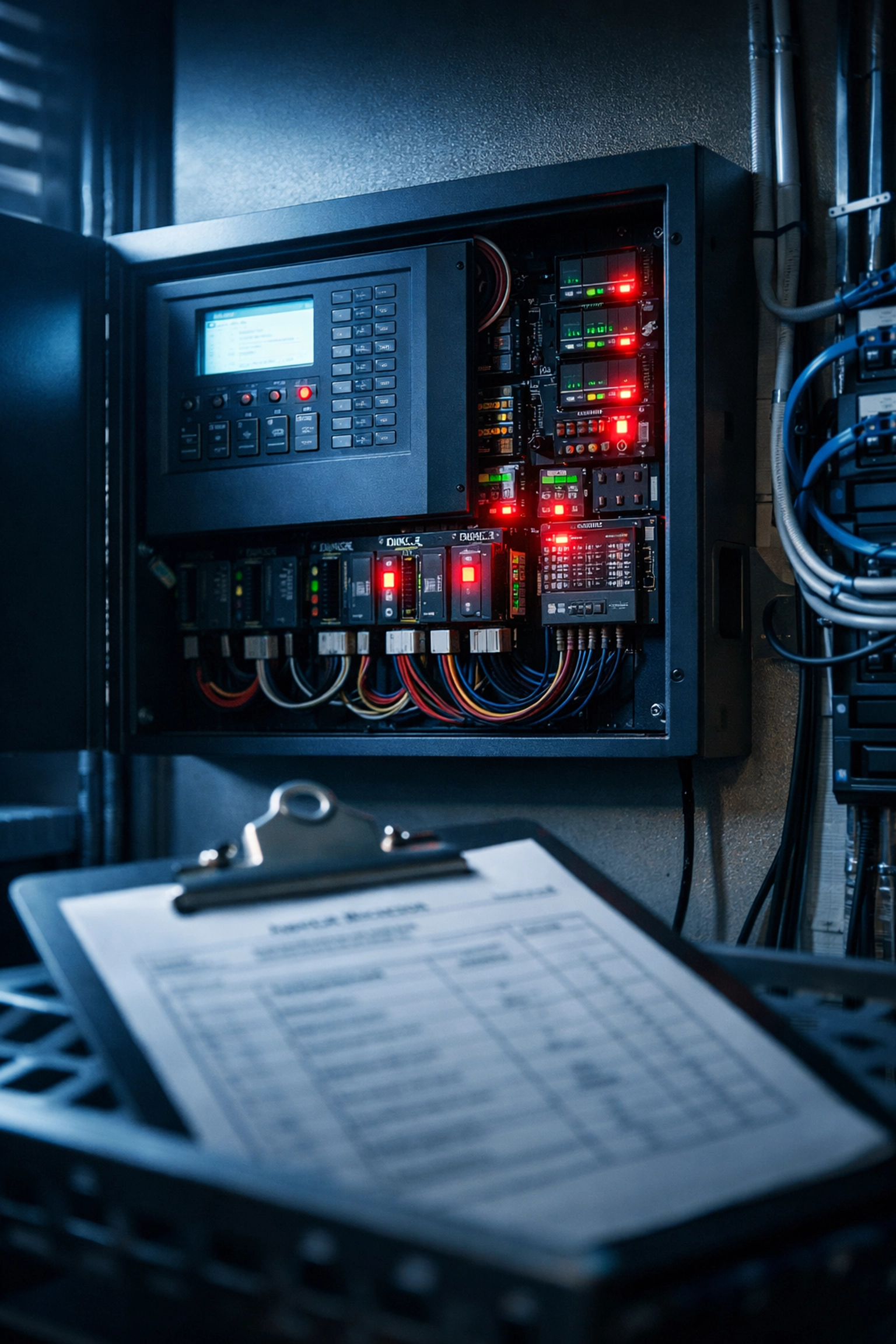
Here's the problem nobody talks about: You just switched your building's fire alarm phone lines from POTS to "VoIP" because your telecom provider told you it was compliant. Three months later, the fire marshal shows up for inspection and fails you.
Why? Because "VoIP" isn't a magic word that makes NFPA 72 compliance automatic. And that $50/month savings you thought you locked in just turned into a $15,000 emergency retrofit with potential fines on top.
Let's fix this. Here's what NFPA 72 inspectors actually test, why standard VoIP fails every time, and what fire alarm phone line replacement solutions actually pass inspection in 2026.
What NFPA 72 Actually Requires (The Part Your Vendor Skipped)
NFPA 72, the National Fire Alarm and Signaling Code, doesn't care what technology you use. It cares about performance guarantees.
The baseline requirement is simple: Your fire alarm system needs either two independent communication paths, or a single path with enhanced performance monitoring and testing capabilities.
Here's where it gets tricky. Prior to 2010, NFPA 72 mandated two dedicated POTS lines for commercial fire alarm systems. The second line could be non-dedicated or cellular, but the dual-line approach was non-negotiable. The problem? Both lines typically came from the same phone trunk in your building, which meant you had zero actual redundancy if that trunk failed.

The 2010 revision changed everything. It allowed cellular communicators to serve as the sole means of communication and opened the door to alternative technologies like VoIP. But, and this is critical, it came with a catch: single-path systems must verify communication integrity every 5 minutes (in the 2010 code) rather than the previous daily checks.
The 2013 edition refined this even further. If you're using a Digital Alarm Communicator Transmitter (DACT), you need one telephone line plus a second pathway using performance-based technology, one-way radio, or two-way radio. Test signal requirements dropped from 24-hour intervals to 6-hour intervals.
Translation: Your fire alarm system has to "phone home" to the monitoring center constantly to prove it's still alive. Miss a single check-in window, and you're out of compliance.
The VoIP Trap: Why Your "Compliant" Solution Isn't
So if NFPA 72-2010 explicitly approved VoIP and cable-based voice networks for fire alarm communications, why do inspectors keep failing buildings that use it?
Because standard business VoIP doesn't meet the performance requirements that NFPA 72 actually demands.
NFPA 72 requires that all voice providers, whether POTS, VoIP, or carrier pigeon, meet identical performance standards:
- Guaranteed carriage of alarm signals across the network
- Operation during power outages and disasters
- UL-listed equipment specific to fire alarm communication
- Redundant pathways or enhanced supervision intervals
Here's where standard VoIP falls apart:
No Battery Backup Guarantee
Your typical VoIP phone system relies on internet connectivity. That means powered equipment: routers, switches, modems. When the power goes out, your VoIP line dies unless you've got battery backup on every single piece of equipment in the chain, including your ISP's equipment outside your building (which you don't control).
POTS lines draw power directly from the phone company's central office. Fire alarm systems need this "dial tone reliability" because fires don't wait for your UPS to kick in.

Supervision Interval Failure
Standard VoIP providers don't guarantee that their service will send test signals to your monitoring center every 5-60 minutes. They don't even know what a "supervision interval" is. Their job is to route voice calls, not maintain life-safety system compliance.
If your VoIP line misses even one test signal window, your fire alarm panel throws a "communication failure" fault. That's an inspection fail and a potential code violation.
No Secondary Path Requirements
Even if you have VoIP "working," NFPA 72 wants proof of redundancy. A single VoIP line connected to your internet isn't redundant, it's a single point of failure. If your ISP has an outage, your building can't report a fire.
This is why property managers who switched to basic VoIP to "save money" after the POTS line sunset deadline are now scrambling to retrofit compliant solutions before their next fire inspection.
What Inspectors Actually Test (And How They Catch VoIP Shortcuts)
Fire marshals don't just look at your panel and say "looks good." They test functionality in real-time. Here's what they verify:
1. Communication Path Integrity and Redundancy
The inspector will disconnect your primary communication line and confirm that the secondary path takes over immediately. If you're running VoIP-only, there's no secondary path to test. Automatic fail.
2. Test Signal Frequency
They'll review your monitoring center logs to confirm that test signals are being received within the required timeframe, every 5 to 60 minutes depending on your NFPA 72 edition. If you're using standard VoIP without enhanced supervision, those logs won't show compliant intervals. Fail.
3. UL Listing Compliance
Every piece of equipment in your fire alarm communication chain must be UL-listed for its specific purpose. Your off-the-shelf VoIP adapter? Not UL-listed for fire alarm communication. Fail.

4. Battery Backup and Power Requirements
Inspectors will simulate a power outage and verify that your fire alarm system can still communicate with the monitoring center. If your VoIP line depends on powered internet equipment without adequate battery backup, your system goes silent. Fail.
5. Cellular or Alternative Communicator Documentation
If you've upgraded from POTS lines, you need a licensed contractor letter detailing the scope of work, installation date, and testing procedures per applicable NFPA 72 standards. No documentation? You guessed it, fail.
The Compliant Alternatives: POTS-in-a-Box and LTE/5G Solutions
So what actually works? Here are the fire alarm phone line replacement options that pass inspection:
Cellular Communicators (GSM/LTE)
These devices connect directly to your fire alarm panel and use cellular networks to communicate with your monitoring center. They're UL-listed, have built-in battery backup, and meet NFPA 72 supervision requirements out of the box.
Key advantages:
- No reliance on internet or powered equipment
- Built-in redundancy (cellular network separate from your building's infrastructure)
- Automatic supervision intervals (every 5-60 minutes depending on model)
- Cost: Typically $100-$200/month vs. $300+ for dual POTS lines
POTS-in-a-Box Solutions
These are bridge devices that convert cellular or fiber connections into traditional analog phone line signals that your existing fire alarm panel understands. They mimic POTS line behavior while using modern infrastructure.
Key advantages:
- Works with legacy fire alarm panels (no panel replacement needed)
- UL-listed for fire alarm communication
- Battery backup included
- Maintains dial tone even during internet outages
5G Fixed Wireless with Enhanced Supervision
The newest option: 5G-based communicators designed specifically for life-safety systems. These offer higher reliability than LTE and lower latency for test signals.
Key advantages:
- Future-proof technology (won't be sunsetted like POTS)
- Extremely fast supervision intervals (sub-60-second check-ins possible)
- Built-in failover to LTE if 5G signal degrades
- Compatible with modern UCaaS phone systems for integrated building communications
The bottom line: You need a solution specifically designed for fire alarm communication, not just "a phone line." That means UL listing, battery backup, enhanced supervision, and either dual-path redundancy or performance-based single-path compliance.
Frequently Asked Questions About NFPA 72 Phone Line Requirements
Q: Can I use my building's existing VoIP phone system for fire alarm communication?
A: Not unless it's a UL-listed VoIP system specifically designed for fire alarm communication with guaranteed battery backup, supervision intervals, and performance monitoring. Standard business VoIP systems don't meet these requirements.
Q: What supervision interval does my fire alarm system need to meet NFPA 72 compliance?
A: It depends on your NFPA 72 edition and communication method. Single-path systems typically need 5-minute supervision (2010 code) or 60-minute supervision (2013+ editions). Dual-path systems have more flexibility.
Q: Do cellular fire alarm communicators work during power outages?
A: Yes. Cellular communicators have built-in battery backup and don't rely on your building's internet or power infrastructure to function.
Q: How much does it cost to replace POTS fire alarm lines with compliant alternatives?
A: Equipment installation typically runs $1,500-$3,500 depending on your panel configuration, plus monthly service fees of $100-$200. You'll save money compared to maintaining dual POTS lines ($300+/month), but the upfront cost exists.
Q: What happens if my fire alarm communication fails during an inspection?
A: You'll receive a code violation notice and a deadline to bring the system into compliance (typically 30-90 days). Continued non-compliance can result in fines, insurance issues, or building occupancy restrictions.
Don't Wait for the Next Inspection to Find Out You're Non-Compliant
Here's the reality: The 2026 POTS line sunset is forcing building owners to make fire alarm phone line replacement decisions right now. And the wrong choice doesn't just cost money: it puts your building at risk and opens you up to liability.
If you're still running POTS lines or you've switched to a "VoIP solution" that your vendor promised was compliant, now is the time to verify that you'll actually pass your next NFPA 72 inspection.
Premier Business Team specializes in life-safety system communication infrastructure. We've helped hundreds of property managers, facility directors, and building owners navigate the transition from legacy POTS lines to fully compliant cellular and performance-based communication systems: without ripping out existing fire panels or failing inspections.
Get a free compliance assessment for your building's fire alarm communication system: we'll review your current setup, identify gaps, and provide a roadmap to NFPA 72 compliance that actually passes inspection.
Because the last thing you need is a fire marshal showing up with a red tag and a deadline.
