

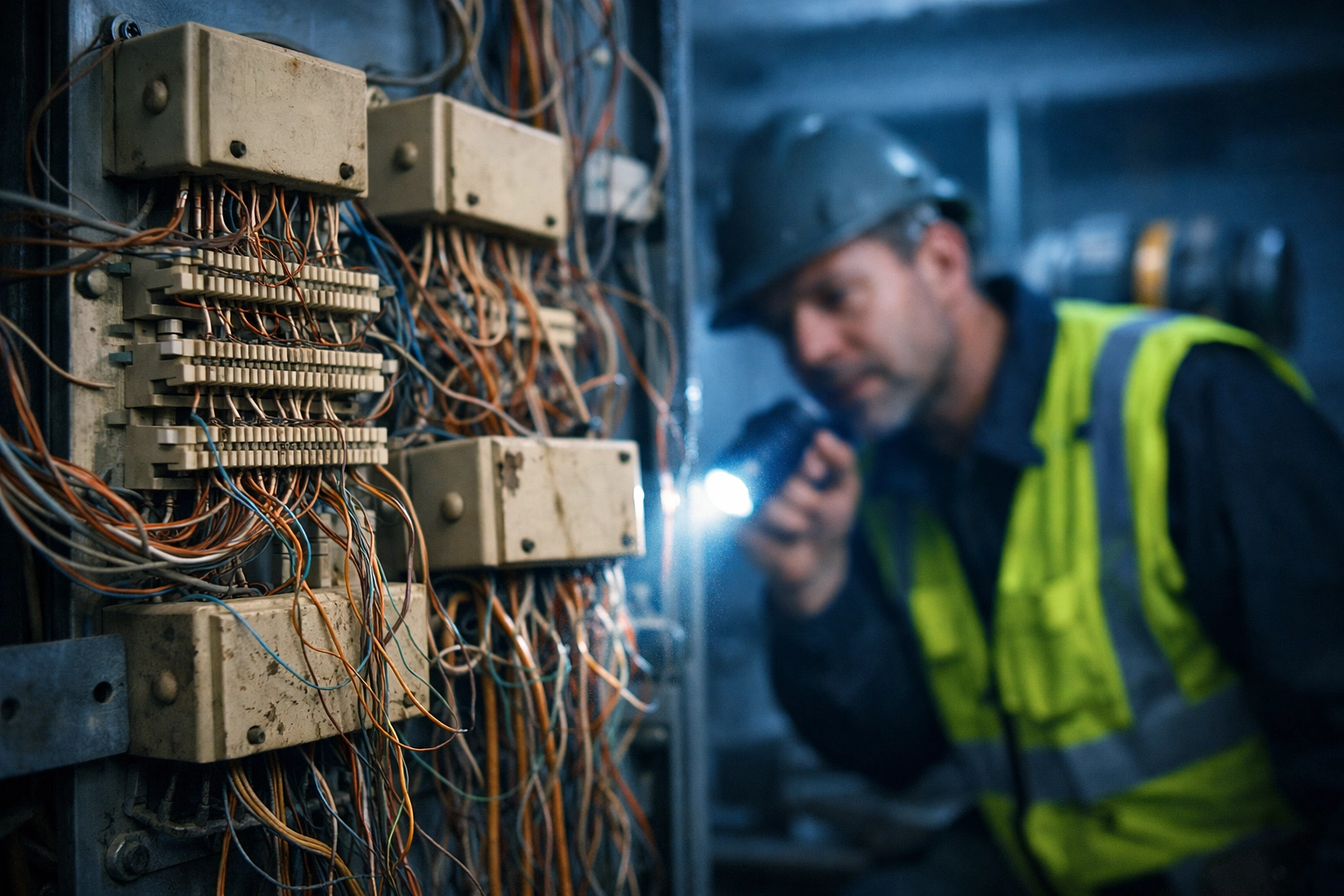
If you manage multiple buildings: whether it's retail locations, office parks, healthcare facilities, or industrial sites: there's a ticking clock you need to know about. AT&T has already received FCC approval to retire over 30% of its copper infrastructure, and by November 15, 2026, they'll begin disconnecting POTS (Plain Old Telephone Service) lines for approximately 90,000 customers across 18 states. By the end of 2029, copper services will be retired across the vast majority of AT&T's footprint.
Here's the problem: those copper lines aren't just supporting desk phones. They're powering your elevator emergency phones and fire alarm communication systems: the exact infrastructure that keeps your buildings compliant with NFPA 72, ASME A17.1, and local fire codes. If those lines go dark during an inspection, you're looking at failed compliance audits, fines, and potential liability issues.
The good news? You have time to get ahead of this: if you act now. Here's your 5-step roadmap to replace your elevator phone lines and fire suppression phone lines before the copper sunset catches you off guard.
Step 1: Audit All Your Emergency Phone Lines (Yes, Even the Ones You Forgot About)
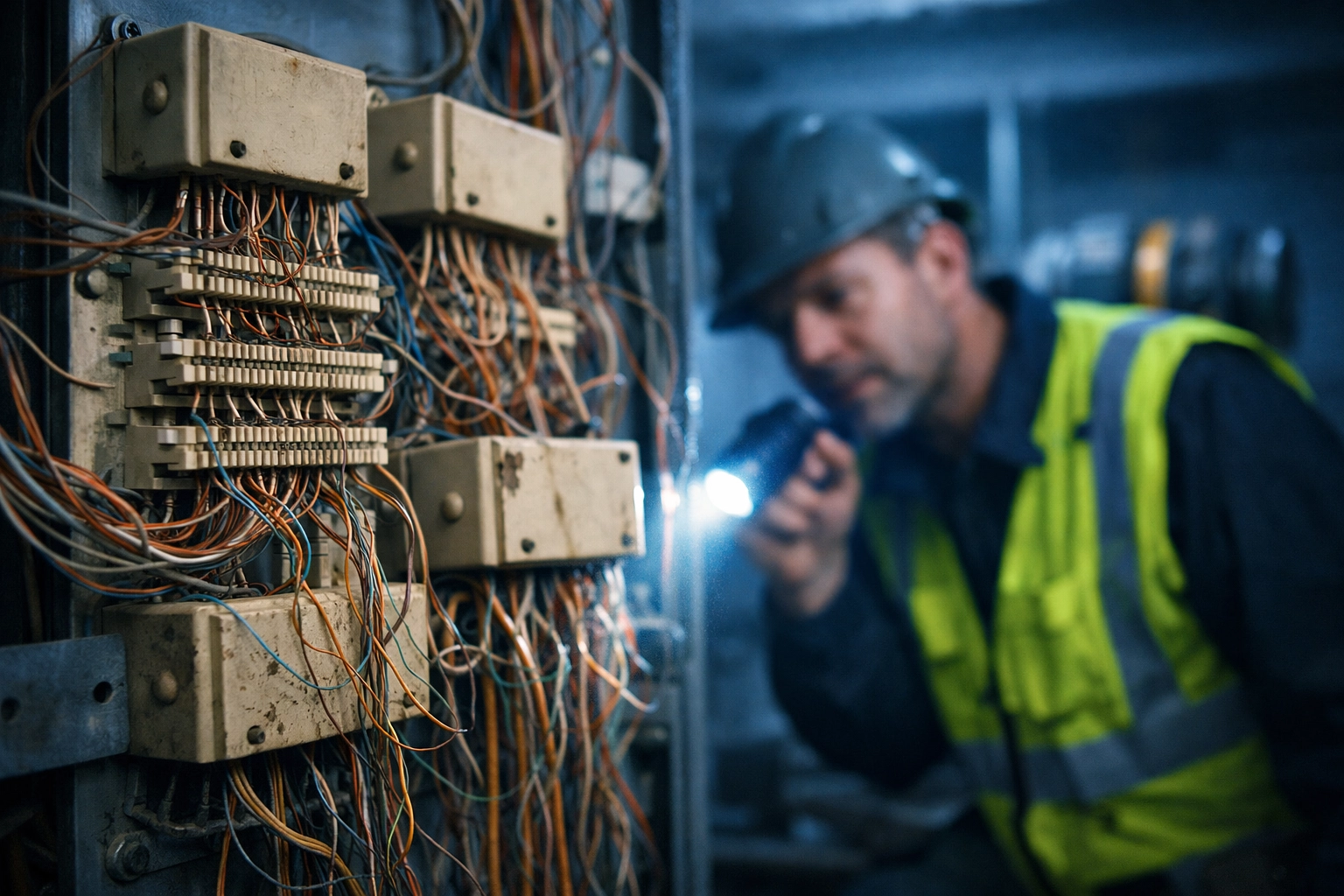
Most multi-site owners are sitting on more POTS lines than they realize. A recent audit of a national retail chain discovered 127 forgotten analog lines still billing at $50–$75/month per line. That's over $6,000/month in hidden costs: and every single one of those lines is at risk when copper gets shut down.
Here's how to find them all:
- Pull your telecom invoices from the last 12 months. Look for line items labeled "POTS," "analog," "copper," or even just random 10-digit phone numbers you don't recognize.
- Walk every property. Check elevator machine rooms, fire alarm control panels, and any equipment closets. Look for phone jacks connected to beige boxes or old-school punch-down blocks.
- Talk to your elevator maintenance company. They often have records of which lines are connected to elevator cabs and emergency phones.
- Check your fire alarm monitoring contract. Your alarm company should have a list of every phone line tied to fire panel reporting.
Create a spreadsheet with every line's phone number, location (building + room), purpose (elevator, fire alarm, door entry, etc.), and monthly cost. This is your baseline.
Step 2: Understand Compliance Requirements (So You Don't Fail Your Next Inspection)
Here's where a lot of people mess up: they assume any "phone line replacement" will work. It won't. Elevator phone line replacement and fire alarm phone line replacement have specific regulatory requirements that standard VoIP or cellular solutions might not meet.
Elevator Phone Lines (ASME A17.1)
Elevator emergency phones must provide two-way voice communication to an answering service or monitoring center. The line must be:
- Available 24/7
- Capable of connecting without dialing (auto-dial or push-to-talk)
- Supervised (monitored for line failure)
- Battery-backed in case of power outages
Fire Alarm Phone Lines (NFPA 72)
Fire alarm systems require a dedicated communication path to the central monitoring station. Key requirements:
- Primary and secondary (backup) communication paths
- Supervised transmission (the system knows if the line goes down)
- Annual testing and documentation
Bottom line: You can't just swap a POTS line for a basic VoIP connection and call it a day. You need a solution that meets or exceeds these standards: and that means working with vendors who understand life safety compliance.
Step 3: Choose the Right Replacement Technology (What Actually Works)
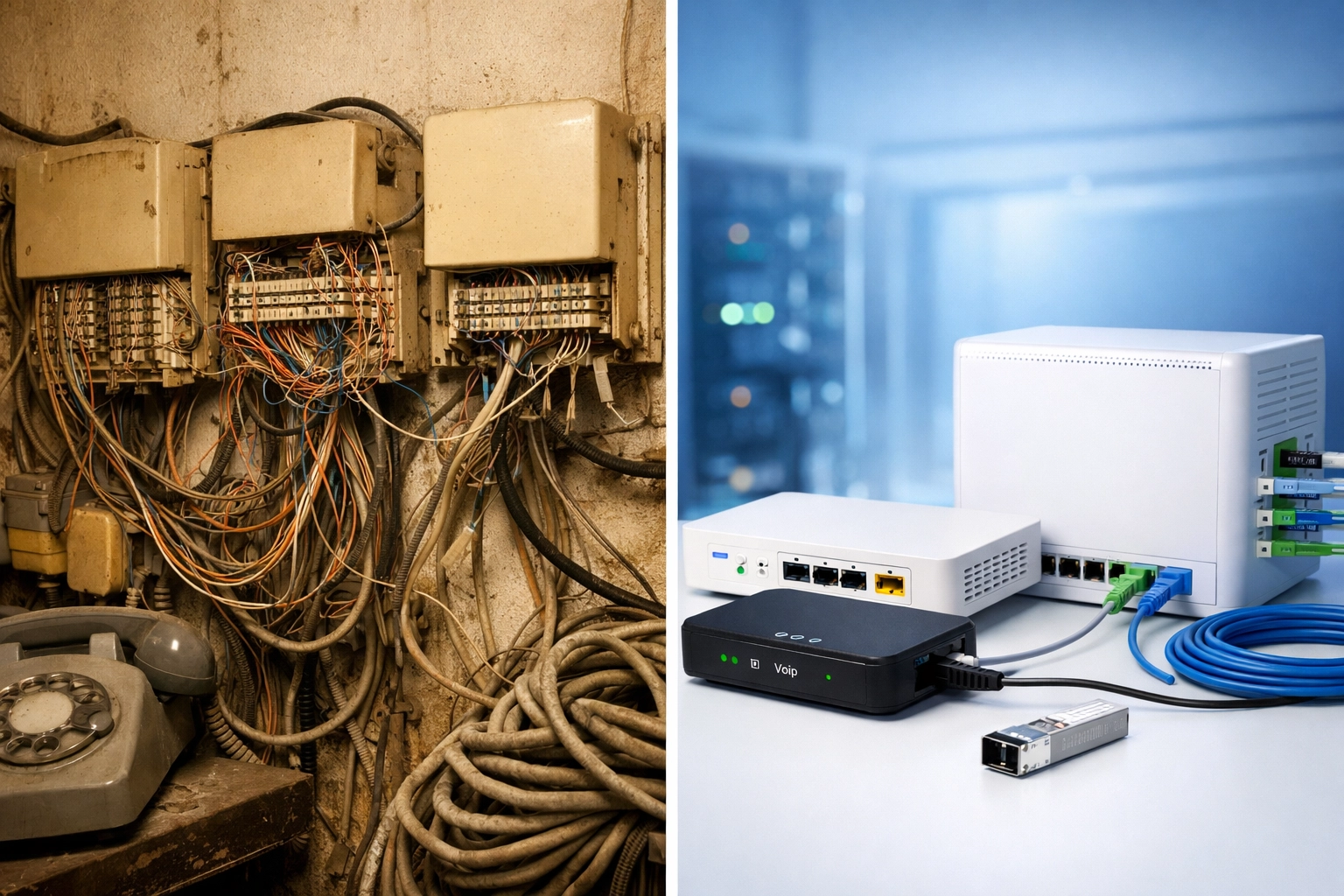
You've got three main options for replacing copper lines on elevators and fire systems. Each has pros, cons, and compliance considerations.
Option 1: Fiber-Based VoIP with Power Backup
If your building already has fiber internet, you can migrate to a managed VoIP solution that's designed for emergency services. Look for:
- QoS (Quality of Service) to prioritize emergency calls
- Battery backup on all network equipment (router, switch, VoIP ATA)
- 24/7 monitoring and auto-failover
- Compliance certification for ASME A17.1 and NFPA 72
Cost: $30–$60/month per line. Upfront equipment cost: $200–$500 per location.
Option 2: Fixed Wireless (LTE/5G)
AT&T and other carriers are offering fixed wireless as a POTS replacement. This uses cellular networks instead of copper.
Pros: No need for fiber. Works in remote locations.
Cons: Cellular coverage can be spotty in elevator machine rooms or basement fire panels. Battery backup is critical.
Cost: $50–$80/month per line.
Option 3: Dedicated Life Safety Networks (AES IntelliNet, RATH, Centrex)
If you have a large portfolio of buildings, consider a specialized life safety network designed specifically for elevators and fire alarms. These vendors provide:
- FCC-approved analog emulation (so your existing equipment doesn't need to change)
- Cellular + IP redundancy
- Full compliance documentation and inspection support
Cost: $40–$70/month per line, but includes monitoring and compliance reporting.
Our recommendation for multi-site owners: Go with a hybrid approach: fiber VoIP where you have it, fixed wireless where you don't, and always spec battery backup and supervision.
Step 4: Test Before You Migrate (And Then Test Again)
This is the step that gets skipped: and it's the one that causes failures during inspections.
Once you've chosen your replacement technology, do not disconnect your copper lines until you've completed full end-to-end testing. Here's your testing checklist:
- Call test: Pick up the elevator emergency phone or trigger the fire alarm. Does it connect to the monitoring center within 30 seconds?
- Supervision test: Unplug the replacement device. Does the monitoring center get an alert within 5 minutes?
- Power failure test: Kill power to the building (or just the telecom equipment). Does the battery backup keep the line active for at least 4 hours?
- Audio quality test: Can you hear clearly? Is there latency or echo? (This matters for elevator emergency phones.)
Document every test with date, time, results, and the name of the person who performed it. Your local AHJ (Authority Having Jurisdiction) may ask for this during your next fire or elevator inspection.
Step 5: Document Everything for Inspections (So You're Not Scrambling Later)
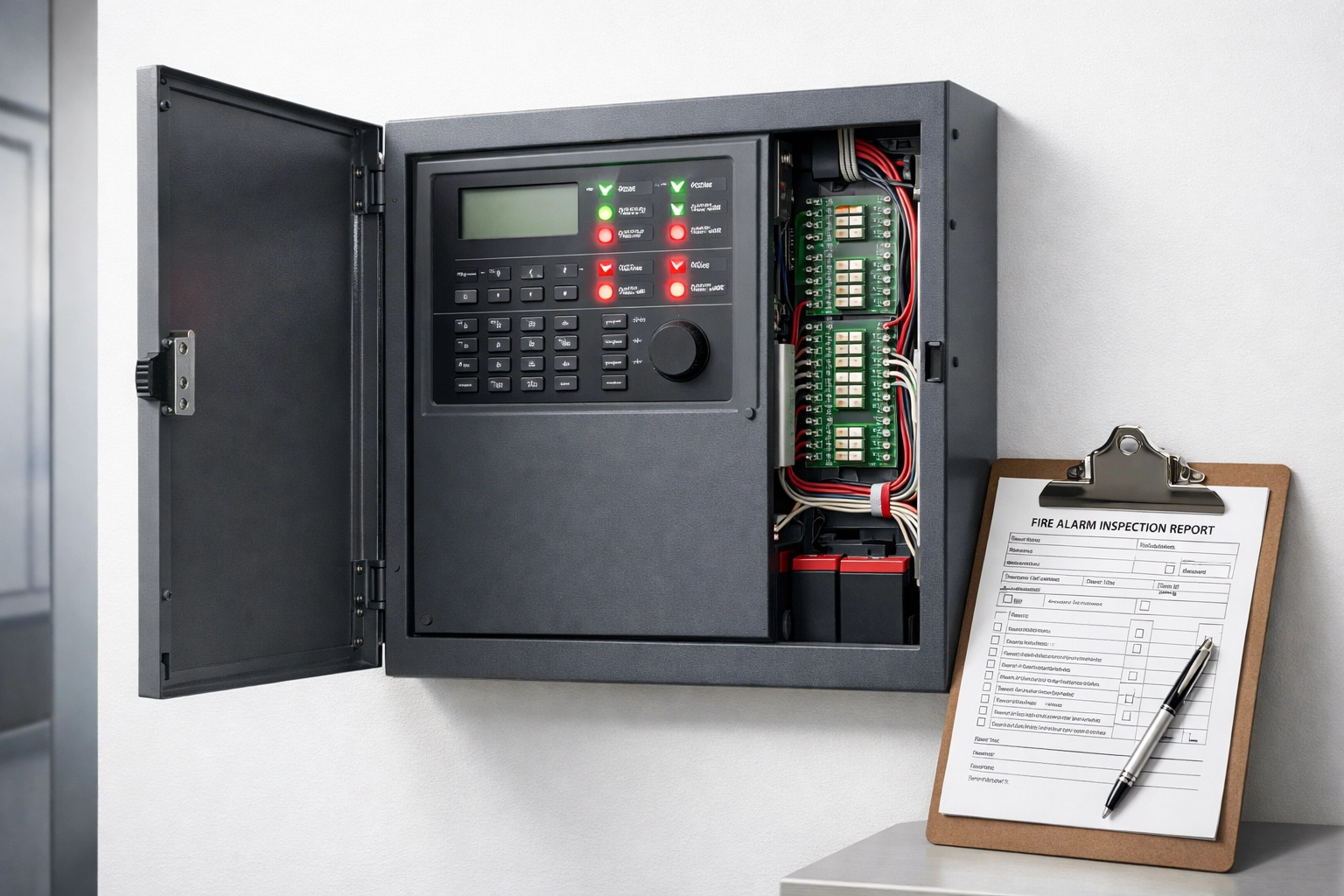
Inspectors don't care that "it works." They care that you can prove it works: and that it meets code.
Create a compliance binder (digital or physical) for each building that includes:
- Line inventory: Every emergency phone line, what it connects to, and the replacement technology used.
- Test records: Dated logs showing successful call tests, supervision tests, and power failure tests.
- Vendor certifications: Documentation from your POTS replacement vendor showing compliance with ASME A17.1, NFPA 72, or other relevant codes.
- Monitoring agreements: Copies of your elevator monitoring or fire alarm monitoring contracts showing 24/7 coverage.
- Equipment specs: Data sheets for VoIP adapters, cellular gateways, or battery backup systems.
When the inspector shows up, hand them the binder. You'll pass with flying colors.
Frequently Asked Questions (FAQ)
When is the copper sunset deadline?
AT&T begins disconnecting POTS lines on November 15, 2026, for select wire centers. Full copper retirement is expected by the end of 2029. Other carriers have similar timelines, so don't wait.
Can I use regular VoIP for elevator and fire alarm lines?
Not without modifications. Standard VoIP lacks the supervision, battery backup, and QoS required for life safety systems. You need a managed, life-safety-grade VoIP solution or a dedicated analog replacement service.
What happens if I don't replace my POTS lines?
Your carrier will either force you onto a more expensive "POTS preservation" service (often $150–$300/month per line) or disconnect the lines entirely. Either way, you're at risk for compliance failures and safety gaps.
How much does elevator phone line replacement cost?
Expect $30–$80/month per line depending on the technology, plus $200–$500 upfront for equipment. If you're managing 50+ buildings, a bulk contract can bring costs down significantly.
Do I need to replace fire alarm phone lines and elevator phone lines at the same time?
Not necessarily, but it makes sense to bundle the project. You'll save on vendor coordination, testing, and compliance documentation.
How long does the replacement process take?
For a single building, you can complete the migration in 1–2 weeks. For a multi-site portfolio, plan for 3–6 months to audit, test, and migrate everything. Start now if you want to beat the November 2026 deadline.
Don't Wait Until the Copper Gets Cut
The 2026 copper sunset isn't a "maybe": it's happening. And if you're managing multiple buildings with elevator phone lines or fire alarm phone lines, you need a plan before your carrier sends the disconnection notice.
The good news? You don't have to figure this out alone. Premier Business Team specializes in helping multi-site businesses navigate telecom transitions like this: from auditing hidden POTS lines to designing compliant, cost-effective replacement solutions. We handle the technical details, testing, and documentation so you can pass your next inspection without breaking a sweat.
Ready to future-proof your emergency communication systems? Contact Premier Business Team today for a free POTS line audit and compliance consultation. Let's get your buildings ready for 2026: and beyond.
