


You're paying for phone lines you didn't know existed. And you're not alone.
A recent telecommunications audit of a national retail chain with 43 locations uncovered something shocking: 127 active POTS (Plain Old Telephone Service) lines that nobody on the finance team knew they were paying for. The monthly bill? Just over $18,000 , or roughly $500+ per location.
These weren't customer-facing phone lines. They were the forgotten infrastructure powering elevator emergency phones, fire alarm panels, security systems, and fax machines that hadn't been used since 2019. In the age of cloud phone systems and fiber internet, these analog relics were silently draining the company's budget while providing zero operational value.
If your business operates multiple locations , whether you're managing auto dealerships, retail franchises, medical offices, or industrial facilities , there's a very real chance you're hemorrhaging money on hidden POTS lines right now.
Here's how it happens, what it costs, and how to fix it before Copper Sunset 2026 forces your hand.
The Anatomy of a $500/Month Mistake
Let's break down what happened during that 43-location audit. The retail chain assumed they had modernized their entire telecom infrastructure back in 2021. They'd migrated to a unified cloud phone system, consolidated internet circuits, and centralized IT management across all stores.
But nobody checked the back-of-house equipment.

When auditors pulled telecom invoices and cross-referenced them with physical site surveys, they found:
- 47 elevator emergency phone lines ($4,700/month at $100/line)
- 31 fire alarm monitoring lines ($3,100/month at $100/line)
- 22 security system backup lines ($2,200/month at $100/line)
- 18 legacy fax lines (inactive but still billed at $90/line = $1,620/month)
- 9 forgotten "manager hotlines" from a discontinued promotion ($810/month)
Total monthly waste: $12,430. Annual waste: $149,160.
And those are 2023 rates. In 2026, with carriers accelerating Copper Sunset pricing, those same lines now average $120–$150 per month. Some businesses are seeing POTS line costs as high as $300–$600 per line depending on service area.
Why POTS Lines Hide in Plain Sight
Here's the thing: these lines aren't mistakes. They were installed for legitimate safety and compliance reasons. Fire codes require monitored alarm connections. Elevator regulations demand emergency communication systems. Security providers spec'd dedicated analog lines because they're "reliable."
The problem? Nobody owns them.
Your IT department doesn't manage fire alarms. Your facilities team doesn't track telecom bills. Your finance department just pays the invoices without questioning line-item charges for "misc. phone services" at locations 17, 23, and 34.
These lines exist in a no-man's-land between departments, locations, and vendors. They were installed by third-party contractors (elevator companies, alarm installers, security firms) who never communicated with your telecom team. And because they "just work," nobody thinks about them until an audit forces the issue.
Meanwhile, your telecom carrier is thrilled to keep billing you. Especially now that copper infrastructure is being decommissioned and POTS replacement pricing is skyrocketing.
The Copper Sunset 2026 Problem
If you haven't heard the term yet, you will: Copper Sunset 2026.
Major telecom carriers (AT&T, Verizon, Lumen, Frontier) are systematically retiring their legacy copper networks in favor of fiber and wireless infrastructure. This isn't optional , copper wire is expensive to maintain, technically obsolete, and unprofitable.
For businesses still using POTS lines, this means:
- Dramatic price increases (some lines have jumped 200–400% since 2020)
- Service discontinuation notices forcing emergency migrations
- Regulatory compliance headaches when fire marshals or building inspectors ask why your alarm panel isn't communicating
The longer you wait to audit and replace these lines, the more expensive and chaotic the transition becomes.
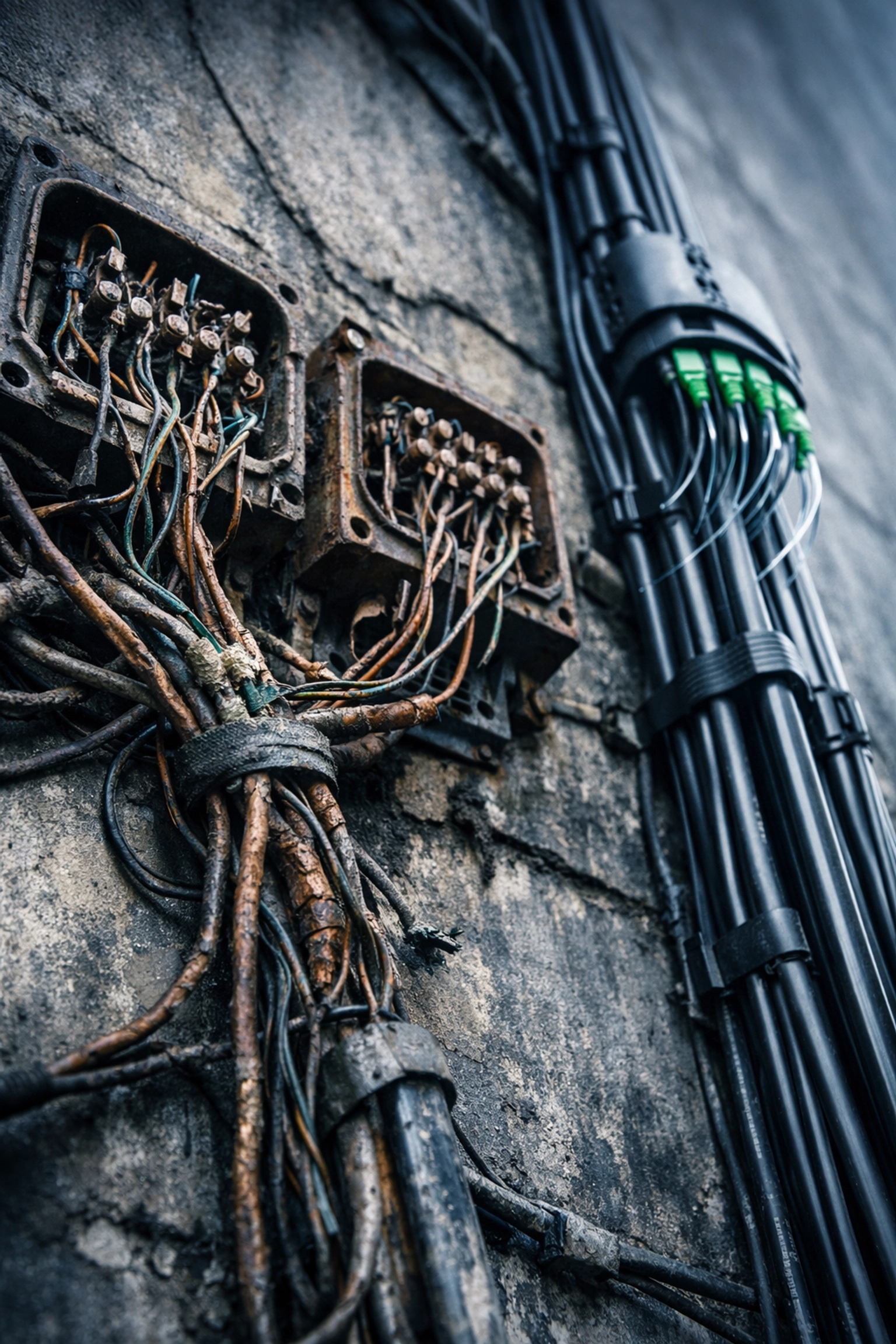
Where Hidden POTS Lines Are Hiding
If you manage multiple locations, here's where to look:
Elevator Emergency Phones
Every elevator is required by code to have an emergency communication device. Older systems use dedicated POTS lines. You're probably paying $100–$150/month per elevator.
Fire Alarm Monitoring Panels
Fire alarm systems must communicate with central monitoring stations. Many still use POTS lines instead of cellular or IP-based solutions.
Security System Backup Lines
Even if your main security system is IP-based, many installers spec'd a "backup" analog line "just in case." Those backups add up fast.
Fax Machines (Yes, Really)
Healthcare, legal, and finance industries often maintain fax capability for compliance reasons. Those standalone fax machines? Usually POTS lines nobody remembers authorizing.
Doorbell/Intercom Systems
Older commercial buildings use analog phone lines for entry systems and intercoms. They're often billed separately from your main telecom account.
Credit Card Terminals
Some legacy point-of-sale systems still use dial-up connections. Even if you've upgraded, the old line might still be active.
ATM Machines
If your business operates ATMs, they likely have dedicated phone lines for transaction processing and monitoring.
How to Conduct Your Own Multi-Location POTS Audit
You don't need to hire an expensive consultant. Here's how to do it yourself:
Step 1: Pull 12 Months of Telecom Invoices
Gather bills from every carrier and service provider. Include local phone companies, security monitoring services, and any vendor that might bill "communication fees."
Step 2: Identify Every Line-Item Charge
Look for terms like "POTS," "analog line," "copper circuit," "local service," or specific 10-digit phone numbers you don't recognize.
Step 3: Cross-Reference with Location Managers
Send your location managers a list of phone numbers and ask: "Do you know what this line does? Is it still needed?"
Step 4: Conduct Physical Site Surveys
Visit each location and physically trace lines. Check elevator machine rooms, alarm panels, back offices, and storage closets for active equipment.
Step 5: Test Disconnection
For non-critical lines (like old fax machines), request a temporary service suspension. If nobody complains in 30 days, cancel permanently.
Step 6: Map Replacement Options
For lines you do need (fire alarms, elevators), research modern alternatives like cellular backup, fiber-based alarm monitoring, or POTS replacement solutions.
The Modern POTS Replacement Strategy
Once you've identified your hidden lines, here's how to replace them without breaking compliance or safety regulations:
For Elevator Phones: Cellular-based emergency phone systems that meet ASME A17.1 code requirements. No copper line needed.
For Fire Alarms: IP-based or cellular fire alarm communicators approved by NFPA 72. Most modern panels support dual-path monitoring (cellular + internet).
For Security Systems: Transition to managed IP security with 4G/5G cellular backup. Faster alerts, better reliability, lower cost.
For Fax: Cloud fax services or eFax solutions that integrate with your existing business phone system infrastructure.
The key is working with a telecom partner who understands both the technical requirements and the compliance landscape. You can't just "rip and replace" , you need solutions that satisfy building codes, insurance requirements, and fire marshal inspections.
Frequently Asked Questions
How much do POTS lines actually cost in 2026?
POTS line pricing varies by carrier and location, but most businesses pay between $100–$300 per line per month. Some rural or hard-to-serve areas see rates as high as $600/line due to copper sunset surcharges.
Can I just disconnect old POTS lines without replacing them?
Not if they serve life-safety or compliance functions. Elevator emergency phones, fire alarm monitoring, and security systems often have regulatory requirements that mandate active communication paths. Always verify code requirements before disconnecting.
What happens if my carrier discontinues copper service?
You'll receive a service discontinuation notice (typically 6–12 months advance warning) and be forced to migrate to an alternative solution. Waiting until the last minute usually means higher costs and limited options.
Are cellular backup solutions reliable enough for fire alarms?
Yes. Modern cellular communicators meet NFPA 72 standards and often provide more reliable monitoring than aging copper infrastructure. Most fire marshals prefer dual-path monitoring (cellular + internet) over single-path POTS.
How long does a multi-location POTS audit typically take?
For a 20–50 location portfolio, expect 4–6 weeks for a thorough audit including invoice review, site surveys, and replacement planning. Larger portfolios may take 2–3 months.
Stop the Bleeding (And Start Saving)
Here's the bottom line: every month you delay auditing your POTS infrastructure, you're potentially wasting hundreds (or thousands) of dollars on forgotten analog lines that serve no business purpose.
The retail chain that discovered 127 hidden lines? They replaced them with modern cellular and IP-based solutions and cut their monthly telecom spend by $11,200. That's $134,400 in annual savings : money that went straight back to their bottom line.
Your business deserves the same financial clarity.
Premier Business Team specializes in multi-location telecom audits, POTS replacement strategies, and copper sunset migration planning. We'll help you identify every hidden line, map compliant replacement options, and execute a migration plan that protects your budget and satisfies regulatory requirements.
Don't wait until your carrier forces your hand. Contact Premier Business Team today and let's find out how much you're really spending on forgotten phone lines.
Because $500/month adds up fast : and you've got better things to do with that money than subsidize obsolete copper infrastructure.
