


Artificial intelligence isn't just the future: it's reshaping how businesses operate right now. But here's the reality check: if your multi-location company is still running on yesterday's internet infrastructure, you're already falling behind. AI applications demand bandwidth, low latency, and consistent performance that traditional business internet setups simply can't deliver.
The gap between AI requirements and current business internet capabilities is widening fast. Companies that don't address these infrastructure limitations in 2026 will find themselves at a significant competitive disadvantage. Here are seven critical warning signs that your internet infrastructure can't support your AI ambitions.
Sign #1: Your Video Conferences Keep Breaking Up During AI-Powered Meetings
Modern AI-enhanced video conferencing tools like Zoom AI Companion, Microsoft Teams Premium with AI features, and Google Meet's live transcription require substantially more bandwidth than traditional video calls. These tools process real-time language translation, generate meeting summaries, and provide live captions: all while maintaining video quality.
If your team experiences choppy video, delayed audio, or frequent disconnections during AI-powered meetings across your locations, your upload speeds are likely insufficient. Most businesses underestimate upload bandwidth requirements, focusing primarily on download speeds.

What AI meetings actually need: While a standard video call might function on 2-3 Mbps upload per participant, AI-enhanced meetings can require 5-8 Mbps upload per participant to handle the additional data processing and real-time AI features without degradation.
Sign #2: Cloud-Based AI Tools Take Forever to Load Across Different Locations
When your sales team in Denver can access AI-powered CRM tools instantly, but your customer service team in Phoenix experiences 30-second loading delays, you're dealing with inconsistent internet infrastructure across locations.
AI applications like Salesforce Einstein, HubSpot's AI features, or custom machine learning dashboards require consistent, high-speed connections to function properly. These tools continuously sync data, process predictions, and update insights in real-time.
The hidden cost: Slow-loading AI tools don't just frustrate employees: they directly impact productivity. A customer service representative waiting 45 seconds for AI-powered sentiment analysis during a support call loses the opportunity to provide timely, personalized assistance.
Sign #3: Your Backup and Sync Systems Can't Handle AI-Generated Data Volumes
AI tools generate massive amounts of data. Marketing automation platforms create detailed behavioral profiles, AI-powered security systems log extensive threat analysis, and business intelligence tools process enormous datasets for predictive analytics.
If your automated backups are failing, taking hours longer than usual, or your cloud sync systems are constantly behind schedule across multiple locations, your internet infrastructure can't handle the data volume AI generates.

Real numbers: A mid-sized company using AI for customer insights, automated marketing, and predictive analytics can generate 10-50 TB of additional data monthly. Traditional business internet packages designed for email and basic cloud access simply aren't equipped for this volume.
Sign #4: Remote Workers Can't Access AI Applications Consistently
Your remote and hybrid workforce relies on consistent internet performance to access AI-powered productivity tools, collaborative platforms, and business applications. When remote employees report that ChatGPT integrations, AI writing assistants, or automated workflow tools work fine from the office but struggle from home or satellite locations, your business internet strategy needs updating.
The solution isn't just faster speeds: it's ensuring consistent, symmetrical bandwidth that supports AI applications regardless of location.
Sign #5: Your Customer-Facing AI Systems Experience Frequent Downtime
Nothing damages customer trust faster than AI-powered chatbots that frequently disconnect, recommendation engines that stop updating, or automated support systems that suddenly become unavailable. These customer-facing failures often trace back to insufficient internet infrastructure.
Customer-facing AI requires 99.9% uptime with minimal latency. If you're experiencing monthly outages or performance degradation that affects customer interactions, your internet infrastructure is the bottleneck.
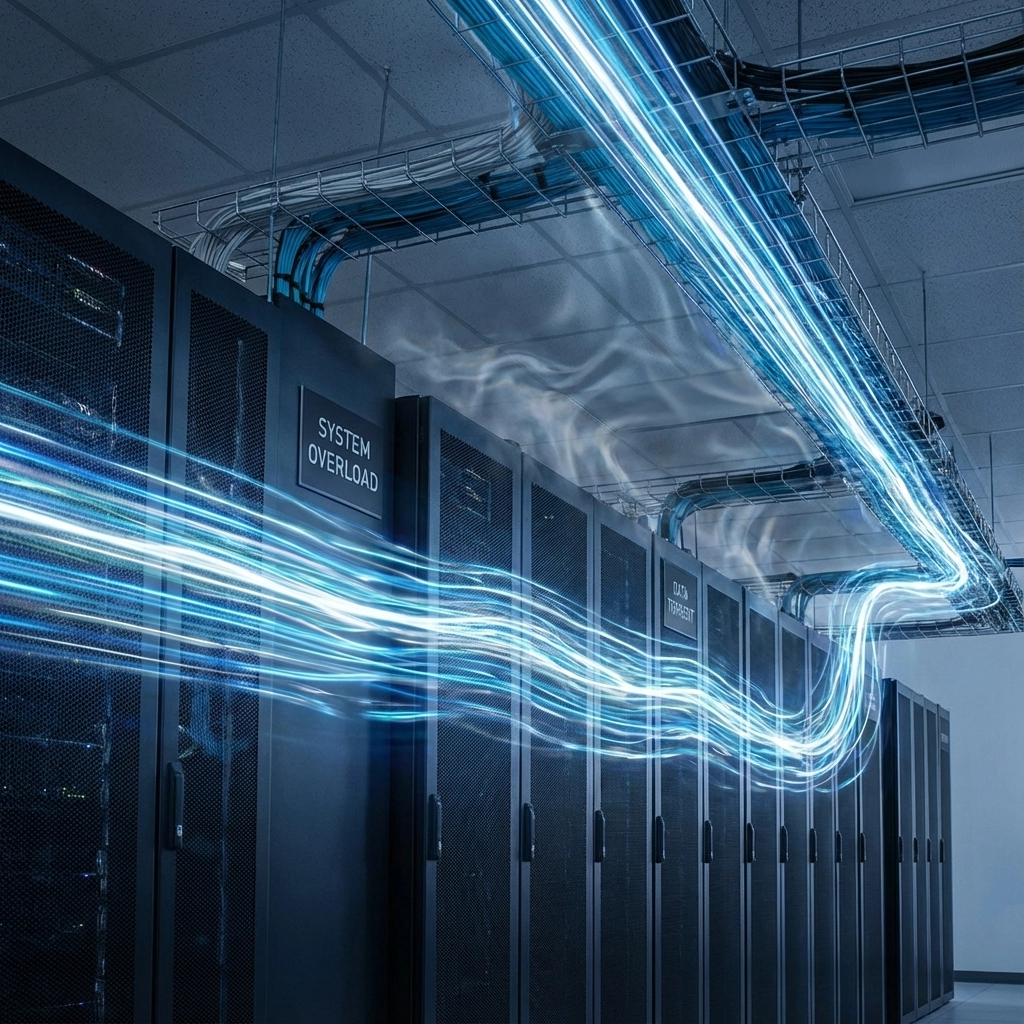
Business impact: A study by Aberdeen Group found that companies with reliable AI-powered customer service see 73% higher customer satisfaction scores compared to those with frequently interrupted AI services.
Sign #6: Multi-Location Data Processing Creates Network Bottlenecks
Modern AI requires seamless data sharing between locations. Whether you're running inventory predictions that need real-time data from multiple warehouses, customer analytics that aggregate information from all retail locations, or financial forecasting that combines data from regional offices, network bottlenecks kill AI effectiveness.
Signs of this problem include:
- Reports that take hours to generate instead of minutes
- AI insights that are hours or days behind real-time
- Inconsistent data accuracy between locations
- Failed automated processes during peak business hours
For SD-WAN solutions that can optimize AI traffic across multiple locations, Premier Business Team helps companies implement centralized control with optimized app performance and built-in resilience.
Sign #7: Your Internet Bills Are Skyrocketing Without Performance Improvements
Many companies try to solve AI infrastructure problems by simply purchasing more bandwidth from their existing provider without addressing underlying connectivity issues. If your internet costs have increased 40-60% over the past year but AI applications still struggle, you're throwing money at the wrong solution.
The issue isn't always bandwidth: it's connection type, reliability, and how traffic is managed across your network infrastructure.

The Real Solution: Future-Proofing Your Infrastructure for AI
Fiber is the foundation: Fiber connections provide the symmetrical speeds, low latency, and reliability that AI applications demand. While cable and DSL might handle basic business needs, AI workloads require the consistent performance that only fiber can deliver.
Bandwidth requirements for AI-ready businesses:
- Small offices with basic AI tools: 300-500 Mbps symmetrical
- Mid-size companies with multiple AI applications: 500 Mbps to 1 Gbps
- Large operations with comprehensive AI integration: 1 Gbps to 10 Gbps
SD-WAN for multi-location success: Software-defined networking provides centralized control, automatic failover, and optimized routing for AI traffic across all your locations. This ensures consistent performance whether your team is accessing AI tools from headquarters or a remote office.
Frequently Asked Questions
Q: How much bandwidth do AI applications really need?
A: It varies significantly by application. Basic AI writing assistants might need 10-20 Mbps, while comprehensive AI analytics platforms processing real-time data can require 100+ Mbps per concurrent user. The key is ensuring symmetrical speeds and consistent performance.
Q: Can we upgrade our current internet instead of switching providers?
A: Sometimes, yes. However, many traditional business internet packages aren't designed for AI workloads. If you're on cable or DSL, upgrading to fiber is often necessary for reliable AI performance.
Q: What's the difference between regular business internet and AI-ready infrastructure?
A: AI-ready infrastructure prioritizes symmetrical speeds, ultra-low latency, 99.9% uptime guarantees, and traffic management capabilities that can prioritize AI applications during peak usage.
Q: How do we calculate our actual AI bandwidth needs?
A: Audit your current and planned AI applications, count concurrent users, factor in data backup and sync requirements, then add 40-50% headroom for growth. Professional assessment is recommended for accurate planning.
Take Action Before AI Leaves You Behind
Don't let outdated internet infrastructure limit your company's AI potential in 2026. The businesses that invest in proper connectivity now will dominate their industries while competitors struggle with basic AI functionality.
At Premier Business Team, we specialize in designing internet infrastructure that supports current AI demands and scales for future innovations. Our team evaluates your multi-location requirements, recommends optimal solutions, and ensures seamless implementation across all your sites.
Ready to future-proof your business? Contact Premier Business Team today for a comprehensive AI infrastructure assessment. We'll identify exactly what your multi-location company needs to stay competitive in the AI-driven marketplace of 2026 and beyond.