

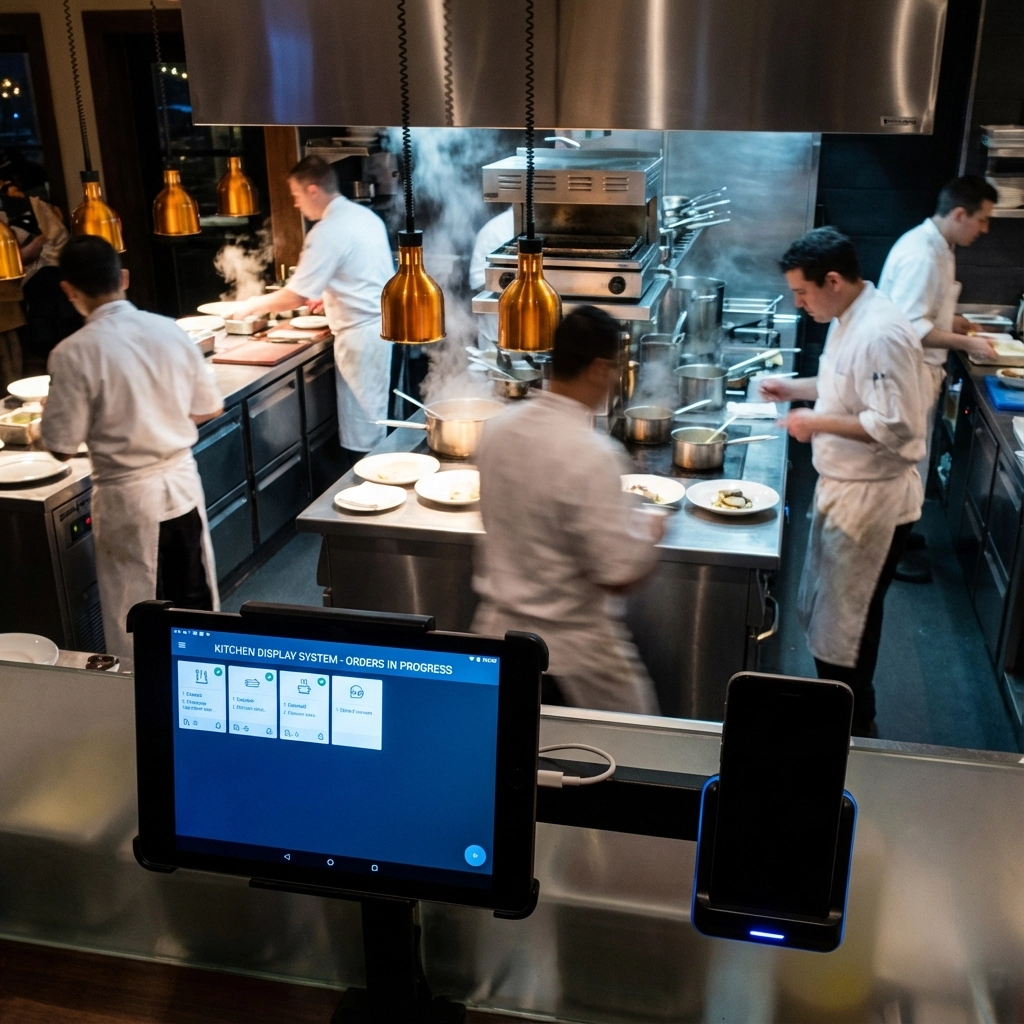
The restaurant industry is experiencing a massive shift in how businesses handle communications. While traditional on-premise phone systems once dominated kitchens and front-of-house operations, cloud-based solutions are rapidly becoming the preferred choice for restaurant owners looking to streamline operations, reduce costs, and improve customer service.
This transformation isn't happening in a vacuum. With 80% annual staff turnover rates and 45% of restaurant operators unable to fully staff their phones, the industry desperately needs communication solutions that can adapt to these realities while maintaining exceptional customer service standards.
Understanding the Restaurant Communication Challenge
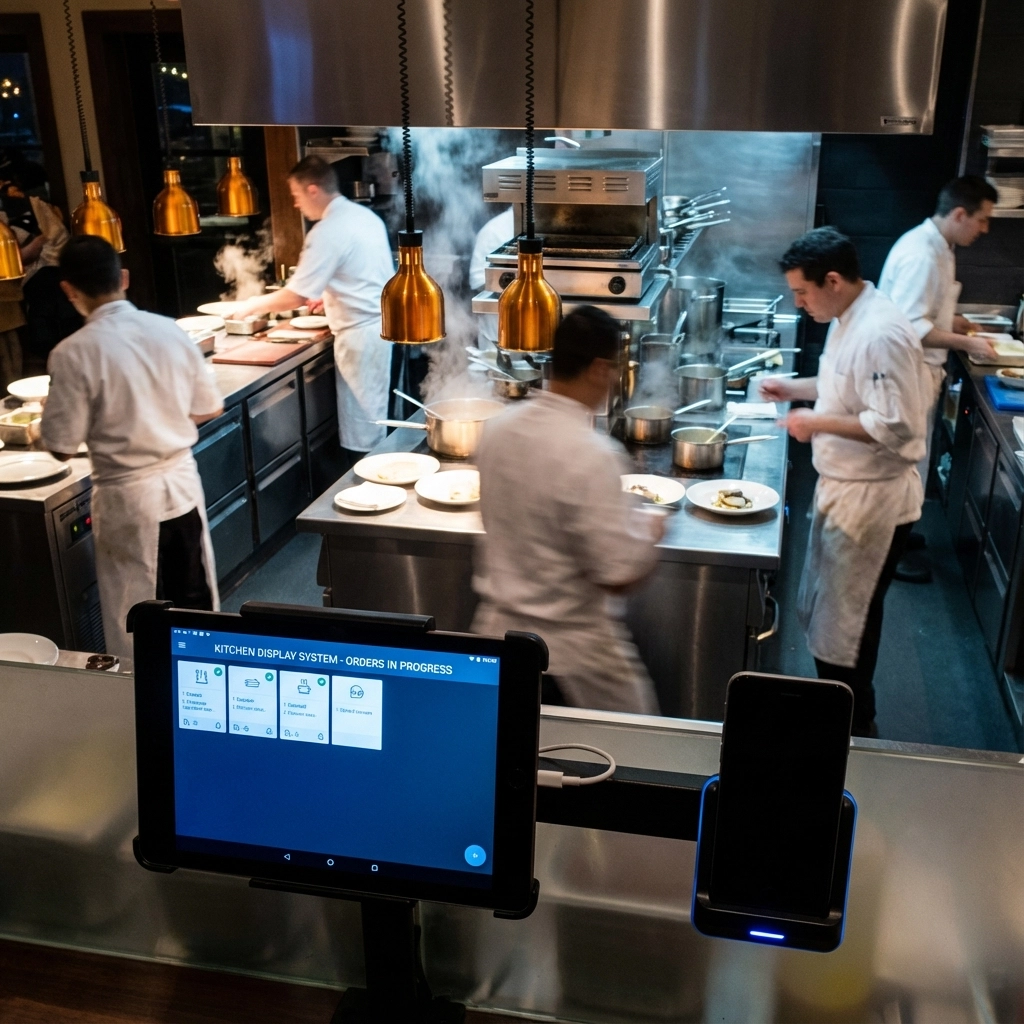
Restaurant communication systems face unique pressures that most other industries simply don't encounter. During peak dining hours, phone lines can become overwhelmed with reservation requests, takeout orders, and customer inquiries. Traditional on-premise systems often buckle under this pressure, leading to busy signals, dropped calls, and frustrated customers.
The staffing crisis has made these challenges even more acute. When restaurants can't maintain consistent phone coverage, they lose revenue from missed orders and reservation opportunities. This is where the fundamental differences between cloud and on-premise systems become critical for business success.
Cloud Phone Systems: The New Standard
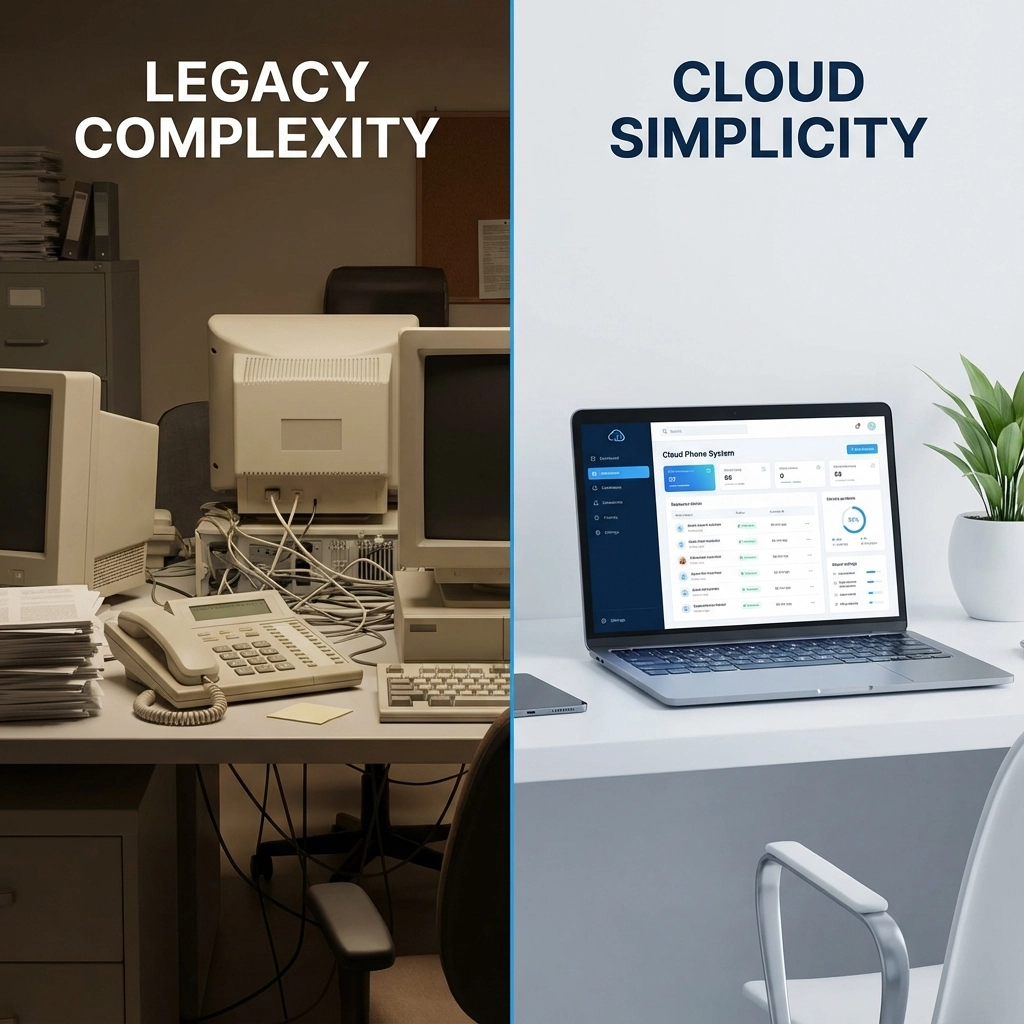
Cloud phone systems operate entirely through internet connectivity, eliminating the need for physical hardware on-site. Instead of investing in expensive PBX equipment, restaurants access their phone system through web-based interfaces and mobile applications.
Key advantages include:
- Instant Scalability: Add or remove phone lines during busy seasons without hardware changes
- Remote Access: Staff can handle calls from anywhere with internet access
- Integration Capabilities: Seamless connection with POS systems, reservation platforms, and delivery apps
- Predictable Costs: Monthly subscription model with no surprise maintenance fees
- Automatic Updates: Software improvements happen automatically without downtime
For restaurants operating on thin margins, these benefits translate directly into improved profitability and operational efficiency.
On-Premise Systems: The Traditional Approach
On-premise phone systems require significant upfront investment in physical equipment installed at the restaurant location. While these systems have served the industry for decades, they come with substantial limitations in today's fast-paced environment.
Traditional system characteristics:
- High Initial Costs: Thousands of dollars for equipment and professional installation
- Limited Flexibility: Adding lines requires new hardware and technician visits
- Location Dependency: Staff must be physically present to handle calls
- Maintenance Expenses: Regular service calls and equipment replacement costs
- Capacity Constraints: Fixed number of simultaneous calls regardless of demand
These limitations become particularly problematic during peak hours when restaurants need maximum communication capacity to handle customer demand effectively.
Why Restaurants Are Making the Switch
Peak Hour Management
Restaurant phone traffic follows predictable patterns, with massive spikes during lunch and dinner rushes. Cloud systems automatically scale to handle these surges without overwhelming the infrastructure. When call volume increases, the system seamlessly distributes calls across available staff members or routes overflow to designated team members working remotely.
Traditional systems simply can't match this flexibility. When all lines are busy, potential customers hear busy signals and often call competitors instead.
Staffing Flexibility Solutions
The restaurant industry's staffing challenges require creative solutions. Cloud phone systems enable restaurants to route calls to remote workers during understaffed periods. A restaurant manager working from home can handle reservation calls, while off-site staff can take delivery orders during peak times.
This distributed approach ensures consistent customer service even when in-house staffing falls short of ideal levels.
Integration with Restaurant Technology
Modern restaurants rely on sophisticated technology stacks including POS systems, reservation platforms, delivery apps, and customer relationship management tools. Cloud phone systems integrate seamlessly with these platforms, creating unified workflows that improve efficiency.
For example, when a customer calls to place an order, staff can access their previous order history through POS integration, process payment directly through the phone system, and automatically update inventory levels, all within a single interface.
Cost Optimization
Restaurant margins are notoriously tight, making cost control essential for profitability. Cloud systems eliminate large upfront capital expenses while providing predictable monthly costs that scale with business needs.
Consider a seasonal restaurant that operates with 10 phone lines during peak summer months but only needs 4 lines during winter. Cloud systems allow this flexibility without paying for unused capacity or investing in equipment that sits idle for months.
Real-World Performance Differences
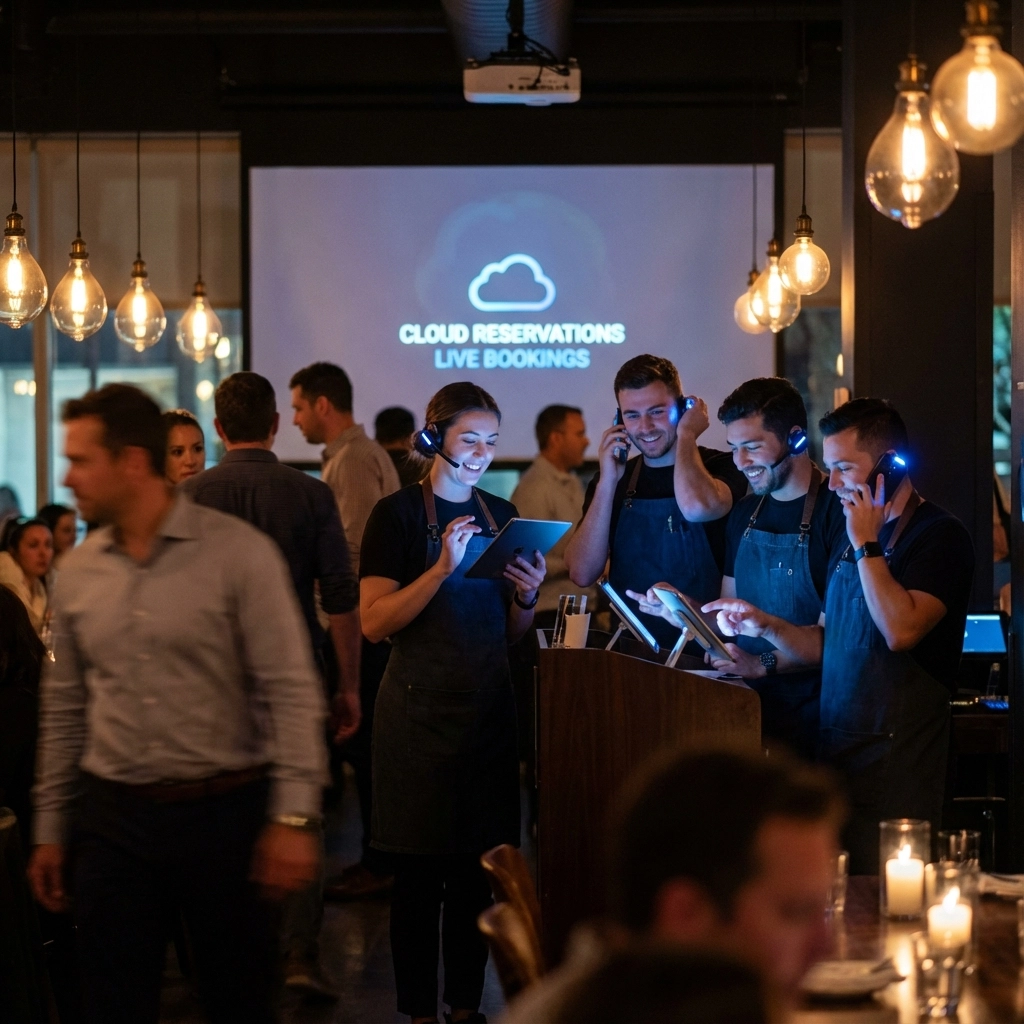
The performance gap between cloud and on-premise systems becomes most apparent during stress testing scenarios common in restaurant environments.
During Peak Hours:
- Cloud systems maintain call quality while automatically scaling capacity
- On-premise systems may experience busy signals and degraded voice quality
- Cloud analytics provide real-time insights into call patterns and staff performance
- Traditional systems offer limited visibility into communication metrics
During System Updates:
- Cloud systems update automatically during off-hours without downtime
- On-premise systems require scheduled maintenance windows that disrupt operations
- Cloud providers handle security patches and feature updates transparently
- Restaurant staff must coordinate with technicians for on-premise updates
During Emergencies:
- Cloud systems enable staff to redirect calls to mobile devices instantly
- On-premise systems may become completely inaccessible during power outages or equipment failures
- Cloud redundancy ensures continuous operation even during local internet issues
- Traditional systems create single points of failure that can shut down communication entirely
Implementation Considerations
Transitioning from on-premise to cloud systems requires careful planning, but the process has become significantly streamlined compared to traditional system installations.
Timeline Expectations:
- Cloud system deployment typically takes 2-3 days versus 1-2 weeks for on-premise installation
- Staff training requirements are minimal due to intuitive web-based interfaces
- Number porting and system integration can happen with minimal business disruption
Infrastructure Requirements:
- Reliable high-speed internet connection becomes critical for voice quality
- Staff devices (smartphones, tablets, computers) can serve as phone endpoints
- Backup internet connectivity provides redundancy for mission-critical communications
FAQ: Cloud vs On-Premise Restaurant Phone Systems
Q: Will cloud phone systems work during internet outages?
A: Most cloud providers offer call forwarding to mobile devices and backup connectivity options. Many restaurants also maintain backup internet connections specifically for business continuity.
Q: How quickly can we add phone lines during busy periods?
A: Cloud systems allow instant line additions through web portals, often taking effect within minutes. On-premise systems require hardware installation and technician visits.
Q: Can cloud systems integrate with our existing POS system?
A: Yes, most cloud phone providers offer extensive integration capabilities with popular restaurant POS platforms, reservation systems, and delivery applications.
Q: What about call quality compared to traditional landlines?
A: Modern cloud systems provide excellent call quality when paired with adequate internet bandwidth. Voice quality often exceeds traditional phone lines due to advanced audio processing capabilities.
Q: How do costs compare over a 5-year period?
A: Cloud systems typically cost 40-60% less than on-premise solutions when factoring in equipment, installation, maintenance, and upgrade expenses over five years.
Q: Can remote staff handle calls as effectively as on-site employees?
A: Cloud systems provide remote workers with the same features and capabilities as on-site staff, including access to customer databases, order systems, and call routing tools.
Ready to discover how cloud phone systems can transform your restaurant's communication capabilities and reduce operational costs? Contact Premier Business Team today to schedule a personalized consultation and learn about implementation options that fit your specific needs. Our telecommunications experts will analyze your current system and provide a detailed comparison showing potential savings and efficiency improvements for your restaurant operation.
