

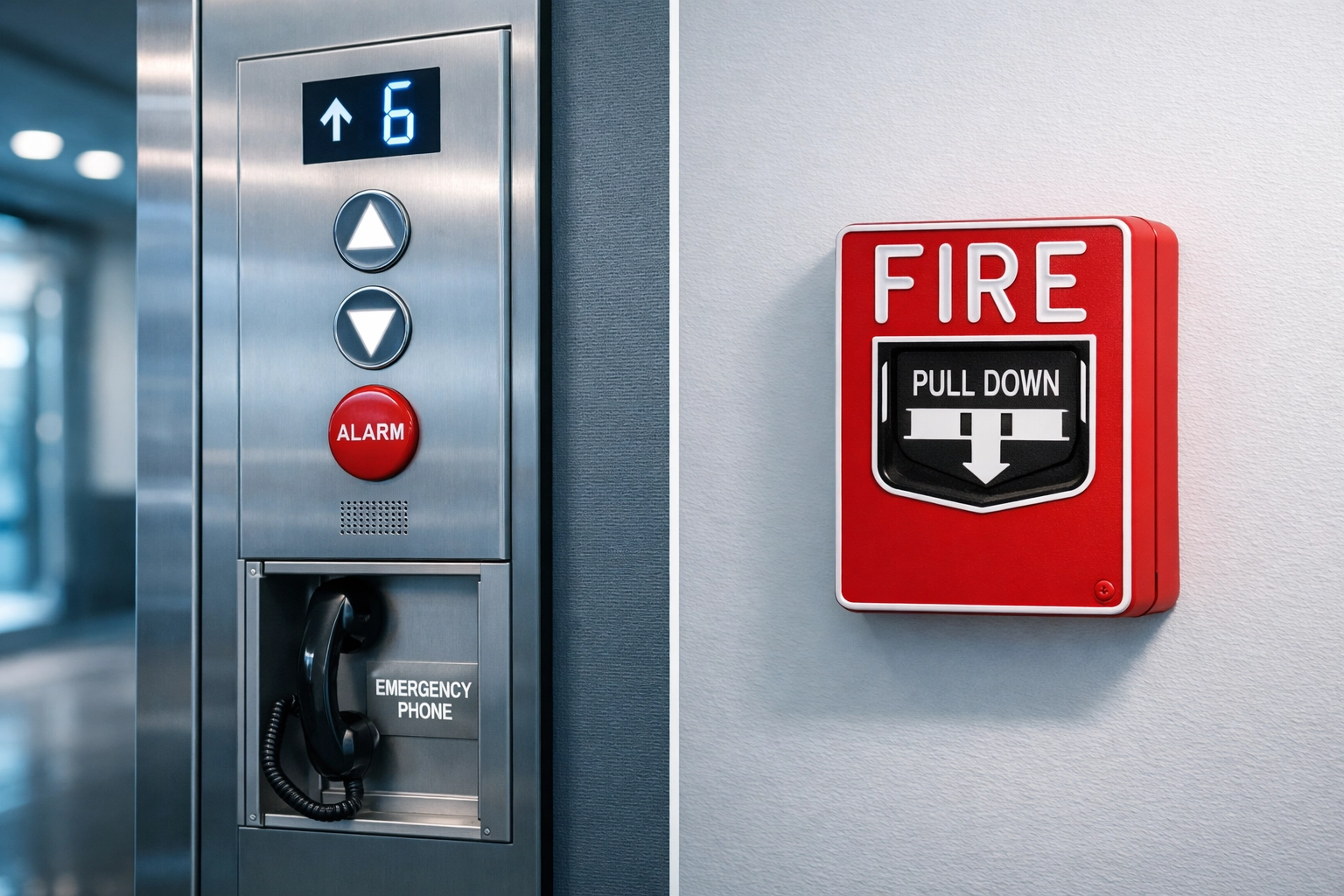
If you're managing multi-location properties with elevators and fire suppression systems, you've probably heard the whispers: copper sunset is coming, and NFPA 72 compliance just got stricter. But here's the million-dollar question nobody's answering clearly, which compliance mistake is going to hit your budget harder in 2026: botching your elevator phone line replacement, or getting your fire alarm line replacement wrong?
Spoiler alert: both can drain thousands per location if you don't get them right the first time. But the type of mistake, the regulatory body breathing down your neck, and the cost of fixing it later? Those variables change dramatically depending on which system we're talking about.
Let's break down the real costs, the hidden pitfalls, and what you need to know before inspection day rolls around.
Why 2026 Is the Year Everything Changes (Copper Sunset Deadline)
The 2026 copper sunset isn't just telecom industry jargon, it's a federally-backed transition away from legacy analog POTS (Plain Old Telephone Service) lines. Major carriers like AT&T, Verizon, and Lumen are phasing out copper infrastructure nationwide, forcing property owners to migrate elevator emergency phones and fire alarm monitoring circuits to modern alternatives like cellular, VoIP, or fiber-backed systems.
Here's the catch: you can't just swap in a VoIP adapter and call it a day. Both elevator phone systems (governed by ASME A17.1/CSA B44) and fire alarm monitoring circuits (governed by NFPA 72) have extremely specific requirements about uptime, monitoring, and failover. Get it wrong, and you're looking at failed inspections, fines, and potential liability if an emergency happens during downtime.
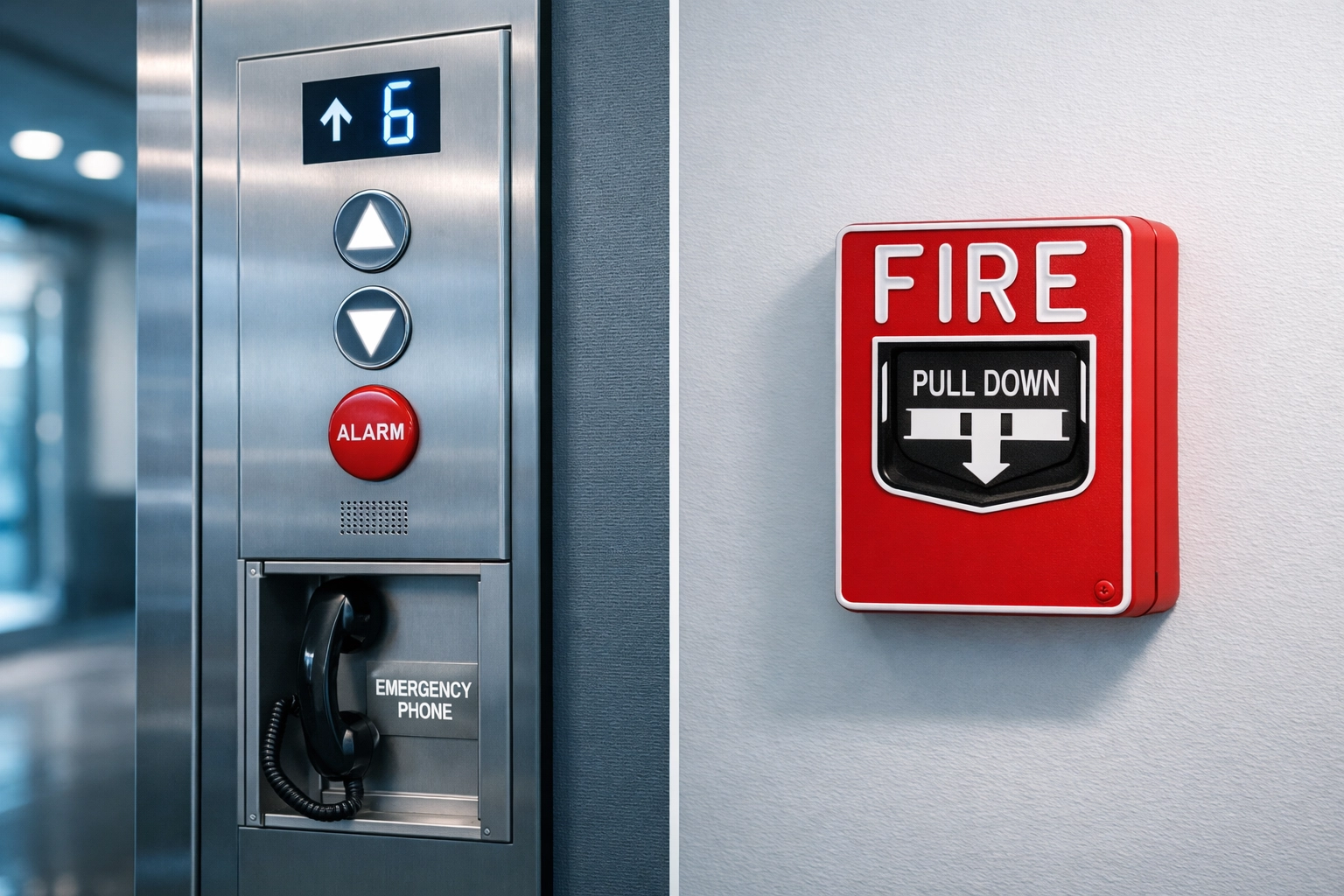
Elevator Phone Line Replacement: The Hidden Cost Traps
What the Code Actually Requires
Under ASME A17.1/CSA B44, every elevator cab must have a two-way communication device (usually a phone) that connects to a live, trained emergency response operator 24/7/365. Not an answering machine. Not a voicemail box. Not 911. A human being who can dispatch help and communicate with someone trapped in the elevator.
This means your replacement solution must include:
- Continuous monitoring service with a third-party provider
- Battery backup to maintain power during outages
- Instant call routing (no dial tone delays or dropped connections)
- Compliance with FCC Order 10-72a1, which phases out copper-dependent systems
The Mistakes That Cost You
Mistake #1: Assuming VoIP is "good enough."
Standard business VoIP systems rely on your internet connection and power grid. If your building loses power or your ISP goes down, your elevator phone is dead, and you've just failed your next inspection. You need a cellular failover or redundant power system, which adds $300–$600 per elevator per year in monitoring costs.
Mistake #2: Skipping the monitoring service.
The phone can't just dial 911. You're legally required to contract with an emergency dispatch service that answers 24/7. If you skip this step (or cancel it to "save money"), you're non-compliant immediately. Monitoring services typically cost $30–$50 per elevator per month, but that's cheaper than the $1,000+ fine most jurisdictions slap you with for a non-working elevator phone.
Mistake #3: DIY installation without code certification.
Some facility managers try to replace elevator phone systems in-house using off-the-shelf cellular devices. Problem: if your installer isn't certified by the elevator manufacturer or doesn't document compliance with ASME A17.1, your inspector will red-tag it. You'll pay twice, once for the DIY attempt, and again for a certified contractor to redo it properly.
Real-world cost: A botched elevator phone line replacement typically costs $1,500–$3,000 per elevator to fix after the fact, not including fines or liability exposure.
Fire Alarm Line Replacement: Where the Big Money Goes
What NFPA 72 Demands
Fire alarm monitoring circuits follow NFPA 72, which dictates how your fire panel communicates with the central monitoring station (CMS). The 2019 update to NFPA 72 also introduced stricter physical access requirements: Fire Alarm Initiating Devices (FAID) must now be accessible from outside the hoistway or mechanical room.
Your replacement solution must guarantee:
- Dual-path communication (primary and backup) to the CMS
- Signal supervision (the system must "check in" every few seconds)
- Tamper resistance and encrypted transmission (for cellular/IP-based systems)
- UL listing for all replacement hardware
The Mistakes That Wreck Your Budget
Mistake #1: Replacing only the "visible" alarm panel.
The fire alarm panel in your lobby isn't the only piece of hardware tied to a copper line. Many older buildings have remote dialer units, elevator recall modules, and sprinkler flow switches all daisy-chained to that one POTS line. If you replace the main panel but forget the hidden dialers, you'll fail your fire marshal inspection, and now you're paying an emergency contractor to hunt down every forgotten circuit. Budget impact: $5,000–$15,000 per building.
Mistake #2: Improper FAID placement during retrofit.
The 2019 NFPA 72 update requires Fire Alarm Initiating Devices to be reachable without calling in an elevator contractor or entering a dangerous space. If your retrofit ignores this rule, you'll be forced to relocate devices later, often requiring re-wiring, re-permitting, and re-inspection. The cost? $2,000–$8,000 per device, depending on how inaccessible the original placement was.
Mistake #3: Using non-UL-listed cellular communicators.
"Budget-friendly" cellular alarm communicators from Amazon or eBay might technically work, but if they're not UL-listed for fire alarm use, your fire marshal will reject them. You'll rip them out and start over with compliant hardware. This mistake alone wastes $1,000–$3,000 per site in duplicate equipment costs.
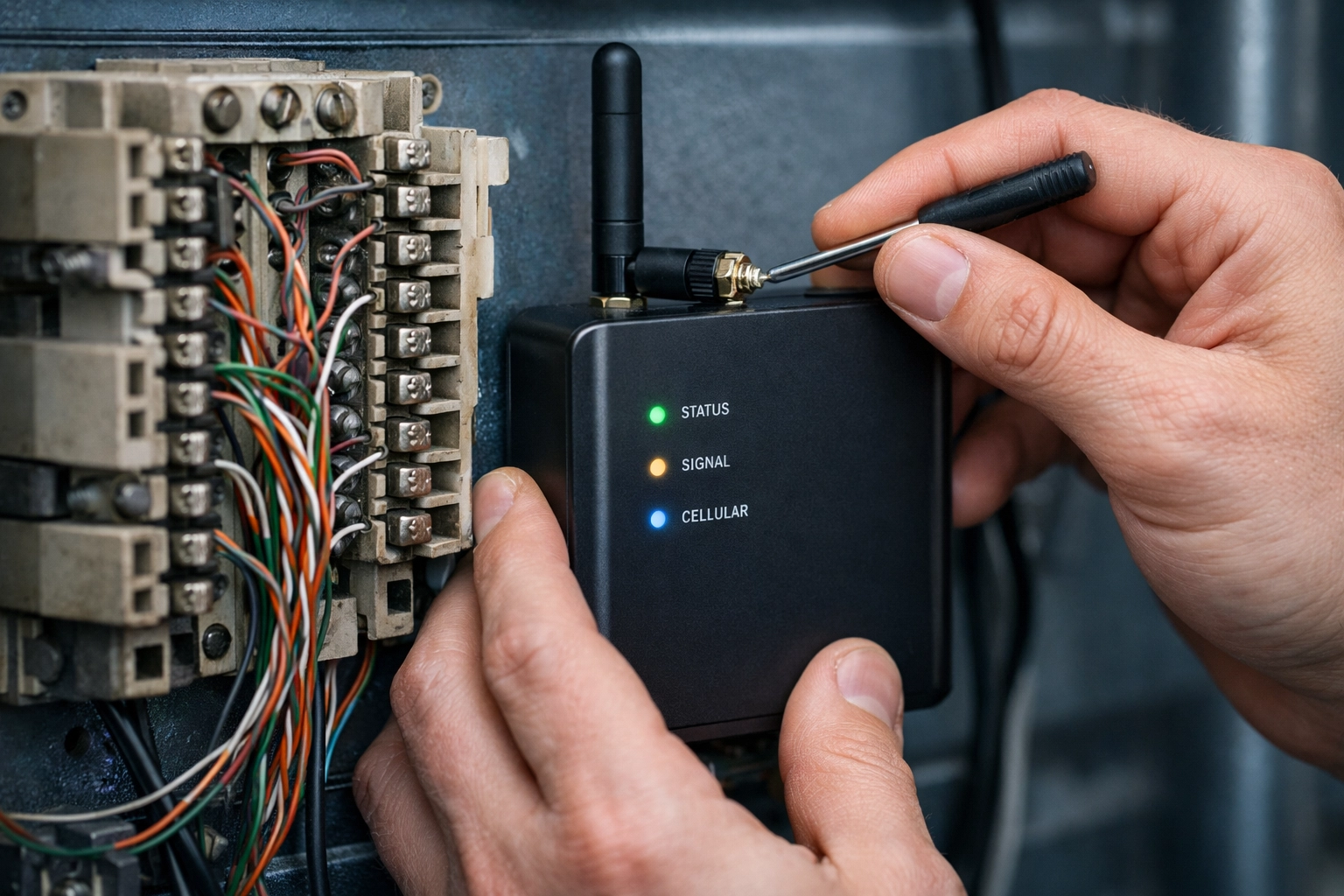
Which Compliance Mistake Actually Costs More?
Let's cut to the chase: fire alarm line replacement mistakes tend to be more expensive than elevator phone mistakes, but elevator mistakes carry higher liability risk.
Here's the breakdown:
| Mistake Type | Elevator Phone Lines | Fire Alarm Lines |
|---|---|---|
| Average Fix Cost (per site) | $1,500–$3,000 | $5,000–$15,000 |
| Inspection Failure Fine | $500–$1,000 | $1,000–$5,000+ |
| Liability Exposure | Very High (trapped occupants) | Extreme (delayed fire response) |
| Recurring Compliance Cost | $30–$50/month (monitoring) | $25–$75/month (dual-path CMS) |
| Retrofit Complexity | Low (single-cab installs) | High (multi-point, multi-floor) |
Bottom line: If you have 100+ locations, a screwed-up fire alarm migration can cost you $500,000–$1.5 million to remediate across your portfolio. A botched elevator phone replacement? Probably $150,000–$300,000, but you're also risking a wrongful death lawsuit if someone gets trapped during a system outage.
How to Get Both Replacements Right (Without Breaking the Bank)
The good news? You don't have to gamble on compliance. Here's the smart-money strategy:
- Audit every analog line in your portfolio. Don't assume you know where all the POTS lines are. Hidden alarm dialers, elevator recall modules, and legacy fax lines lurk everywhere.
- Work with a certified integrator who specializes in life-safety systems. This isn't the time to save $500 by hiring your nephew's IT friend.
- Prioritize dual-path solutions (cellular + IP) for both elevator phones and fire alarm panels. Redundancy is the only way to guarantee uptime.
- Document everything. Keep compliance certificates, monitoring contracts, and installation photos on file. Inspectors love paperwork, and you'll love having it when questions arise.
- Schedule replacements before the copper cutoff. Waiting until AT&T kills your line means you're at the mercy of emergency pricing and limited contractor availability.
Frequently Asked Questions (FAQ)
Q: Can I use the same cellular device for both my elevator phone and fire alarm panel?
A: In most cases, no. Elevator phones require dedicated two-way voice communication with a live operator, while fire alarm panels need supervised data transmission to a UL-listed Central Monitoring Station. You'll need separate, purpose-built devices for each system.
Q: What happens if I don't replace my copper lines before the 2026 deadline?
A: Your carrier will either force-migrate you to a more expensive "legacy" plan (often 300%+ price increases), or they'll simply disconnect service. Either way, you'll be scrambling to find a replacement solution while your systems are offline, and that's when contractors charge premium emergency rates.
Q: Do I need to replace elevator phones in freight elevators or service lifts?
A: Yes. ASME A17.1 applies to all elevators, including freight, service, and even some residential units in mixed-use buildings. Check with your local jurisdiction, but assume you need compliant two-way communication in every cab.
Q: Can I just upgrade my fire alarm panel's communicator, or do I need to replace the entire panel?
A: It depends on the age and compatibility of your existing panel. Many panels from the 2010s or later can accept modern cellular or IP communicators via a plug-in module. Panels from the 1990s–2000s often lack the right interfaces and may need full replacement. A licensed fire alarm contractor can assess your specific hardware.
Q: How long does a typical replacement project take for a multi-site portfolio?
A: Plan for 60–120 days per wave of sites, depending on contractor availability, permit timelines, and inspection scheduling. For a 100-location portfolio, a phased rollout over 12–18 months is realistic (and spreads out the capital expense).
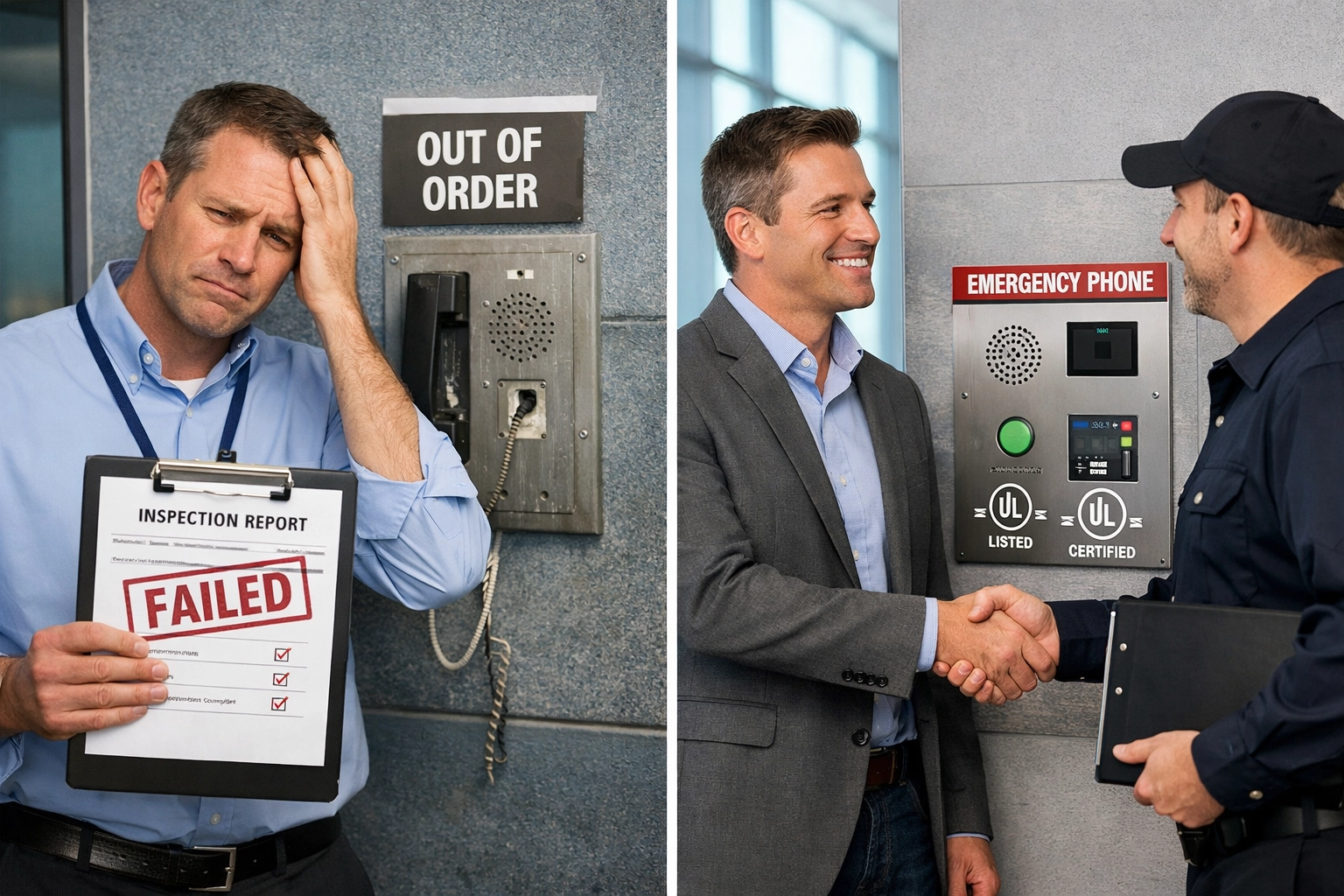
Don't Wait Until Inspection Day to Find Out You Failed
Here's the thing about life-safety compliance: you don't get a do-over. A failed elevator phone inspection means shutting down that elevator until it's fixed. A failed fire alarm inspection can mean evacuating tenants, halting operations, and dealing with extremely unhappy fire marshals.
The smartest move? Get ahead of the 2026 copper sunset now and replace both your elevator phone lines and fire alarm circuits with future-proof, compliant solutions. Whether you're managing a single high-rise or a nationwide portfolio, the cost of doing it right is always less than the cost of doing it twice.
Ready to audit your portfolio and lock in compliant POTS line replacement solutions before the copper cutoff? Premier Business Team specializes in life-safety system migrations for multi-site operators. We'll handle the tech, the compliance paperwork, and the vendor coordination so you can focus on running your properties: not chasing inspectors.
Contact Premier Business Team today for a free site assessment and see exactly what your elevator and fire alarm migrations will cost before the deadline hits.
