

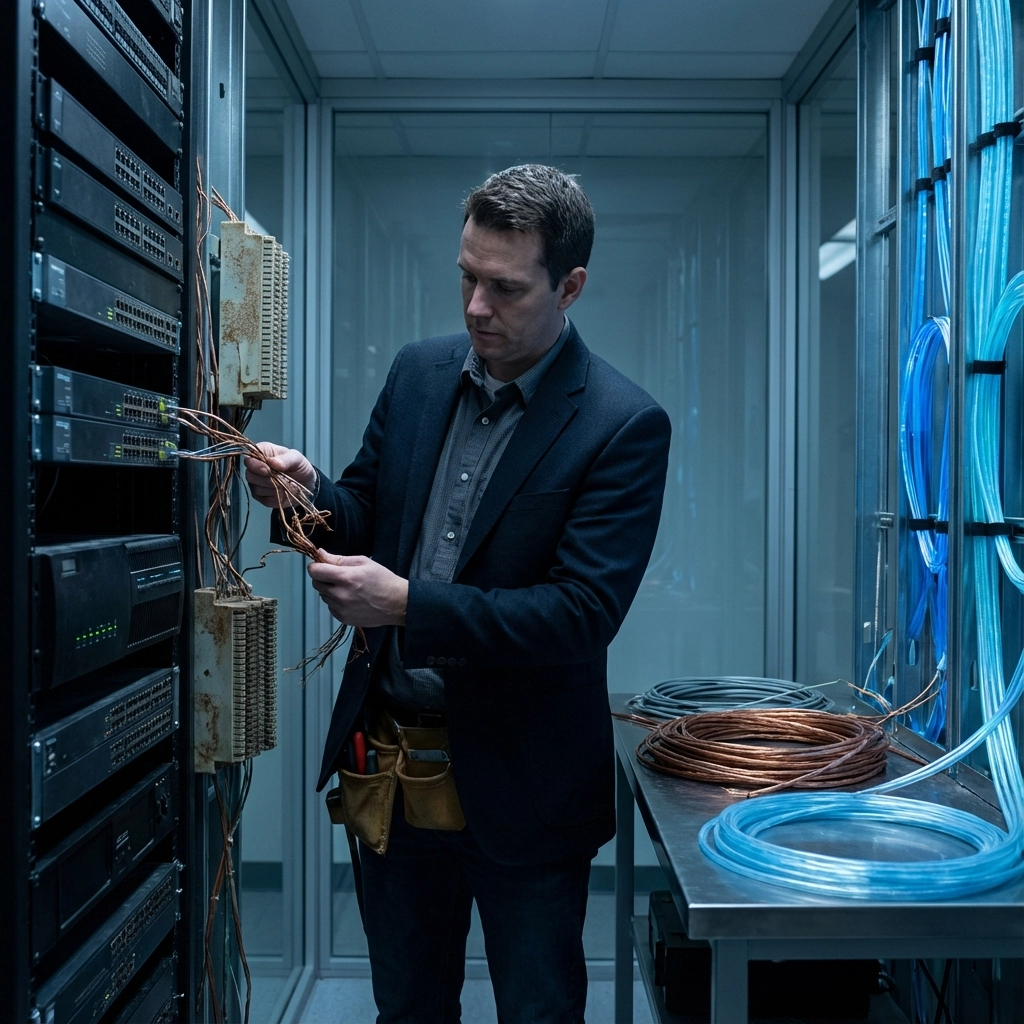
The writing is on the wall: Plain Old Telephone Service (POTS) lines are facing their final countdown, and 2026 marks the point of no return for most businesses. While the complete phase-out extends through 2029, June 2026 is when AT&T begins decommissioning copper facilities in approximately 500 wire centers, representing 10% of their entire footprint.
If your business still relies on traditional copper phone lines for critical systems like fire alarms, elevators, security panels, or fax machines, you're operating on borrowed time. The carriers have already stopped accepting new orders in 19 states as of October 2025, repair services are being deprioritized, and monthly POTS rates have skyrocketed by 200-400% in many regions.
This isn't just about upgrading your phone system, it's about ensuring business continuity when the copper network your operations depend on simply stops working.
Why 2026 Is the Critical Deadline
The telecommunications industry's copper retirement isn't happening overnight, but 2026 represents several critical milestones that make it the effective "death date" for POTS reliability:
New Service Cutoff: Major carriers including AT&T, Verizon, and CenturyLink have already filed retirement notices with the FCC. No new POTS installations, moves, or changes are being accepted in most markets.
Infrastructure Deterioration: With carriers actively discouraging POTS usage through pricing and reduced support, the physical copper infrastructure is deteriorating rapidly. Repair times that once took hours now stretch into days or weeks.
Regulatory Approval: The FCC's 2019 ruling gives providers the ability to retire these services without offering direct replacements, meaning there's no safety net for businesses that wait too long.
Cost Explosion: Monthly POTS line costs have increased dramatically, from $40-60 per line to $150-250 per line in many markets, making traditional copper economically unsustainable even before the shutdown.
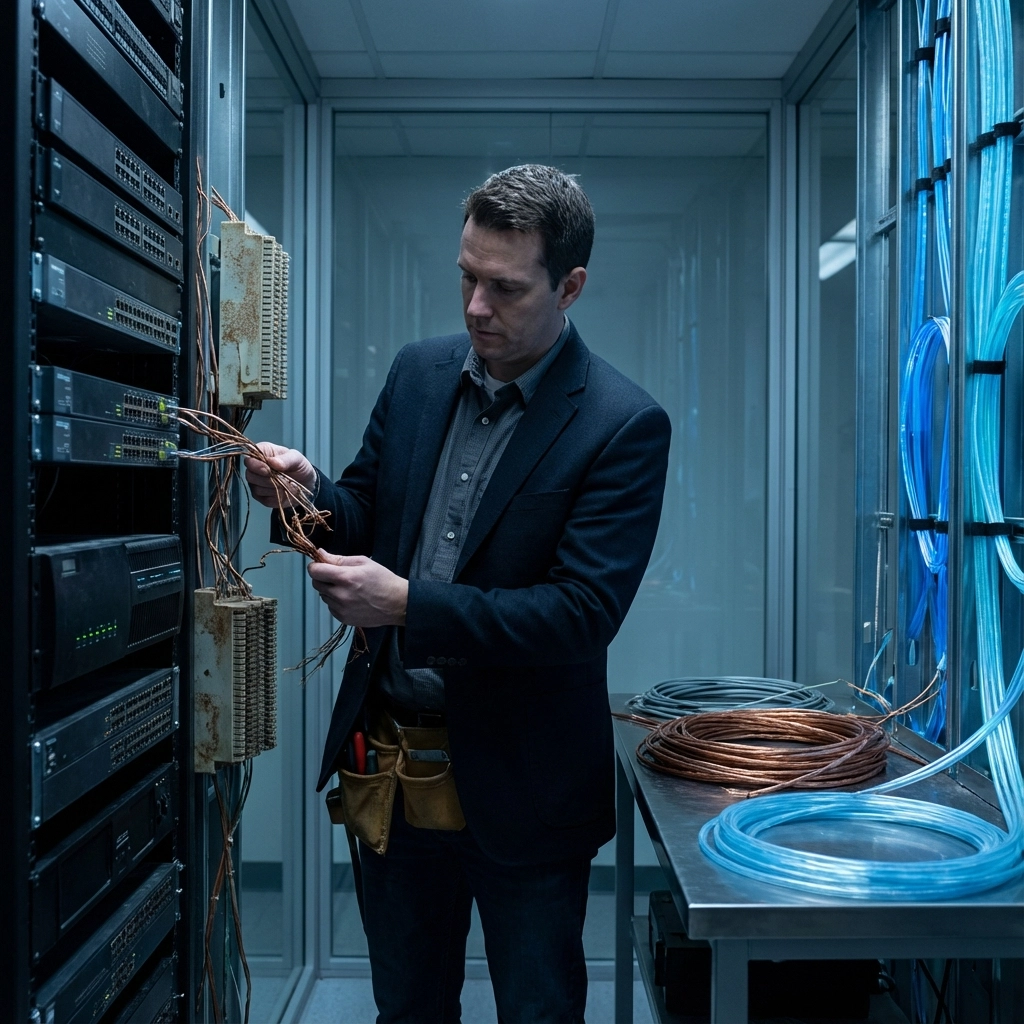
Your 5-Step Emergency POTS Replacement Plan
Step 1: Audit All Copper-Dependent Systems (Immediate Action Required)
Don't just count your phone lines, identify every system in your business that connects to the copper network. Many business owners are shocked to discover how many critical systems still depend on POTS connectivity:
- Fire alarm monitoring systems
- Elevator emergency phones
- Security alarm panels
- Point-of-sale (POS) credit card processing
- Fax machines and medical equipment
- Door access control systems
- HVAC monitoring and control
Create a comprehensive inventory with installation dates, vendor information, and current functionality. This audit will determine your replacement priorities and budget requirements.
Action Item: Contact each system vendor to understand their POTS replacement options and compatibility requirements.
Step 2: Evaluate Your Network Infrastructure
Modern POTS replacement solutions require reliable internet connectivity, something many businesses take for granted until they need guaranteed uptime for critical systems.
Assess your current internet setup:
- Bandwidth capacity and consistency
- Redundancy and backup connections
- Quality of Service (QoS) capabilities
- Network security and firewall configuration
Most POTS replacement solutions require dedicated bandwidth and low-latency connections. If your current internet service struggles during peak usage, adding voice and alarm systems to the same connection will create reliability problems.
Pro Tip: Consider upgrading to dedicated business internet with Service Level Agreements (SLAs) that guarantee uptime for critical communications.
Step 3: Choose Your Replacement Technology
Not all POTS replacements are created equal. Your choice depends on the specific systems you need to support and your reliability requirements.
Primary Options:
VoIP/UCaaS Systems: Best for office phone systems and general business communications. Modern IP phone systems offer advanced features like auto-attendants, call routing, and mobile integration while maintaining reliability.
Cellular-Based Solutions: Ideal for alarm systems, elevators, and remote monitoring where internet connectivity isn't guaranteed. LTE and 5G cellular modems can replace POTS lines for most monitoring applications.
Fiber-Based Analog Adapters: Specialized devices that convert analog signals to digital transmission over fiber networks. Often required for older fire alarm and security systems that can't be upgraded.
Hybrid Solutions: Combining multiple technologies for maximum reliability. For example, using VoIP for office communications while maintaining cellular connections for life safety systems.

Step 4: Plan Your Migration Timeline
Q1 2026 (January-March): Complete system audits and vendor consultations. Lock in pricing and installation schedules with providers before the June 2026 rush begins.
Q2 2026 (April-June): Begin installations for non-critical systems. Test new solutions thoroughly while POTS backup is still available.
Q3 2026 (July-September): Complete critical system migrations. This gives you a buffer before widespread copper facility shutdowns begin.
Q4 2026 (October-December): Finalize all transitions and cancel remaining POTS services to avoid ongoing monthly charges.
Critical Timing Note: Many specialized alarm and elevator phone replacements require 60-90 days for ordering, shipping, and installation. Starting this process in late 2026 may leave you without service when copper facilities shut down.
Step 5: Test Everything Before You Disconnect
The biggest mistake businesses make is assuming their POTS replacements will work identically to their old copper lines. Different technologies have different characteristics, and thorough testing is essential.
Testing Checklist:
- Alarm monitoring: Verify that signals reach monitoring centers reliably
- Emergency systems: Test elevator phones and fire alarm communications during simulated emergencies
- Fax transmissions: Ensure document clarity and transmission reliability
- Credit card processing: Verify transaction speed and backup connectivity
- Audio quality: Test call clarity and volume levels for all phone systems
Run parallel systems for at least 30 days before disconnecting POTS lines. This overlap period lets you identify and resolve issues while maintaining backup connectivity.
Common POTS Replacement Challenges and Solutions
Challenge: Legacy alarm systems that only work with specific voltage and signal characteristics of copper lines.
Solution: Specialized POTS replacement devices that emulate exact copper line characteristics. Companies like Comcast Business and AT&T offer certified solutions for most alarm system manufacturers.
Challenge: Elevator emergency phones that require dedicated copper connections for code compliance.
Solution: Cellular-based elevator phone systems that meet ASME A17.1 safety codes. These systems often provide better reliability than traditional copper connections.
Challenge: Multi-location businesses with different requirements at each site.
Solution: Hybrid approaches that use the most appropriate technology for each location's specific needs, managed through centralized network services.
Frequently Asked Questions
Q: Can I wait until my POTS lines actually stop working?
A: No. Once copper facilities are decommissioned in your area, there's no emergency restoration option. Additionally, repair services are already being deprioritized, meaning outages may not be fixed promptly even before the official shutdown.
Q: Will POTS replacement solutions work during power outages?
A: This depends on your setup. Traditional POTS lines receive power from the telephone company's central office, providing service during local power outages. VoIP systems require local power and internet connectivity. Cellular solutions typically include battery backup but have limited runtime.
Q: How much will POTS replacement cost compared to current copper lines?
A: With current POTS rate increases, many businesses find that modern replacement solutions cost less than inflated copper line pricing. VoIP solutions typically cost $20-40 per line monthly, while specialized alarm line replacements range from $30-80 per month depending on features and redundancy.
Q: Do I need to replace systems that rarely use their POTS connection?
A: Yes. Even systems that only use their phone connection for emergencies or monthly test signals need functioning replacement solutions. Fire safety and elevator codes require working emergency communications regardless of usage frequency.
Q: Can I handle this migration myself, or do I need professional help?
A: While simple phone system replacements might be manageable internally, critical safety systems typically require professional installation and certification. Many jurisdictions require licensed technicians for fire alarm and elevator phone installations.
Take Action Now: Before It's Too Late
The POTS phase-out isn't a distant threat: it's happening now, and 2026 will bring the most significant disruptions to businesses that haven't prepared. Every month you delay increases your risk of service interruption, emergency non-compliance, and expensive rush installations.
Don't wait until your critical systems fail to discover that replacement parts aren't available or installation schedules are booked months in advance. The businesses that act now will have their choice of solutions, pricing, and installation timeframes. Those who wait will face limited options and emergency pricing.
Ready to future-proof your business communications? Contact Premier Business Team today for a comprehensive assessment of your current systems and a customized migration plan that ensures continuous operation throughout the POTS transition. Our telecommunications experts understand the complexities of replacing legacy systems while maintaining compliance and reliability.
Schedule your free business technology assessment and take the first step toward POTS-independent operations. Your business continuity depends on the decisions you make today.