

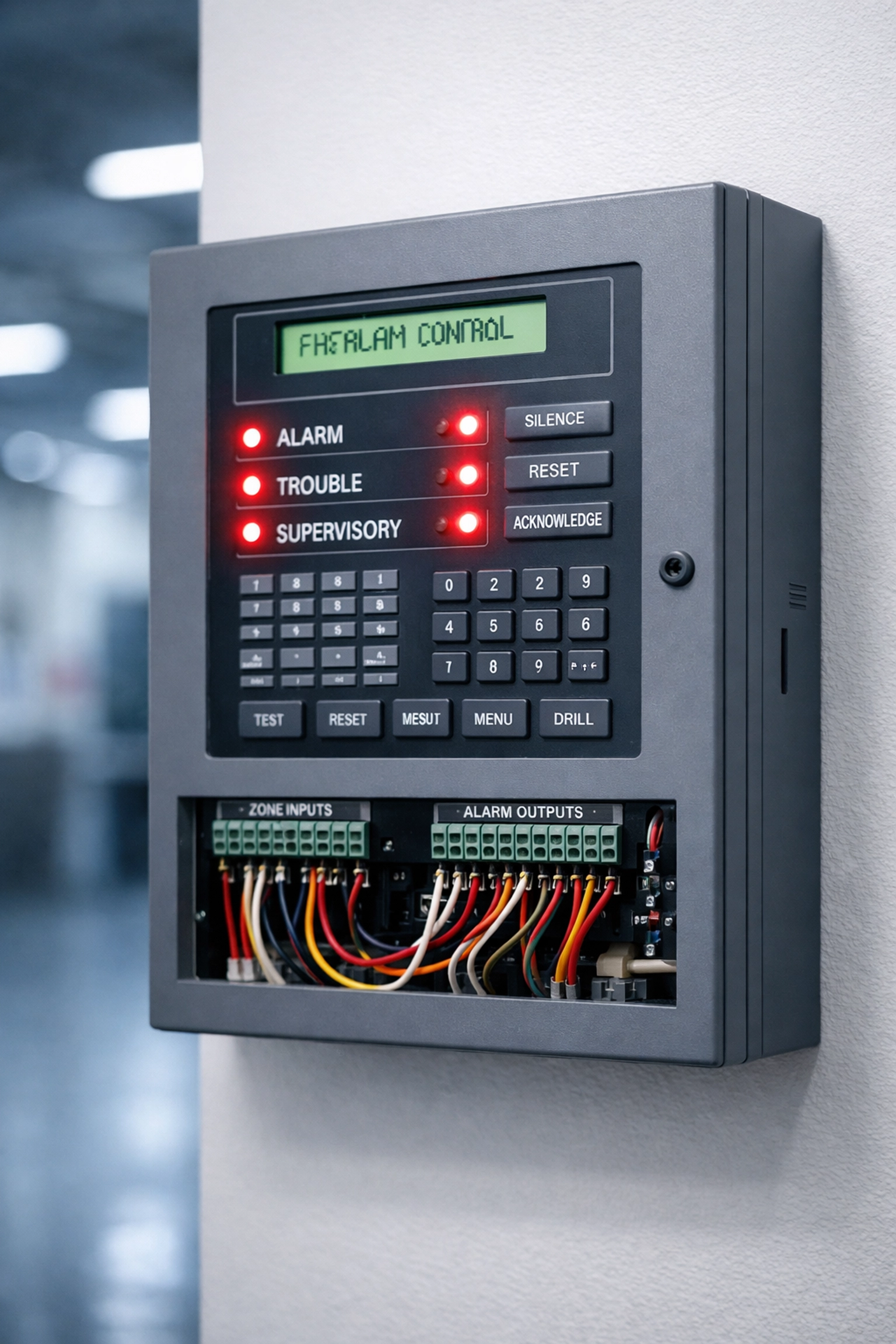
Here's the uncomfortable truth nobody is telling you about POTS replacement: that "simple VoIP switch" your IT vendor recommended for your fire alarm system? It's going to fail your next inspection. And when it does, you'll be scrambling to fix it while facing potential fines, insurance issues, and, worst case, a life safety system that doesn't work when you need it most.
With copper sunset 2026 deadlines accelerating and the FCC reducing shutdown notice periods from 180 days to just 90 days, facility managers across the country are making a critical mistake. They're treating fire alarm phone line replacement like any other telecom migration. It's not.
Let's talk about what actually works, and why cutting corners on life safety communications is the one place you can't afford to get it wrong.
The $10,000 Mistake: Why Standard VoIP Won't Pass Inspection
You've probably heard the pitch a hundred times: "VoIP is cheaper, more flexible, and works just fine for everything else, why not use it for your fire alarm panel?"
Because fire alarm systems don't operate under "everything else" rules. They operate under the National Fire Alarm and Signaling Code (NFPA 72) and require UL 864 certification, regulatory frameworks that standard business VoIP solutions were never designed to meet.
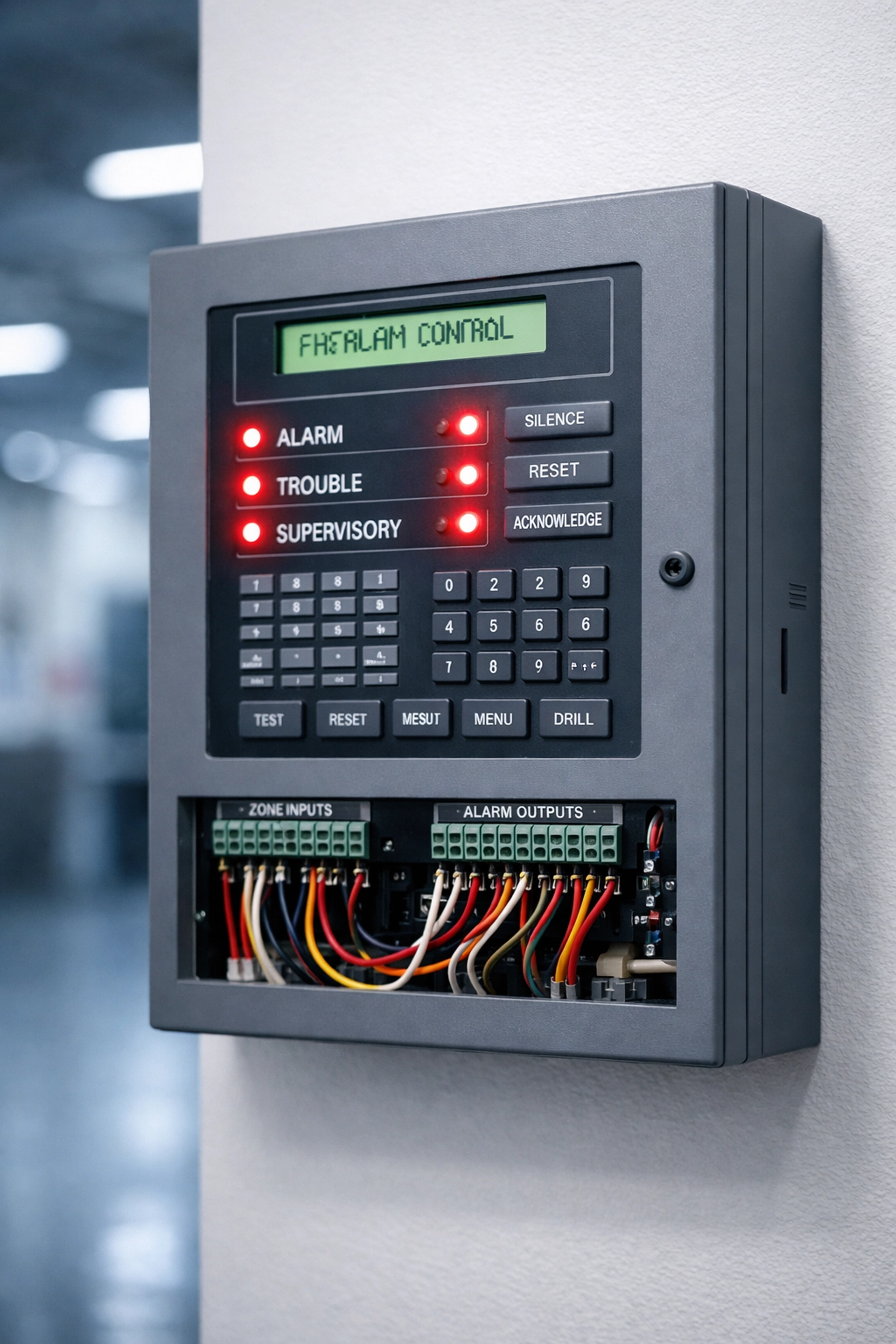
Here's what happens when you plug a generic VoIP line into your fire alarm panel:
Supervision Interval Failures: NFPA 72 requires specific check-in frequencies to ensure your alarm system is actively monitored. A typical VoIP or cellular communicator might ping the monitoring station every 5 minutes. Fire safety codes may mandate tighter intervals, and those requirements can change with code updates. If your solution can't be reconfigured remotely, you're looking at a complete system replacement after the next code revision.
No Guaranteed Uptime: Your fire alarm system doesn't care that "the internet is down." It needs to communicate 24/7/365, which means dual-path redundancy with automatic failover. Standard VoIP runs on your building's internet connection, the same connection that goes down during storms, power outages, or when someone in accounting accidentally unplugs the router.
Power Dependency Issues: Most VoIP systems require AC power and don't include the 48-hour battery backup mandated for fire alarm communications. When the power goes out, your alarm goes silent.
Lack of Third-Party Certification: UL 864 isn't a suggestion, it's a requirement. Fire marshals and insurance underwriters want to see certified equipment that's been tested by independent labs. Your $200 VoIP adapter from Amazon doesn't have that certification.
The consequence? Failed inspections, compliance violations, potential insurance claim denials, and in the worst-case scenario, a fire alarm system that can't reach emergency services when lives are at stake.
What NFPA 72 Actually Requires (And Why It Matters)
Let's break down the non-negotiables for fire alarm phone line replacement. These aren't recommendations, they're code requirements backed by decades of fire safety engineering:
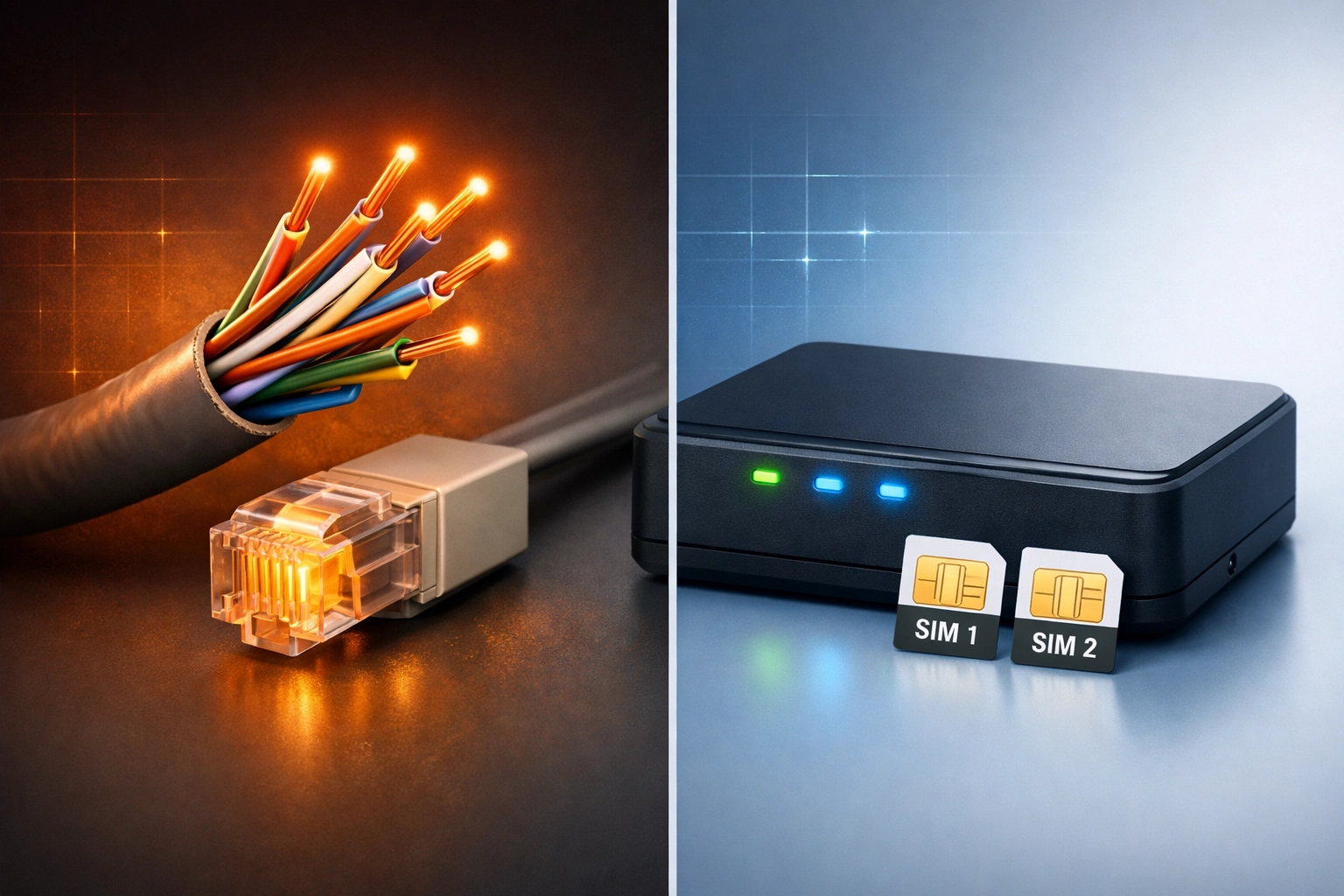
Dual Network Redundancy: NFPA 72 compliance requires a minimum of two independent communication paths. This typically means dual wireless SIM cards from different carriers or a combination of cellular and wired WAN backup. If your primary path fails, the system must automatically switch to the secondary path within seconds, not minutes.
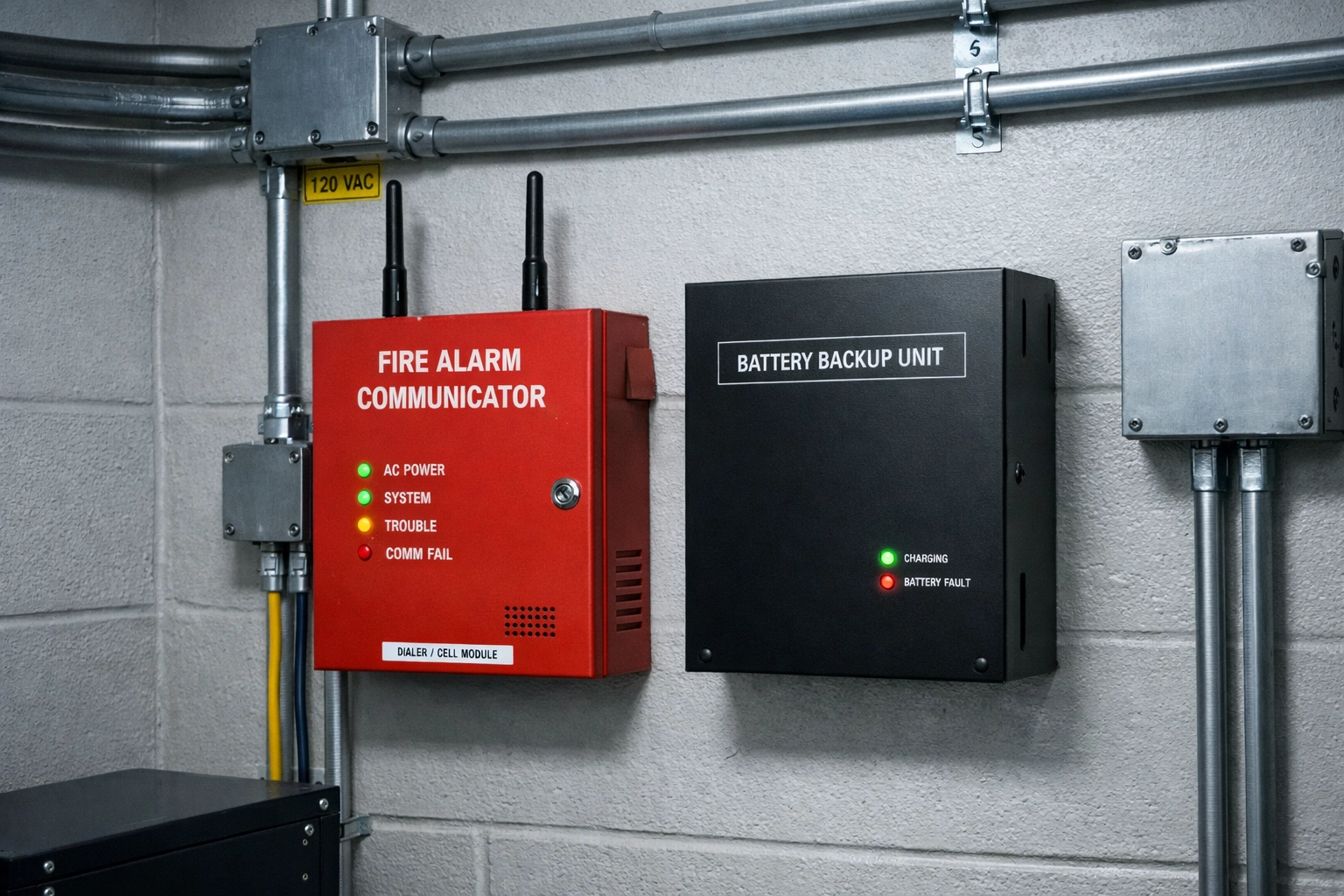
Integrated Battery Backup: Regulations mandate 48-hour battery systems specifically designed for fire alarm functionality. This isn't about keeping a router powered, it's about maintaining full alarm supervision, monitoring, and emergency communication during extended outages.
Remote Firmware Update Capability: Here's where most "cheap" solutions fail. Fire codes evolve. Supervision intervals change. New encryption protocols get adopted. Your POTS replacement must support over-the-air firmware updates so you can stay compliant without ripping out equipment every time NFPA publishes a new edition.
UL 864 Certification and NFPA 72 Verification: This is your paper trail. When the fire marshal asks for documentation, you need certified test reports from recognized third-party labs proving your equipment meets current standards.
What Actually Works: Compliant POTS Replacement Solutions
Now that we've covered what doesn't work, let's talk about solutions that will pass inspection, keep you compliant, and, most importantly, keep your building safe.
Cellular Fire Alarm Communicators with Dual-SIM Technology
Purpose-built cellular communicators designed specifically for fire alarm applications use dual SIM cards from different carriers (e.g., AT&T and Verizon). If one carrier experiences an outage or poor signal, the system instantly fails over to the backup carrier. These devices include integrated battery backup, meet UL 864 standards, and support remote configuration updates.
Supervised Network-Based Fire Alarm Communications
Some facilities with robust network infrastructure can use supervised IP-based communicators, but only when paired with proper backup paths. This means a primary wired network connection with cellular or satellite backup, continuous supervision monitoring, and equipment specifically listed for fire alarm use (not generic VoIP adapters).
Satellite Backup for Remote or Rural Facilities
For locations where cellular coverage is unreliable, distribution centers in rural areas, remote industrial sites, or facilities in cellular dead zones, satellite-based backup provides truly independent redundancy. While more expensive, it eliminates the "all my wireless carriers are down" scenario.
Cloud-Managed Monitoring with NOC Support
Modern compliant solutions include cloud-based management portals that give your team (and your monitoring provider's Network Operations Center) real-time visibility into system health. Instant alerts for signal degradation, failed check-ins, or backup power activation mean problems get fixed before they become critical failures.
The Implementation Checklist: How to Get It Right
Don't assume your vendor knows fire alarm compliance. Use this checklist to verify you're getting a proper solution:
✅ Verify UL 864 certification documentation before purchasing any equipment
✅ Conduct signal strength testing at your specific location (cell coverage maps aren't always accurate inside buildings)
✅ Test failover scenarios before going live, simulate primary path failure and verify automatic switchover
✅ Document your installation with photos, equipment serial numbers, and test results for inspection records
✅ Schedule training for your facilities team on system monitoring and troubleshooting
✅ Establish a maintenance schedule for battery testing and firmware updates
✅ Confirm your monitoring company supports the new communication method and has updated account programming
Critical Timeline Note: As of 2025, telecom providers only need to give you 90 days' notice before shutting down analog lines. That's three months to evaluate solutions, get quotes, schedule installation, test systems, and pass inspection. Start this process before you receive a shutdown notice, not after.
The Hidden Cost of "Cheap" Solutions
We see it all the time: a facility manager gets three quotes for fire alarm POTS replacement. Two are around $2,500–$3,500 per location. The third is $800.
Guess which one they pick?
Six months later, we get the call: "Our fire alarm failed inspection. The fire marshal red-tagged our building. We need this fixed immediately."
Here's what that "savings" actually cost:
- Failed inspection: $500–$2,000 in re-inspection fees
- System replacement: $2,500 for compliant equipment (should have bought this first)
- Emergency installation: 50% premium for rush service
- Insurance notification: potential policy complications
- Business disruption: possible facility closure until compliance is restored
Total cost: $5,000–$8,000 plus operational headaches.
The compliant solution from day one would have cost $3,000.
Why Premier Business Team Gets POTS Replacement Right
We've been helping facilities navigate traditional business phone line replacement since before copper sunset became a crisis. Our team includes specialists who understand the difference between general telecom and life safety communications, and we only recommend solutions that we'd trust in our own buildings.
When you work with Premier Business Team, you get:
- Code-compliant solutions with UL 864 certification and NFPA 72 verification
- Dual-path redundancy configured for your specific location and risk profile
- Pre-installation site surveys including cellular signal testing and failover planning
- Full documentation packages ready for fire marshal inspection
- Ongoing monitoring and cloud-based system health visibility
- Future-proof equipment with remote update capability to adapt to code changes
We handle the technical complexity so you can focus on running your facility, confident that your fire alarm system will work when it matters most.
Frequently Asked Questions About Fire Alarm POTS Replacement
Q: Can I use the same VoIP system for my fire alarm that I use for my office phones?
A: No. Standard business VoIP doesn't meet NFPA 72 or UL 864 requirements. Fire alarm systems need dedicated, certified communicators with dual-path redundancy and integrated battery backup. Mixing life safety communications with general business phone systems creates compliance violations and reliability risks.
Q: How long does a fire alarm POTS replacement installation take?
A: For a single-location facility, expect 2–4 hours for installation plus testing. Multi-building campuses or facilities with complex alarm systems may require a full day. The timeline includes equipment installation, system programming, failover testing, and documentation preparation.
Q: What happens if my building loses power for more than 48 hours?
A: Compliant fire alarm communicators include 48-hour battery backup as mandated by code. If an outage extends beyond that, the monitoring company should receive a low-battery alert and dispatch support. For mission-critical facilities, consider extended battery systems or generator backup for alarm panels.
Q: Do I need to notify my fire alarm monitoring company when replacing POTS lines?
A: Absolutely. Your monitoring company needs to update account programming for the new communication method, verify receiver compatibility, and conduct test signals after installation. Failing to notify them can result in alarm signals not reaching the monitoring station: which defeats the entire purpose of having a fire alarm system.
Q: How much does a compliant fire alarm POTS replacement cost?
A: Expect $2,500–$4,000 per location for a properly certified solution with dual-path redundancy, battery backup, and professional installation. Cheaper options exist but typically fail inspection or require replacement within the first year. This is not an area where cutting costs makes sense.
Don't Wait for the Shutdown Notice
Copper sunset 2026 isn't a distant deadline: it's happening now. With only 90 days' notice before carriers pull the plug on analog lines, waiting until you receive a shutdown letter means you're operating under crisis pressure.
The right time to address fire alarm phone line replacement is before it becomes an emergency.
Ready to ensure your fire alarm system stays compliant and operational?
Call Premier Business Team today at 360-946-2626 for a free consultation. We'll assess your current fire alarm communications, provide a code-compliant solution tailored to your facility, and handle everything from installation to inspection documentation.
Because when it comes to life safety systems, "good enough" isn't good enough. Get it right the first time with specialists who understand both the technology and the regulations.
Contact Premier Business Team | Call 360-946-2626
