

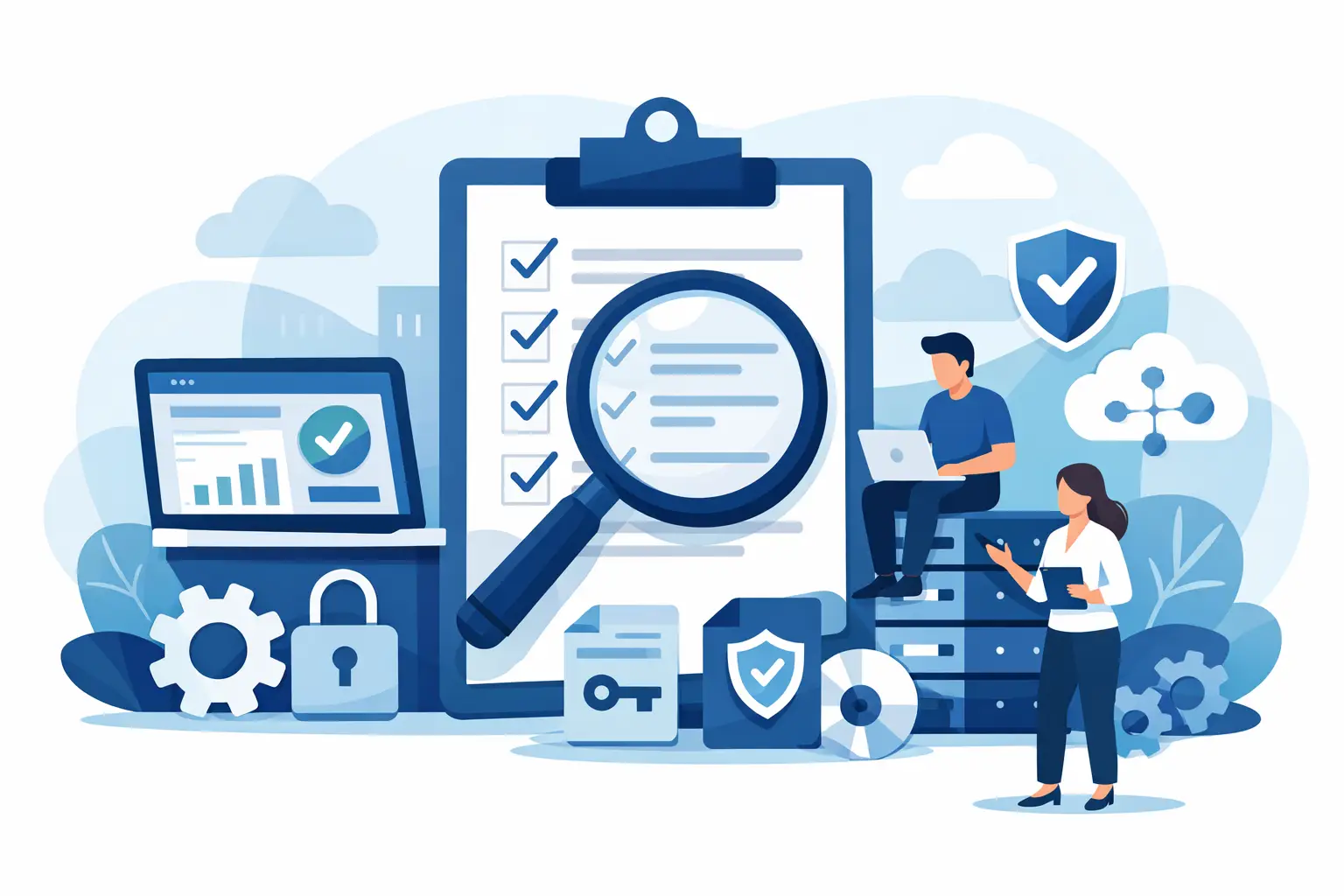
A renewal quote that arrives 30 days before a deadline can expose months of unmanaged software decisions. Licenses may sit unused, employees may have higher-tier access than their roles require, and separate departments may be paying the same vendor under different agreements. A disciplined software licensing audit checklist gives your business a clear view of what it owns, what it uses, and what needs attention before cost or compliance becomes a problem.
For small and mid-sized businesses, the goal is not to create a large compliance project. It is to establish control. The right process helps IT, finance, operations, and department leaders make better purchasing decisions with fewer surprises at renewal time.
Start With a Clear Audit Scope
Trying to review every application, device, and user account at once can stall the effort before it produces value. Begin by defining the software categories and business units included in the review. Prioritize software with high annual spend, complex user-based licensing, upcoming renewals, or known security and compliance requirements.
Your first audit may focus on collaboration platforms, productivity suites, cloud infrastructure tools, endpoint security, accounting systems, customer relationship management software, and specialized line-of-business applications. Include both perpetual licenses and subscriptions. A one-time license can still create support, maintenance, upgrade, or true-up obligations that affect your budget.
Assign a business owner for the audit. IT typically manages technical discovery and access controls, while finance validates invoices and payment history. Department leaders confirm whether applications are still needed and whether employee access matches actual job responsibilities. Without clear ownership, the audit often becomes a spreadsheet that nobody maintains.
Build a Complete Software Inventory
An audit is only as reliable as the inventory behind it. Gather data from purchase orders, vendor invoices, renewal notices, contract repositories, expense reports, procurement records, IT asset tools, identity platforms, and department-managed subscriptions. Do not assume all software was purchased through a central IT process. Many organizations have recurring charges on corporate cards for tools selected by individual teams.
Create one working inventory that records the vendor, product name, edition, license type, quantity purchased, quantity assigned, contract number, renewal date, payment terms, and annual or monthly cost. Include the business owner and technical owner for every significant application. These fields make it easier to resolve questions quickly rather than reconstructing decisions months later.
Normalize product names as you build the inventory. A vendor may use different naming conventions across invoices, administration portals, and contracts. For example, a collaboration product could appear under a legacy product name, a bundled suite name, or a reseller invoice description. Standardized names prevent duplicate entries and reveal overlapping purchases.
Use This Software Licensing Audit Checklist
Once the inventory is assembled, validate each application against the records that govern its use. The following checklist keeps the review focused on business decisions, not just data collection:
- Confirm the current contract, order form, license agreement, and renewal notice are available and match the product in use.
- Compare purchased, assigned, active, and inactive licenses for every subscription or software title.
- Verify that employee roles, device counts, server deployments, or usage metrics align with the license model.
- Identify duplicate applications, unused accounts, outdated editions, and features that are not being used.
- Review administrative access, former employee accounts, shared credentials, and unapproved department purchases.
- Document renewal dates, notice periods, price increases, minimum commitments, and automatic renewal terms.
- Record any potential under-licensing, over-deployment, or contract exceptions that require follow-up.
This is not simply a cost-cutting exercise. A business could have too many licenses in one application while lacking the right licenses for a growing team, new location, or expanded security requirement. The best outcome is a licensing position that supports how the organization actually operates.
Compare Entitlements With Real Usage
Entitlements tell you what your organization has the right to use. Usage data tells you whether that right is being used efficiently. Both matter.
For SaaS applications, review sign-in activity, feature adoption, and account status over a meaningful period, often 60 to 90 days. A user who has not signed in may be a candidate for removal, but context matters. Seasonal employees, field teams, project-based contractors, and executives who access a platform infrequently may still need an account.
For desktop, server, and device-based software, use deployment records and asset data to compare installations with purchased licenses. Pay close attention to software that can be installed through automated images, bundled with hardware, or accessed through virtual environments. License rules can differ based on processor cores, named users, concurrent users, devices, or server instances.
Where visibility is limited, start with the highest-cost products and work outward. It is better to validate the licenses that drive most of your exposure than to wait for perfect data across every low-cost application.
Check License Terms, Not Just Quantities
A common audit mistake is assuming that one active user equals one valid license. Software agreements can include restrictions that are not visible in an admin console. Terms may limit use by affiliate companies, contractors, geographic locations, development environments, or specific business functions. A lower-cost edition may also exclude security, compliance, analytics, or support capabilities your teams rely on.
Review the agreement version attached to your purchase. Vendor licensing terms can change over time, and newer subscription plans may not match legacy entitlements. If your organization acquired another business, opened a new entity, or shifted work to a managed service provider, confirm that the agreement permits the current arrangement.
Document uncertainty instead of making assumptions. A flagged item may be a genuine compliance concern, a contract interpretation issue, or simply a data mismatch. Keeping those categories separate allows leadership to prioritize the right response.
Turn Findings Into a Renewal and Remediation Plan
After validation, categorize findings by financial impact, compliance exposure, operational dependency, and renewal timing. An unused low-cost application can be cleaned up during normal administration. A potentially under-licensed business-critical platform with a renewal due next month requires immediate attention.
Your plan should identify which licenses to remove, reassign, downgrade, consolidate, or purchase. It should also state who will complete each action and when. If several departments use similar applications, compare functionality, integrations, security requirements, and total cost before standardizing. Consolidation can reduce spend and support effort, but forcing every team onto one platform may disrupt specialized workflows. The right decision depends on the value each tool provides, not license count alone.
Use the audit to improve renewal timing. Centralizing renewal dates in a calendar gives your team time to assess usage, negotiate terms, and evaluate alternatives before an automatic renewal window closes. It also prevents several large invoices from landing in the same quarter without budget preparation.
For larger or complex vendor agreements, independent guidance can be useful. Premier Business Team helps organizations assess licensing needs alongside cloud, managed services, cybersecurity, and broader technology costs, so software decisions are considered in the context of the full operating environment.
Keep Licensing Control Between Audits
A one-time cleanup will not stay accurate if new software enters the business without review. Establish a simple intake process for new applications and renewals. Before purchase, require a business owner, security review when appropriate, projected user count, budget source, and confirmation that an existing tool cannot meet the need.
Connect onboarding and offboarding processes to license assignment and recovery. When an employee joins, access should be provisioned based on role. When they leave or change teams, licenses should be removed, reassigned, or adjusted promptly. This control reduces waste while limiting unnecessary access to business systems.
Review your inventory quarterly for high-cost and high-risk applications, then conduct a fuller audit annually or ahead of major renewals. Fast-growing businesses may need more frequent reviews because headcount, applications, and vendor commitments can change quickly.
Treat software licensing as an operating discipline, not an invoice review. When ownership, usage, contracts, and renewal dates are visible in one place, your business can spend with more confidence and make technology decisions before vendors set the timetable.