

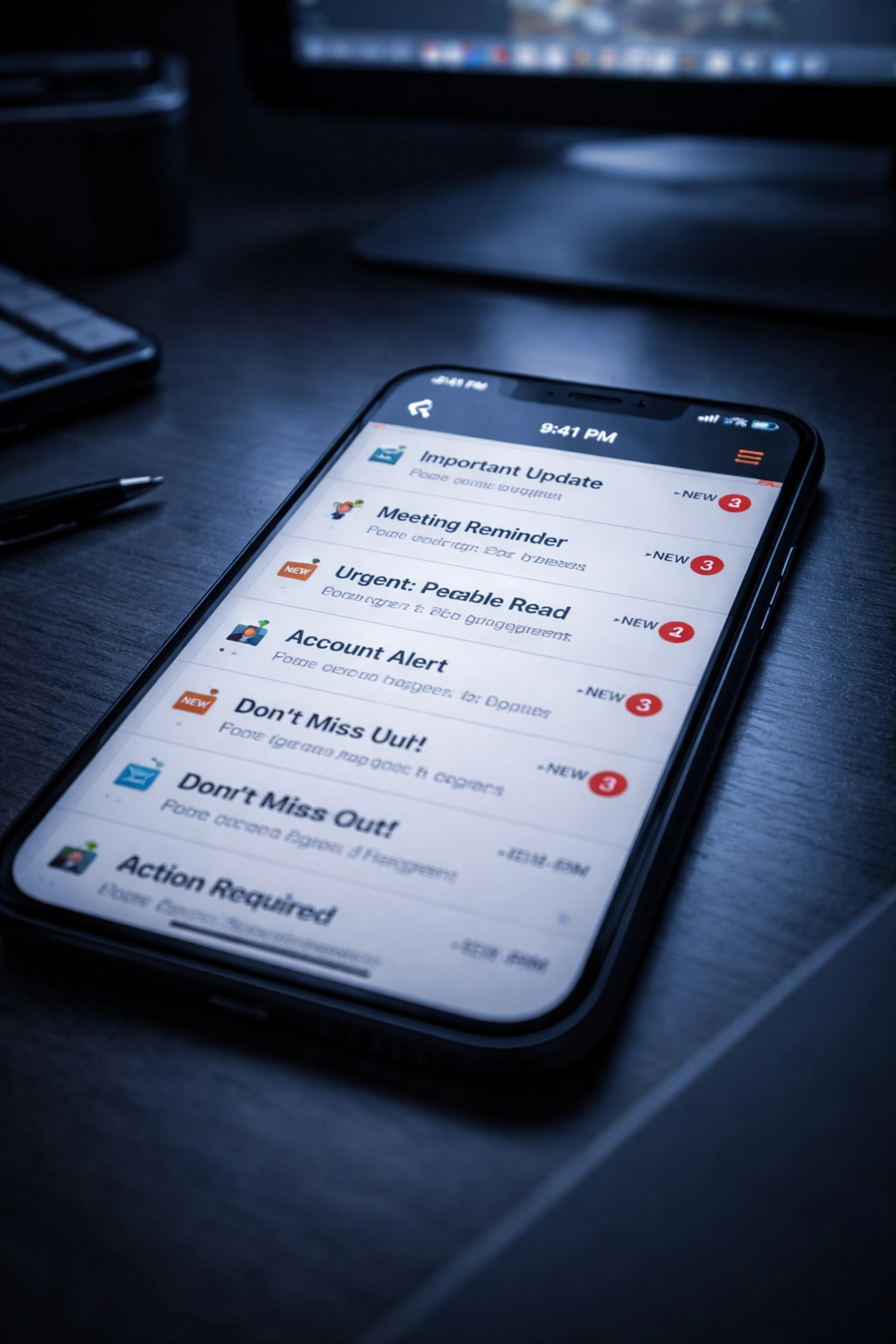
In early January 2026, millions of Instagram users woke up to unexpected password reset emails flooding their inboxes. The emails looked legitimate. The sender addresses checked out. But something felt off: users hadn't requested these resets.
What followed was a masterclass in how quickly threat actors can weaponize confusion. And buried in the chaos was a simple visual cue that helped countless users avoid falling victim: a tiny logo next to the sender's name.
That logo was powered by BIMI. And if your business isn't using it yet, this story should change your mind.
What Actually Happened with Instagram in January 2026
The incident unfolded in two waves that overlapped in the worst possible way.
First, a threat actor released approximately 17.5 million Instagram records on a dark web forum. This dataset included usernames, names, email addresses, phone numbers, and partial address data: likely scraped via an Instagram API vulnerability in late 2024.
Second, a bug in Instagram's system allowed external parties to trigger password reset emails using only a username or email address. Suddenly, legitimate password reset emails were hitting inboxes without users ever requesting them.
Meta quickly patched the vulnerability and confirmed there was no direct breach of Instagram's systems. But the damage was already in motion.
How Threat Actors Weaponized the Situation
With leaked contact information circulating on dark web forums and real Instagram emails confusing users, scammers saw an opportunity. Here's what happened:
- Valid password reset emails were being sent from Instagram but were not initiated by the users themselves
- As this issue became publicized, threat actors quickly weaponized the situation by sending spoofed messages with identical content: but not from Instagram
- Many recipients struggled to distinguish real messages from fake ones because sender names and addresses appeared legitimate
- The leaked phone numbers and emails also increased risks of SIM-swapping and social engineering attacks
The timing was perfect for attackers. Users were already primed to expect strange emails from Instagram. All scammers had to do was send convincing fakes and wait for clicks.
The Visual Lifeline: How BIMI Made the Difference
Here's where the story takes a turn.
Instagram had BIMI enabled for their domain. This meant every legitimate email from Instagram displayed their verified logo directly in the inbox: right next to the sender name.
When users received spoofed emails pretending to be Instagram, those messages lacked the official logo. No BIMI verification meant no visual trust indicator.
This gave Instagram a simple, powerful way to communicate authenticity to users:
"If you see our logo, it's really us. If you don't, proceed with extreme caution."
That visual distinction helped users pause, verify, and avoid clicking malicious links. For a split second, BIMI transformed inbox chaos into clarity.
What Is BIMI and How Does It Work?
BIMI stands for Brand Indicators for Message Identification. Think of it as the verified checkmark for email: but instead of a generic symbol, recipients see your actual company logo.
Here's how it works:
- Your email authentication must be airtight. BIMI requires SPF, DKIM, and DMARC to be properly configured and enforced on your domain.
- You create a BIMI DNS record that points to your brand's logo file.
- You obtain a Verified Mark Certificate (VMC) from an authorized certificate authority, proving you own the trademark for that logo.
- Major email providers validate your setup and display your logo next to authenticated emails.
When everything aligns, recipients see your brand logo every time they receive a legitimate message from your organization. Spoofed emails? No logo. No trust.
Email Providers That Support BIMI
- Google (Gmail)
- Yahoo Mail
- Apple Mail
- Fastmail
These platforms actively validate BIMI participation, meaning your organization meets higher trust standards recognized by leading email providers worldwide.
Beyond Security: BIMI Strengthens Brand Confidence
The security benefits are obvious. But BIMI delivers something equally valuable: brand reinforcement at scale.
Consider how many emails your business sends daily: invoices, confirmations, newsletters, support responses. Every single one is an opportunity to build trust or lose it.
With BIMI enabled:
- Recipients see your logo consistently in the inbox, reinforcing brand recognition
- Users gain confidence that messages truly come from your organization
- Customers are less likely to ignore or mistrust legitimate communications
- Your brand stands out in crowded inboxes where most senders have no visual identity
For businesses investing heavily in email marketing or customer communications, BIMI transforms every message into a branded touchpoint. It's marketing and security working together.
The Foundation: SPF, DKIM, and DMARC Explained
BIMI doesn't work in isolation. It's the visual layer built on top of three critical email authentication protocols:
| Protocol | What It Does |
|---|---|
| SPF (Sender Policy Framework) | Specifies which mail servers are authorized to send email on behalf of your domain |
| DKIM (DomainKeys Identified Mail) | Adds a digital signature to emails, allowing recipients to verify the message wasn't altered |
| DMARC (Domain-based Message Authentication) | Tells receiving servers what to do when SPF or DKIM checks fail (quarantine, reject, or allow) |
For BIMI to display your logo, your DMARC policy must be set to "quarantine" or "reject" at 100% enforcement. This proves to email providers that you've taken authentication seriously.
If your domain isn't fully authenticated, your logo won't appear: even if you've configured BIMI correctly.
How Premier Business Team Helps You Implement BIMI
Getting BIMI right requires careful planning across DNS records, email authentication, and certificate procurement. That's where we come in.
Through our trusted partnerships, Premier Business Team guides organizations through the entire BIMI implementation process:
- DMARC readiness and enforcement – We assess your current email authentication posture and build a roadmap to full DMARC enforcement
- SPF and DKIM validation – We ensure your sending infrastructure is properly configured and authenticated
- BIMI record configuration – We help you create and publish the correct DNS records to enable BIMI
- Verified Mark Certificate guidance – We connect you with authorized certificate authorities and walk you through the VMC application process
Whether you're a small business sending a few hundred emails a week or an enterprise with complex multi-domain infrastructure, we tailor the approach to your environment.
Already working on your cybersecurity strategy? BIMI fits perfectly alongside endpoint protection, firewall management, and employee training initiatives.
Frequently Asked Questions About BIMI
Q: How long does BIMI implementation take?
A: For organizations with existing DMARC enforcement, BIMI can be configured in days. If you're starting from scratch with email authentication, expect 4–12 weeks to reach full DMARC enforcement before enabling BIMI.
Q: Does BIMI cost money?
A: The BIMI DNS record itself is free. However, you'll need a Verified Mark Certificate (VMC), which typically costs $1,000–$1,500 annually depending on the certificate authority.
Q: Will BIMI stop all phishing attacks?
A: No single technology stops all attacks. But BIMI provides a powerful visual indicator that helps recipients quickly identify legitimate emails: significantly reducing the success rate of domain spoofing attempts.
Q: What if my logo doesn't appear after setup?
A: Logo display depends on the receiving email provider's support for BIMI and your domain's authentication status. We help troubleshoot these issues during implementation.
Q: Can small businesses benefit from BIMI?
A: Absolutely. Any organization that sends email to customers, vendors, or partners benefits from increased trust and reduced spoofing risk.
Don't Wait for Your Brand to Be Weaponized
The Instagram incident proved how quickly legitimate communications can become attack vectors. Threat actors don't need to breach your systems: they just need to impersonate your brand convincingly enough.
BIMI gives your recipients a clear, instant way to verify your identity. It protects your customers. It protects your reputation. And it transforms every email into a branded experience.
Ready to implement BIMI for your organization? Premier Business Team is here to guide you through every step: from DMARC readiness to Verified Mark Certificate procurement.
📞 Call us today at 360-946-2626 or visit our website to schedule a consultation.
