

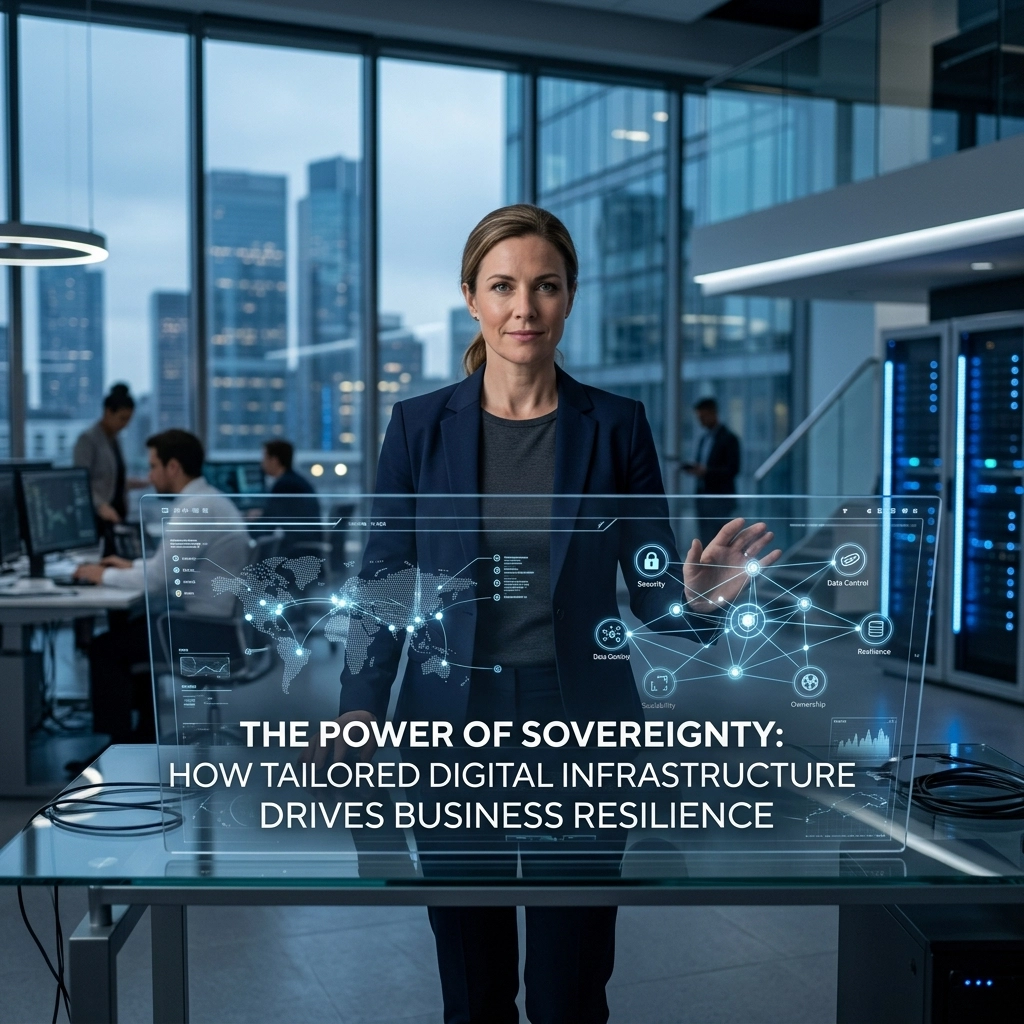
In the modern business landscape, most leaders are living like digital tenants. They pay their monthly rent to massive cloud providers, trust that the "digital landlord" keeps the roof from leaking, and cross their fingers that the locks don’t change overnight. But here’s the cold, hard truth: when you rent your infrastructure without a strategy for sovereignty, you’re not just outsourcing your IT: you’re outsourcing your destiny.
At Premier Business Team, we believe it’s time to stop renting your technology and start owning your results. Digital sovereignty isn't just a buzzword for policy wonks in Brussels; it’s a foundational pillar of business resilience. It’s about having the control to pivot when a provider goes down, the visibility to stay secure when threats evolve, and the independence to grow without being held hostage by proprietary "walled gardens."
What is Digital Sovereignty (And Why Should You Care)?
Before we dive into the "how," let’s clarify the "what." In the simplest terms, digital sovereignty is the ability of an organization to have meaningful control over its digital assets: data, hardware, software, and the networks that connect them.
It’s often broken down into three main buckets:
- Data Sovereignty: Knowing exactly where your data lives, who can access it, and ensuring it stays under your jurisdictional control.
- Operational Sovereignty: The power to maintain visibility and control over your systems, regardless of where they are hosted.
- Compute Sovereignty: Ensuring you aren't so dependent on a single provider’s infrastructure that a single outage or policy change can shutter your entire operation.
When your infrastructure is tailored specifically to your business needs, you gain the ability to navigate these buckets with confidence. You aren't just another account number in a hyperscaler's database; you are the architect of your own resilience.

The "Renter’s Trap": The Hidden Risks of Generic Infrastructure
We’ve all seen the appeal of the "one-size-fits-all" solution. It’s easy to set up, requires zero thought, and comes with a shiny dashboard. But generic, off-the-shelf digital infrastructure often leads to the Renter’s Trap.
1. The Single Point of Failure
If your entire business: from your Business Phone Systems to your CRM: runs through a single provider with no diversification, you haven’t built a business; you’ve built a house of cards. When that provider has a "regional anomaly" (which is IT-speak for "everything is broken"), your business grinds to a halt.
2. The Lack of Transparency
In a generic environment, you see what the provider wants you to see. If a cyber threat emerges, you’re often the last to know and the least equipped to respond. Sovereignty requires a tailored approach that prioritizes visibility, allowing you to see threats before they become catastrophes.
3. Price and Policy Volatility
Ever notice how your "fixed" monthly costs seem to creep up every year? Or how a provider suddenly changes their terms of service, making your favorite integration obsolete? When you don't own the result, you’re at the mercy of someone else’s bottom line.
Building Resilience Through Tailored Diversification
Resilience doesn't happen by accident. It is a design choice. By moving toward a tailored digital infrastructure, you can diversify your risk and build a "self-healing" business model.
Think of it like a professional investment portfolio. You wouldn’t put 100% of your retirement savings into a single volatile stock. So why would you put 100% of your business operations into a single cloud environment?
Diversified Connectivity
A truly resilient business uses multiple paths for connectivity. This means having a primary and secondary Business Internet Solution that don't share the same physical infrastructure. If a backhoe takes out a fiber line on Main Street, your sovereign infrastructure should automatically fail over to a secondary provider, ensuring your Contact Center Technologies remain online and your customers remain happy.
Multi-Cloud and Hybrid Strategies
Sovereignty doesn't mean you can’t use the big cloud providers. It means you use them deliberately. A tailored approach might involve keeping your most sensitive data on a private server while using the public cloud for scalable web applications. This hybrid model ensures that even if one environment is compromised, the "crown jewels" of your data remain safe and under your direct control.
How an Advisor Helps You "Own" the Result
The biggest hurdle to digital sovereignty is complexity. Most business owners don't have the time to audit data center locations, negotiate with five different ISPs, or design a multi-cloud failover strategy. This is where the "parts vs. results" distinction becomes vital.
You don't need to manage the parts; you need to own the results.
At Premier Business Team, we act as the bridge between technical complexity and business outcomes. Our role as an advisor is to help you "own" your infrastructure without the stress of managing the nuts and bolts.
What a tailored advisory looks like:
- Custom Design: We don't push a single vendor. We look at your specific risk profile and design a stack that works for you.
- Supplier Relations: We leverage our relationships with Our Suppliers to get you the best terms and the most reliable service.
- Ongoing Advocacy: We don’t just set it and forget it. As the landscape changes, we help you adjust your infrastructure to maintain sovereignty and resilience.

Cyber Resilience: Sovereignty as a Shield
Cyber threats are no longer a matter of "if," but "when." In a sovereign infrastructure, your security posture is proactive rather than reactive. Because you have control over the "control plane": the part of your network that manages data flow: you can implement zero-trust principles that aren't tied to a specific vendor's limitations.
If a security breach occurs at a major service provider, a sovereign business can quickly isolate affected segments and reroute traffic. This "containment" capability is the difference between a minor headline and a business-ending event.
AEO & SEO Insights: Frequently Asked Questions
To help you better understand the landscape of digital sovereignty, we’ve compiled some of the most common questions our clients ask.
What is the difference between data residency and data sovereignty?
Data residency refers to where the data is physically stored. Data sovereignty goes a step further, encompassing the legal protections and jurisdictional rights over that data based on its location.
Does digital sovereignty cost more than generic cloud solutions?
While there may be a slightly higher initial design cost, a sovereign infrastructure often saves money in the long run by eliminating vendor lock-in, reducing downtime costs, and avoiding the "hidden fees" of generic providers.
How does sovereignty improve customer trust?
When you can tell your customers exactly where their data is and how it’s protected: and prove that your services will remain online even during global outages: you build a level of trust that generic competitors simply cannot match.
Can small businesses achieve digital sovereignty?
Absolutely. Sovereignty is a mindset, not a budget size. By choosing open standards and diversified providers for things like Business Phone Systems, even small businesses can protect themselves from the risks of "renting" their tech.
Key Takeaways for Business Leaders
If you’re ready to move from being a digital tenant to a digital owner, keep these principles in mind:
- Audit Your Dependencies: Identify where your "single points of failure" live.
- Prioritize Visibility: Choose solutions that give you full logs and telemetry, not just a "green light" on a dashboard.
- Design for Portability: Avoid proprietary features that make it impossible to move your data or applications to a new provider.
- Partner with an Advisor: Don't try to build the plane while flying it. Use an expert to help navigate the vendor landscape.

Don’t Just Rent Your Technology: Own Your Results
The world of IT and Telecommunications is moving faster than ever. The companies that survive the next decade won't be the ones with the biggest IT budgets; they’ll be the ones with the most resilient, sovereign infrastructures.
You deserve a digital foundation that works for you, not the other way around. It’s time to take control of your data, your connectivity, and your future.
Ready to see what a tailored digital infrastructure looks like for your business?
Book a discovery call today and let the Premier Business Team help you own your results. Whether you need to overhaul your Business Internet or secure your Contact Center, we’re here to ensure your business stays resilient, no matter what the digital landlord does next.