

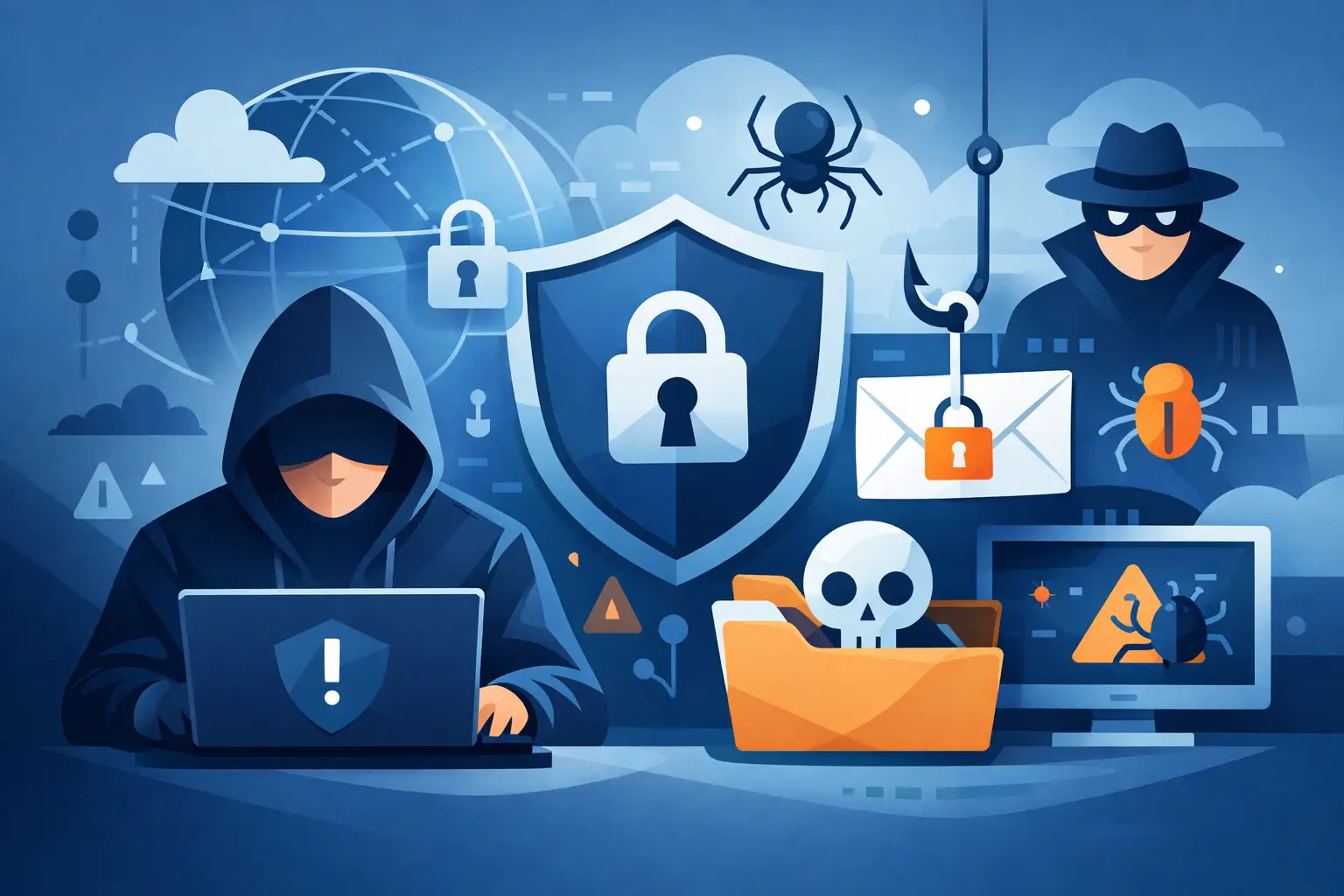
A finance leader approves a wire transfer, an employee clicks a familiar-looking email, or a remote device misses a security update. Those routine moments are often where business disruption starts. If you are asking what is threats in cyber security, the simplest answer is this: threats are anything that can exploit your systems, people, or processes to cause damage, steal data, interrupt operations, or create financial loss.
For small and mid-sized businesses, that definition matters because cyber risk is rarely just a technical issue. It affects cash flow, customer trust, compliance posture, productivity, and leadership time. A security event can stall sales, delay service delivery, and force teams into reactive mode when they should be focused on growth.
What Is Threats in Cyber Security and Why It Matters
In practical terms, a cyber threat is a potential source of harm to your digital environment. That harm may come from criminals, careless users, malicious insiders, software weaknesses, or third-party exposure. The threat itself is the possibility of attack or misuse. When that threat successfully takes advantage of a weakness, it becomes an incident.
That distinction is useful for business decision-makers. A threat is not always an active breach. It can be a realistic risk that exists because of how your environment is built, managed, or accessed. For example, weak passwords, unpatched systems, and overly broad user permissions do not guarantee a compromise, but they create an easier path for one.
This is where many organizations get tripped up. They focus only on tools and overlook the full picture. Cybersecurity is not just about buying software. It is about reducing the chance that a threat can interrupt the business.
The Main Types of Cyber Security Threats
Not every threat looks the same, and not every business faces the same mix of risk. Still, most organizations encounter a few common categories.
Malware and ransomware
Malware is malicious software designed to damage systems, spy on activity, or gain unauthorized access. Ransomware is one of the most disruptive forms because it can encrypt files, lock down operations, and demand payment to restore access. For a growing business, the biggest cost is often not the ransom itself. It is downtime, missed revenue, recovery work, legal exposure, and reputational damage.
Phishing and social engineering
Many attacks start with people, not firewalls. Phishing emails, fake login pages, text-message scams, and phone-based impersonation tactics are all designed to manipulate employees into handing over credentials or approving fraudulent actions. These attacks work because they mimic normal business behavior. They often look urgent, familiar, and believable.
Credential theft and account compromise
Usernames and passwords remain a top target because access is valuable. If an attacker can sign in as a legitimate user, they may bypass security controls and move through email, cloud applications, file storage, and collaboration platforms. This is especially risky in businesses with remote work, multiple SaaS platforms, or inconsistent access policies.
Insider threats
Not every threat comes from outside the company. Insider threats can involve intentional misuse by a disgruntled employee or accidental exposure by a well-meaning team member. Sensitive data may be shared in the wrong place, downloaded to an unmanaged device, or retained after someone changes roles. The risk increases when user access is not reviewed regularly.
Vulnerability exploitation
Software flaws, outdated systems, and unsupported devices create opportunities for attackers. If a known vulnerability exists and a patch has not been applied, the window for exploitation stays open. Some businesses assume they are too small to be targeted, but attackers often automate scanning for these weaknesses at scale.
Supply chain and third-party risk
Your security is also influenced by the vendors, platforms, and service providers your business depends on. A weak point in a third-party application, managed platform, or connected partner can create exposure inside your own environment. This is one reason vendor management and solution fit matter as much as individual product features.
Where Threats Actually Hit the Business
Cyber threats become expensive when they disrupt business functions. Email compromise can lead to invoice fraud. A ransomware event can shut down file access and delay payroll, logistics, or customer service. Stolen credentials can expose contracts, employee records, and financial data. Even a short outage can affect customer confidence and internal productivity.
The impact also depends on your industry and operating model. A healthcare practice has different regulatory and privacy pressures than a manufacturing company or a professional services firm. A business with multiple locations, remote users, or field devices has a different threat surface than a single-site office. That is why effective cybersecurity planning is never one-size-fits-all.
What Causes Cyber Threats to Succeed
Most successful attacks do not happen because a company failed in one dramatic way. They happen because of a series of smaller gaps. Password reuse, limited employee training, poor visibility across vendors, aging infrastructure, inconsistent patching, and unclear ownership can all compound risk.
Complexity is often the hidden problem. As businesses add cloud apps, internet circuits, mobile devices, collaboration tools, and managed services, the environment becomes harder to govern. Security controls may exist, but they are often fragmented. One provider handles connectivity, another manages endpoints, another owns cloud applications, and no one has a complete view of the exposure.
That is where leaders need to think beyond products. The question is not simply whether you have security tools. The question is whether those tools, policies, and providers work together in a way that supports the business.
What Is Threats in Cyber Security From a Risk Management View
From a business risk perspective, threats are variables that can affect continuity, cost, and control. That framing changes the conversation. Instead of asking only, “Are we protected?” a better question is, “Where are we most exposed, and what level of protection makes sense for our operations?”
For example, a company handling payment data or regulated information may need tighter controls and more active monitoring than a business with lower data sensitivity. A firm with a lean internal IT team may benefit from managed detection and response because internal oversight is limited. Another business may first need to simplify access management and improve backup strategy before investing in more advanced tools.
There are trade-offs. Stronger security can add friction if it is poorly implemented. Too little security creates obvious risk, but too much complexity can slow users down and encourage workarounds. The goal is not maximum restriction. It is practical risk reduction aligned to how the company actually operates.
How Businesses Can Reduce Cyber Threat Exposure
The strongest approach starts with visibility. You need to know what systems you have, who can access them, which vendors are involved, where critical data lives, and what would happen if those systems went down. Without that baseline, security spending can become reactive and inefficient.
From there, the fundamentals matter more than many businesses realize. Multi-factor authentication, timely patching, endpoint protection, secure backups, email filtering, user awareness training, and access controls provide meaningful value because they reduce common paths of attack. These are not flashy measures, but they consistently lower risk.
It also helps to define response procedures before an incident occurs. If a user account is compromised, who gets notified, what systems are isolated, and how is recovery managed? During a security event, delays create cost. Clear processes reduce confusion.
Vendor alignment is another major factor. If your internet, cloud, mobility, communications, and security services are spread across disconnected providers, it becomes harder to maintain accountability and spot coverage gaps. Advisory support can help organizations compare options objectively and build a more coordinated environment instead of layering tools without a plan.
A Smarter Way to Think About Cyber Threats
Business leaders do not need to become security engineers to make sound decisions. They do need a clear understanding of where threats come from, how those threats affect operations, and which protections fit the business without creating unnecessary complexity.
That is the real answer to what is threats in cyber security. They are not abstract technical problems. They are business risks with operational consequences. The companies that handle them best are usually not the ones buying the most tools. They are the ones making informed, coordinated decisions across technology, process, and vendor strategy.
If your environment has grown faster than your security plan, that is a good reason to reassess now. A clear view of your risks, providers, and priorities can prevent far more disruption than any after-the-fact fix ever will.