


Your shiny new AI tools are about to hit a wall: and it's probably your internet connection.
Most businesses diving headfirst into AI deployment in 2026 are discovering a harsh reality: their current internet infrastructure wasn't built for the demands of modern artificial intelligence. While everyone's focused on choosing the right AI platforms and training their teams, they're overlooking the foundation that makes it all possible.
The result? Frustrated employees, failed implementations, and thousands of dollars wasted on AI subscriptions that barely work.
But here's the thing: this is completely preventable. The businesses thriving with AI aren't necessarily the ones with the biggest budgets. They're the ones who recognized that AI success starts with rock-solid internet infrastructure.
Why Your Current Internet Setup Is Sabotaging Your AI Investment

Let's cut straight to the problem. Traditional business internet packages were designed for email, web browsing, and maybe some video calls. AI workloads are different beasts entirely.
The Upload Speed Trap
Most business internet plans focus heavily on download speeds because that's what traditional applications needed. But AI? It's constantly sending data back and forth. When your team uploads large datasets for analysis or feeds real-time information to AI models, those upload speeds become the bottleneck.
We're seeing businesses with "high-speed" 100 Mbps download speeds struggling with 10 Mbps upload speeds. Try running multiple AI applications simultaneously, and you'll watch productivity grind to a halt.
Latency Kills Real-Time AI
AI applications doing real-time processing: whether it's customer service chatbots, automated scheduling systems, or live data analysis: need consistent, low-latency connections. Even a few hundred milliseconds of delay can make AI responses feel sluggish and unreliable.
The Bandwidth Sharing Problem
Here's what most businesses don't realize: AI applications are bandwidth-hungry, and they don't play nice with other applications. When your AI tools fire up, they'll compete with everything else on your network: video calls, cloud backups, file transfers. Something's got to give, and usually, it's productivity.
Security Gaps That Expose Everything
Standard business internet often lacks the security framework needed for AI data transmission. Many AI platforms require secure connections, encrypted data transfer, and private network capabilities. Without proper infrastructure, you're either blocked from using enterprise-grade AI tools or exposing sensitive data.
5 Quick Fixes That Actually Work
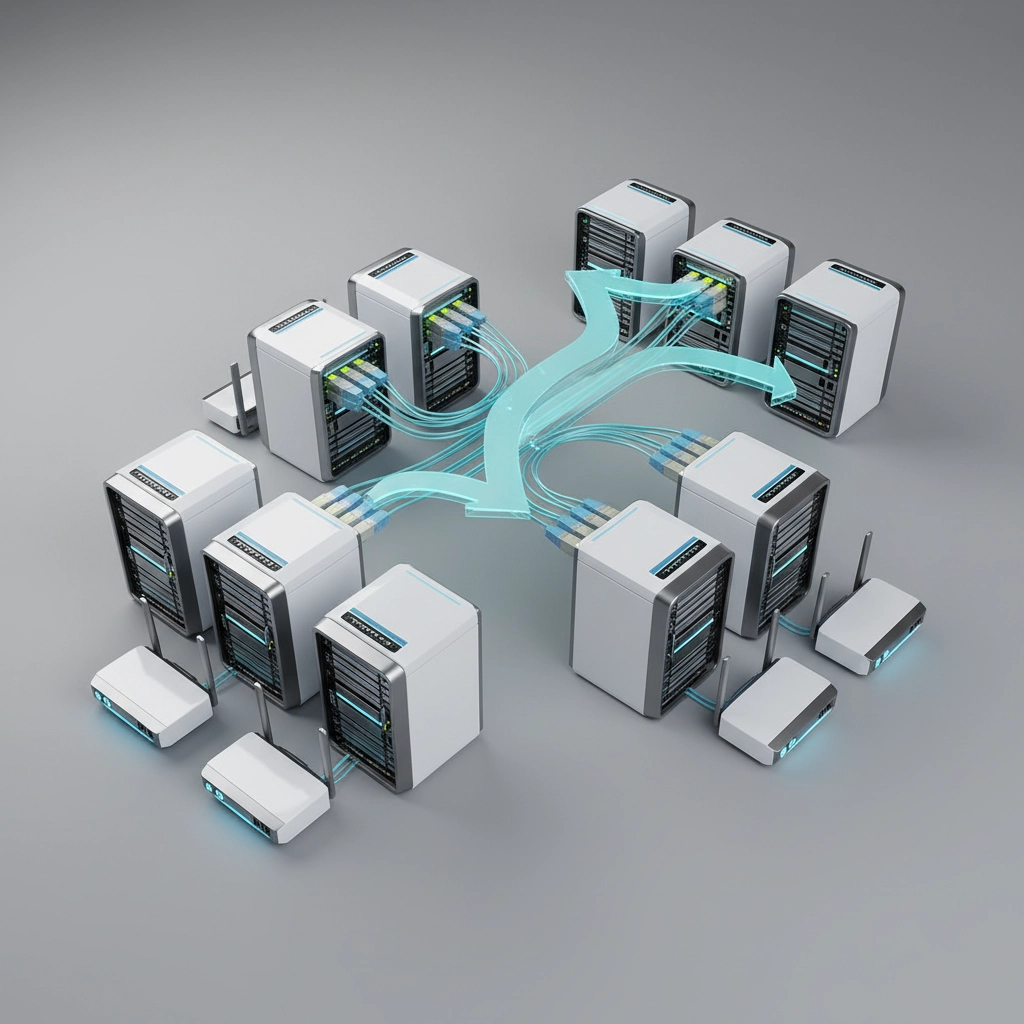
Fix #1: Upgrade to Symmetrical Bandwidth
Stop accepting internet plans where download speeds dwarf upload speeds. AI workloads need balanced, symmetrical connections.
What to do right now: Call your internet provider and ask about fiber-based business plans with matching upload and download speeds. Look for plans offering at least 100 Mbps symmetrical, but ideally 500 Mbps or higher if you're running multiple AI applications.
If fiber isn't available in your area, consider bonded connections that combine multiple lines for better upload performance.
Fix #2: Implement Quality of Service (QoS) Rules
Your network needs to know that AI applications get priority when bandwidth gets tight.
What to do right now: Configure your router or firewall to prioritize AI application traffic. Most business-grade routers allow you to set specific applications or IP addresses as high-priority. Tag your AI platforms as critical applications so they get first dibs on available bandwidth.
This simple change can eliminate the frustrating slowdowns when AI competes with other network traffic.
Fix #3: Create Dedicated AI Network Segments
Stop letting AI share network resources with everything else.
What to do right now: Set up a separate network segment or VLAN specifically for AI applications. This isolates AI traffic, improves performance, and adds an extra security layer.
For businesses with multiple AI tools, consider dedicating specific bandwidth allocations to each application. This prevents one hungry AI application from starving others.

Fix #4: Deploy Edge Computing Solutions
Reduce dependency on internet speed by processing more AI workloads locally.
What to do right now: Identify AI tasks that don't require cloud processing and move them to local servers or edge devices. This is particularly effective for data analysis, image processing, and routine automation tasks.
Edge computing reduces internet bandwidth requirements and improves response times for AI applications.
Fix #5: Establish Private Network Connections
For businesses using enterprise AI platforms, public internet isn't enough.
What to do right now: Investigate private connection options like AWS Direct Connect, Azure ExpressRoute, or Google Cloud Interconnect. These create dedicated, high-speed connections between your business and AI cloud providers.
While more expensive than standard internet, private connections provide consistent performance, better security, and guaranteed bandwidth for AI workloads.
The Real Cost of Getting This Wrong
Businesses that skip these infrastructure upgrades don't just deal with slow AI: they deal with AI that actively hurts productivity. Employees lose confidence in AI tools that respond slowly or inconsistently. Projects get delayed. Eventually, teams abandon AI initiatives altogether.
We've seen companies invest $50,000+ in AI software subscriptions only to cancel them after six months because their internet infrastructure couldn't support reliable performance.
Summary: Your AI Success Checklist
Here's your action plan for AI-ready internet infrastructure:
✅ Audit your current speeds: Test both upload and download speeds during peak usage hours
✅ Upgrade to symmetrical bandwidth: Target at least 100 Mbps symmetrical, preferably 500+ Mbps
✅ Configure QoS rules: Prioritize AI applications in your network traffic management
✅ Segment your network: Create dedicated pathways for AI traffic
✅ Explore edge computing: Move appropriate AI workloads closer to users
✅ Consider private connections: For enterprise AI platforms, investigate dedicated connectivity options
The businesses winning with AI in 2026 aren't necessarily the ones with the most advanced AI strategies: they're the ones with the infrastructure to support them reliably.

Frequently Asked Questions
Q: How much bandwidth do AI applications really need?
A: It varies significantly by application type. Simple chatbots might use 1-5 Mbps, while data-intensive AI analysis can consume 50+ Mbps per concurrent user. The key is having consistent, available bandwidth when AI applications need it.
Q: Can't I just upgrade my internet plan and call it done?
A: Speed alone won't solve AI performance issues. You need the right type of connection (symmetrical), proper network configuration (QoS), and often additional infrastructure like edge computing or private connections.
Q: Is fiber internet required for AI applications?
A: While not technically required, fiber provides the consistent, low-latency, symmetrical bandwidth that AI applications perform best with. Cable and DSL connections often struggle with AI workloads due to asymmetrical speeds and variable performance.
Q: How do I know if my current internet is the problem?
A: Monitor your AI applications during different times of day. If performance varies significantly, or if other network activities slow down AI responses, your internet infrastructure is likely the bottleneck.
Q: What's the difference between business and residential internet for AI?
A: Business internet typically offers symmetrical speeds, Service Level Agreements (SLAs), priority support, and better security features: all critical for reliable AI performance. Residential internet prioritizes download speeds and offers limited support for business-critical applications.
Ready to Future-Proof Your AI Infrastructure?
Your competitors are already moving on AI initiatives. Don't let outdated internet infrastructure hold you back from the productivity gains and competitive advantages that AI can deliver.
Premier Business Team specializes in designing internet and network infrastructure that actually supports modern AI workloads. We've helped businesses across the Pacific Northwest transform their connectivity to handle everything from simple AI chatbots to complex machine learning operations.
Call us today at 360-946-2626 to schedule your AI infrastructure assessment. We'll evaluate your current setup, identify potential bottlenecks, and design a connectivity solution that grows with your AI ambitions.
Don't let slow internet kill your AI investment. Let's build the foundation your business needs to thrive in 2026 and beyond.
