

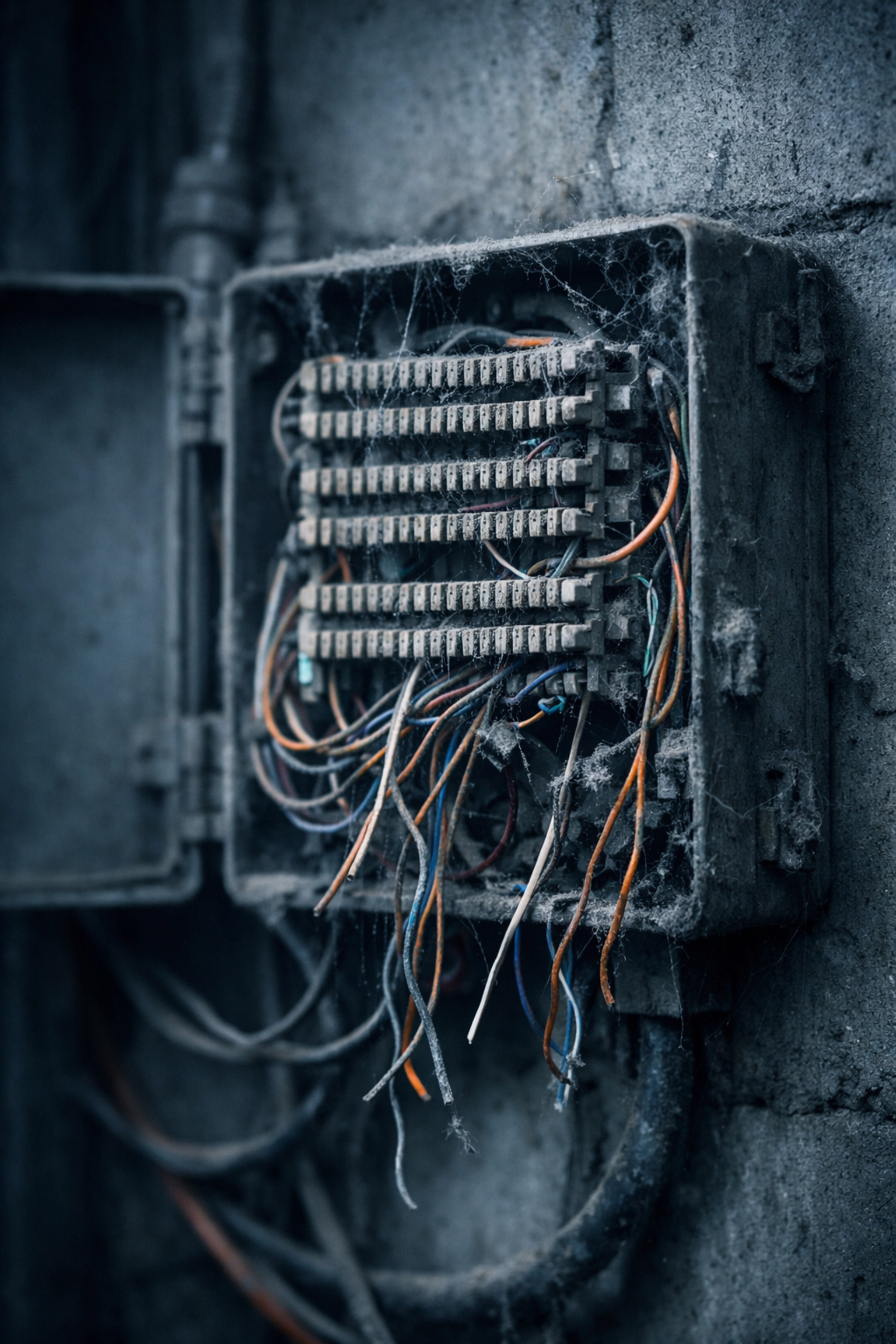
You're paying for phone lines you forgot existed.
It sounds dramatic, but most multi-location businesses have at least 3–5 "zombie" POTS lines buried in their telecom bills. Lines that were installed years ago for fax machines, alarm systems, or elevator phones, and nobody's touched them since.
The problem? You're still paying $50–$150/month per line. And with copper sunset 2026 forcing the complete phase-out of traditional copper phone service, carriers are quietly jacking up POTS line rates to push you toward replacement.
If you don't find these hidden lines now, you'll be stuck paying premium rates for outdated infrastructure until the day AT&T or Verizon finally pulls the plug.
Here's how to hunt them down, and what to do once you find them.
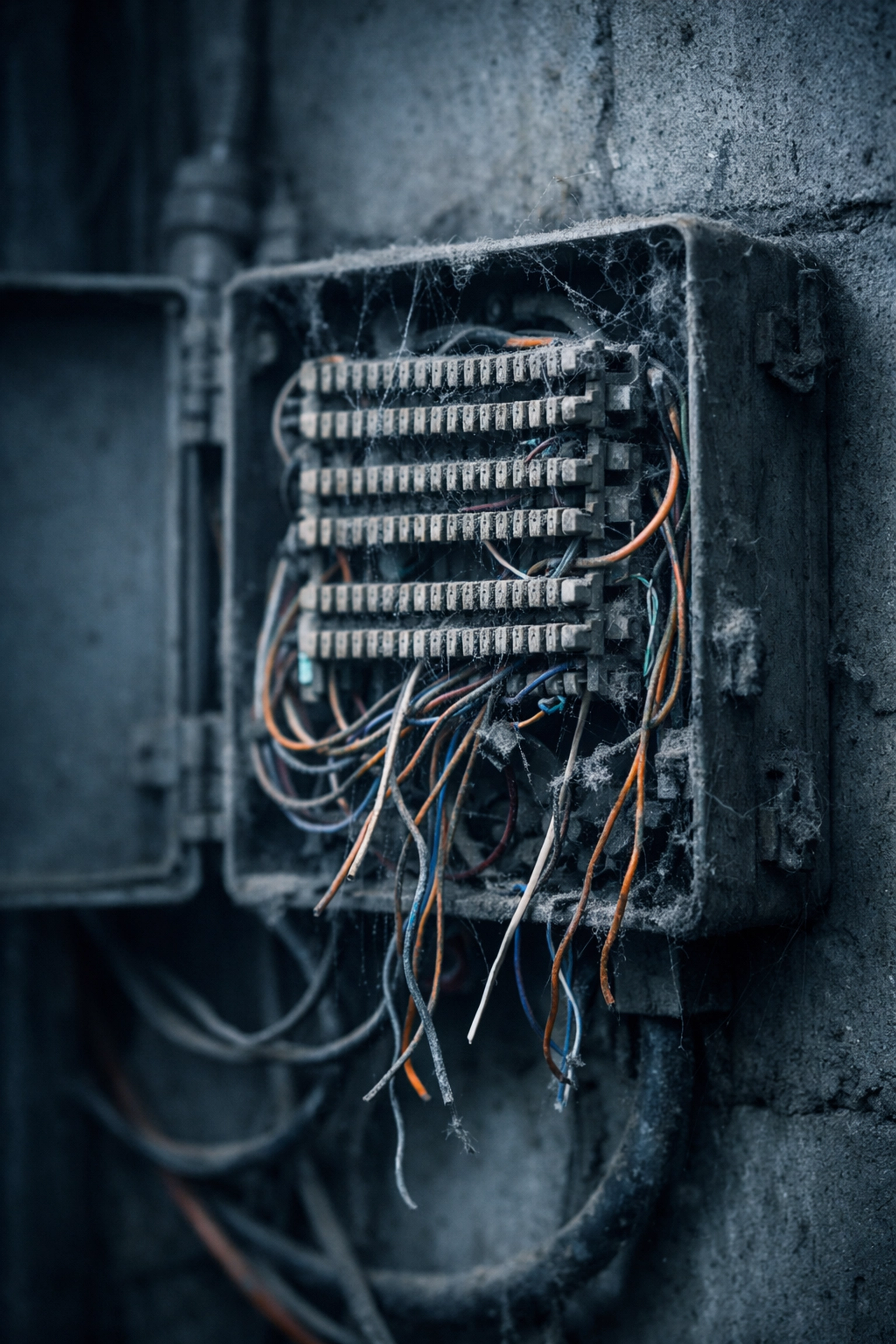
Why This Matters Right Now
Copper sunset 2026 isn't a suggestion. It's a hard deadline.
Legacy copper phone lines (POTS lines) are being decommissioned across the U.S. as telecom carriers shift to fiber and IP-based systems. The FCC has approved the transition, and carriers are moving fast.
What does that mean for you?
- POTS line rates are climbing 15–30% annually
- Carriers are no longer maintaining aging copper infrastructure
- When a line fails, replacement parts are scarce (or nonexistent)
- You'll be forced to switch eventually, but on the carrier's timeline, not yours
The businesses that audit their POTS lines now can replace them strategically, avoid emergency upgrades, and stop bleeding money on unused services.
The ones who wait? They'll scramble in Q4 2026 when their elevator inspector shows up and the phone line is dead.
The 7 Hidden POTS Lines Draining Your Budget
Let's break down where these zombie lines are hiding, and how much they're costing you.
1. Elevator Emergency Phones
Every elevator in your building is required by code to have a working emergency phone line. Most were installed during construction and haven't been touched since.
Average cost: $75–$120/month per line
Where it's hiding: In the elevator machine room, usually terminating at a small control panel
If you have 3 buildings with 2 elevators each, that's 6 lines at $90/month = $540/month or $6,480/year.
2. Fire Alarm Panel Lines
Your fire alarm system needs a monitored phone line to communicate with the central station. These lines are often separate from your main phone system and billed independently.
Average cost: $60–$100/month per line
Where it's hiding: Near the fire alarm control panel, often in a utility closet or back hallway
3. Fax Lines (That Nobody Uses Anymore)
Remember when every office had a dedicated fax machine? Most companies switched to digital faxing years ago, but forgot to cancel the physical line.
Average cost: $50–$80/month per line
Where it's hiding: In the corner of the break room, under a stack of old menus
4. Security System/Door Access Lines
Older security systems used POTS lines for alarm monitoring and door access control. Many buildings upgraded to IP-based systems but left the old copper lines active "just in case."
Average cost: $65–$110/month per line
Where it's hiding: In the security closet or IT room, terminating at a dusty alarm panel

5. ATM or Point-of-Sale Backup Lines
If you have an ATM, payment kiosk, or older POS system, there's a good chance it has a POTS line for backup connectivity. Modern systems use internet connections, but the backup line often stays active.
Average cost: $70–$100/month per line
Where it's hiding: Behind the ATM or at the register base station
6. Gate/Intercom Systems
Multi-tenant properties, gated communities, and warehouse facilities often use POTS lines for entry intercom systems. Residents or visitors dial in, and the line connects to a specific unit or office.
Average cost: $55–$90/month per line
Where it's hiding: At the gate controller box or in the property management office
7. Redundant "Backup" Lines That Never Get Used
Businesses used to install backup POTS lines for critical systems "just in case the main line goes down." Spoiler: the backup line has probably been sitting idle for years, collecting dust and billing charges.
Average cost: $60–$95/month per line
Where it's hiding: Anywhere, often mislabeled or undocumented in telecom records
Quick math: If you have just one of each type of hidden line, you're paying roughly $435–$695/month, or $5,220–$8,340/year for services you might not even need.
How to Find Your Hidden POTS Lines (The Audit Process)
You can't fix what you can't see. Here's how to systematically locate every POTS line on your bill, and in your building.
Step 1: Pull Your Telecom Bills
Grab the last 3 months of invoices from every carrier (AT&T, Verizon, Lumen, Frontier, etc.). Look for line items labeled:
- "Business Line"
- "Analog Line"
- "POTS"
- "Copper Line"
- "Plain Old Telephone Service"
Note the phone numbers and monthly charges.
Step 2: Walk the Building
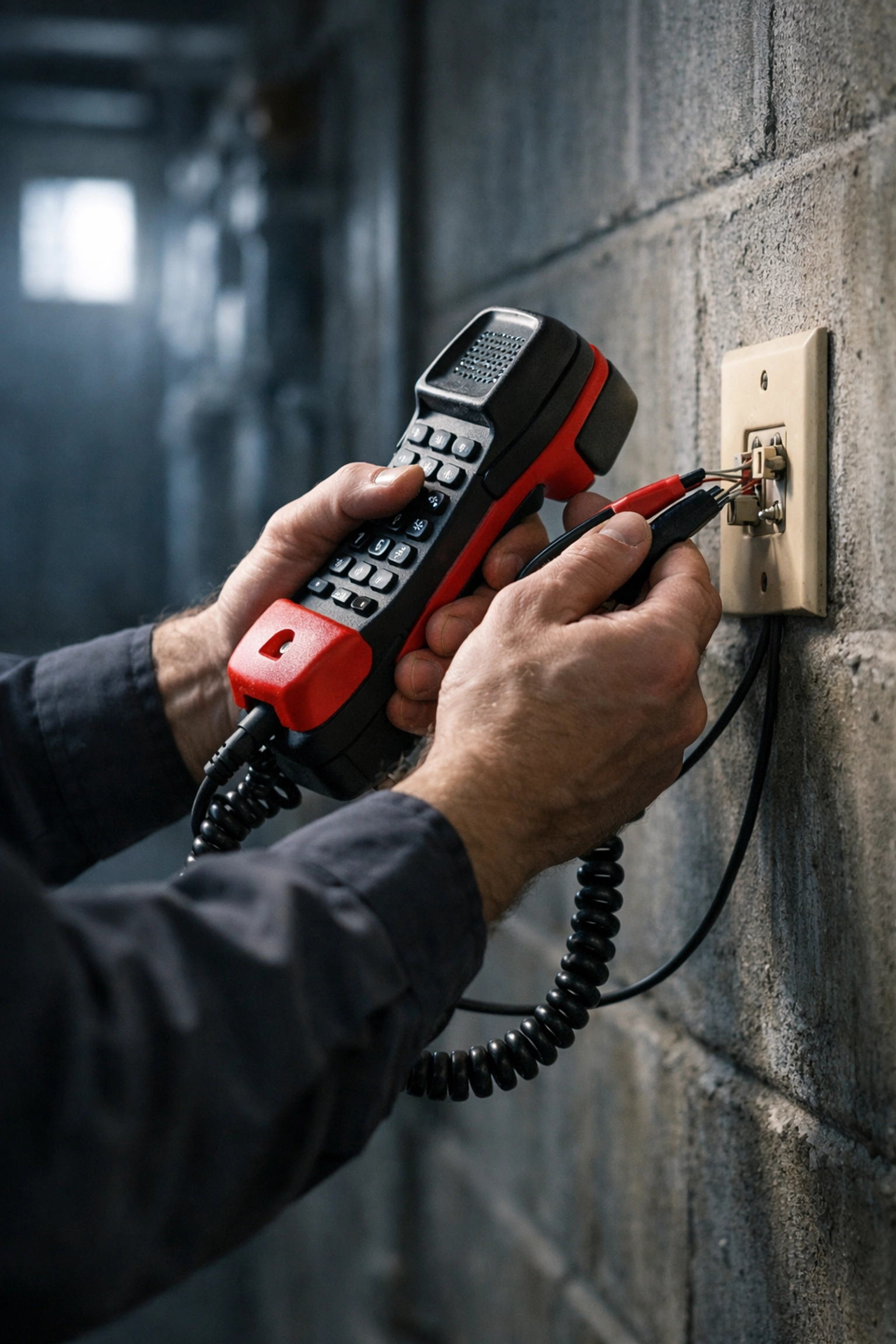
Grab a butt set (telecom test handset) or a basic corded phone. Visit every potential POTS line location:
- Elevator machine rooms
- Fire alarm panels
- Security closets
- Old fax machine corners
- Break rooms
- Gate controllers
Plug the test handset into each jack. If you hear a dial tone, the line is active. No dial tone? It might be dead (or already disconnected).
Step 3: Cross-Reference with Your Bill
Match the active lines you found to the phone numbers on your telecom bill. Any line you can't physically locate? Flag it for investigation.
Some lines may be active on the bill but not physically connected, meaning you're paying for nothing.
Step 4: Test Each Line's Purpose
Once you've identified a POTS line, test its function:
- Elevator phones: Dial the number. Does it ring in the elevator?
- Fire alarm panels: Check with your alarm monitoring company. Is this line still in use?
- Fax lines: When was the last fax sent or received?
- Security systems: Is the alarm panel still using this line, or has it been upgraded to IP?
If a line isn't actively serving a critical function, it's a candidate for elimination.
Step 5: Document Everything
Create a simple spreadsheet:
- Phone number
- Monthly cost
- Physical location
- Purpose (elevator, alarm, fax, etc.)
- Status (active, inactive, unknown)
This becomes your POTS line replacement roadmap.
What to Do Once You've Found Them
You've identified the zombie lines. Now what?
Option 1: Disconnect Unused Lines Immediately
If a line isn't serving any purpose (old fax machine, redundant backup, etc.), call your carrier and cancel it. Easy savings.
Option 2: Replace Critical Lines with Modern Alternatives
For lines that must stay active (elevator phones, fire alarms), you need a compliant POTS line replacement solution:
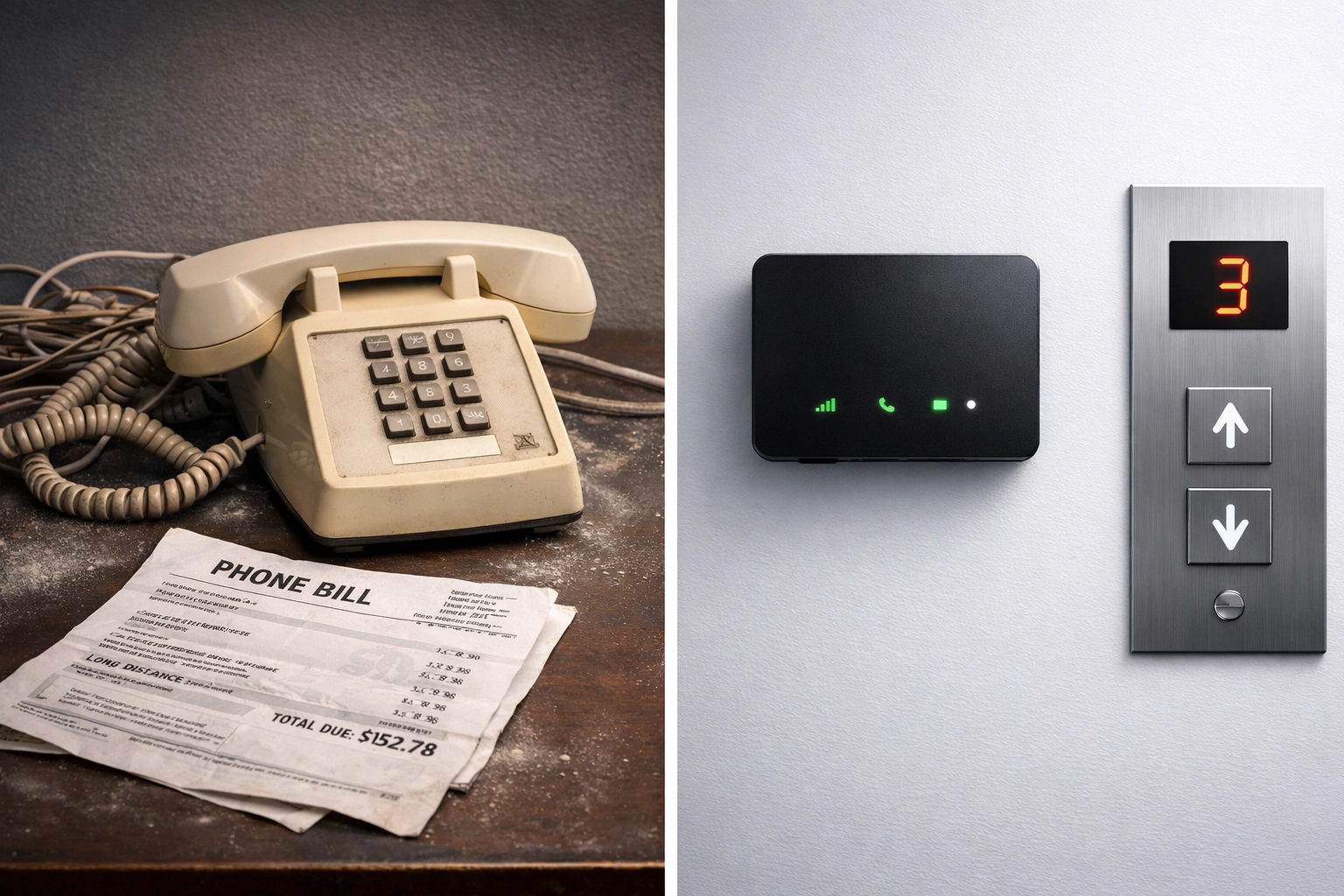
- Cellular-based POTS replacements (like RAD or Ooma AirDial) use 4G/5G to emulate a traditional phone line
- VoIP adapters can work for some applications, but check code compliance first
- Fiber-based analog terminal adapters (ATAs) deliver dial tone over fiber networks
Each option has pros and cons depending on your building, location, and use case. We covered the full elevator phone replacement guide here.
Option 3: Negotiate a Bulk Migration with Your Telecom Partner
If you're managing 10+ locations with dozens of POTS lines, don't go it alone. A telecom advisor (like Premier Business Team) can help you:
- Audit all lines across every location
- Design a compliant replacement strategy
- Negotiate carrier pricing for bulk migrations
- Coordinate installations to meet code deadlines
The savings from eliminating even 5 zombie lines will likely cover the cost of a full migration plan.
FAQ: Hidden POTS Lines and Copper Sunset 2026
Q: How do I know if a POTS line is actually dead or just disconnected at the jack?
A: Use a butt set or corded phone to test at multiple points. Start at the network interface device (NID) outside your building, if there's a dial tone there but not at the jack, the issue is internal wiring. If there's no dial tone at the NID, the line may be disconnected by the carrier (but you might still be billed for it).
Q: Can I just wait until 2026 and let the carrier handle it?
A: Technically yes, but you'll pay a premium for the privilege. POTS line rates are climbing fast as carriers push customers toward migration. Waiting also means you're at the mercy of the carrier's timeline, if your elevator line goes down in December 2026, you'll be scrambling for an emergency replacement.
Q: Are there legal requirements for elevator phone line replacement?
A: Yes. ASME A17.1 elevator safety code requires a working two-way communication system in every elevator. POTS line replacement solutions must meet these standards, which means not every VoIP adapter or cellular device will work. Always verify compliance before switching.
Q: How much can I realistically save by eliminating hidden POTS lines?
A: It depends on how many you have. A typical 5-location business with 2–3 zombie lines per site could save $3,000–$6,000 annually just by disconnecting unused lines. Add in strategic replacement of critical lines with modern alternatives, and you're looking at 30–50% cost reduction on your analog line spend.
Q: What if I'm not sure whether a line is still needed?
A: When in doubt, test it. Call the number, check the physical connection, and confirm with your alarm company, elevator service provider, or security team. If nobody can confirm it's in use, it's probably safe to disconnect.
Stop Paying for Zombie Lines
Hidden POTS lines are a silent budget drain: and with copper sunset 2026 accelerating the phase-out, now's the time to act.
A simple audit can save you thousands per year. And replacing critical lines before the deadline gives you control over the timeline, the technology, and the cost.
Need help tracking down your hidden POTS lines?
Premier Business Team specializes in telecom audits, POTS line replacement, and carrier negotiations for multi-location businesses. We'll help you identify every zombie line, build a compliant replacement strategy, and stop the bleeding before copper sunset 2026 forces your hand.
Schedule a free telecom audit today and find out how much you're really paying for lines you didn't know existed.
