• Skip to primary navigation
  • Skip to main content
Premier Business Team

Premier Business Team

Your business connectivity and IT Team

  • Home
  • Business Internet
  • Business Phone
  • Blog
  • About Us
    • Our Featured Suppliers
  • Contact Us
  • Business Quote
    • Business Tech Assessment
  • Engineering
  • Call: 360-946-2626
  • Show Search
Hide Search

Blog Posts

Are POTS Lines Dead? Here's What 10,000+ Businesses Discovered About Modern Connectivity in 2026

premierbusiness · January 10, 2026 ·

The short answer? Yes, POTS (Plain Old Telephone Service) lines are effectively dead: and the businesses that waited until 2026 to make the switch learned some hard lessons. As we move through 2026, over 10,000 companies have shared their experiences with the great POTS migration, and the data tells a compelling story about modern connectivity.

The Final Nail in the POTS Coffin

By early 2026, major telecommunications carriers have accelerated their copper retirement schedules. AT&T has already achieved their 50% copper line reduction target and is pushing toward complete elimination by 2029. Verizon has transitioned nearly 80% of their POTS customers to fiber or wireless solutions, with full completion expected by late 2027.

What businesses discovered in 2026 wasn't just that POTS lines were disappearing: it was that the remaining infrastructure had become so unreliable and expensive that staying put was actually costing them more than upgrading.

image_1

What Businesses Actually Experienced During the Transition

The Cost Reality Check

Companies that tracked their telecommunications expenses through 2026 found some eye-opening numbers:

  • Legacy POTS costs increased by 35-60% as carriers reduced maintenance investment while raising service fees
  • Downtime costs averaged $1,200 per hour for small businesses still relying on copper lines
  • Emergency repair response times stretched from same-day to 3-5 business days in many markets

Meanwhile, businesses that migrated to modern solutions like cloud phone systems reported immediate cost savings of 40-65% on their monthly telecommunications bills.

The Reliability Gap

The most surprising discovery for many businesses was how much their old POTS lines had deteriorated without them realizing it. Companies conducting side-by-side comparisons found:

  • Call quality on POTS lines had declined gradually, making poor audio seem "normal"
  • Static, dropped calls, and connection delays were accepted as unavoidable business costs
  • Weather-related outages affected POTS lines 3x more frequently than fiber-based solutions

One retail franchise owner told us: "We didn't realize how many potential customers we were losing to poor call quality until we switched. Our phone-based orders increased 20% in the first month just from clearer connections."

image_2

The Modern Connectivity Landscape

Fiber Optic: The Clear Winner

Businesses that moved to fiber-optic solutions in 2026 consistently reported the best outcomes:

  • Crystal-clear call quality with zero static or interference
  • Bundled internet and voice services at lower total costs than separate POTS and broadband
  • Built-in redundancy that eliminated weather-related outages
  • Scalability that allowed adding lines or features without infrastructure changes

VoIP: Feature-Rich and Cost-Effective

Voice over Internet Protocol solutions proved especially popular with growing businesses:

  • Advanced features like call forwarding, voicemail-to-email, and auto-attendants
  • Mobile integration allowing employees to use business numbers on personal devices
  • Easy scalability for seasonal businesses or rapid growth
  • Cost savings averaging 50% compared to traditional phone systems

Cellular/LTE: The Backup That Became Primary

Many businesses discovered that cellular solutions weren't just backup options: they were often more reliable than their primary POTS lines:

  • Faster installation with no waiting for copper line repairs
  • Better coverage in areas where copper infrastructure was failing
  • Built-in redundancy through multiple cell towers
  • Future-proof technology that continues improving with 5G rollouts

image_3

The Hidden Costs of Waiting

Businesses that delayed their POTS migration until 2026 faced several unexpected challenges:

Emergency Equipment Dependencies

Many companies didn't realize how many systems depended on POTS lines until it was almost too late:

  • Elevator emergency phones required specific compliance solutions
  • Security systems needed compatible communication methods
  • Fire alarm systems had to be updated to meet safety regulations
  • Point-of-sale systems needed connectivity updates

Limited Migration Windows

As carriers accelerated retirement schedules, businesses found themselves competing for installation appointments. Companies that waited until the last minute faced:

  • Installation delays of 4-6 weeks for fiber connections
  • Limited technician availability during peak migration periods
  • Equipment shortages for popular business phone systems
  • Higher costs due to rushed implementation timelines

What Successful Businesses Did Differently

They Audited Their Entire Communications Infrastructure

The most successful migrations in 2026 started with comprehensive audits. These businesses discovered hidden dependencies and planned accordingly. This aligns with our approach to cybersecurity assessments: understanding your complete technology ecosystem before making changes.

They Prioritized Redundancy

Smart businesses didn't just replace POTS with a single alternative: they built redundant systems. This might include primary fiber service with cellular backup, or VoIP systems with failover to mobile devices.

They Planned for Growth

Instead of simply replacing existing functionality, successful companies used the migration as an opportunity to upgrade their entire communications strategy. This included integration with cloud services and modern business tools.

image_4

The Bottom Line: What 2026 Taught Us

The data from over 10,000 business transitions in 2026 reveals a clear pattern: companies that embraced modern connectivity solutions didn't just replace their old phone systems: they transformed their entire approach to business communications.

Key takeaways include:

  • Waiting costs more than upgrading, both in direct expenses and opportunity costs
  • Modern solutions deliver better reliability than aging POTS infrastructure
  • Feature improvements often provide unexpected business value beyond basic connectivity
  • Professional implementation reduces downtime and ensures compliance with safety regulations

Making the Transition Work for Your Business

If your business is still relying on POTS lines, the window for a smooth transition is closing rapidly. However, the good news is that modern alternatives are more accessible and affordable than ever.

The key is working with experienced professionals who understand both the technical requirements and regulatory compliance issues. Whether you need unified communications for a contact center or simple voice service for a small office, the right solution exists for your needs and budget.

Don't let your business become a cautionary tale of waiting too long. The companies that thrived through the POTS transition were those that planned ahead, implemented professionally, and chose solutions designed for the future.

Ready to future-proof your business communications? Contact Premier Business Team today to discuss your transition options and ensure your connectivity supports your business growth for years to come. Our experts will assess your current setup, recommend the best solutions for your needs, and handle the entire migration process with minimal disruption to your operations.


Phone Systems for Hospitality in Denver, CO

premierbusiness · January 9, 2026 ·

Request a Quote

Modernize Your Denver Hotel, Resort, or Casino Phone System and Save Hundreds of Thousands

Denver's hospitality industry is thriving, with new hotels, expanded resorts, and gaming facilities investing heavily in guest experience technology. But many properties are still running on outdated phone systems that drain budgets, frustrate guests, and limit operational efficiency. Premier Business Team has helped hotels, resorts, and casinos save over half a million dollars by fully upgrading and modernizing their phone systems , and we're bringing that same expertise to Denver's hospitality market.

Whether you're managing a boutique hotel in LoDo, a ski resort in nearby mountains, or a casino in Black Hawk, the right phone systems for hotels can transform your guest experience while dramatically reducing operational costs. Our cloud phone systems for hospitality integrate seamlessly with property management systems and deliver enterprise-grade reliability at a very low cost per room.

Why Denver Hospitality Properties Need Modern Phone Systems

Denver's competitive hospitality landscape demands efficiency, reliability, and exceptional guest service. Traditional phone systems simply can't deliver what today's properties need:

Guest Expectations Have Changed
Modern travelers expect seamless communication, whether they're booking spa appointments, requesting room service, or connecting with concierge services. Legacy systems create bottlenecks, dropped calls, and frustrated guests who share negative experiences online.

Operational Costs Are Spiraling
Maintaining outdated PBX systems means expensive hardware repairs, dedicated IT staff, and limited scalability. Many Denver properties pay thousands monthly for phone services that could cost a fraction with modern solutions.

Integration Challenges
Your phone system should work seamlessly with your property management system (PMS), point-of-sale systems, and guest services platforms. Legacy systems create data silos and manual workarounds that waste staff time and create service gaps.

image_1

Our Proven Track Record: Over $500,000 in Savings for Hospitality Clients

Premier Business Team specializes in hospitality phone solutions that deliver measurable ROI. We've successfully modernized communications for hotels, resorts, and casinos across multiple markets, consistently delivering:

  • 50-70% reduction in monthly phone costs
  • Elimination of hardware maintenance expenses
  • Seamless integration with existing property management systems
  • Enhanced guest satisfaction scores through improved service delivery
  • Streamlined staff communication across departments

Our approach combines industry expertise with technical excellence. We understand the unique needs of hospitality operations , from front desk efficiency to housekeeping coordination to guest service excellence.

Comprehensive Phone System Solutions for Denver Hospitality

Hotels: From Boutique to Enterprise

Phone systems for hotels must balance guest convenience with operational efficiency. Our solutions include:

Guest Room Features:

  • One-touch service requests (housekeeping, maintenance, front desk)
  • Automated wake-up calls with personalized messaging
  • Direct dial capabilities for local and long-distance calling
  • Integration with in-room entertainment systems
  • Emergency service connectivity

Front Desk Integration:

  • Seamless connection with property management systems
  • Automated guest check-in/check-out notifications
  • Call routing based on guest preferences and VIP status
  • Multi-language support for international visitors
  • Real-time occupancy and service request tracking

Resorts: Comprehensive Communication Solutions

Phone systems for resorts require expanded functionality to support diverse amenities and services:

Multi-Location Connectivity:

  • Unified system across resort buildings, restaurants, and recreational facilities
  • Mobile integration for staff working across sprawling properties
  • Guest services coordination between departments
  • Activity booking and scheduling integration
  • Transportation and shuttle service communication

Guest Experience Enhancement:

  • Concierge services integration
  • Restaurant reservation systems
  • Spa and recreational activity booking
  • Event coordination and communication
  • VIP guest service protocols

image_2

Casinos: Security and Efficiency Combined

Business phone systems for casinos must meet strict regulatory requirements while supporting complex operations:

Security Integration:

  • Secure communication channels for surveillance and security teams
  • Emergency response protocols with local law enforcement
  • Incident reporting and documentation systems
  • Compliance monitoring and recording capabilities
  • VIP player service coordination

Gaming Floor Operations:

  • Instant communication between gaming supervisors
  • Player services and host coordination
  • Food and beverage service integration
  • Maintenance and technical support communication
  • Customer relationship management integration

Seamless Property Management System Integration

One of our key differentiators is seamless integration with major property management systems used throughout Denver's hospitality market:

Supported PMS Platforms:

  • Opera (Oracle Hospitality)
  • Amadeus Hospitality Platform
  • Protel Air
  • RoomKey PMS
  • Maestro PMS
  • SkyTouch Technology
  • Choice Advantage

Integration Benefits:

  • Automatic guest information synchronization
  • Real-time room status updates
  • Integrated billing for phone services
  • Guest preference tracking and service delivery
  • Automated service request routing
  • Comprehensive reporting and analytics

This integration eliminates manual data entry, reduces service errors, and ensures consistent guest experiences across all touchpoints.

Very Low Cost Per Room: Maximizing Your ROI

Traditional hospitality phone systems often cost $50-100+ per room monthly. While the industry standard for modern cloud solutions is typically $15-25 per room, Premier Business Team can deliver per-room pricing as low as $2 with our cloud phone systems for hospitality, while providing superior functionality:

Cost Breakdown:

  • Unlimited local and long-distance calling
  • No hardware maintenance fees
  • Free system updates and feature additions
  • 24/7 technical support included
  • Scalable pricing based on actual occupancy

Additional Savings:

  • Elimination of PBX hardware replacement costs
  • Reduced IT support requirements
  • Lower energy consumption
  • Simplified vendor management
  • Faster deployment of new services

For a 100-room property, this typically translates to $3,000-6,000 monthly savings compared to traditional systems.

image_3

Advanced Features for Modern Hospitality Operations

Mobile Integration and Flexibility

Modern staff need mobile communication capabilities. Our systems provide:

  • Smartphone apps for front desk, housekeeping, and maintenance staff
  • Guest service request notifications and updates
  • Real-time communication across departments
  • Location-based call routing and directory services

Analytics and Reporting

Data-driven insights help optimize operations:

  • Call volume analysis by department and time
  • Guest service response time tracking
  • Staff productivity and efficiency metrics
  • Cost analysis and ROI reporting
  • Integration with business intelligence platforms

Scalability and Future-Proofing

Denver's hospitality market continues evolving. Our systems grow with your needs:

  • Easy addition of rooms and facilities
  • Integration with emerging guest technologies
  • Support for future communication standards
  • Cloud-based flexibility for multi-property management

Why Choose Premier Business Team for Your Hospitality Phone System

Industry-Specific Expertise
We understand hospitality operations, guest expectations, and the unique challenges Denver properties face. Our team includes specialists who've worked with major hotel chains, independent properties, and resort operations.

Local Denver Support
While we serve properties nationwide, we provide dedicated support for Denver-area clients with local understanding of market conditions, regulatory requirements, and business practices.

Proven Implementation Process
Our systematic approach ensures minimal disruption during transitions:

  1. Comprehensive needs assessment and system design
  2. Integration planning with existing systems
  3. Staff training and change management
  4. Phased deployment with continuous support
  5. Performance monitoring and optimization

Ongoing Partnership
We're not just a vendor , we're your technology partner. Our relationship continues long after installation with:

  • Regular system optimization reviews
  • Feature updates and enhancements
  • 24/7 technical support
  • Strategic planning for future growth

Frequently Asked Questions

Q: How long does it take to install a new hospitality phone system?
A: Most installations complete within 2-4 weeks, depending on property size and integration complexity. We work around your operational schedule to minimize guest impact.

Q: Can you integrate with our existing property management system?
A: Yes, we integrate with all major PMS platforms used in the hospitality industry. Our team will assess your current system and design seamless integration.

Q: What happens if our internet goes down?
A: Our systems include automatic failover to backup connections and cellular networks, ensuring continuous communication even during internet outages.

Q: Do you provide staff training on the new system?
A: Absolutely. We include comprehensive training for all departments, ongoing support materials, and follow-up sessions to ensure successful adoption.

Q: How does pricing work for seasonal properties?
A: We offer flexible pricing models that accommodate seasonal occupancy changes, ensuring you only pay for active services during peak periods.

Q: What kind of support do you provide after installation?
A: We provide 24/7 technical support, regular system maintenance, software updates, and dedicated account management for ongoing optimization.

Transform Your Denver Hospitality Communications Today

Don't let outdated phone systems hold back your property's potential. Join the hundreds of hotels, resorts, and casinos that have already saved over half a million dollars while dramatically improving their guest experience and operational efficiency.

Ready to modernize your hospitality phone system and start saving thousands monthly? Contact Premier Business Team today for a free consultation and custom proposal tailored to your Denver property's specific needs.

Call us at 360-946-2626 or visit our website to schedule your complimentary assessment. Our hospitality communication experts are standing by to help you deliver exceptional guest experiences while maximizing your technology ROI.

Request a Quote

Stop Paying for Outdated POTS Lines: 7 Cloud Phone System Upgrades That Actually Save Money in 2026

premierbusiness · January 9, 2026 ·

If you’re still paying for those ancient POTS (Plain Old Telephone Service) lines, you’re basically lighting money on fire every month. The telecom landscape has completely shifted in 2026, and businesses clinging to outdated phone systems are missing out on massive savings: we’re talking 30-73% reductions in communication costs.

The math is simple: traditional phone systems drain your budget through expensive infrastructure, maintenance headaches, and limited functionality. Cloud phone systems flip that equation entirely. Let’s break down the seven game-changing upgrades that’ll put money back in your pocket.

1. Ditch the Server Room Drama

Remember when you needed an entire room dedicated to phone system servers? Those days are over. Cloud phone systems eliminate all that costly on-premises infrastructure that’s been eating up your budget and office space.

No more servers humming in the corner. No more expensive electrical systems keeping everything powered. No more replacing aging equipment every few years. Your cloud provider handles all of that remotely, and you just pay a simple monthly fee.

image_1

The best part? Calls work through apps on existing devices. Your team can use their smartphones, tablets, or computers immediately: no expensive desk phones required. This alone can save thousands in hardware costs.

2. Scale Smart, Not Expensive

Traditional phone systems force you into a corner. Hit capacity? Buy new physical machines. Need less capacity? Too bad: you’re stuck with what you bought.

Cloud systems let you pay for exactly what you need, when you need it. Adding new employees? Just update your subscription. Seasonal business fluctuations? Scale up or down without any equipment purchases or carrying costs.

This flexibility is huge for growing businesses. Instead of overbuying infrastructure “just in case,” you can invest that capital into actual business growth.

3. Setup Costs That Don’t Hurt

Here’s where traditional systems really sting: setup costs often run into the thousands, sometimes tens of thousands for larger offices. Cloud phone systems? Most providers charge $0-$100 for setup, and many waive fees entirely.

Since everything runs through your existing internet connection, there’s no rewiring your office or calling in specialized technicians. Download the software, make a call. It’s that simple.

If you eventually want physical desk phones, they cost around $80 each: not the thousands required for traditional PBX equipment. But honestly, most teams find the mobile apps work perfectly fine.

4. Pricing That Actually Makes Sense

Traditional phone bills are a nightmare of hidden fees, per-minute charges, and mysterious line items. Cloud phone systems use straightforward monthly rates: typically $15-$50 per user.

That flat rate usually includes:

  • Voicemail
  • Call routing
  • Auto-attendant
  • Conference calling
  • Free long-distance within the US

Let’s do the math for a 20-person team:

  • Cloud system: ~$400/month ($15-20 per user)
  • Traditional system: $14,500+ in year one alone

That’s over 40% savings in the first year, and the gap gets wider since you avoid ongoing maintenance and feature fees.

image_2

5. Maintenance? What Maintenance?

This might be the biggest hidden cost saver. With traditional systems, your IT team spends countless hours on maintenance, patches, upgrades, and fixing broken components. Cloud providers handle all of that as part of the service.

Your IT department can focus on actually advancing your business instead of keeping ancient phone equipment limping along. The efficiency gains alone are worth the switch, even before considering the direct cost savings.

For comprehensive guidance on choosing the right system for your needs, check out our cloud services buyer’s guide that walks through the decision process in just 5 minutes.

6. Work from Anywhere Without Extra Costs

2026 business reality: your team works from everywhere. Traditional phone systems make remote work expensive and complicated. Cloud systems make it seamless and included.

Built-in mobile apps let employees take calls from anywhere. Seamless device switching means starting a call on the office phone and finishing it on mobile. After-hours routing sends calls to voicemail or mobile devices automatically.

No expensive call forwarding charges. No complex routing hardware. Just smooth communication regardless of where your team is working.

image_3

7. Future-Proof Features Without Upgrade Fees

Traditional systems lock you into whatever features existed when you bought the hardware. Want new capabilities? Pay for expensive upgrades or replace everything.

Cloud systems automatically include new features and improvements. AI-powered call routing, advanced analytics, integration with modern business tools: it all comes with your subscription. Vendors continuously improve their platforms, and you benefit without additional costs.

Smart call routing alone can transform your business:

  • Route sales calls to available reps by department
  • Escalate VIP customers to senior staff
  • Handle after-hours calls appropriately
  • Reduce missed calls and improve response times

The POTS Problem is Real

Many businesses don’t realize they’re still paying premium prices for POTS lines that major carriers are actively phasing out. These legacy systems often support elevators, fire alarms, and fax machines, but carriers are pushing expensive “managed” alternatives that cost significantly more.

For businesses dealing with POTS replacement challenges, our specialized POTS replacement services help navigate the transition smoothly while maintaining critical safety and compliance systems.

Making the Switch in 2026

The technology has matured, the savings are proven, and the business case is overwhelming. Companies report savings of 50-90% after switching from traditional desk phones to cloud-based solutions.

For a deeper comparison of your options, our analysis of cloud phone systems vs traditional PBX breaks down exactly which solution works best for different business sizes and needs.

The transition doesn’t have to be complicated. Start with a pilot group, test the features your team needs most, then roll out company-wide. Most businesses complete the switch in 2-4 weeks with minimal disruption.

Your Next Step

Stop throwing money at outdated technology. Cloud phone systems deliver better features, superior reliability, and massive cost savings. The only question is how much longer you’ll wait before making the switch.

Ready to see exactly how much your business could save? Contact Premier Business Team today for a free consultation and cost analysis. We’ll show you the real numbers and help design a cloud phone solution that fits your specific needs and budget. Don’t let another month of overpaying slip by( take action now.)

Zero Trust Cybersecurity Explained in Under 3 Minutes (And Why Your Current Firewall Isn't Enough)

premierbusiness · January 9, 2026 ·

Your business firewall is like a medieval castle wall: impressive looking, but completely useless against modern threats. While you're defending the gate, hackers are already inside the walls, moving freely through your network, accessing sensitive data, and causing damage that could have been prevented.

If your cybersecurity strategy still revolves around keeping the bad guys out with a traditional firewall, you're fighting yesterday's war with yesterday's weapons. Today's threat landscape demands a fundamentally different approach: Zero Trust cybersecurity.

What Exactly Is Zero Trust?

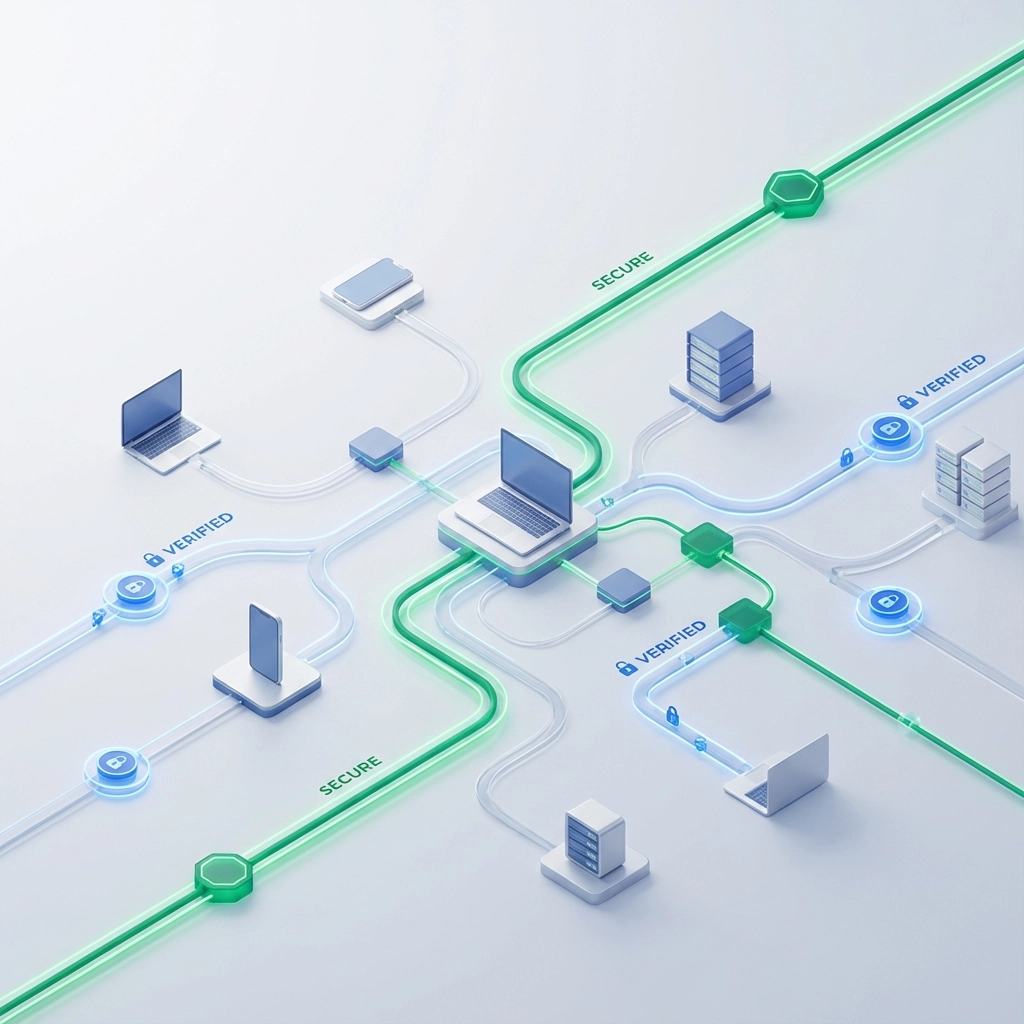
Zero Trust is a security framework built on one simple principle: never trust, always verify. Unlike traditional security models that assume everything inside your network is safe, Zero Trust treats every user, device, and connection as a potential threat: even if they're already inside your network perimeter.

Think of it this way: traditional security is like a nightclub with a bouncer at the front door. Once you're inside, you can access the VIP section, the bar, the DJ booth: everything. Zero Trust is like a high-security facility where you need to show your ID and get verified at every single door, even if you work there.

image_1

This approach might seem paranoid, but it's exactly what businesses need in 2026. The old "trust but verify" model has been flipped to "verify, then trust: and keep verifying."

Why Your Current Firewall Strategy Is Failing

Traditional firewalls operate on a simple premise: create a secure perimeter around your network and trust everything inside that boundary. This perimeter-based security model made sense twenty years ago when employees worked from the office, used company computers, and accessed data stored on local servers.

But that world doesn't exist anymore.

The Perimeter Has Vanished

Your network perimeter disappeared the moment your first employee logged in from home, your first application moved to the cloud, or your first vendor needed remote access to your systems. Modern businesses operate with:

  • Remote employees accessing company data from personal devices
  • Cloud applications storing sensitive information outside your network
  • Third-party vendors requiring system access
  • Mobile devices connecting from coffee shops, airports, and home networks
  • SaaS applications that bypass your firewall entirely

Your firewall is protecting a perimeter that no longer exists.

Insider Threats Are Real and Growing

The biggest cybersecurity myth is that all threats come from outside your organization. In reality, insider threats account for nearly 60% of data breaches, according to recent cybersecurity studies. These aren't just disgruntled employees: they include:

  • Compromised employee accounts with legitimate access
  • Infected devices that appear trusted to your network
  • Third-party contractors with excessive permissions
  • Accidentally misconfigured systems and applications

A traditional firewall can't distinguish between a legitimate employee and a hacker using stolen credentials. Once someone is inside the perimeter, they often have broad access to move laterally through your network.

image_2

Breaches Are Inevitable

Here's the uncomfortable truth: sophisticated attackers will eventually find a way past your firewall. Whether through social engineering, zero-day exploits, or simple human error, breaches happen to organizations with even the most advanced perimeter security.

The question isn't if you'll face a security incident, but how much damage it will cause when you do.

The Core Principles of Zero Trust

Zero Trust isn't a single product you can buy: it's a comprehensive security philosophy built on three fundamental principles:

1. Verify Every Access Request

In a Zero Trust model, every single access request requires verification, regardless of who's making it or where it's coming from. This means:

  • Multi-factor authentication for all users
  • Device verification and health checks
  • Real-time risk assessment for each access attempt
  • Continuous monitoring of user behavior

Even your CEO logging in from their usual computer at the main office goes through the same verification process as a contractor accessing the system from across the country.

2. Implement Least Privilege Access

Users get exactly the minimum level of access required to do their job: nothing more. This principle dramatically reduces the potential damage from compromised accounts because:

  • Accounting staff can't access engineering systems
  • Temporary contractors can't view customer financial data
  • Marketing employees can't modify network configurations
  • Access permissions are regularly reviewed and updated

3. Assume Breach Has Already Occurred

Zero Trust operates under the assumption that attackers are already inside your network. This mindset drives security decisions that limit the blast radius of any potential breach:

  • Network segmentation isolates critical systems
  • Continuous monitoring detects unusual activity
  • Automated responses can quickly contain threats
  • Data encryption protects information even if accessed

image_3

Real-World Benefits Your Business Will See

Implementing Zero Trust isn't just about better security: it delivers tangible business benefits that impact your bottom line.

Reduced Risk of Successful Attacks

Companies with mature Zero Trust implementations experience 45% fewer security incidents compared to those relying on traditional perimeter security. When attacks do occur, the damage is typically contained to a much smaller scope.

Simplified Compliance

Zero Trust frameworks align perfectly with compliance requirements for regulations like GDPR, HIPAA, and PCI DSS. The continuous monitoring and access controls required by Zero Trust often exceed compliance minimums, making audits much smoother.

Support for Modern Work Patterns

Your employees can work securely from anywhere without compromising security. Remote work, cloud adoption, and digital transformation become enablers rather than security risks.

Faster Incident Response

When security incidents occur, Zero Trust's comprehensive logging and monitoring capabilities help security teams quickly identify the source, scope, and impact of the breach. This means faster containment and recovery.

Making Zero Trust Work for Your Business

Implementing Zero Trust doesn't require ripping out your entire IT infrastructure overnight. Smart organizations approach it as a gradual transformation:

Start with Identity and Access Management

Begin by implementing strong authentication controls and reviewing user permissions. Multi-factor authentication and regular access reviews provide immediate security improvements while laying the foundation for broader Zero Trust initiatives.

Segment Your Network

Divide your network into smaller, isolated segments that limit how far attackers can move if they gain initial access. Critical systems like financial databases and customer records should be heavily protected and monitored.

Monitor Everything

Deploy comprehensive monitoring tools that can detect unusual user behavior, suspicious network traffic, and potential security incidents in real-time. The goal is to identify threats quickly, before they can cause significant damage.

image_4

Encrypt Your Data

Protect data both in transit and at rest with strong encryption. Even if attackers access your systems, encrypted data remains protected as long as they don't have the decryption keys.

The Cost of Doing Nothing

Sticking with traditional firewall-based security isn't just ineffective: it's expensive. The average data breach costs businesses $4.45 million in 2026, and that number continues climbing. For smaller businesses, a single significant breach can be financially devastating.

Beyond direct financial costs, consider:

  • Lost customer trust and reputation damage
  • Regulatory fines and legal liability
  • Business disruption and downtime
  • Cost of forensic investigation and remediation
  • Increased insurance premiums

The investment in Zero Trust security typically pays for itself by preventing just one major incident.

Your Network Security Needs an Upgrade

If you're still relying on firewalls as your primary security strategy, you're leaving your business vulnerable to modern threats. Zero Trust isn't just the future of cybersecurity: it's the present reality for organizations serious about protecting their data, customers, and reputation.

The transition to Zero Trust can seem overwhelming, but you don't have to figure it out alone. Working with experienced IT professionals who understand both your business needs and the technical requirements of modern security can make the difference between a successful implementation and a costly misstep.

Ready to move beyond outdated firewall security and implement a Zero Trust framework that actually protects your business? Contact Premier Business Team today for a comprehensive security assessment and learn how Zero Trust can strengthen your cybersecurity posture while supporting your business growth. Visit our cybersecurity solutions page or call us to schedule your consultation: because in 2026, "good enough" security isn't good enough anymore.

New FCC Rules Hit January 27th: Are You Making These Fatal Business Text Marketing Mistakes?

premierbusiness · January 8, 2026 ·

The business text marketing landscape just got a lot more complicated. With new FCC regulations on the horizon and stricter enforcement of existing rules, many businesses are unknowingly setting themselves up for massive fines and legal headaches. If you’re sending marketing texts to customers, you need to know what’s changed: and what mistakes could cost you big time in 2026.

Here’s the thing: most businesses think they’re doing text marketing right. They’re not. And with regulatory scrutiny increasing, those “minor oversights” could turn into six-figure penalties faster than you can say “TCPA violation.”

The FCC Rules That Are Shaking Up Business Text Marketing

The Federal Communications Commission originally planned to implement stricter consent requirements for business text marketing on January 27, 2025. While these specific rules were postponed and later challenged in court, the regulatory environment around business texting has never been more scrutinized.

The key issue? One-to-one consent. Under the proposed rules, businesses would have needed explicit, individual consent for each company or brand sending marketing messages. No more blanket permissions. No more “Company X and its affiliates” language that covers everyone under the sun.

Even though these particular requirements were struck down by the Eleventh Circuit Court of Appeals, the writing’s on the wall: regulators are cracking down on business text marketing practices, and companies need to get serious about compliance.

image_1

The 7 Fatal Text Marketing Mistakes That Could Bankrupt Your Business

1. Using Shared or Bulk Consent Lists

This is the big one. Many businesses buy “opt-in” lists or use shared consent databases, thinking they’re covered. Wrong. The Telephone Consumer Protection Act (TCPA) requires direct, verifiable consent from each individual recipient.

If you can’t prove that John Smith at 555-123-4567 personally agreed to receive texts from your specific business, you’re playing with fire. TCPA violations can cost $500 to $1,500 per unwanted message. Send a campaign to 1,000 people without proper consent? That’s potentially $1.5 million in fines.

2. Ignoring the “Logical and Topical” Connection Rule

Even with proper consent, your messages need to be logically and topically related to what the customer originally agreed to receive. Got consent for appointment reminders? You can’t suddenly start sending promotional offers for your new product line.

This seemingly minor detail has tripped up countless businesses. Customers who agreed to service updates don’t want to hear about your Black Friday sale, and they definitely don’t want texts from your “sister company” they’ve never heard of.

3. Failing to Maintain Proper Opt-Out Mechanisms

Every marketing text must include a clear way to opt out: typically “Reply STOP to unsubscribe.” But here’s where businesses mess up: they don’t process opt-outs immediately or they make it difficult to unsubscribe.

The law requires you to honor opt-out requests within a reasonable time, usually within 24 hours. Some companies try to get clever by requiring customers to call a number or visit a website to unsubscribe. That’s a violation waiting to happen.

4. Not Scrubbing for Reassigned Phone Numbers

Phone numbers get reassigned more often than you think. That customer who opted in six months ago? Their old number might now belong to someone who never agreed to hear from you.

The Reassigned Numbers Database exists for a reason, but many businesses ignore it. Premier Business Team’s communication solutions include automated number verification to help prevent these costly mistakes.

image_2

5. Sending Messages Outside Permitted Hours

Text marketing has strict timing rules: generally 8 AM to 9 PM in the recipient’s time zone. Sounds simple, right? But businesses with customers across multiple time zones often mess this up.

Sending a marketing blast at 9 PM Eastern Time means you’re potentially texting West Coast customers at 6 PM: which is fine. But send that same blast at 6 AM Pacific? Now you’re waking up East Coast customers at 9 AM, which could be a violation depending on your consent terms.

6. Using Inadequate Record-Keeping Systems

When (not if) you face a TCPA lawsuit, your records are your only defense. Many businesses use basic spreadsheets or outdated systems that can’t prove consent, track opt-outs, or maintain message logs.

You need detailed records showing:

  • When and how consent was obtained
  • The exact consent language used
  • All messages sent to each number
  • Opt-out requests and when they were processed
  • Any reassigned number checks performed

7. Mixing Personal and Business Communications

This mistake is becoming more common as remote work blurs the lines. Using personal phones or basic consumer messaging apps for business communications creates compliance nightmares.

When your sales team sends promotional texts from their personal iPhones, you lose control over consent verification, opt-out processing, and record-keeping. It’s a recipe for violations.

The Real Cost of Getting Text Marketing Wrong

TCPA violations aren’t just expensive: they can destroy businesses. The law allows for statutory damages of $500 per violation, tripling to $1,500 if violations are deemed willful. Class action lawsuits are common, and plaintiff attorneys actively hunt for TCPA violations.

Consider this: a restaurant chain recently paid $8 million to settle a TCPA lawsuit over unwanted promotional texts. A debt collection agency paid $2.3 million for similar violations. These aren’t isolated cases: TCPA litigation is a billion-dollar industry.

image_3

How Modern Businesses Are Staying Compliant in 2026

Smart businesses aren’t just trying to avoid violations: they’re implementing comprehensive communication strategies that ensure compliance while maximizing effectiveness.

Unified Communication Platforms: Instead of juggling multiple messaging systems, successful companies use integrated platforms that handle consent management, automated opt-outs, and compliance reporting in one place.

Professional Business Phone Systems: Cloud-based business phone systems provide built-in compliance features that consumer apps simply can’t match. Features like automatic time zone detection, consent verification workflows, and detailed audit trails.

Regular Compliance Audits: The regulatory landscape changes constantly. Companies that stay compliant conduct regular audits of their messaging practices, consent records, and technical systems.

The Premier Business Team Advantage: Compliance Without Complexity

Here’s what most businesses don’t realize: compliance doesn’t have to be complicated or expensive. The right communication infrastructure makes following the rules automatic, not an afterthought.

Premier Business Team specializes in helping businesses implement compliant communication systems that actually improve customer engagement while reducing legal risk. Our solutions include:

  • Automated consent verification that creates bulletproof records
  • Built-in compliance monitoring that prevents violations before they happen
  • Integrated opt-out processing that protects your reputation and legal standing
  • Professional-grade record keeping that stands up in court

We’ve helped hundreds of businesses transition from risky, ad-hoc messaging to professional, compliant communication systems. Our cybersecurity expertise ensures your communication data stays protected while meeting all regulatory requirements.

image_4

What You Need to Do Right Now

The time for hoping you’re compliant is over. With increased regulatory scrutiny and aggressive plaintiff attorneys, every business using text marketing needs to act immediately:

  1. Audit your current consent records – Can you prove consent for every number in your database?
  2. Review your opt-out processes – Are they immediate and bulletproof?
  3. Check your record-keeping systems – Will they hold up under legal scrutiny?
  4. Verify your technical infrastructure – Are you using professional business communication tools or consumer apps?
  5. Plan for 2026 compliance requirements – Even if current proposals were struck down, more regulations are coming.

Don’t Wait for a Lawsuit to Take Action

The businesses that thrive in 2026 will be those that get ahead of compliance requirements instead of reacting to them. While your competitors are scrambling to avoid violations, you could be building stronger customer relationships with professional, compliant communication systems.

Ready to protect your business from costly text marketing violations? Contact Premier Business Team today for a free communication compliance audit. Our experts will review your current practices, identify potential risks, and design a solution that keeps you compliant while growing your business.

Don’t let a simple text message mistake cost you millions. Call us now at 360-946-2626 or visit our website to schedule your compliant communication strategy session. Your business: and your legal team( will thank you.)

  • « Go to Previous Page
  • Page 1
  • Interim pages omitted …
  • Page 39
  • Page 40
  • Page 41
  • Page 42
  • Page 43
  • Interim pages omitted …
  • Page 78
  • Go to Next Page »

Get a no obligation quote for your business. Learn More

Proud Chamber Member

Bellingham Chamber Badge

Premier Business Team

Copyright © 2026 ยท Premier Business Team 2219 Rimland Dr. Suite 301 Bellingham, WA 98226 - 360-946-2626

  • Home
  • Business Internet
  • Business Phone
  • Blog
  • About Us
  • Contact Us
  • Business Quote
  • Engineering
  • Call: 360-946-2626