• Skip to primary navigation
  • Skip to main content
Premier Business Team

Premier Business Team

Your business connectivity and IT Team

  • Home
  • Business Internet
  • Business Phone
  • Blog
  • About Us
    • Our Featured Suppliers
  • Contact Us
  • Business Quote
    • Business Tech Assessment
  • Engineering
  • Call: 360-946-2626
  • Show Search
Hide Search

Blog Posts

Cybersecurity Secrets Revealed: What Telecom Providers Don't Want You to Know About Built-In Business Protection

premierbusiness · January 12, 2026 ·

Your telecom provider just told you their service comes with "enterprise-grade security" and "built-in protection." Sounds great, right?

Here's what they're not telling you: those buzzwords often mask significant gaps that could leave your business exposed. After working with hundreds of companies transitioning their telecom infrastructure, we've seen the good, the bad, and the downright misleading when it comes to cybersecurity claims.

Let's pull back the curtain on what's really happening with business telecom security in 2026.

What "Built-In Protection" Actually Means (Spoiler: It's Complicated)

When telecom providers talk about built-in security, they're usually referring to basic network-level protections like firewalls and encryption. But here's the thing: not all protection is created equal.

Most legitimate providers now deploy next-generation firewalls, intrusion detection systems, and 24/7 Security Operations Centers (SOCs). They're also implementing end-to-end encryption, multi-factor authentication, and behavior-based anomaly detection. That's the foundation, not the whole house.

image_1

The real differentiator? AI-powered threat detection that continuously learns from data patterns to predict and prevent cyber incidents before they escalate. This isn't standard across all providers, and many won't volunteer whether their "AI security" is actually machine learning algorithms or just automated rule-based systems.

The Physical Infrastructure Problem Nobody Talks About

Here's something 57% of telecom companies are losing sleep over but rarely discuss with customers: physical attacks on data centers and undersea cables. Your data isn't just vulnerable to hackers: it's vulnerable to someone with bolt cutters.

This extends way beyond digital threats. If your provider's data center gets compromised physically, all the encryption in the world won't help. Yet most security conversations focus exclusively on software threats.

Smart questions to ask your provider:

  • Where are your data centers located?
  • What physical security measures are in place?
  • Do you have geographic redundancy?
  • How quickly can you failover if a facility is compromised?

Zero Trust: The New Standard (When Done Right)

The biggest shift in telecom security is Zero Trust Network Access (ZTNA). Instead of trusting anything inside a network perimeter, zero trust verifies every user and device before granting access to resources.

But here's where providers get sneaky: they'll claim "zero trust architecture" when they're really just running basic access controls. True zero trust uses identity-driven access control and dynamic, context-aware security policies that adjust based on user location, device posture, and time of day.

image_2

Real zero trust solutions integrate with existing security infrastructure like identity providers, EDR (Endpoint Detection and Response), and SIEM (Security Information and Event Management) systems. If your provider can't explain how their zero trust works with your current security stack, it's probably not real zero trust.

The Staffing Problem That Affects Your Security

Here's an uncomfortable truth: many telecom operators are lean on security staff. They're trying to manage vast, complex networks without enough qualified people monitoring them 24/7.

This is why self-learning AI systems that operate without constant human input have become crucial. But again, not all AI is the same. Some providers use true machine learning that adapts to new threats, while others use basic automation scripts with fancy names.

The difference matters. A lot.

Questions Your Provider Hopes You Won't Ask

"How quickly can you detect and isolate a threat?"
Real-time detection should be standard, but response times vary wildly. Some providers can isolate threats in minutes; others take hours.

"What happens to our data if your security is breached?"
This question reveals whether they have proper incident response plans and data recovery procedures.

"Can we see real-time security monitoring data?"
Legitimate providers offer dashboards with actual monitoring data. If they're vague about visibility, be concerned.

"What compliance standards do you actually meet?"
GDPR, HIPAA, and CCPA compliance require specific technical implementations. Generic "compliance-ready" claims aren't enough.

Red Flags That Should Make You Run

Vague security descriptions: If they can't explain their security in technical detail, they probably don't understand it themselves.

No mention of continuous monitoring: Security isn't a "set it and forget it" solution. 24/7 monitoring should be standard.

Unwillingness to discuss limitations: Every security system has limitations. Providers who claim perfect protection are lying.

No integration capabilities: Your telecom security should work with your existing IT security infrastructure, not replace it entirely.

image_3

Advanced Features That Actually Matter

Centralized network visibility: Unified dashboards that consolidate multiple carriers, vendors, and services into one interface allow IT teams to detect anomalies faster.

Automated patch and vulnerability management: Keeps devices and endpoints secure without requiring constant manual intervention.

Behavior-based anomaly detection: Learns normal usage patterns and flags unusual activity that might indicate a breach.

Automated audit trails: Essential for compliance and forensic analysis if something goes wrong.

The Integration Reality Check

Here's something providers often gloss over: how their security integrates with your existing systems. Cloud phone systems and business internet should work seamlessly with your current security infrastructure.

If switching providers means rebuilding your entire security architecture, factor that cost and complexity into your decision. Some providers offer excellent security in isolation but create integration nightmares.

What This Means for Your Business in 2026

The telecom security landscape is more complex than ever. While genuine advances in AI-powered threat detection and zero trust architecture offer better protection than ever before, the marketing hype often outpaces reality.

Your best defense? Ask specific questions, demand technical details, and don't accept vague promises about "enterprise-grade security."

image_4

The providers doing security right won't hesitate to explain exactly what they're doing and how it works. The ones making empty promises will give you marketing speak and change the subject.

Making Smart Security Decisions

Remember: telecom providers aren't hiding advanced protections: they're actively implementing them because modern cyber threats demand it. The real differentiator lies in how seamlessly these technologies integrate and how effectively they're monitored.

Business cybersecurity isn't just about having the right tools; it's about having them properly configured, monitored, and integrated into your overall security strategy.

Don't let marketing buzzwords fool you into thinking basic protection is comprehensive protection. Your business deserves better than security theater.

Ready to cut through the cybersecurity marketing hype and get real answers about telecom protection? Contact Premier Business Team today for a straightforward assessment of your current telecom security and recommendations based on your actual business needs( not what sounds good in a sales pitch.)


Stop Wasting Money on Separate Systems: How to Integrate POS, VoIP, and Cloud Services in One Platform

premierbusiness · January 12, 2026 ·

Are you juggling multiple monthly bills for your POS system, business phone service, and cloud storage? Switching between different platforms just to complete simple tasks like processing a sale and following up with a customer? You're not alone: and you're definitely overpaying.

Most businesses unknowingly waste 30-40% of their technology budget on overlapping systems that don't talk to each other. The result? Frustrated employees, inconsistent customer experiences, and mounting monthly bills that keep growing as your business expands.

The solution isn't adding more systems: it's consolidating the ones you have into a unified platform that actually works together.

The Hidden Costs of System Fragmentation

image_1

Before diving into integration solutions, let's break down what separate systems are really costing your business:

Multiple Monthly Subscriptions: Your POS provider charges $89/month, VoIP service runs $45/user, cloud storage costs $25/month, and customer management adds another $60. For a 10-person team, you're looking at $600+ monthly: before add-ons and overages.

Training Complexity: Every new employee needs training on 4-5 different platforms, each with unique interfaces, login credentials, and workflows. New hire onboarding stretches from days to weeks.

Data Silos: Customer information lives in your POS, call history sits in your phone system, and documents scatter across cloud folders. When a customer calls with an issue, your team wastes precious minutes hunting for context across multiple platforms.

Integration Failures: When systems don't communicate, manual data entry becomes inevitable. Sales data doesn't automatically update inventory. Customer calls don't trigger CRM updates. These gaps create errors, duplicated work, and missed opportunities.

The Integration Advantage: How Unified Platforms Transform Operations

Modern cloud-based platforms eliminate these pain points by bringing your essential business tools under one roof. Here's what proper integration actually delivers:

Automatic Data Flow: When a customer makes a purchase through your POS, their information instantly appears in your CRM. If they call later, your team sees their complete purchase history, preferences, and previous interactions before answering the phone.

Streamlined Workflows: Process a sale, schedule a follow-up call, and send a receipt: all from the same interface. No more switching between applications or losing track of tasks across multiple platforms.

Real-Time Insights: Integrated systems provide comprehensive analytics across sales, customer service, and operations. You'll spot trends, identify problems, and make decisions based on complete data instead of fragmented reports.

Scalable Costs: Instead of adding new monthly subscriptions as you grow, integrated platforms typically offer per-user pricing that scales predictably with your business.

Step-by-Step Integration Guide

image_2

Step 1: Audit Your Current Systems

Create a comprehensive list of every platform your business uses:

  • POS and payment processing
  • Business phone and VoIP services
  • Cloud storage and file sharing
  • Customer relationship management
  • Inventory management
  • Accounting and billing

Document monthly costs, user licenses, and integration capabilities for each system. Most businesses discover they're using 8-12 separate platforms when they expected 4-5.

Step 2: Identify Integration Opportunities

Look for systems that offer robust APIs, webhook support, or pre-built integrations. Cloud-based VoIP providers like RingCentral, Dialpad, and 8×8 typically integrate seamlessly with popular CRM platforms, automatically logging calls and enabling click-to-dial functionality from customer records.

For POS integration, prioritize platforms that offer:

  • Real-time inventory updates
  • Customer data synchronization
  • Automated receipt and follow-up workflows
  • Sales reporting that feeds into your business analytics

Step 3: Choose Your Integration Strategy

Option A: Platform Consolidation
Select one primary platform that includes multiple functions. For example, some modern business platforms combine POS, VoIP, CRM, and cloud storage in unified packages.

Option B: Best-of-Breed Integration
Keep specialized systems but ensure they integrate seamlessly. Your POS might excel at inventory management while your VoIP provider offers superior call quality: the key is making them work together.

Step 4: Plan Your Migration

Start with your most critical integrations:

  1. POS to CRM: Customer data should flow automatically from sales to customer management
  2. VoIP to CRM: Enable automatic call logging and screen-popping of customer information
  3. Cloud Storage to Business Apps: Ensure documents and files are accessible from your primary work platforms

Step 5: Test and Optimize

Before full deployment, test your integrations with a small subset of data and users. Verify that:

  • Customer information synchronizes correctly across platforms
  • Sales data triggers appropriate follow-up workflows
  • Phone calls automatically log against the right customer records
  • Inventory updates reflect in real-time across all sales channels

Real-World Integration Success

image_3

Consider how a typical retail business transforms with proper integration:

Before Integration: A customer calls asking about a recent purchase. The employee puts them on hold, logs into the POS system, searches by phone number (which may not match), then checks the CRM for any service history. The 2-minute call becomes 8 minutes of frustrated searching.

After Integration: The customer calls, and their complete profile automatically appears on screen: recent purchases, preferences, previous service calls, and any open issues. The employee provides personalized service immediately, often resolving issues before the customer finishes explaining.

This transformation doesn't just improve customer satisfaction: it directly impacts your bottom line. Businesses typically see 25-30% improvements in customer service efficiency and 15-20% increases in follow-up sales when integration eliminates system switching and data hunting.

Overcoming Common Integration Challenges

Legacy System Compatibility: Older POS or phone systems may lack modern integration capabilities. While this sometimes requires system upgrades, the ROI from improved efficiency and reduced monthly costs typically justifies the investment within 12-18 months.

Data Migration Concerns: Moving customer data between systems requires careful planning to avoid loss or corruption. Professional IT consultants can ensure smooth migrations while maintaining business continuity.

Employee Resistance: Teams comfortable with existing workflows may resist change. Address this by highlighting how integration eliminates their current frustrations: no more switching between screens, hunting for customer information, or manually entering data.

Security Questions: Integrated systems require robust security protocols since one breach could affect multiple business functions. Ensure your chosen platforms offer enterprise-grade security, regular updates, and compliance with relevant industry standards.

FAQ: Platform Integration Essentials

Q: How long does system integration typically take?
A: Simple integrations (like connecting VoIP to CRM) can be completed in 1-2 days. Comprehensive platform consolidation usually takes 2-4 weeks, depending on data volume and complexity.

Q: Will integration disrupt daily operations?
A: Properly planned integrations minimize disruption through phased rollouts and parallel system operation during transition periods. Most businesses maintain normal operations throughout the process.

Q: How much can businesses save with integrated systems?
A: Companies typically reduce technology costs by 20-40% within the first year through eliminated redundant subscriptions, reduced training needs, and improved operational efficiency.

Q: What happens if one integrated system fails?
A: Quality integration platforms include redundancy and backup systems. However, this highlights the importance of choosing established providers with proven reliability and disaster recovery capabilities.

Q: Can small businesses benefit from integration, or is it only for large companies?
A: Small businesses often see the biggest impact from integration since they can't afford dedicated staff to manage multiple systems. Modern cloud platforms scale from solo operations to enterprise deployments.

Transform Your Business Operations Today

Stop accepting the inefficiencies and mounting costs of disconnected systems. Premier Business Team specializes in helping businesses like yours streamline operations through strategic technology integration.

Our team will audit your current systems, identify integration opportunities, and implement solutions that reduce costs while improving efficiency. We work with leading platforms to ensure your POS, VoIP, and cloud services work together seamlessly: not as expensive separate subscriptions.

Ready to cut your technology costs and eliminate system frustrations? Contact Premier Business Team today for a free integration assessment. We'll show you exactly how much you can save and create a step-by-step plan to consolidate your systems without disrupting your operations.

Don't wait for your competitors to gain the advantage of unified operations. Call us now and discover how integrated systems can transform your business efficiency and profitability.

Phone Systems for Hospitality in Bellingham, WA

premierbusiness · January 11, 2026 ·

Request a Quote

Bellingham's Leading Hospitality Phone System Experts

When your hotel, resort, or casino needs a phone system that delivers exceptional guest experiences while cutting operational costs, Premier Business Team has the expertise to transform your communications infrastructure. We've helped hospitality businesses across Bellingham and the Pacific Northwest save over $500,000 by fully upgrading and modernizing their phone systems with cutting-edge cloud technology.

As Bellingham's premier telecommunications consultants, we understand that hospitality businesses require more than basic phone service. Your guests expect seamless communication, your staff needs efficient tools, and your bottom line demands cost-effective solutions that scale with your property's growth.

Comprehensive Phone Systems for Every Hospitality Business

Phone Systems for Hotels in Bellingham

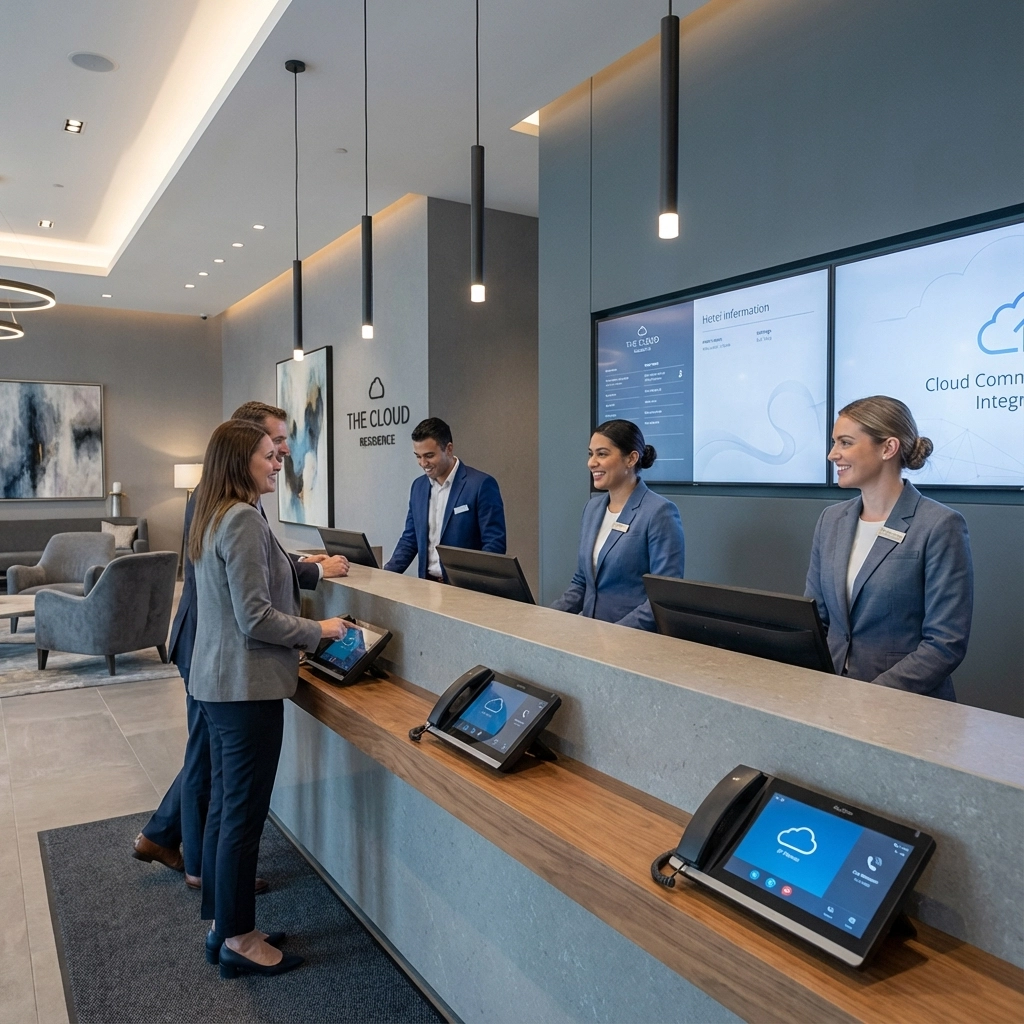
Modern hotels in Bellingham need phone systems that enhance the guest experience while streamlining operations. Our cloud phone systems for hospitality deliver advanced features like automated wake-up calls, multilingual auto-attendants, and direct room-to-room calling. Whether you're managing a boutique downtown hotel or a larger property near Western Washington University, we design systems that integrate seamlessly with your daily operations.

Phone Systems for Resorts

Resort properties have unique communication needs, from coordinating activities across multiple buildings to managing spa appointments and restaurant reservations. Our phone systems for resorts include features like:

  • Multi-location calling between resort facilities
  • Advanced call routing for different departments
  • Integration with booking and reservation systems
  • Mobile extensions for staff working across the property
  • Guest service hotlines with intelligent call distribution

image_1

Business Phone Systems for Casinos

Casino operations require robust, reliable communication systems that never go down. Our business phone systems for casinos are built for high-volume environments with advanced security features, instant communication between security teams, and seamless integration with surveillance and safety systems.

Why Bellingham Hospitality Businesses Choose Premier Business Team

Unmatched Local Expertise

As a locally-owned business serving the Bellingham area, we understand the unique challenges facing hospitality businesses in Washington State. From seasonal fluctuations in tourism to the specific needs of Pacific Northwest travelers, we design phone systems that address your local market's demands.

Property Management System Integration

One of the biggest advantages of working with Premier Business Team is our expertise in integrating phone systems with major property management systems (PMS). Whether you're using Opera, Folio, RoomMaster, or another platform, we ensure seamless data flow between your phone system and existing technology infrastructure.

This integration enables:

  • Automatic guest information display on staff phones
  • Real-time room status updates
  • Streamlined check-in and check-out processes
  • Enhanced guest service through immediate access to preferences and history

Extremely Low Cost Per Room

We've engineered our hospitality phone solutions to deliver maximum value at an incredibly low cost per room. We can provide per-room pricing as low as $2 per month (much lower than the typical $15-$25 per-room industry standard), and many of our Bellingham clients see their phone system costs drop to under $5 per room per month while gaining advanced features that were previously only available to large hotel chains.

image_2

Proven Track Record of Massive Savings

Our hospitality clients consistently achieve dramatic cost reductions while improving service quality. Here's how we've helped similar properties:

Case Study: Bellingham Area Resort

  • Previous System: Legacy PBX with expensive long-distance charges
  • New System: Cloud-based VoIP with unlimited calling
  • Annual Savings: $47,000 in phone bills plus $23,000 in maintenance costs
  • ROI Timeline: 8 months

Regional Casino Implementation:

  • Challenge: Outdated phone infrastructure causing guest service delays
  • Solution: Complete cloud phone system modernization with PMS integration
  • Results: 40% reduction in guest complaint calls, 60% decrease in phone-related IT support tickets

Advanced Features That Transform Guest Experience

Smart Auto-Attendant Systems

Our advanced auto-attendants can handle multiple languages, route calls based on time of day, and provide guests with instant access to services like:

  • Room service and concierge
  • Spa and fitness center bookings
  • Local attraction information
  • Emergency services

Mobile Integration for Staff

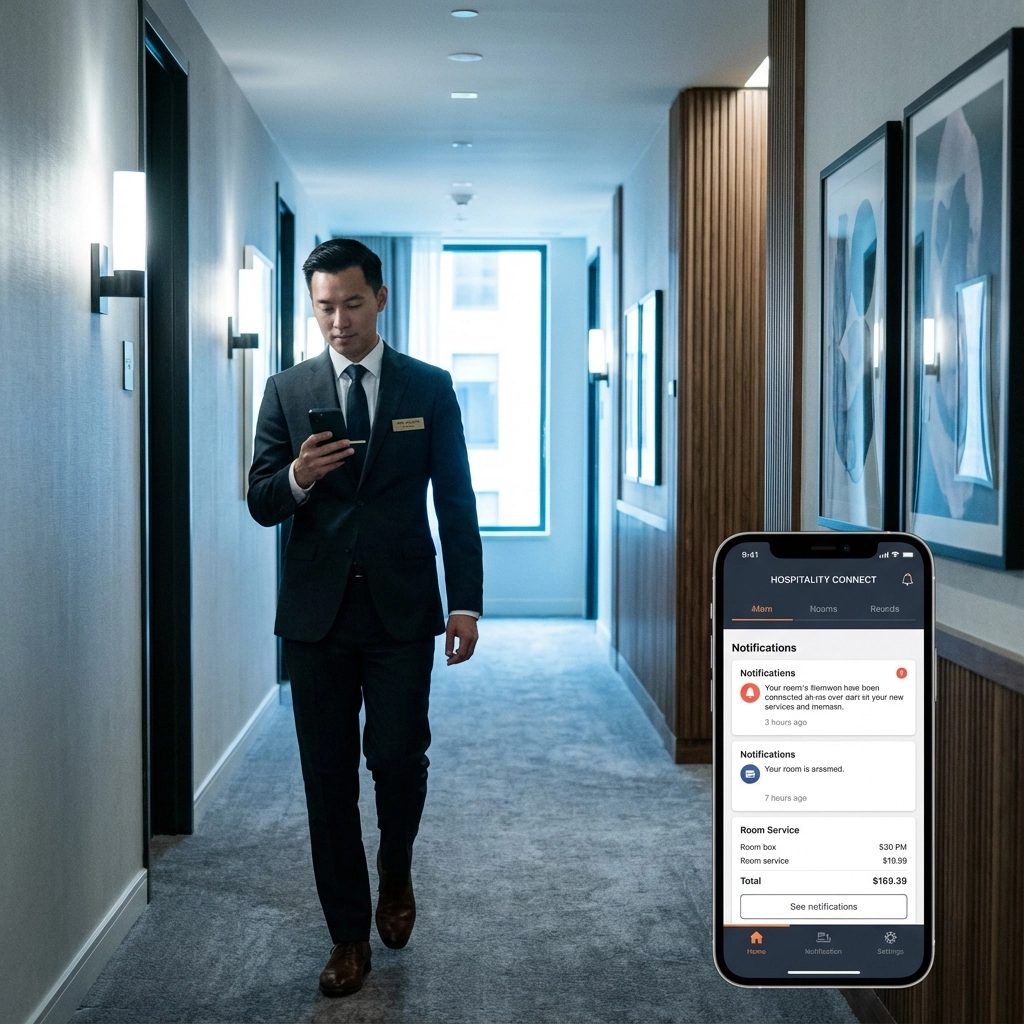
Your housekeeping, maintenance, and guest services teams can stay connected anywhere on the property with mobile apps that integrate directly with your phone system. This means faster response times, better guest service, and more efficient operations.

Analytics and Reporting

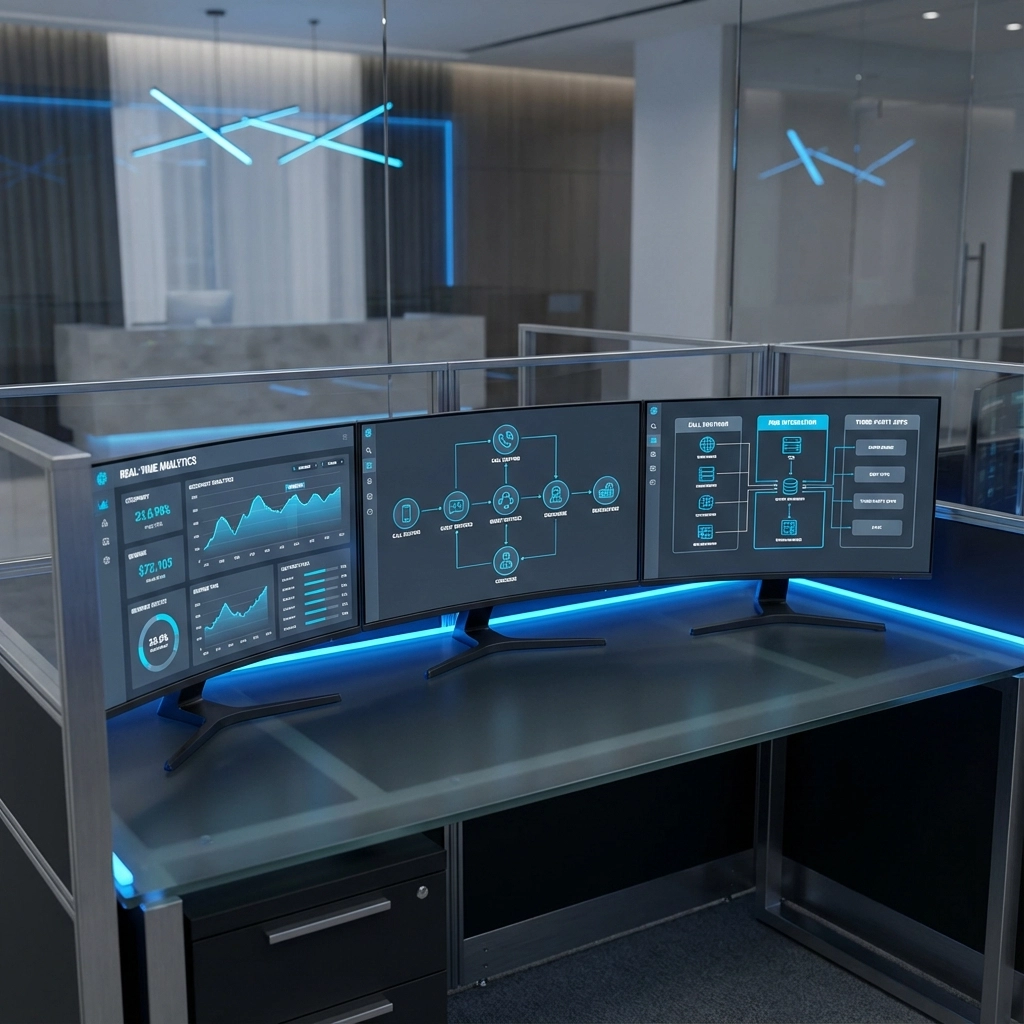
Understanding your communication patterns helps optimize staffing and improve service. Our systems provide detailed analytics on call volume, response times, and guest service metrics that help you make data-driven decisions.

image_3

Cloud vs. On-Premise Solutions

While traditional on-premise phone systems require significant upfront investment and ongoing maintenance, our cloud phone systems for hospitality offer several advantages for Bellingham properties:

  • Scalability: Add or remove extensions instantly as your property needs change
  • Reliability: 99.9% uptime with automatic failover to backup systems
  • Remote Management: Make changes to your system from anywhere
  • Automatic Updates: New features and security patches deploy automatically
  • Disaster Recovery: Cloud-based systems continue working even during local outages

For properties that prefer on-premise solutions due to specific security requirements or existing infrastructure investments, we also offer hybrid solutions that combine the best of both approaches.

Local Bellingham Support You Can Count On

When you choose Premier Business Team for your hospitality phone system, you're not just getting technology – you're getting a local partner committed to your success. Our business tech assessment helps identify exactly what your property needs, and our ongoing support ensures your system performs flawlessly.

We understand that hospitality businesses can't afford communication downtime. That's why we provide:

  • 24/7 emergency support
  • Local technicians familiar with Bellingham properties
  • Proactive monitoring to prevent issues before they impact guests
  • Regular system optimization to ensure peak performance

Integration with Existing Technology

Modern hospitality businesses rely on multiple technology systems working together seamlessly. Our phone systems integrate with:

  • Property Management Systems (PMS) – Opera, Folio, RoomMaster, and others
  • Point of Sale (POS) Systems – For restaurants and retail operations
  • Security Systems – Enhanced emergency communication protocols
  • Wi-Fi Networks – Unified communication across all property systems

Learn more about our comprehensive solutions and how we can customize them for your specific needs.

Frequently Asked Questions

Q: How quickly can you install a new phone system for our hotel?
A: Most hotel phone system installations in Bellingham are completed within 2-4 weeks from contract signing. Cloud-based systems can often go live even faster, with some implementations completed in just 5-7 business days.

Q: Will our new phone system work during power outages?
A: Yes, our cloud phone systems include battery backup for critical components and automatic failover to mobile devices. Your guests can still reach your staff even during extended power outages.

Q: Can we keep our existing phone numbers?
A: Absolutely. We handle all number porting processes to ensure your guests and vendors can reach you using the same numbers they've always used.

Q: How much can we realistically save with a new phone system?
A: Most Bellingham hospitality properties save 40-70% on their monthly phone bills while gaining significant new capabilities. Properties with high long-distance usage often see even greater savings.

Q: Do you offer training for our staff?
A: Yes, we provide comprehensive training for all staff members who will use the new system. This includes both in-person sessions and ongoing video tutorials.

Q: Can the system integrate with our existing property management software?
A: We have experience integrating with virtually every major PMS platform used by hospitality businesses. Our team will work with your software vendor to ensure seamless integration.

Ready to Modernize Your Hospitality Phone System?

Don't let outdated phone technology hold back your guest experience or inflate your operating costs. Premier Business Team has the expertise and local presence to transform your Bellingham hospitality property's communications infrastructure while delivering the cost savings your business needs to thrive.

Our hospitality phone system experts are ready to conduct a free assessment of your current system and show you exactly how much you could save with a modern solution. Join the hundreds of hotels, resorts, and casinos that have already saved over half a million dollars by upgrading with Premier Business Team.

Ready to cut your phone costs in half while improving guest satisfaction? Call us today at 360-946-2626 or visit premierbusinessteam.com to schedule your free consultation. Let's discuss how we can design the perfect phone system for your Bellingham hospitality business.

Request a Quote

Phone Systems for Hospitality in New York, NY

premierbusiness · January 11, 2026 ·

New York City's hospitality industry demands communication systems that can handle millions of guests, thousands of staff members, and endless operational complexities. Whether you're managing a boutique hotel in Manhattan, a resort in the Hamptons, or a casino operation anywhere in New York, your phone system is the backbone of guest satisfaction and operational efficiency.

At Premier Business Team, we've revolutionized communication infrastructure for hotels, resorts, and casinos across New York, helping properties save over $500,000 while completely modernizing their phone systems. Our cloud-based hospitality phone solutions integrate seamlessly with major property management systems, delivering enterprise-grade features at an incredibly low cost per room.

Request a Quote

Why New York Hospitality Properties Choose Premier Business Team

image_1

The NYC hospitality market is unforgiving. Guests expect flawless service, staff needs instant connectivity across sprawling properties, and managers require real-time visibility into operations. Traditional phone systems simply can't keep up with these demands.

Our phone systems for hotels and cloud phone systems for hospitality have transformed communication for properties ranging from 50-room boutique hotels to 1,000+ room resort complexes. We understand that every call represents revenue, every connection impacts guest experience, and every system failure costs money.

Our Track Record Speaks for Itself

We've helped hospitality properties across New York achieve:

  • Average cost reduction of 60-70% on monthly communication expenses
  • Zero downtime during system transitions with our proven migration process
  • Full integration with leading property management systems including Opera, Maestro, and RoomMaster
  • ROI achievement within 8-12 months through operational efficiencies and cost savings

Core Features of Our Hospitality Phone Systems

Advanced Call Routing and IVR Systems

Our intelligent call routing ensures guests reach the right department instantly. Whether they need housekeeping, room service, or the concierge, calls are automatically directed based on customizable rules, time of day, and department availability.

Mobile Integration for Staff Connectivity

Hotel staff can't be tethered to desk phones. Our mobile softphone applications enable seamless communication throughout your property. Housekeeping, maintenance, and management staff stay connected whether they're on the 30th floor or in the basement.

Emergency Communication Features

Safety is paramount in hospitality. Our systems integrate with fire alarm systems, provide instant emergency calling capabilities, and ensure compliance with all New York safety regulations including Enhanced 911 services.

image_2

Guest Room Phone Modernization

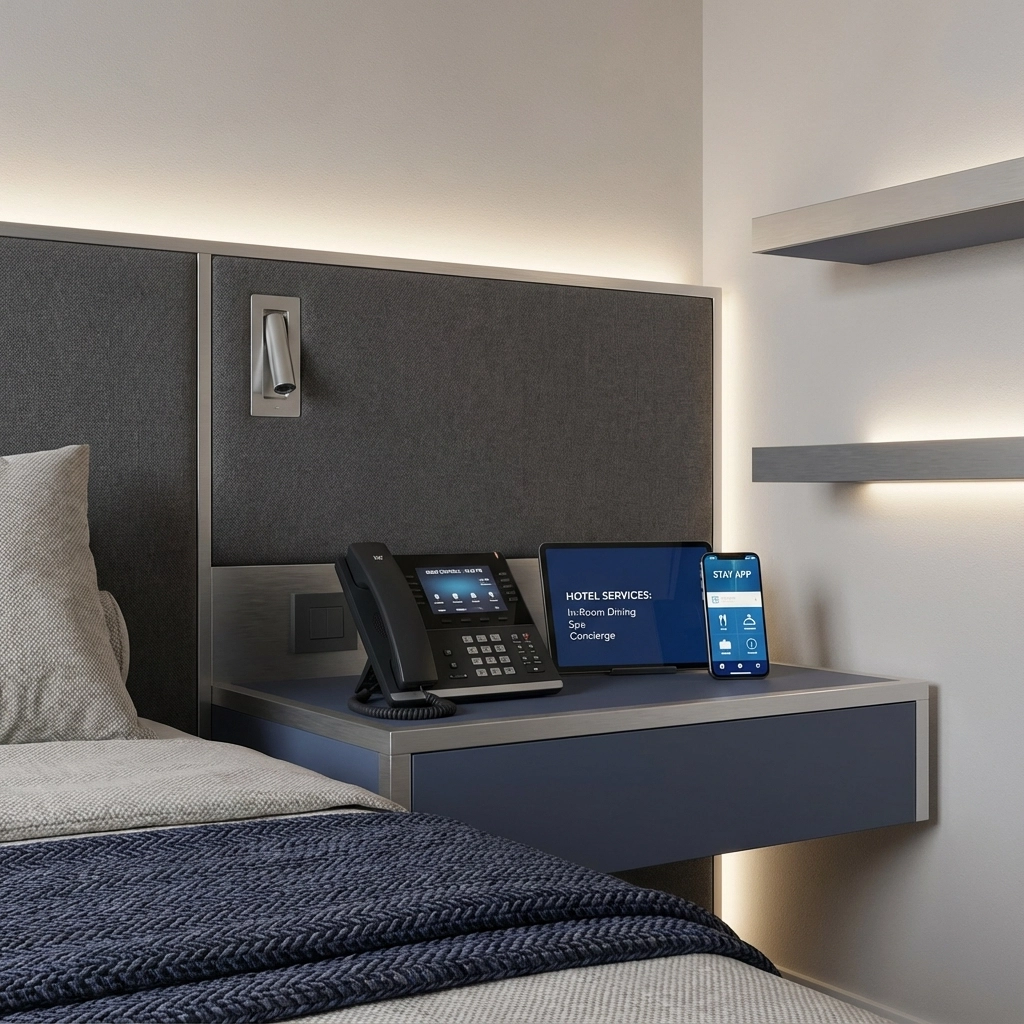
Transform traditional guest room phones into modern communication hubs. Guests can make local calls, access hotel services, and even connect to international destinations at competitive rates, all while the property maintains complete control and visibility.

Property Management System Integration

Business phone systems for casinos, hotels, and resorts require seamless integration with existing property management systems. Our solutions integrate with:

  • Opera PMS: Complete guest profile integration and automated wake-up calls
  • Maestro PMS: Real-time room status updates and guest communication logging
  • RoomMaster: Streamlined check-in/check-out communication workflows
  • Northwind: Automated guest messaging and service request routing
  • StayNTouch: Mobile-first integration for modern hotel operations

This integration eliminates double data entry, reduces errors, and provides managers with comprehensive communication analytics tied directly to guest stays and revenue generation.

Cost Efficiency: Very Low Cost Per Room

Traditional phone systems burden hospitality properties with massive upfront investments and ongoing maintenance costs. Our cloud-based approach delivers:

Transparent Per-Room Pricing

Premier Business Team can provide per-room pricing as low as $2 per month, far below the typical $15-$25 per-room industry standard.

  • Small properties (10-50 rooms): Starting at $8 per room per month
  • Mid-size properties (51-200 rooms): $6 per room per month
  • Large properties (200+ rooms): Custom pricing as low as $4 per room per month
  • Casino operations: Specialized pricing based on gaming floor requirements

Eliminated Costs

  • No expensive on-premise PBX hardware
  • Zero maintenance contracts for phone system equipment
  • Reduced long-distance and international calling rates
  • Eliminated costly system upgrades and replacements

image_3

Success Stories: $500,000+ in Savings

Our hospitality clients consistently achieve remarkable results. A 200-room Manhattan hotel reduced their annual communication expenses from $84,000 to $28,000 while adding advanced features like automated wake-up calls and multi-language IVR support.

A casino operation in upstate New York eliminated $15,000 in monthly PBX maintenance costs and improved gaming floor communication efficiency by 40% through our integrated mobile solutions.

Phone Systems for Resorts: Hamptons Case Study

A 150-room Hamptons resort struggling with seasonal communication demands implemented our scalable cloud solution. Results included:

  • 65% reduction in communication costs during peak season
  • Instant scalability for seasonal staffing changes
  • Seamless integration with their reservation and spa booking systems
  • Enhanced guest satisfaction scores due to improved service responsiveness

Advanced Analytics and Reporting

Understanding communication patterns drives operational improvements. Our systems provide:

  • Real-time call volume monitoring to optimize staffing
  • Guest communication analytics to identify service improvement opportunities
  • Cost tracking by department, room type, and service category
  • Performance metrics for front desk, concierge, and guest services teams

Security and Compliance for Hospitality

New York hospitality properties face strict security and compliance requirements. Our systems ensure:

PCI Compliance for Casino Operations

Business phone systems for casinos must meet rigorous security standards. Our solutions provide encrypted communications, secure payment processing integration, and comprehensive audit trails.

Guest Privacy Protection

All guest communications are protected through enterprise-grade encryption, secure data storage, and compliance with New York privacy regulations.

image_4

Migration and Implementation Process

Switching phone systems shouldn't disrupt operations. Our proven implementation process ensures:

Phase 1: Assessment and Planning (Week 1)

  • Complete audit of existing communication infrastructure
  • Integration planning with current property management systems
  • Staff training schedule development
  • Custom configuration for property-specific needs

Phase 2: System Setup and Testing (Week 2)

  • Cloud infrastructure deployment
  • PMS integration configuration and testing
  • Staff mobile application setup
  • Comprehensive system testing with property management

Phase 3: Go-Live and Support (Week 3+)

  • Seamless cutover with zero downtime
  • On-site support during initial operation
  • Staff training and adoption assistance
  • 24/7 ongoing technical support

Frequently Asked Questions

Q: How quickly can we implement a new hospitality phone system?
A: Most properties complete full implementation within 2-3 weeks, including staff training and PMS integration. We work around your operational schedule to minimize disruption.

Q: Will our existing property management system work with your phone system?
A: Yes, we integrate with all major PMS platforms including Opera, Maestro, RoomMaster, and dozens of others. Custom integrations are available for proprietary systems.

Q: What happens if our internet connection fails?
A: Our systems include automatic failover to cellular backup connections, ensuring continuous communication even during internet outages. Critical functions like 911 calling always remain operational.

Q: Can we maintain our existing phone numbers?
A: Absolutely. We handle all number porting to ensure guests and vendors can reach you at familiar numbers without interruption.

Q: How do costs compare for seasonal properties?
A: Our scalable pricing adjusts for seasonal operations. During off-season, you pay only for active rooms and essential services, reducing costs by up to 80%.

Transform Your New York Hospitality Communication Today

Don't let outdated phone systems limit your property's potential. Join the hundreds of hotels, resorts, and casinos that have modernized their communication infrastructure with Premier Business Team.

Our hospitality phone solutions deliver the reliability, features, and cost savings your New York property needs to compete in today's demanding market. With proven integration capabilities, very low per-room costs, and a track record of helping properties save over half a million dollars, we're ready to transform your communication infrastructure.

Ready to modernize your hospitality phone system and start saving money immediately? Contact Premier Business Team today for a free consultation and discover how our cloud-based solutions can enhance guest satisfaction while dramatically reducing your communication costs.

Call us now at 360-946-2626 or visit our solutions page to schedule your comprehensive hospitality communication assessment. Let us show you why New York's leading hospitality properties trust Premier Business Team for their critical communication infrastructure.

Request a Quote

Is Your Business Internet Ready for AI Integration? 5 Bandwidth Upgrades You Should Know Before Investing

premierbusiness · January 10, 2026 ·

AI isn't just coming to business: it's already here. But here's what most companies miss: your current internet setup probably can't handle what AI actually demands.

Think about it. Your team downloads files, streams video calls, and runs cloud applications. Now add AI processing, real-time data analysis, and machine learning models that need constant connectivity. That 25 Mbps connection that seemed fine last year? It's about to become your biggest bottleneck.

The good news? You don't need to guess what upgrades matter most. Let's break down the five bandwidth upgrades that actually make a difference when you're ready to integrate AI into your business operations.

Why AI Changes Everything About Your Internet Needs

Traditional business applications are pretty predictable. Email, web browsing, basic cloud software: they all have steady, manageable bandwidth requirements. AI flips this completely upside down.

AI applications need to constantly communicate with cloud-based models, process large datasets in real-time, and handle sudden spikes in computational demand. When your customer service AI needs to analyze a complex support ticket or your inventory management system runs predictive analytics, your internet connection becomes the critical path.

image_1

AI for business applications often requires immense computational power, and much of that processing happens in the cloud. Your network becomes the bridge between your business operations and the AI engines that power them.

The 5 Essential Bandwidth Upgrades for AI-Ready Businesses

1. Symmetrical Upload and Download Speeds

Most business internet plans give you fast downloads but slow uploads. That worked fine when you mostly consumed content from the internet. AI changes this completely.

Your AI applications need to send large amounts of data to cloud processing centers just as often as they receive results back. Customer data, transaction records, inventory information: all of this flows upstream to AI models for analysis.

Standard business plans might give you 100 Mbps down but only 10 Mbps up. For AI integration, you want symmetrical speeds or at least a 3:1 ratio. Look for fiber connections that offer equal upload and download bandwidth.

2. Ultra-Low Latency Connections

Speed isn't just about bandwidth: it's about response time. When your AI-powered chatbot needs to respond to a customer inquiry or your predictive analytics need real-time data, every millisecond matters.

Traditional cable and DSL connections often have 30-50ms latency. For AI applications, you want under 20ms, ideally under 10ms. This typically means upgrading to dedicated fiber or high-performance business internet services.

Low latency becomes critical when you're running real-time AI applications like dynamic pricing, fraud detection, or automated customer service responses.

3. Guaranteed Service Level Agreements (SLAs)

Consumer-grade internet comes with no promises. Business-grade internet offers SLAs, but AI integration demands enterprise-level guarantees.

Look for internet services that guarantee 99.9% uptime with specific penalties for downtime. When your AI systems go offline, they're not just inconvenient: they can stop critical business processes entirely.

Quality SLAs should also guarantee consistent bandwidth during peak hours. AI processing can't wait for "faster speeds after midnight."

image_2

4. Scalable Bandwidth On-Demand

AI workloads aren't consistent. Your machine learning models might need massive bandwidth during training periods, then settle into lighter maintenance mode. Seasonal businesses see AI processing spikes during busy periods.

Traditional internet contracts lock you into fixed bandwidth. AI-ready connections offer burst capabilities or on-demand scaling. You pay for baseline connectivity but can temporarily scale up when your AI applications need extra performance.

This flexibility prevents over-paying for bandwidth you don't always need while ensuring you're never limited during critical processing periods.

5. Multiple Connection Redundancy

Single points of failure become business disasters when AI systems are integrated into your operations. If your AI-powered inventory management goes down because your internet connection fails, you can't just "work around it" like you might with email outages.

Implement diverse connection paths: fiber from one provider, fixed wireless from another, or cellular backup for critical applications. Modern business internet solutions can automatically failover between connections without interrupting AI processing.

Redundancy isn't just about having backup internet: it's about maintaining consistent performance standards across all connections.

How to Assess Your Current Infrastructure

Before investing in AI integration, you need an honest assessment of your current setup. AI applications require immense computational power, and your network infrastructure must support high-performance computing resources capable of processing big datasets, complex algorithms, and real-time analytics.

Start with a bandwidth audit. Monitor your current usage patterns during peak business hours. Look for:

  • Maximum simultaneous users and applications
  • Data transfer patterns (upload vs. download)
  • Latency during video conferences and cloud application usage
  • Any current bottlenecks or slowdowns

Next, evaluate your internal network capacity. AI integration often means more devices, more data, and more simultaneous connections. Your router, switches, and wireless infrastructure need to handle increased internal traffic.

image_3

Consider your data storage and backup requirements. AI systems generate massive amounts of data that needs secure, reliable storage with fast access speeds.

Planning Your AI Integration Strategy

Successfully integrating AI requires more than just bandwidth upgrades: you need a clear AI integration strategy that maps out your objectives, project scope, and timeline.

Determine whether you'll build in-house AI capabilities, use third-party APIs, or partner with an AI vendor. Each approach has different bandwidth and connectivity requirements.

Cloud-based AI services need consistent, high-bandwidth internet connections but minimal local infrastructure. On-premises AI processing requires less internet bandwidth but demands robust local network capacity.

Hybrid approaches: which most businesses end up choosing: need the best of both worlds: excellent internet connectivity and strong internal network infrastructure.

Implementation Best Practices

Upgrading your internet for AI integration isn't just about calling your provider and asking for more bandwidth. You need strategic planning that aligns with your business goals.

Start with pilot projects that test your network capabilities. Implement AI in low-risk areas first: maybe customer service chatbots or basic data analytics: before moving to mission-critical applications.

Work with your IT team or a trusted technology partner to design network architecture that supports both current operations and future AI expansion. Consider how cloud phone systems and other modern business communications will integrate with your AI-enhanced operations.

Test failover procedures and backup systems before you depend on them. AI integration makes reliable internet connectivity absolutely critical to business operations.

The Cost of Getting It Wrong

Underestimating your bandwidth needs for AI integration leads to expensive problems. Slow AI response times frustrate customers. Inconsistent connectivity disrupts automated processes. And poor performance often means scrapping AI investments entirely.

But over-engineering your network can be just as costly. Paying for enterprise-grade internet when business-class service would suffice wastes money that could fund other technology investments.

The key is right-sizing your connectivity upgrades to match your actual AI integration plans, with enough headroom for reasonable growth.

Ready to Upgrade Your Business Internet for AI?

AI integration is transforming how businesses operate, but success depends on having the right infrastructure foundation. Your internet connectivity needs to support not just today's operations, but tomorrow's AI-enhanced processes.

The five bandwidth upgrades we've covered: symmetrical speeds, low latency, strong SLAs, scalable capacity, and connection redundancy: form the foundation for reliable AI integration. But every business has unique requirements that need professional assessment.

Don't let inadequate internet connectivity limit your AI potential. Premier Business Team specializes in designing network infrastructure that supports modern business technology, including AI integration. Our vendor-neutral approach ensures you get the right solutions for your specific needs, not just what one provider happens to offer.

Contact Premier Business Team today for a comprehensive assessment of your current network infrastructure and a customized plan for AI-ready connectivity upgrades. Let's make sure your business internet is ready for the AI revolution.

  • « Go to Previous Page
  • Page 1
  • Interim pages omitted …
  • Page 38
  • Page 39
  • Page 40
  • Page 41
  • Page 42
  • Interim pages omitted …
  • Page 78
  • Go to Next Page »

Get a no obligation quote for your business. Learn More

Proud Chamber Member

Bellingham Chamber Badge

Premier Business Team

Copyright © 2026 · Premier Business Team 2219 Rimland Dr. Suite 301 Bellingham, WA 98226 - 360-946-2626

  • Home
  • Business Internet
  • Business Phone
  • Blog
  • About Us
  • Contact Us
  • Business Quote
  • Engineering
  • Call: 360-946-2626