

Here's the reality: 75% of renters now expect smart home technology, and nearly 60% would trade other amenities just to get better connectivity. If you're an MDU owner or business leader still treating digital infrastructure as an afterthought, you're leaving money: and tenants: on the table.
The properties winning in 2026 aren't the ones chasing every shiny new tech trend. They're the ones who own their digital infrastructure and treat it like the strategic asset it actually is. This guide breaks down exactly how to do that: without the vendor lock-in, fragmented systems, or surprise costs.
Why Owning Your Digital Infrastructure Matters in 2026
Digital infrastructure isn't a line item anymore. It's a revenue driver, a retention tool, and a competitive moat.
When you own your MDU digital infrastructure: rather than piecing together solutions from five different vendors: you gain control over tenant experience, operational costs, and long-term property value. Properties with robust, centralized connectivity systems consistently see higher tenant satisfaction, lower maintenance costs, and stronger NOI.
Think about it this way: every time a tenant complains about spotty Wi-Fi or a smart lock that won't connect, that's a retention risk. Every truck roll to troubleshoot a fragmented system is money out the door. And every month you're not charging a technology amenity fee? That's revenue you're handing to your competitors.
The math is simple. If you can charge even $75 per unit monthly for managed Wi-Fi and smart building amenities across a 100-unit property, that's $90,000 in annual revenue you didn't have before. Multiply that across your portfolio, and owning your infrastructure starts looking less like an expense and more like an investment with real returns.
What Tenants and Employees Actually Want
Let's cut through the marketing noise. Tenants and employees don't care about buzzwords. They care about whether the Wi-Fi works when they need it to.
The Top Priorities
When you survey what actually matters to the people using your buildings every day, the list is refreshingly straightforward:
- Strong, consistent Wi-Fi coverage : No dead zones. No buffering during peak hours. Just reliable connectivity everywhere.
- Minimal downtime and fast support : When something breaks, they want it fixed fast. Not "we'll send someone next Tuesday."
- Seamless device compatibility : Their phones, laptops, smart TVs, and IoT devices should all connect without headaches.
This is why property-wide Wi-Fi solutions are becoming non-negotiable. Tenants expect the same seamless experience they get at a hotel or coffee shop: except in their home or office, 24/7.
Properties that deliver on these basics see measurably better retention. Properties that don't? They're competing on price alone, which is a race to the bottom.
Wi-Fi Infrastructure: Skip the Hype, Focus on What Works
Every vendor wants to sell you the latest and greatest. But here's the honest take: Wi-Fi 6 is your best ROI in 2026.
Wi-Fi 7 is technically impressive, sure. But most properties aren't even maximizing Wi-Fi 6 capabilities yet. The newer standard lacks proven cost justification for multifamily and commercial environments, and the devices that fully support it are still rolling out.
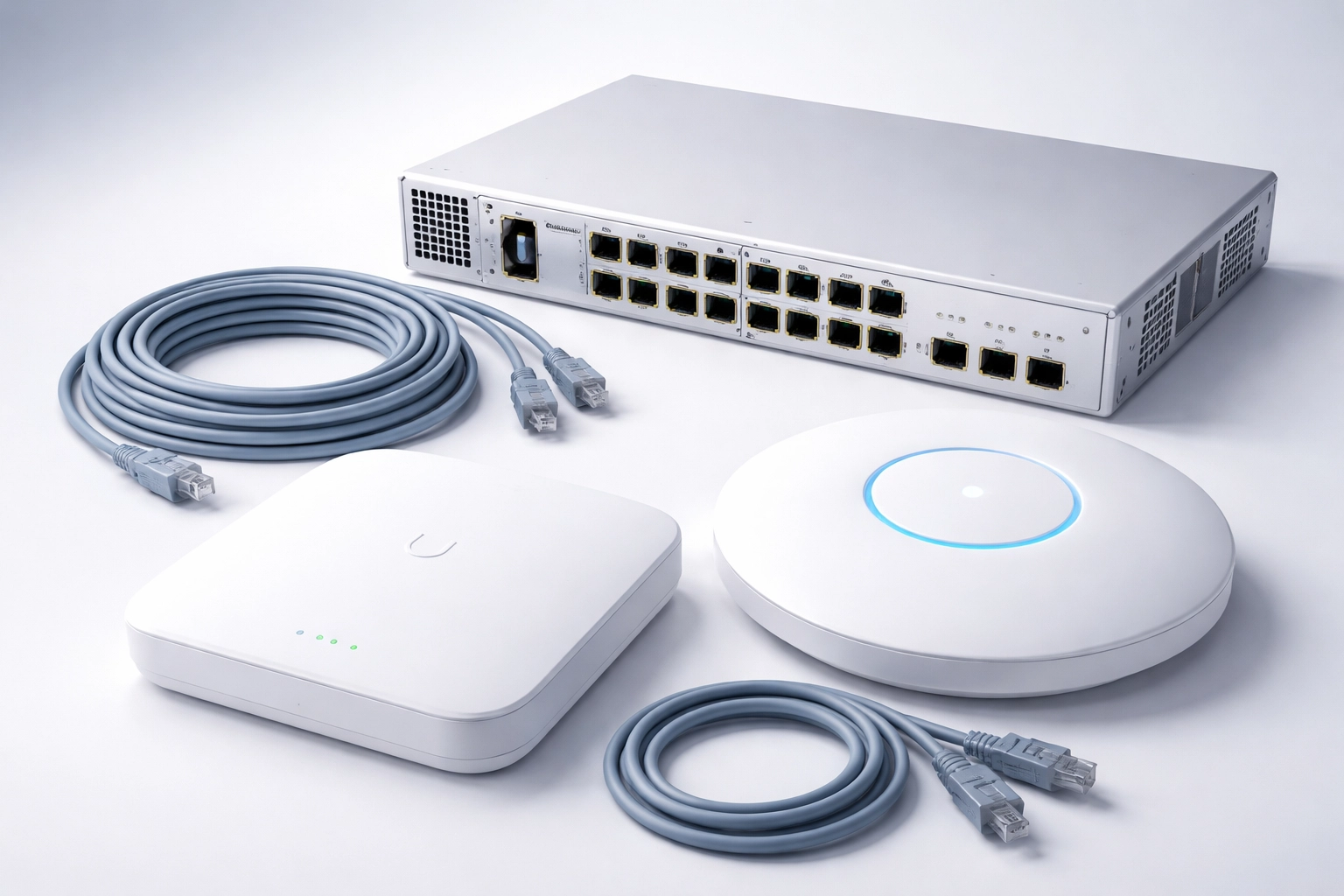
Instead of chasing specs, focus on enterprise-grade Wi-Fi 6 equipment from established manufacturers with solid warranty coverage and technical support. Pair that with professional Wi-Fi access point installation and ethernet wiring, and you've got a foundation that'll serve you well for the next decade.
A few infrastructure principles that actually matter:
- Deploy fiber to individual units even if you don't need unit-level termination today. Future-proofing now saves disruptive retrofits later.
- Plan for 50-100% excess capacity beyond current requirements. Bandwidth demands only grow.
- Segment your networks : Keep IoT devices, tenant connectivity, and property management systems on separate segments for security and performance.
Operational Efficiency: Turn Infrastructure Into Savings
Owned infrastructure isn't just about revenue. It's about cutting costs you didn't even realize you were bleeding.
Energy Management Systems (EMS)
Properties with Wi-Fi-connected energy management systems are seeing average 19% decreases in energy expenses and 18% lower overall operating costs. That's not a projection: that's what's happening right now in buildings that have centralized their digital infrastructure.
Smart thermostats, automated lighting, and connected HVAC systems all require reliable, property-wide connectivity to function. When you own that infrastructure, you can implement EMS solutions without worrying about compatibility issues or third-party limitations.
Centralized Monitoring and Management
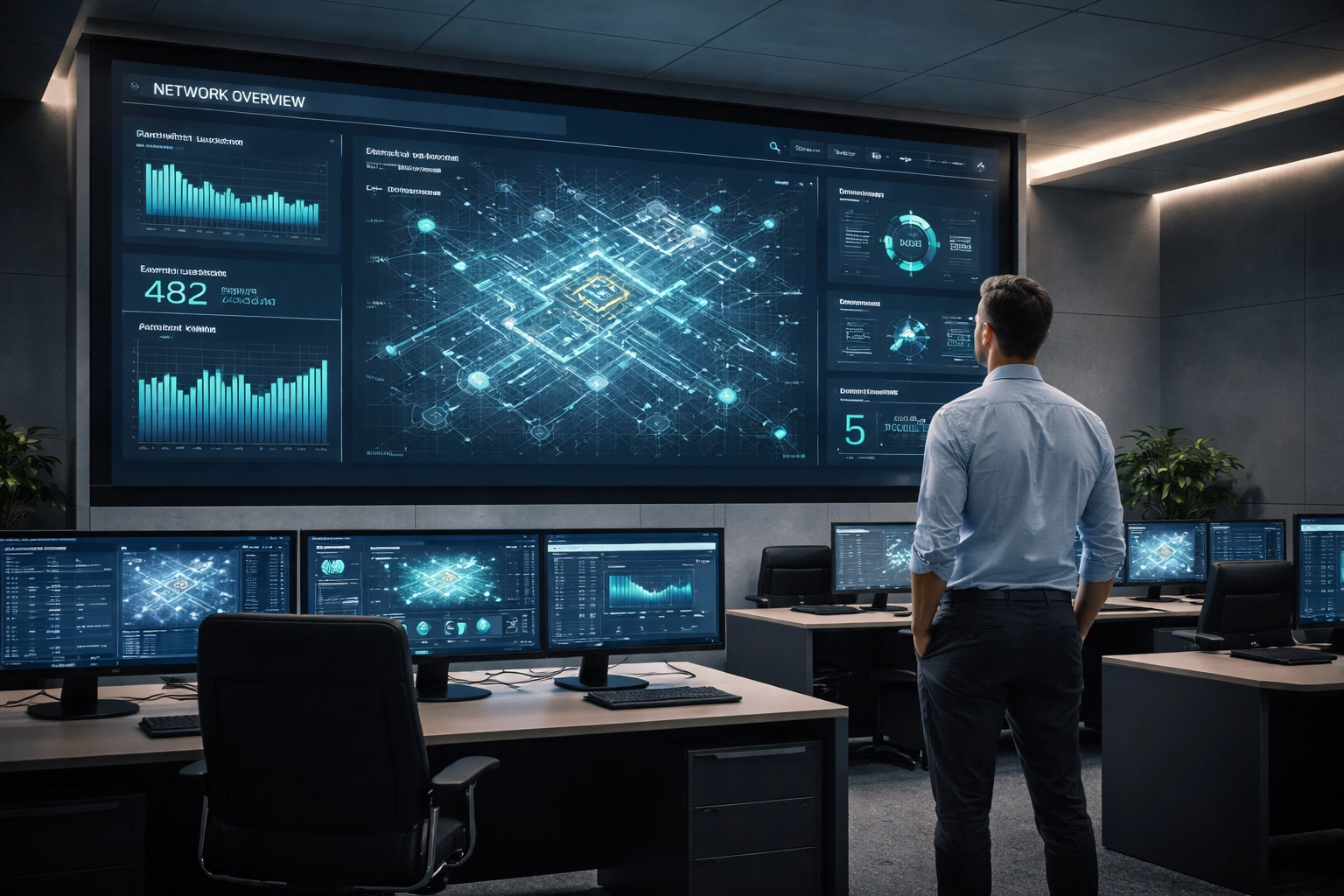
Here's where it gets even better. Centralized network management platforms give you real-time visibility into bandwidth utilization, device connectivity, and performance metrics: all from a single dashboard.
Properties using proactive network management experience 60% fewer tenant complaints compared to those stuck in reactive troubleshooting mode. Fewer complaints mean fewer support tickets, fewer truck rolls, and happier tenants who renew their leases.
This is the kind of operational efficiency that directly impacts NOI. And it's only possible when you own and control your digital infrastructure end-to-end.
The Hidden Cost of Technology Fragmentation
Let's talk about what happens when you don't own your infrastructure.
You end up with one vendor for internet, another for access control, a third for security cameras, and maybe a fourth for building automation. Each system has its own dashboard, its own support line, and its own billing cycle. When something breaks, everyone points fingers at everyone else.
This fragmentation creates real problems:
- Higher costs : You're paying multiple vendors, multiple support contracts, and often for overlapping capabilities.
- Security gaps : Every integration point is a potential vulnerability. Disjointed systems are harder to secure and monitor.
- Slower fixes : Troubleshooting across multiple platforms takes longer, which means more downtime and more frustrated tenants.
The solution isn't to avoid technology: it's to consolidate it under a unified strategy. That's where a partner with expertise in cybersecurity and managed connectivity can help you build something coherent instead of cobbled together.
How to Build Infrastructure You Actually Own
Ready to take control? Here's a practical five-step roadmap:
Step 1: Audit Your Current Setup
Document everything. Telecommunications closets, vertical risers, distribution pathways, existing contracts. You can't optimize what you don't understand.
Step 2: Define Your Requirements
What coverage do you actually need? What's your uptime target? Get specific about performance expectations before you start shopping for solutions.
Step 3: Choose Scalable Solutions (And Avoid Lock-In)
Prioritize compatibility, scalability, and interoperability. Select network components that can integrate with future technologies, not just today's offerings. Avoid proprietary systems that trap you with a single vendor.
Step 4: Centralize Management
Implement a unified platform for monitoring, troubleshooting, and managing your entire network. This is what separates professional-grade infrastructure from consumer-level setups.
Step 5: Partner With Experts
You don't have to do this alone. Working with a team that understands business internet, cloud communication systems, and infrastructure deployment means faster implementation and fewer headaches down the road.
Frequently Asked Questions
What is digital infrastructure for MDU properties?
Digital infrastructure includes all the connectivity systems that power a modern property: fiber and ethernet wiring, Wi-Fi networks, smart building systems, access control, and the management platforms that tie them together. When you "own" this infrastructure, you control it rather than relying on fragmented third-party solutions.
Is Wi-Fi 7 worth the investment in 2026?
For most MDU and commercial properties, not yet. Wi-Fi 6 delivers excellent performance and ROI, while Wi-Fi 7 adoption is still early. Focus on maximizing Wi-Fi 6 capabilities before jumping to the next generation.
How much can MDU owners charge for technology amenities?
Many properties successfully charge $50-$100+ per unit monthly for managed Wi-Fi and smart building amenities. At $75/unit across 100 units, that's $90,000 in additional annual revenue.
How do Energy Management Systems reduce costs?
EMS platforms use connected sensors and automation to optimize heating, cooling, lighting, and other building systems. Properties report average 19% reductions in energy expenses when these systems are properly implemented.
What's the biggest mistake MDU owners make with technology?
Fragmentation. Piecing together solutions from multiple vendors creates higher costs, security gaps, and slower support. A unified infrastructure strategy solves all three problems.
Take Control of Your Digital Future
Owning your digital infrastructure isn't about having the flashiest tech: it's about having the right foundation. That means reliable connectivity, centralized management, and a strategy that scales with your portfolio.
The properties that thrive in 2026 and beyond will be the ones that treat infrastructure as a strategic asset. Better retention. New revenue streams. Lower operating costs. It all starts with taking control.
Ready to build infrastructure you actually own? Premier Business Team helps MDU owners and business leaders design, deploy, and manage connectivity solutions that deliver real results.
📞 Call us at 360-946-2626 or contact us online to start the conversation.