

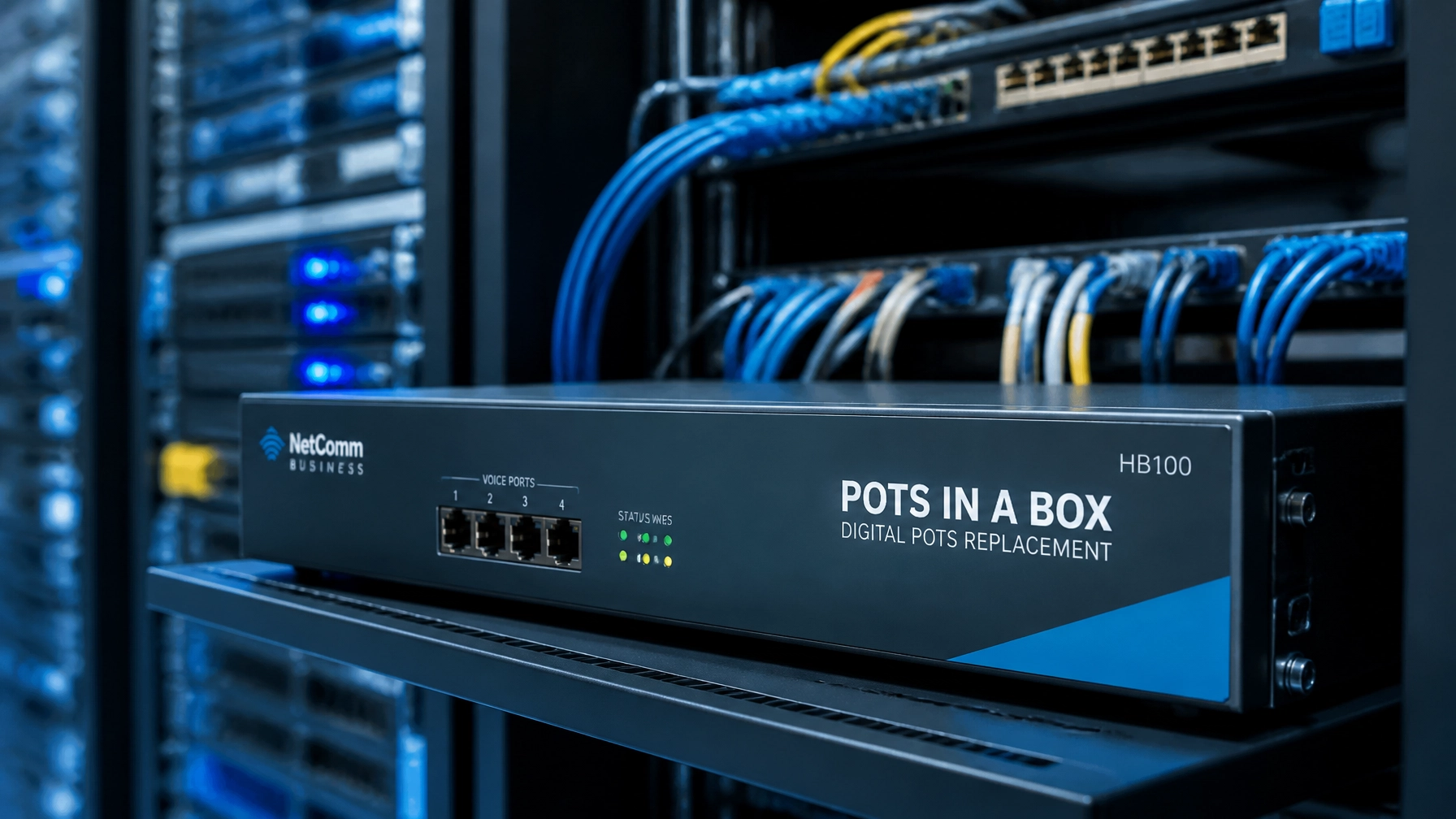
For decades, Plain Old Telephone Service (POTS) was the gold standard for business communications. It was reliable, familiar, and everywhere. But as we move toward the copper sunset of 2026, the landscape has shifted. Major carriers are no longer maintaining these aging networks, prices are skyrocketing, and reliability is plummeting.
For businesses relying on copper lines for fire alarms, elevator phones, and security systems, a POTS line replacement is no longer a "future" project, it is a critical requirement for maintaining safety compliance and operational stability.
What is POTS Line Replacement?
POTS line replacement is the process of migrating traditional analog copper telephone lines to modern, digital, or cellular-based alternatives. This isn't just about switching to a "VoIP" line. For critical life-safety systems like fire alarms and elevators, a simple internet-based phone line isn't enough to meet strict building codes.
Modern POTS replacement involves installing a specialized device, often called "POTS in a Box" or a Managed Facilities Voice Network (MFVN) appliance, that converts your existing analog equipment signals into digital data transmitted over secure cellular (LTE/5G) or fiber connections. This allows you to keep your existing hardware while upgrading the communication path to a faster, more reliable, and significantly cheaper digital network.
Why Businesses Must Replace POTS Lines Now
The urgency behind POTS replacement is driven by four primary factors: compliance, cost, the 2026 deadline, and network degradation.
1. The Copper Sunset 2026
The FCC has issued orders allowing telecommunications carriers to retire their copper networks and stop offering traditional POTS service. In many regions, the transition is already complete, but 2026 marks a major milestone where the availability of traditional copper will effectively vanish for most commercial users.
2. NFPA 72 Compliance and Fire Alarms
If your fire alarm panel communicates over a phone line, it must follow NFPA 72 (National Fire Alarm and Signaling Code). When you replace a copper line, the new solution must provide a "supervised path" that monitors connectivity every few minutes. If the line goes down, the system must report a trouble signal immediately. Traditional home-grade VoIP does not meet these standards, but professional-grade cellular replacement solutions do.
3. Elevator Phone Line Replacement & ASME A17.1
Elevator emergency phones must comply with ASME A17.1 and ADA requirements. These codes demand that the phone line works during a power outage (requiring 24+ hours of battery backup) and connects to a live operator 24/7. Modern cellular POTS replacement devices are built specifically with these battery backups to ensure you remain code-compliant during emergencies.
4. Skyrocketing Costs
As carriers try to force customers off copper, they are hiking prices. Many businesses that used to pay $30–$50 per line are now seeing bills of $150, $250, or even $500 per line, per month. Transitioning to a digital alternative typically drops that cost by 60% to 80% instantly.

POTS Replacement Options: Which is Right for You?
Not all replacements are created equal. Depending on whether you are upgrading a standard office phone or a critical fire alarm, your options will vary:
- Cellular (LTE/5G) "POTS in a Box": This is the gold standard for life-safety applications. It uses a dedicated cellular gateway with an internal battery backup. It is ideal for elevator phone line replacement and fire alarm phone line replacement because it doesn't rely on your building’s internet or power to function.
- IP/Fiber Managed VoIP: For standard voice lines or fax machines, migrating to a cloud phone system or fiber-based voice service is the most cost-effective route.
- Dual-Path Solutions: For high-security environments, a dual-path solution uses both cellular and IP connections. If one fails, the other takes over instantly, ensuring 99.999% uptime for fire signaling.
- MFVN (Managed Facilities Voice Network): A managed service that offers the reliability of copper with the benefits of modern technology, specifically designed to meet NFPA 72 standards.
Cost Comparison: POTS vs. Modern Replacement
| Feature | Traditional POTS (Copper) | Cellular / IP Replacement |
|---|---|---|
| Monthly Cost | $150 – $500+ | $30 – $65 |
| Reliability | Decreasing (Aging Infrastructure) | High (Redundant Networks) |
| Compliance | Legacy ( grandfathered ) | Full NFPA 72 / ASME A17.1 |
| Power Outage | Works (Line Powered) | Works (24-Hour Battery Backup) |
| Maintenance | Minimal/None from Carriers | Proactively Monitored |
Our POTS Replacement Process
At Premier Business Team, we take the stress out of the "copper sunset." Our vendor-neutral approach means we find the best carrier and hardware for your specific building, not the one that pays the most commission.
- Discover & Assess: We inventory your current lines, identify which ones are life-safety (fire/elevator) versus general use, and review your current billing to identify savings.
- Compare & Recommend: We source quotes from the top POTS replacement providers in the country, comparing them side-by-side for cost, compliance, and coverage in your specific zip code.
- Implement & Support: We manage the deployment, ensuring your fire and elevator vendors are coordinated for a seamless cutover that doesn't trigger false alarms or downtime.

Why Choose Premier Business Team?
We aren't just another telecom vendor; we are your strategic technology partner. We understand that phone lines are being phased out and that the transition can be confusing for facility managers and business owners.
- Vendor-Neutral Advice: We represent dozens of providers, ensuring you get the right technology for your specific needs.
- NFPA 72 & ADA Expertise: We specialize in ensuring your life-safety lines meet every local and national code requirement.
- Free Service: Most of our advisory and sourcing services are paid for by the providers, meaning you get expert consulting at no additional cost to your business.
- Single Point of Contact: Instead of sitting on hold with a major carrier for hours, you call us. We handle the technical heavy lifting.

Frequently Asked Questions
Is POTS really going away in 2026?
Yes. While some areas may have small pockets of copper left, the FCC has already removed the requirement for carriers to maintain these networks. In most major markets, the "sunset" is already in progress, and 2026 is the widely accepted deadline for total commercial transition.
Can I just use a standard VoIP line for my fire alarm?
No. Standard VoIP lines often lack the supervision, signal integrity, and battery backup required by NFPA 72. Using a non-compliant line can lead to failed inspections, fines, and serious liability issues in the event of a fire.
How much can I save by switching from copper lines?
Most of our clients see a reduction in monthly recurring costs of 60% to 80%. If you have multiple lines for fire, elevators, and security, the savings often pay for the new hardware in less than 12 months.
Does the elevator phone still work if the power goes out?
Yes, provided you use a compliant POTS replacement solution. These devices come with internal battery backups designed to keep the emergency phone operational for at least 24 hours, meeting ASME A17.1 requirements.
Take Control of Your Copper Sunset Strategy
Don't wait until your carrier sends a "service disconnected" notice or your monthly bill triples again. Secure your facility's safety and your company's budget with a proactive POTS line replacement plan today.
Ready for a free assessment of your analog lines?
Contact Premier Business Team Today or visit our Office Phone Systems page to see how we can modernize your entire communications stack.
