

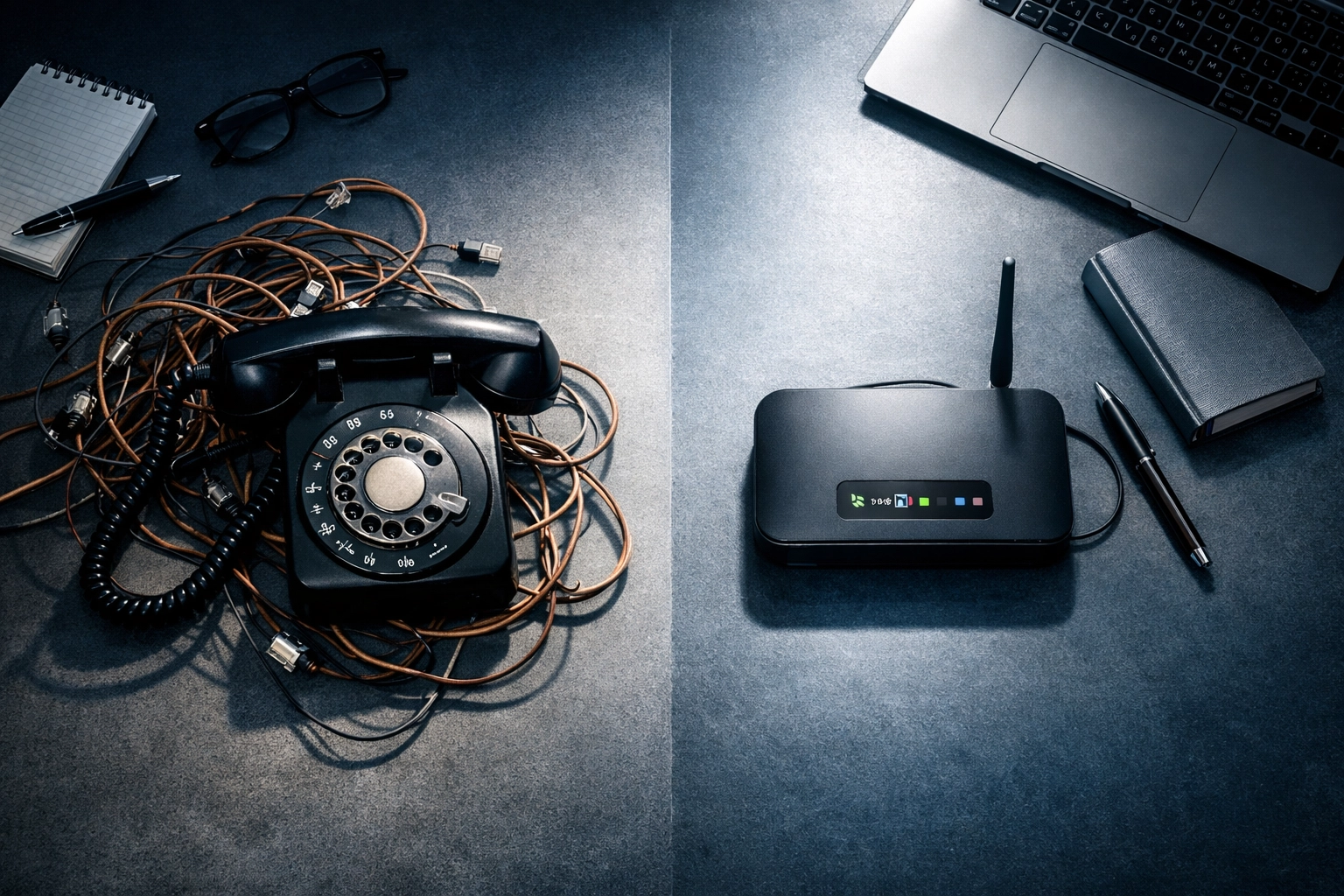
If you're running a multi-location business with traditional copper phone lines, you're probably asking yourself the same question right now: Should I replace these POTS lines now, or just ride them out until 2026?
It's a fair question. After all, those lines still work. Your elevators, fire alarms, security systems, and fax machines (yes, some of you still have them) are humming along just fine. Why fix what isn't broken?
Here's why: waiting is going to cost you a lot more money than acting now. And when we say "a lot," we mean hundreds of thousands of dollars for businesses with multiple locations.
Let's break down the math, because numbers don't lie.
The Price Tag of "Just Waiting It Out"
Right now, business POTS lines are running you somewhere between $150 and $200 per month per line. Some unlucky businesses are paying even more, several hundred dollars for a single line.
Here's what's happening: the FCC removed price caps on POTS services. Carriers know copper is dying, fewer customers are using these lines, and maintaining that ancient infrastructure is expensive. So they've been steadily cranking up the prices. Industry projections show POTS costs could spike by 75% between 2023 and 2026.
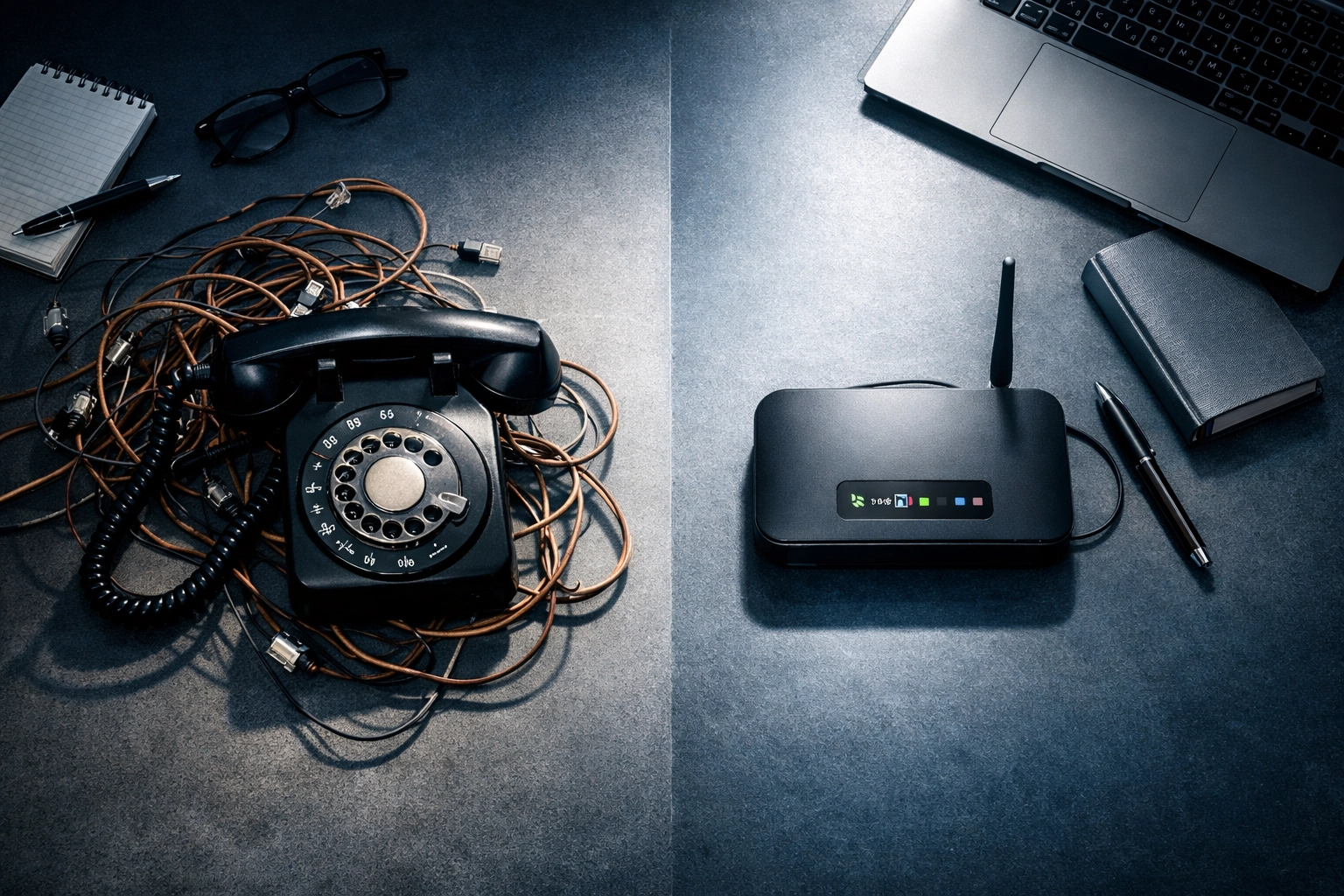
Let's use a real example. Say you've got 12 POTS lines across your locations. At $150/month per line, you're paying:
- $1,800 per month
- $21,600 per year
- $108,000 over five years
And remember, those prices are going up, not staying flat. By 2026, when copper sunset hits and carriers start flipping the switch, you'll be scrambling with everyone else who waited. That's when the real costs kick in:
Emergency migration fees. When you're forced to move under time pressure, carriers and vendors know they've got you. Expedited installations, rush orders, premium pricing, it all adds up.
Limited negotiating power. When you wait until the last minute, you lose leverage. You can't shop around. You take what's available, at whatever price they're charging.
Downtime risks. A rushed migration means higher chances of service interruptions. For multi-location businesses, that could mean elevator phones going offline, security systems failing, or fire alarms losing their connection. Those aren't just inconveniences, they're compliance nightmares and potential safety issues.
The Real Cost of Replacing Now
Modern POTS replacement solutions aren't just cheaper, they're dramatically cheaper. We're talking 40% to 75% cost reductions.
Cellular-based POTS replacement technology typically runs $30 to $60 per month per line. Many providers offer flat rates around $45/month with no surprise fees.
Using that same 12-line example:
- Replacement cost: $45/month × 12 lines = $540 per month ($6,480 annually)
- Current POTS cost: $150/month × 12 lines = $1,800 per month ($21,600 annually)
- Your savings: $1,260/month or $15,120 per year
Over five years, that's $75,600 back in your pocket instead of lighting it on fire with legacy line charges.
And here's the kicker: modern replacement solutions come with features that used to cost extra. Built-in redundancy. Remote monitoring. Battery backup. Automatic failover. All included, no upcharges, no surprises.
You also lock in your rate now instead of watching it climb year after year as copper disappears and carriers squeeze the last dollars out of dying technology.

The Multi-Location Reality Check
If you're operating multiple locations, the math gets even more dramatic.
Let's say you run 20 locations with an average of 10 lines each, that's 200 total lines. Here's what the next few years look like:
Sticking with POTS (estimated mid-range pricing):
- 200 lines × $175/month = $35,000 per month
- $420,000 per year
Switching to POTS replacement:
- 200 lines × $50/month = $10,000 per month
- $120,000 per year
That's an annual savings of $300,000. Even after you factor in equipment costs and installation, you're looking at payback within the first few months.
Over five years? You're saving $1.5 million dollars. That's not a typo.
Beyond the Dollar Signs: What Else You're Risking
Money is obviously a big part of this decision, but it's not the only consideration. Waiting until copper sunset 2026 creates operational risks that could cost you in ways that don't show up on a monthly bill:
Compliance gaps. Fire codes and safety regulations require functional communication lines for elevators, fire panels, and emergency systems. If your copper lines go dark unexpectedly (and they will), you could face fines, failed inspections, or worse, liability issues if something goes wrong.
Vendor availability. Right now, reputable POTS replacement vendors have capacity and competitive pricing. In late 2025 or early 2026, when everyone is scrambling? Good luck finding a vendor who can handle 20 locations without putting you on a six-month waiting list.
Installation bottlenecks. Replacing 200 lines across multiple locations takes time and coordination. You need site surveys, equipment ordering, installation scheduling, testing, and cutover planning. Rushing that process invites mistakes and service disruptions.
Technology lock-in. Waiting means you'll take whatever solution is available in a panic. Acting now means you can evaluate options, choose technology that fits your specific needs, and avoid getting stuck with subpar equipment for the next decade.
If you've already explored elevator phone line replacement or researched traditional business phone line alternatives, you know the landscape is shifting fast. The businesses winning this transition are the ones planning ahead, not reacting when it's too late.

Frequently Asked Questions About POTS Replacement Timing
Q: Can I just wait until my carrier notifies me about copper sunset?
A: You can, but that notification often comes with short timelines, sometimes 90 days or less. That's not enough time to properly evaluate solutions, get competitive bids, and coordinate installations across multiple locations without paying premium rush fees.
Q: Will POTS replacement technology work with my existing fire alarms and elevator systems?
A: Yes. Modern POTS replacement solutions are specifically designed to work with legacy equipment that requires analog phone line connectivity. They're plug-and-play compatible with fire panels, elevator phones, fax machines, alarm systems, and door entry systems.
Q: What if some of my locations still have good copper line pricing?
A: That's a short-term win that's about to turn into a long-term loss. Those rates won't last through 2026, and you'll still face the same migration pressure and limited options when copper sunset hits. Standardizing your replacement strategy now: across all locations: gives you better pricing, easier management, and consistent technology.
Q: How long does POTS replacement take for a multi-location business?
A: It depends on the number of locations and lines, but a typical project might take 3–6 months when done properly. That includes assessment, vendor selection, equipment procurement, site surveys, installation scheduling, and cutover. Rushing it in 2026? Expect delays, higher costs, and more headaches.
Q: Can I phase in POTS replacement over time instead of doing everything at once?
A: Absolutely. Many multi-location businesses prioritize critical sites first (locations with the most lines, aging equipment, or compliance-sensitive systems) and phase in the rest over 12–18 months. This spreads costs and reduces operational risk: but only if you start now instead of waiting until 2026.
The Bottom Line: Act Now or Pay Later
Here's the truth: the cost of replacing POTS lines now is substantially lower than continuing to pay inflated legacy line charges or being forced to migrate when copper sunset hits in 2026.
The only scenario where waiting looks cheaper is if you bury your head in the sand so long that copper service disappears entirely: and then you're stuck paying whatever emergency migration costs the market will bear.
For multi-location businesses, the math is simple:
✅ Replace now = predictable costs, better vendor options, operational control, and massive savings
❌ Wait until 2026 = escalating legacy costs, forced migration, limited options, and unnecessary expense
The window to act strategically is closing. By mid-2025, the rush will be on: and you'll be competing with thousands of other businesses for the same limited vendor capacity.
Ready to Calculate Your Real Savings?
We help multi-location businesses across the country transition from legacy POTS lines to modern, cost-effective solutions: without service disruptions or compliance gaps.
Get a free POTS replacement audit and consultation. We'll assess your current lines, calculate your exact savings, and build a migration roadmap tailored to your locations and timeline.
Contact Premier Business Team today and find out how much money you're leaving on the table by waiting.
