
Let’s be real: the college campus isn't just about brick-and-mortar lecture halls and student unions anymore. In 2026, a university is essentially a massive, distributed data hub. With thousands of students logging in from across the globe, the "digital campus" has become the primary target for some of the most sophisticated cyber-attacks we’ve ever seen.
The challenge for Higher Ed institutions today isn't just about teaching; it’s about proving that the person on the other side of the screen is actually who they say they are. Between AI-driven deepfakes, synthetic identity fraud, and increasingly clever cyber-attacks, the old way of doing things: like simple passwords or security questions: just doesn't cut it anymore.
At Premier Business Team, we’ve seen how the landscape of cybersecurity has shifted. Higher Ed needs a modern shield, and that’s where next-gen identity verification comes into play.
The Evolution of Fraud in Higher Ed
It used to be that identity fraud in a university setting was mostly about someone trying to sneak into a dorm or use a fake ID at a local bar. Fast forward to 2026, and the stakes are much higher. We’re talking about "ghost students" who enroll just to siphon off federal financial aid, and fraud rings that use AI to generate synthetic identities that can bypass basic enrollment checks.
Recent data from the Department of Education suggests that identity theft through sophisticated fraud rings has hit a breaking point. In fact, stricter verification standards have already prevented over $1 billion in student aid fraud. But as the defenses get better, the fraudsters get smarter.
The emergence of AI-driven fraud means that a scammer can now create a realistic video or audio clip to bypass traditional "live" video calls. This is why institutional integrity is under fire. If a university can’t guarantee the identity of its students, the value of the degrees it confers begins to erode.

Why VeriNow is the Game Changer for Enrollment
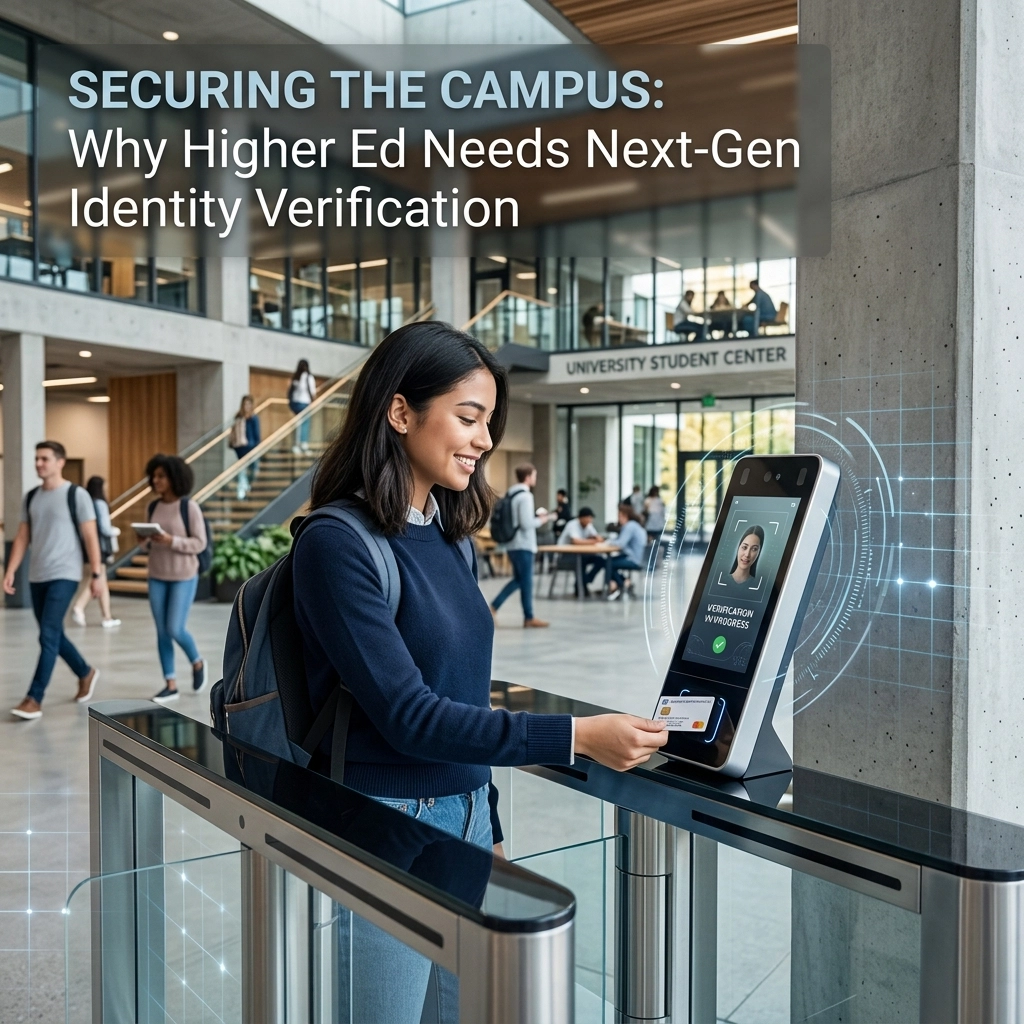
When we talk to administrators about securing their digital perimeter, the conversation often leads to VeriNow. In the digital-first educational landscape of 2026, VeriNow provides the heavy lifting required for secure enrollment.
The traditional enrollment process is often full of friction and security holes. Students upload a scan of a driver’s license, and an overworked registrar's office tries to verify it. It’s slow, and it’s prone to error. VeriNow automates this by meeting the NIST IAL2 standard: the gold standard for identity assurance.
Here’s how it works for enrollment:
- Government ID Validation: VeriNow scans and validates government-issued IDs against global databases in real-time.
- Biometric Comparison: It uses AI to compare a "live" selfie of the student against the photo on their ID.
- Liveness Detection: This is the big one for 2026. It ensures the person is physically present and not using a high-res photo or a deepfake video to trick the system.
By integrating this at the start of the student journey, institutions can stop fraud before it even begins, ensuring that every seat in the digital classroom belongs to a real, verified student.
Protecting the Integrity of Online Exams
Online learning is no longer a "backup" option; it’s a core part of the Higher Ed business model. However, maintaining academic integrity during remote assessments has been a major headache for faculty.
We’ve all heard the stories: students having someone else take their exams or using unauthorized resources. Traditional proctoring can be intrusive and, frankly, easy to game. Next-gen identity verification fixes this by providing "identity binding" at the start of an exam.
Using VeriNow during high-stakes testing ensures that the person who registered for the course is the same person clicking "Submit" on the final exam. This doesn't just prevent cheating; it protects the institution's accreditation. Organizations like the HLC now require institutions to have robust procedures for student identity verification to maintain their standing.

Safeguarding Student and Faculty Data from AI Threats
Identity verification isn't just about students; it’s about protecting the entire ecosystem. Faculty and staff handle sensitive research, financial data, and personal student information every day. A single compromised staff account can lead to a massive data breach.
In 2026, we’re seeing a rise in "step-up verification." Instead of asking for a password every time, the system monitors for "anomalous behavior." If a professor usually logs in from Chicago but suddenly tries to access the payroll system from an IP address in a different country, the system triggers a VeriNow identity check.
This adaptive approach to internet security ensures that even if a password is stolen, the data remains safe because the criminal can’t replicate the biometric requirements.
The Inclusivity Factor: Beyond Credit History
One of the coolest things about moving toward biometric and document-based verification is that it’s actually more inclusive. For a long time, universities relied on Knowledge-Based Authentication (KBA): those questions like "What was your first car?" or "Which of these addresses have you lived at?"
The problem? KBA relies on credit bureau data. If you’re an international student or someone from a low-income background with little to no credit history (often called "credit invisible"), you might fail these checks through no fault of your own.
Next-gen verification removes these barriers. By focusing on the ID the student holds and the person standing in front of the camera, universities can provide a smoother, fairer entry point for all students, regardless of their financial background.

Frequently Asked Questions (FAQ) for Higher Ed Identity Security
Q: What is NIST IAL2 and why does it matter for my university?
A: NIST Identity Assurance Level 2 (IAL2) is a federal standard that requires high confidence in a person’s identity. It involves the collection of government IDs and biometric verification. Meeting this standard is becoming a requirement for handling federal student aid and maintaining accreditation.
Q: Can’t AI deepfakes just bypass biometric checks?
A: Not with next-gen "liveness detection." Modern systems like VeriNow are designed to detect the subtle markers of AI-generated imagery and "spoofing" attempts, ensuring that only a physical, living human can pass the check.
Q: How does this impact student privacy and FERPA compliance?
A: Secure identity platforms are built with privacy-first architectures. They provide the audit trails required for FERPA while ensuring that sensitive biometric data is encrypted and handled according to strict regulatory standards.
Q: Is this difficult to integrate with our existing LMS (Learning Management System)?
A: Not at all. Most modern identity verification solutions are designed to plug directly into existing portals via API, making the transition seamless for both the IT department and the end-user.
Conclusion: Lead with Integrity
In the digital-first era of 2026, identity is the new perimeter. Higher Education institutions that fail to modernize their verification processes aren't just risking financial loss; they’re risking their reputation. By adopting tools like VeriNow, colleges and universities can ensure secure enrollment, protect the sanctity of their exams, and defend against the rising tide of AI-driven fraud.
Maintaining institutional integrity is a journey, and you don't have to walk it alone. At Premier Business Team, we specialize in helping organizations navigate the complex world of IT and telecommunications. Whether you’re looking to overhaul your cybersecurity strategy or need to find a better way to manage your digital identity, we’re here to help.
Ready to secure your campus for the future?
Explore more insights on our blog or contact the Premier Business Team today to see how we can help you implement next-gen identity verification that works for your students and your staff. Let’s build a more secure, more inclusive, and more integrated educational landscape together.
