• Skip to primary navigation
  • Skip to main content
Premier Business Team

Premier Business Team

Your business connectivity and IT Team

  • Home
  • Business Internet
  • Business Phone
  • Blog
  • About Us
    • Our Featured Suppliers
  • Contact Us
  • Business Quote
    • Business Tech Assessment
  • Engineering
  • Call: 360-946-2626
  • Show Search
Hide Search

Blog Posts

MDU Bulk Internet & Digital Infrastructure: How Apartment Owners Boost NOI with Seamless Connectivity

premierbusiness · February 8, 2026 ·

Resident expectations have changed. Fast, reliable internet isn't a luxury anymore: it's a basic utility, right up there with water and electricity. For apartment owners and operators, this shift creates a major opportunity: MDU (Multi-Dwelling Unit) bulk internet and digital infrastructure programs that improve resident satisfaction, create new revenue streams, and give you control over your building's technology.

If you're still letting residents scramble to find their own providers: or watching outdated wiring limit your property's potential: it's time to rethink your approach. Here's how bulk internet and smart digital infrastructure can directly boost your Net Operating Income (NOI) while making life easier for everyone involved.

What Is MDU Bulk Internet?

MDU bulk internet is a service model where the property owner or operator contracts with a provider (or multiple providers) to deliver high-speed internet to all units under a single agreement. Instead of each resident setting up their own service, connectivity is included as a building amenity: often bundled into rent or offered at a reduced rate.

Key benefits at a glance:

  • Consistent, high-speed connectivity for every unit
  • Simplified move-in experience for residents
  • New ancillary revenue or cost savings for ownership
  • Centralized management and support

This model transforms internet from a resident headache into a reliable, revenue-generating amenity you control.

Modern apartment building lobby with WiFi and digital kiosk, illustrating seamless bulk internet amenity for residents

Why Resident Experience Drives Property Performance

Today's renters: especially millennials and Gen Z: expect seamless digital experiences from day one. When a new resident moves in and their internet works instantly, that's a win. When they have to wait days for a provider appointment, that's a frustration that sticks.

Fast, Seamless Move-In Connectivity

Bulk internet means residents are online the moment they get their keys. No scheduling, no waiting, no missed work-from-home days. This "instant-on" experience is a major differentiator, especially in competitive rental markets.

Smart Amenities and Building Tech

Modern buildings are integrating smart locks, package lockers, climate controls, and security systems: all of which require robust digital infrastructure. Bulk internet lays the foundation for these amenities, making your property more attractive and future-ready.

For insights on how unified tech reduces downtime and improves operations, check out how a retail franchise achieved unified tech and reduced downtime.

Secure, Reliable Connectivity

A professionally managed network means fewer outages, better security, and consistent speeds across all units. Residents working from home, streaming, or running smart devices get the reliability they need: and you get fewer complaints.

How Bulk Internet Increases NOI and Ancillary Revenue

Let's talk numbers. MDU bulk internet isn't just about resident happiness: it's a direct lever for improving your bottom line.

Revenue Generation Through Bulk Billing

Bulk agreements typically offer lower per-unit costs than individual plans. You can pass some savings to residents while capturing a margin, or bundle connectivity into rent at a premium. Some partnerships even allow property owners to generate ongoing revenue through bulk billing agreements, turning internet into a consistent income stream.

Revenue opportunities include:

  • Monthly bulk billing to residents
  • Hybrid models with tiered speed options
  • Partnerships with providers who share revenue
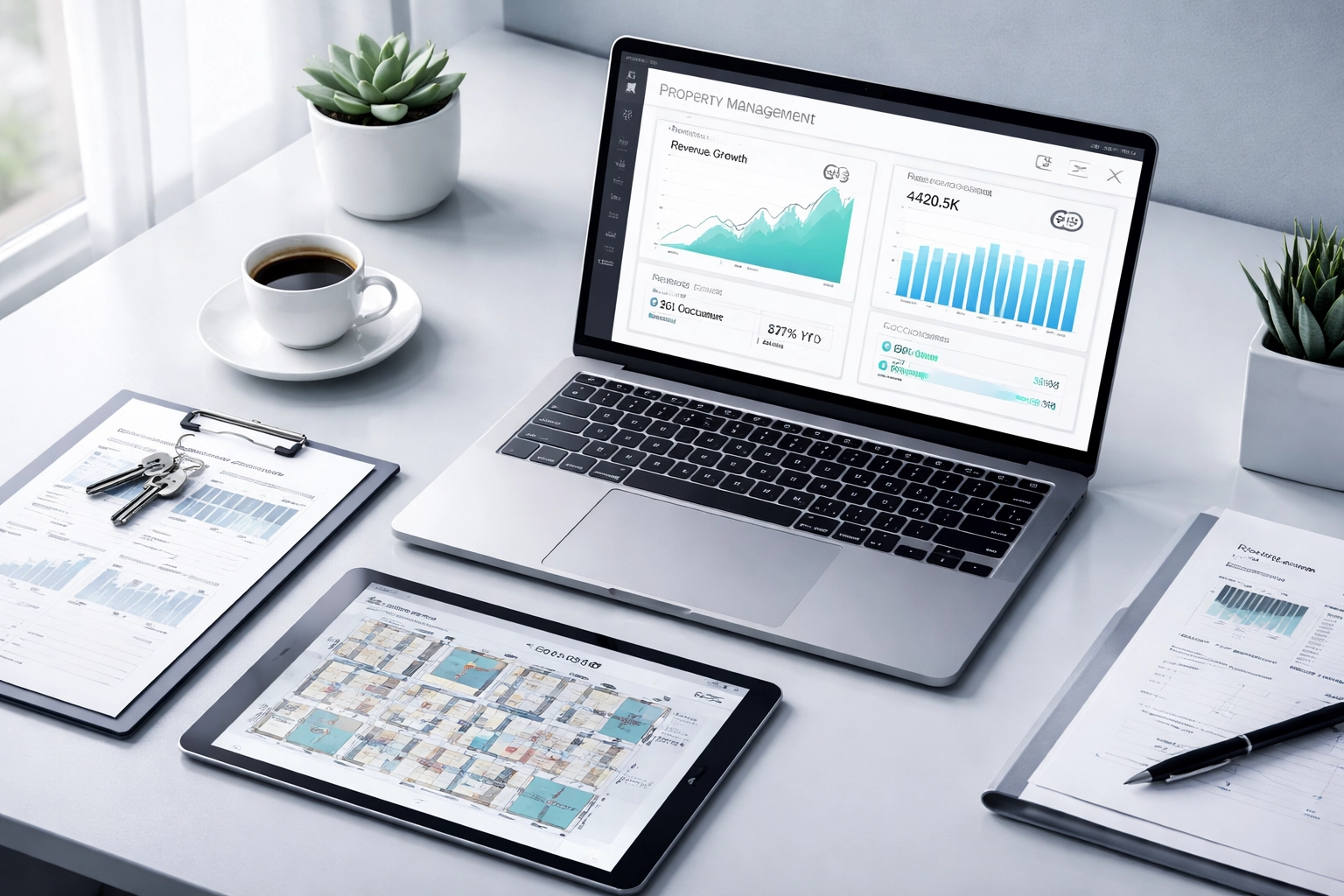
Property manager's desk with laptop showing NOI and occupancy graphs, highlighting bulk internet revenue benefits

Operational Cost Reduction

Managing a building where every resident has a different provider is a logistical nightmare. Coordinating access, troubleshooting issues, and dealing with outdated wiring eats up staff time and resources.

Bulk internet eliminates this complexity:

  • One provider, one point of contact for the entire building
  • Centralized network management reduces admin burden
  • Professional infrastructure minimizes service calls and troubleshooting

A single, secured connection is far less invasive: and easier to maintain: than hundreds of residents independently sourcing providers.

Higher Tenant Retention and Property Value

Reliable internet directly impacts resident satisfaction. When people can work, stream, and connect without interruption, they're more likely to renew their lease. Higher retention means lower vacancy costs and more stable rental income.

Plus, state-of-the-art broadband infrastructure increases your property's value and competitive edge. In some cases, it can even improve eligibility for government funding or incentives for lower-income housing.

Owner Control Over Digital Infrastructure

One of the biggest advantages of MDU bulk internet is control. When you own or manage the building's digital infrastructure, you're not at the mercy of third-party providers or outdated wiring.

What Does "Control" Mean?

  • Vendor flexibility: You choose the provider(s) and service levels that fit your property and residents.
  • Future-proofing: Upgrade infrastructure as technology evolves, without renegotiating with multiple ISPs.
  • Data and insights: Centralized management gives you visibility into network performance and usage.
  • Security: Implement building-wide cybersecurity solutions to protect residents and property systems.

For properties looking to modernize their network, Network as a Service (NaaS) offers scalable, secure options without heavy upfront investment.
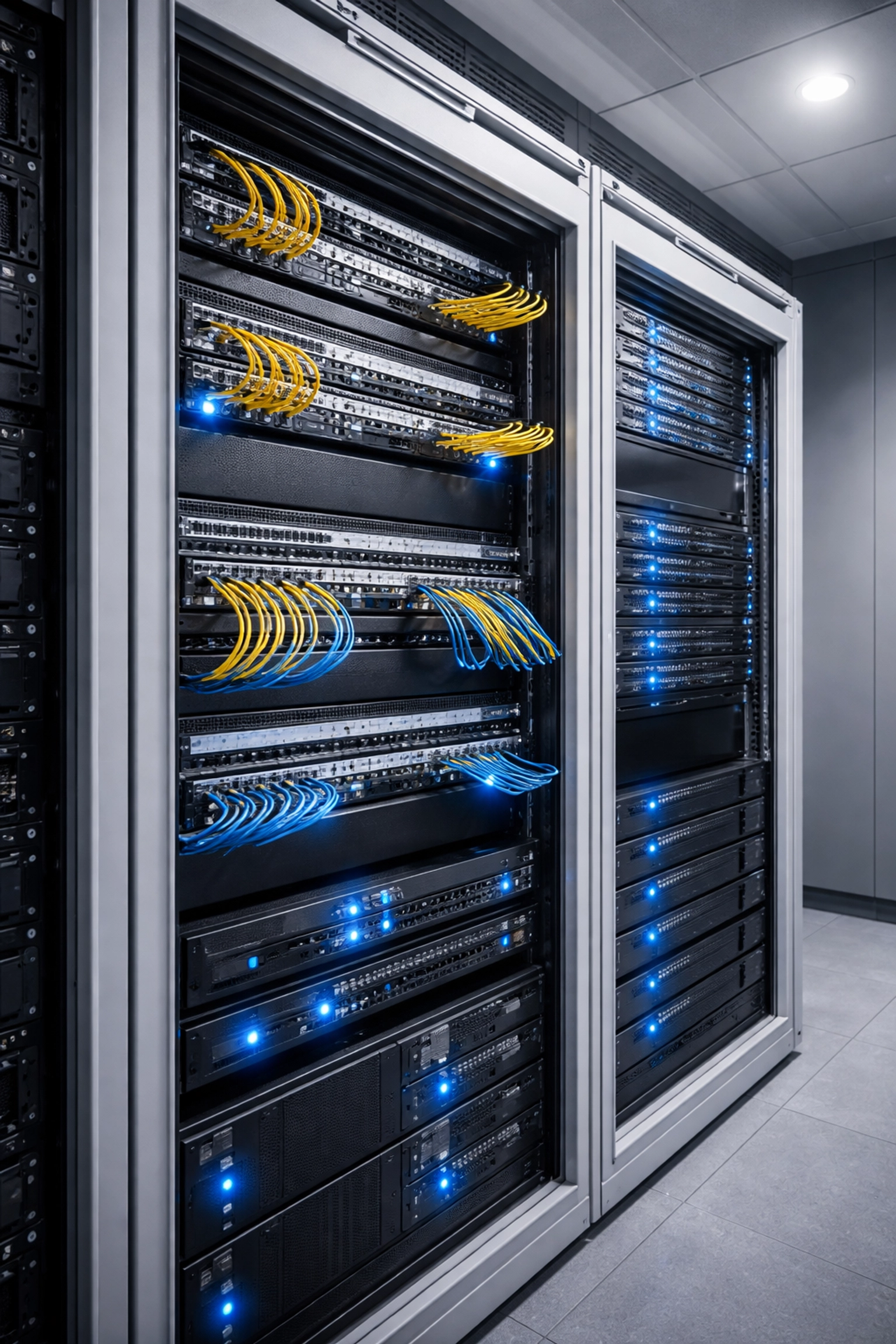
Apartment server room with organized fiber optic cables, representing secure, advanced digital infrastructure for MDUs

Premier's Vendor-Neutral, Stress-Free Engagement Process

Here's where Premier Business Team stands apart. We're not a carrier or a reseller pushing a single solution. We're your single point of contact: sourcing, evaluating, and implementing the right bulk internet and digital infrastructure for your property, often at no cost to you (providers cover our services).

How It Works

  1. Discovery: We learn about your property, resident profile, and goals.
  2. Evaluation: We research and compare providers, pricing, and infrastructure options: vendor-neutral, always.
  3. Implementation: We manage deployment, coordinate with providers, and handle the details.
  4. Ongoing Support: Questions, upgrades, or issues? One call to us, and we handle it.

You get expert guidance, a stress-free process, and infrastructure that's right for your building: without the sales pressure or technical headaches.

Looking for help with on-site IT, wiring, or network hardware? Explore our business IT and network installation services.

Industries and Properties That Benefit Most

MDU bulk internet isn't just for luxury high-rises. Properties of all types and sizes see results:

  • Market-rate apartments
  • Affordable and workforce housing
  • Student housing and higher education
  • Senior living communities
  • Mixed-use developments

If your property has multiple units and residents who value connectivity, bulk internet is worth exploring.

Frequently Asked Questions (FAQ)

Q: Is MDU bulk internet expensive to implement?
A: Not necessarily. Many providers offer turnkey solutions with little to no upfront cost. Premier Business Team helps you find the best fit for your budget and property.

Q: Will residents lose choice if I switch to bulk internet?
A: Bulk programs often include tiered options, so residents can upgrade speeds if desired. The goal is to improve the baseline experience for everyone.

Q: How does bulk internet affect my lease agreements?
A: Bulk connectivity can be bundled into rent or offered as a separate amenity fee. We help you navigate the best approach for your market.

Q: What if my building has outdated wiring?
A: Infrastructure upgrades are often included in bulk agreements, or can be coordinated through our network installation services.

Q: Can I integrate smart building tech with bulk internet?
A: Absolutely. Bulk internet provides the backbone for smart locks, access control, package systems, and more: future-proofing your property.

Ready to Boost NOI and Resident Satisfaction?

MDU bulk internet and digital infrastructure aren't just trends: they're competitive necessities. The right program improves resident experience, generates new revenue, and puts you in control of your building's technology future.

Premier Business Team makes it easy. As your vendor-neutral partner, we source, evaluate, and implement the best solutions for your property: often at no cost to you.

๐Ÿ“ž Call us at 360-946-2626 or contact Premier Business Team to schedule your free consultation.


#MDUInternet #BulkInternet #ApartmentOwners #PropertyNOI #DigitalInfrastructure #SmartBuildings #ResidentExperience #PropertyManagement #PremierBusinessTeam #MultifamilyTech #PropTech2026
5 Steps to Replace Your Elevator and Fire Suppression Phone Lines Before Copper Sunset (Easy Compliance Guide for Multi-Site Owners)

premierbusiness · February 8, 2026 ·

If you manage multiple buildings with elevators or fire suppression systems, you're sitting on a ticking compliance bomb. AT&T's copper network is being systematically dismantled across nearly 20 states, and by November 15, 2026, thousands of wire centers will no longer support POTS (Plain Old Telephone Service) lines. That means the analog phone lines powering your emergency elevator phones and fire alarm panels are on borrowed time.

The challenge? Most multi-site owners don't even know how many POTS lines they still have, let alone which ones are mission-critical for life safety compliance. This guide walks you through the exact five-step process to replace your elevator phone line and fire suppression communication systems before copper sunset forces your hand, or worse, leaves you non-compliant during an inspection.

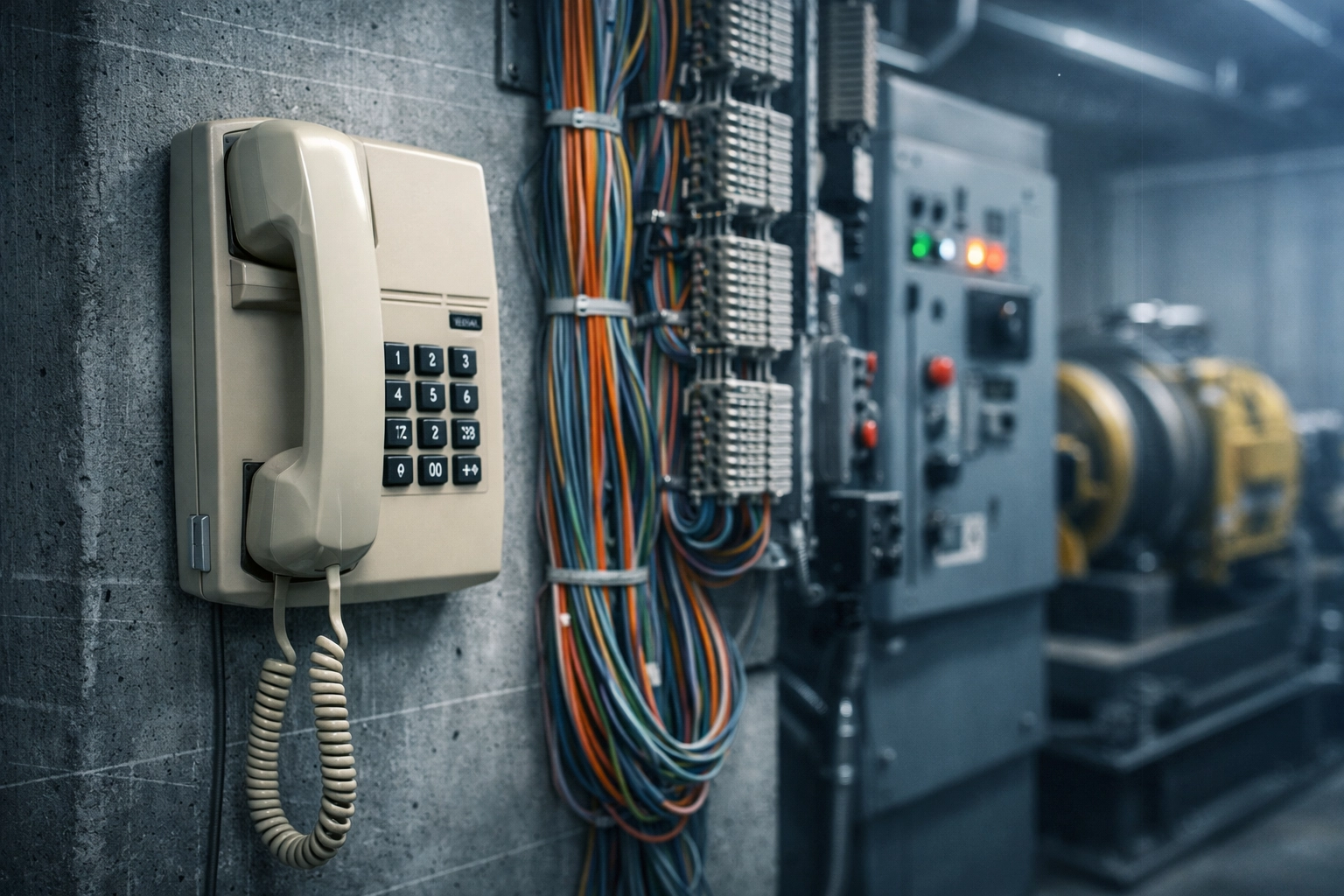
Old analog POTS line telephone and copper wiring in elevator machine room

Step 1: Complete a Multi-Site POTS Line Inventory

Before you can replace anything, you need to know what you're working with. This is the step most organizations skip, and it costs them thousands in hidden charges later.

Here's what to do:

  • Pull every telecom bill from the last 3โ€“6 months for all locations. Look for line items labeled "POTS," "analog," "copper," or even vague descriptions like "dedicated line."
  • Walk each property with your facility manager or elevator service provider. Physically locate the phone panels in elevator cabs, machine rooms, fire alarm control panels, and emergency pull stations.
  • Document everything: Building address, line purpose (elevator vs fire alarm), current carrier, monthly cost, and circuit ID.

Why this matters: We routinely find clients paying for 20โ€“40% more POTS lines than they actually use. One multi-location retail client discovered 127 forgotten analog lines still billing at $85/month each, that's over $10,000/month in waste.

Premier Business Team Insight: We've built custom audit tools to scan your telecom invoices and cross-reference with site equipment inventories. This usually cuts discovery time from weeks to days.

Step 2: Evaluate Your Current Compliance Requirements

Not all emergency phone lines are created equal. Elevator lines and fire alarm lines operate under different regulatory frameworks, and mixing them up during replacement can trigger failed inspections.

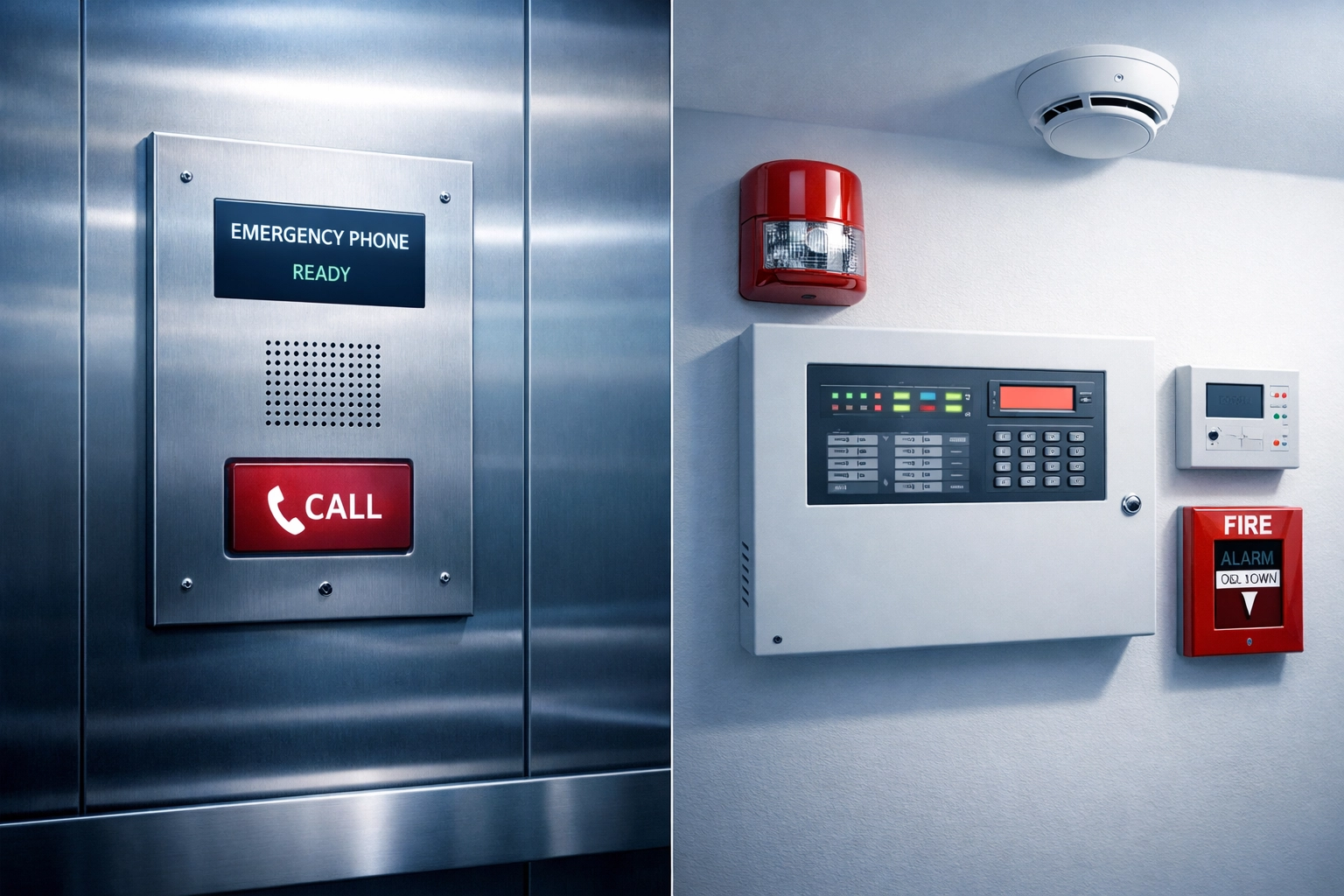
Elevator emergency phone panel and fire alarm control panel showing compliance equipment

Elevator Phone Lines (ASME A17.1 / ADA)

  • Must connect to a live operator or emergency service 24/7.
  • Require two-way voice communication.
  • Must function during power outages (backup battery).
  • Cannot rely solely on cellular if the building has poor signal.

Fire Alarm Lines (NFPA 72)

  • Must transmit alarm signals to a UL-listed central monitoring station.
  • Require supervision (the monitoring station must detect line failure within 200 seconds).
  • May use cellular/IP as primary communication if it meets TIA-4950 standards.

Why you can't just "swap to VoIP": Standard VoIP phone systems don't meet supervision requirements for fire alarms and often fail ADA compliance for elevators because they lack battery backup during internet outages. This is the #1 mistake we see during emergency POTS line replacement projects.

Action Step: Request a compliance letter from your elevator service provider and fire alarm monitoring company outlining their technical requirements. Use this as your baseline when evaluating replacement solutions.

Step 3: Select the Right Replacement Solution (LTE/Cellular)

Once you know what you need, it's time to pick the technology that actually works. For most multi-site owners, LTE/cellular-based emergency phone line solutions offer the best balance of compliance, reliability, and cost.

Top Replacement Options:

LTE Elevator Phone Systems

  • Dedicated cellular units that install in the elevator machine room.
  • Built-in battery backup (4โ€“24 hours depending on model).
  • Two-way voice communication with live operators.
  • No reliance on building internet or power.
  • Cost: $30โ€“$60/month per elevator line.

Cellular Fire Alarm Communicators

  • Replace copper with dual-path monitoring (cellular + IP).
  • Meet NFPA 72 supervision requirements.
  • Instant signal transmission to UL-listed monitoring stations.
  • Cost: $25โ€“$50/month per fire panel.

What to avoid: Cheap "plug-and-play" cellular adapters that don't meet ADA voice quality standards or lack proper battery backup. If it costs less than $200 for the device, it's probably not compliant.

Modern LTE cellular device for POTS line replacement mounted on wall

Premier Business Team Recommendation: We work directly with manufacturers like Kings III, Phonetics, and Viking Electronics to ensure every replacement solution is pre-certified for your specific compliance codes. No guesswork, no failed inspections.

Step 4: Deploy with Professional Project Management

Here's where most multi-site POTS line replacement projects go sideways: coordination. You're juggling elevator techs, fire alarm vendors, telecom carriers, and building managers across 10, 20, or 50+ locations. Without a single point of accountability, installations drag on for months.

Deployment Best Practices:

  • Schedule installations during low-traffic hours to avoid elevator downtime complaints.
  • Coordinate with your fire alarm monitoring company at least 2 weeks in advance to update receiver profiles and test signals.
  • Port existing phone numbers if your elevator emergency line is listed in public directories (some jurisdictions require this).
  • Test immediately after installation, don't wait for the monthly inspection cycle.

Timeline Expectation: A well-managed 20-location deployment typically takes 4โ€“6 weeks from kickoff to final sign-off. Rushed jobs without proper project management? 3โ€“6 months with multiple site revisits.

How Premier Business Team Helps: We act as your single-point project manager, coordinating directly with elevator vendors, fire alarm companies, and cellular providers. You get one contact, one timeline, and one invoice. We even handle the carrier port requests and final compliance documentation.

Step 5: Test, Document, and Maintain Compliance

Replacing the hardware is only half the battle. You need proof that everything works, and that proof needs to survive an OSHA, fire marshal, or elevator inspector visit.

Building manager coordinating multi-site elevator phone line replacement project

Post-Installation Checklist:

  • Elevator Phone Test: Place a test call from each elevator cab. Verify two-way audio, operator response time, and automatic callback functionality.
  • Fire Alarm Signal Test: Trigger a supervised test signal and confirm receipt by the monitoring station within 60 seconds.
  • Battery Backup Test: Simulate a power failure and verify the system stays online for at least 4 hours.
  • Documentation: Collect signed-off test reports from your elevator vendor and fire alarm company. Store these with your building permits and inspection records.

Ongoing Maintenance: Most LTE/cellular systems require annual testing and battery replacement every 3โ€“5 years. Build this into your preventive maintenance schedule, or better yet, let us handle it under a managed support agreement.

Frequently Asked Questions (FAQ)

What happens if I don't replace my POTS lines before copper sunset?
Your carrier will either force-migrate you to a higher-cost alternative (some clients have seen 648% price increases) or simply disconnect service. If you lose your elevator or fire alarm line and don't have a compliant replacement, you risk failed inspections, fines, and potential liability during emergencies.

Can I use my building's existing internet connection for elevator phones?
Technically yes, but it's risky. Internet-based solutions (VoIP) often fail ADA compliance because they lack dedicated battery backup and can drop during network congestion. LTE/cellular is safer because it doesn't rely on your building's infrastructure.

How much does elevator phone line replacement cost per location?
Budget $30โ€“$60/month per elevator line for LTE solutions, plus $200โ€“$500 in one-time installation costs per unit. Fire alarm cellular communicators run $25โ€“$50/month with similar installation fees. For a 10-building portfolio with 15 elevators and 10 fire panels, expect $1,200โ€“$1,800/month in ongoing service costs.

Do I need to notify my elevator inspector before switching?
Yes. Most jurisdictions require updated equipment certifications and test results. Your elevator service provider should handle this as part of the installation, but always confirm they're filing the proper paperwork with your local AHJ (Authority Having Jurisdiction).

What's the timeline for a full multi-site replacement?
With proper project management, most 10โ€“20 location deployments take 4โ€“6 weeks. Larger portfolios (50+ sites) can stretch to 8โ€“12 weeks depending on vendor availability and site access.

Don't Wait Until Copper Sunset Forces Your Hand

The clock is ticking. Copper retirement is happening right now, and carriers are actively turning off wire centers across the country. If you wait until your elevator phone or fire alarm line goes dead, you're looking at emergency service calls, expedited shipping fees, and potential compliance violations.

Premier Business Team specializes in multi-site POTS line replacement projects: from initial inventory audits to final compliance sign-off. We've helped commercial property managers, retail franchises, and industrial facility operators across the country navigate copper sunset without disrupting operations or failing inspections.

Ready to get started? Call us today at 360-946-2626 and let's build your compliance roadmap before November 2026. Your elevators and fire systems are too important to leave to chance.

Escaping the VMware Licensing Trap: Why National Enterprises are Pivoting to Private Cloud in 2026

premierbusiness · February 7, 2026 ·

If you're still running VMware and haven't felt the squeeze yet, you will soon. Since Broadcom's 2023 acquisition of VMware, enterprises across North America, Europe, and Asia-Pacific have watched their virtualization costs spiral out of control, sometimes tripling overnight. What was once a predictable line item has become a budget-busting liability, and IT leaders are scrambling for alternatives.

The exodus is real. According to Gartner, by 2028, most enterprises will migrate half of their virtual workloads away from VMware due to mounting costs. The question isn't whether your organization should evaluate alternatives, it's how quickly you can execute a strategic migration before your next renewal cycle locks you into another painful contract.

The Broadcom Acquisition: What Changed (And Why It Matters)

When Broadcom acquired VMware in late 2023, the playbook was predictable: squeeze more revenue from the existing customer base. But the speed and severity of the changes caught even seasoned IT executives off guard.

Here's what shifted:

  • Perpetual licensing eliminated entirely. No more buying licenses outright and paying annual maintenance. Every customer is now forced into mandatory subscription models with zero flexibility.
  • Per-core pricing with a 72-core minimum (effective April 10, 2025). Previously, you could start at 16 cores. Now you're paying for 72 cores minimum, even if you're only using a fraction of that capacity.
  • Forced bundling. Need vSphere? Great, you're also buying NSX and vSAN whether you use them or not. No ร  la carte options. No opt-outs.
  • 20% late renewal penalty with zero grace period. Miss your renewal window by a day? Pay a penalty. It's a hard stop, and it's designed to squeeze every dollar out of hesitant customers.

This isn't about "modernizing the business model." It's about extracting maximum value from a captive customer base before they find the exit.

IT executive reviewing rising VMware licensing costs compared to private cloud server infrastructure

The Real Cost: 30โ€“70% Increases Are Just the Beginning

Let's talk numbers. The financial impact of these changes isn't theoretical, it's hitting P&Ls across every industry.

Typical enterprise data center scenario:

  • 2,000 cores under the old model: ~$500,000/year
  • Same 2,000 cores under Broadcom's new model: $1.5 million+/year

That's a 3x increase for the exact same infrastructure. No new features. No additional value. Just a new pricing structure designed to maximize revenue extraction.

Even "modest" increases are devastating. Most organizations are seeing annual VMware spend jump 30โ€“70% compared to the previous perpetual+maintenance model. And over a typical seven-year lifecycle, VMware licensing now costs approximately 60% more under subscription pricing compared to perpetual licensing.

For CFOs, this creates a nightmare scenario: OpEx inflation with no corresponding business value. For IT leaders, it's a wake-up call to reassess the entire virtualization strategy.

The Cost Predictability Myth

Broadcom marketed the subscription model as a way to deliver "predictable OpEx" and simplified budgeting. In practice, it's done the opposite.

Here's why:

  • Forced bundles mean you're paying for unused capacity. Your organization might only need vSphere, but you're forced to pay for NSX and vSAN. That's like buying a car and being forced to pay for a boat trailer you'll never use.
  • Renewal cycles are inflexible. There's no room to negotiate, no volume discounts for long-term customers, and no grace period if you need time to evaluate alternatives.
  • Core minimums create artificial waste. If your workload requires 40 cores, you're still paying for 72. The pricing model doesn't scale down, it only scales up.

The result? Enterprises are locked into escalating costs with no escape hatch and no ability to right-size their spend based on actual usage.

Why Private Cloud Is the Strategic Alternative

Private cloud platforms offer something VMware under Broadcom cannot: flexibility, cost control, and true infrastructure ownership.

Here's what a modern private cloud deployment looks like in 2026:

1. Licensing Flexibility
Unlike VMware's mandatory subscription model, private cloud platforms offer both perpetual and subscription options. You can choose the model that aligns with your financial planning, not the vendor's revenue targets.

2. All-In-One Licensing with Transparent Pricing
No forced bundles. No hidden fees. No surprise add-ons. Leading private cloud platforms integrate compute, storage, networking, and security into a single, predictable licensing model, often delivering up to 40% total cost of ownership reduction compared to VMware.

3. Zero Egress Fees
This is critical for enterprises with multi-cloud or hybrid-cloud strategies. AWS and Azure charge egress fees when you move data out of their environments. Private cloud solutions eliminate those fees entirely, giving you true portability and control over your data.

4. Greater Customization and Control
Private cloud platforms are designed for enterprises that need granular control over their infrastructure. You're not locked into a one-size-fits-all bundle. You build the environment your workloads actually require.

Enterprise data center showing VMware cost increases and infrastructure spending metrics

The Migration Playbook: How Premier Business Team Helps

Moving away from VMware isn't a weekend project. It requires strategic planning, workload assessment, vendor evaluation, and seamless execution. That's where Premier Business Team comes in.

Our role as your vendor-neutral advisor:

1. Workload Assessment & Migration Roadmap

We start by analyzing your current VMware environment, workload dependencies, licensing footprint, performance requirements, and compliance needs. Then we build a phased migration roadmap that minimizes disruption and risk.

2. Cloud Platform Evaluation

We evaluate private cloud platforms (Azure Stack HCI, AWS Outposts, VMware alternatives like Nutanix or Scale Computing) based on your specific requirements. Our recommendations are always vendor-neutral, we're not pushing a specific platform because we get a kickback. We're recommending the solution that best fits your operational and financial goals.

3. Procurement & Negotiation

We leverage our relationships with cloud providers and infrastructure vendors to negotiate competitive pricing and favorable contract terms. Our clients typically see 20โ€“30% better pricing than they'd get going direct, simply because we know the market and we know how to negotiate.

4. Implementation & Migration Support

We manage the technical migration, working alongside your internal IT team or augmenting your team with our engineers. We handle everything from hypervisor conversion to network reconfiguration to application testing.

5. Ongoing Optimization

Post-migration, we provide ongoing cost optimization, performance tuning, and strategic guidance as your infrastructure evolves. This isn't a one-time project, it's a partnership.

Why National and International Enterprises Are Making the Move Now

The VMware licensing changes have created urgency across industries:

  • Financial services firms are migrating mission-critical workloads to private cloud to escape unpredictable licensing costs and maintain regulatory compliance.
  • Healthcare systems are moving to private cloud platforms that offer HIPAA-compliant infrastructure without the VMware tax.
  • Manufacturing and logistics companies with distributed operations are adopting hybrid cloud strategies that give them flexibility across regions without egress fees.
  • Retail and hospitality brands are consolidating their virtualization footprint into cost-effective private cloud environments that scale with demand.

The common thread? Strategic control. These organizations refuse to let a vendor dictate their infrastructure roadmap or budget priorities.

IT professionals planning cloud migration strategy and private cloud deployment

FAQ: Private Cloud Migration in 2026

Q: Can we migrate away from VMware without disrupting production workloads?
A: Yes. A phased migration approach allows you to move workloads incrementally, testing and validating each phase before moving to the next. Most enterprises complete migrations in 6โ€“12 months with minimal production impact.

Q: What's the ROI timeline for moving to private cloud?
A: Most organizations see positive ROI within 18โ€“24 months, primarily driven by lower licensing costs, reduced egress fees, and elimination of forced bundling. The longer you wait, the more you're overpaying under the VMware subscription model.

Q: Do we need to rearchitect applications to move to private cloud?
A: Not necessarily. Many private cloud platforms support lift-and-shift migrations for VMware workloads. Rearchitecting can unlock additional benefits (like cloud-native scalability), but it's not a prerequisite for migration.

Q: How do we avoid vendor lock-in with a new platform?
A: Choose platforms that support open standards, offer both perpetual and subscription licensing, and integrate with multi-cloud environments. We help you evaluate portability and exit strategies before you commit.

Q: What about our VMware contracts that still have time left?
A: We can help you evaluate early termination clauses, negotiate exit terms, or structure a phased migration that aligns with your renewal dates. Many organizations find that the cost savings from migration outweigh early termination penalties.

Take Control of Your Infrastructure: Before Your Next Renewal

The VMware licensing trap is real, and it's only getting worse. Every renewal cycle locks you into higher costs, less flexibility, and more restrictive terms. The good news? You have options.

Private cloud platforms offer the performance, security, and control you need: without the licensing chaos. And Premier Business Team is here to guide you through every step of the evaluation, migration, and optimization process.

Ready to explore your options? Contact Premier Business Team today for a no-obligation infrastructure assessment. We'll map your current VMware footprint, model your migration options, and show you exactly how much you can save by making the move to private cloud in 2026.

Don't wait until your next renewal forces your hand. Take control now.

Data Center Connectivity & Consulting Services: National & International Solutions

premierbusiness · February 7, 2026 ·

Request a Quote

Modern businesses require robust, reliable data center infrastructure to support their critical operations across national and international markets. Whether you're expanding globally, consolidating facilities, or building your first data center, Premier Business Team delivers comprehensive connectivity and consulting services designed to meet the most demanding requirements.

Our vendor-neutral approach ensures you receive optimal solutions tailored to your specific needs, backed by extensive project management expertise and end-to-end service delivery across multiple continents.

Comprehensive Data Center Connectivity Solutions

Multiple Connectivity Options & Providers

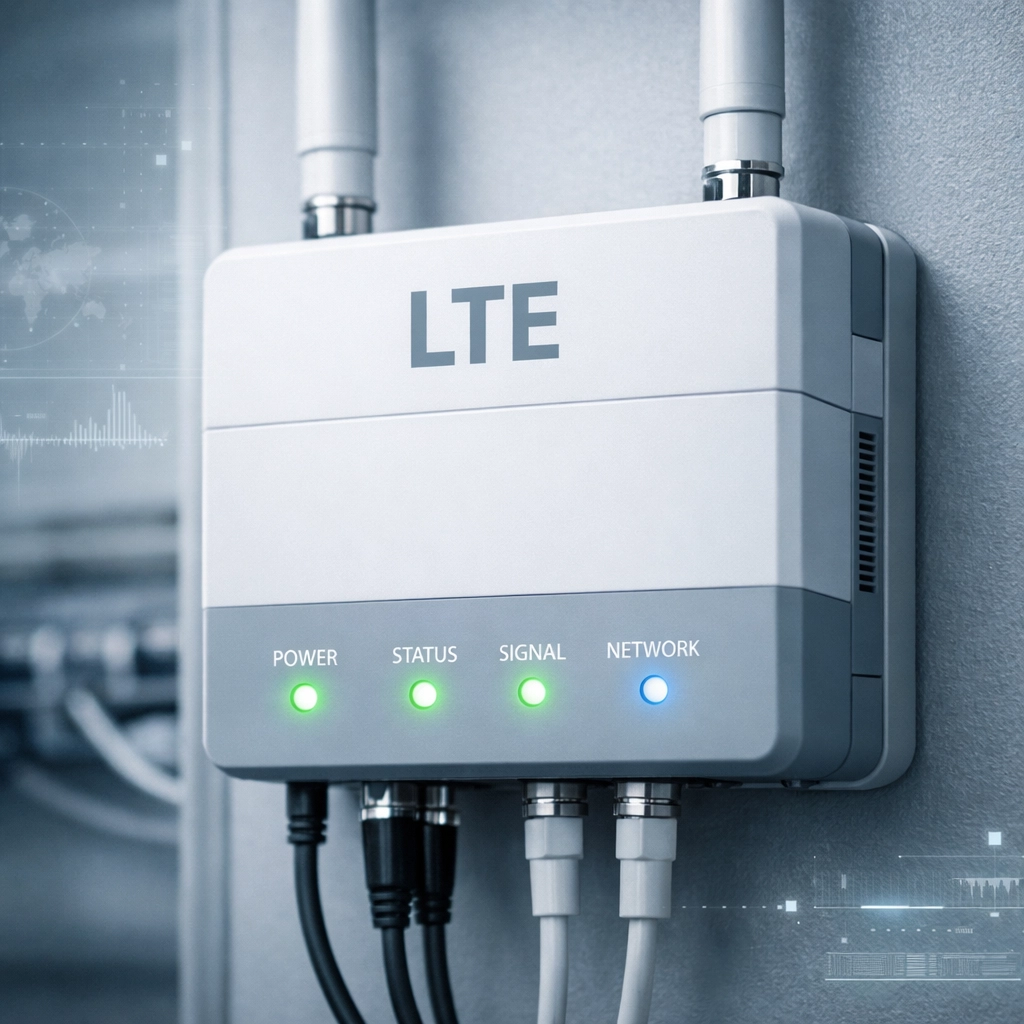
Today's data centers demand diverse connectivity options to ensure maximum uptime and performance. We provide access to multiple fiber providers, creating redundant pathways that eliminate single points of failure. Our connectivity solutions include:

Fiber Optic Infrastructure: High-capacity fiber connections supporting speeds from 100 Mbps to 100+ Gbps, with dedicated bandwidth options for mission-critical applications.

Redundant Circuit Design: Multiple carrier connections ensure your data center maintains connectivity even during provider outages or network disruptions.

Diverse Path Routing: Physically separate fiber routes prevent simultaneous failures caused by construction accidents, natural disasters, or infrastructure damage.

Backup Internet Services: Secondary and tertiary internet connections provide automatic failover capabilities, maintaining operations during primary circuit interruptions.

image_1

Advanced Network Architecture

Our team designs network architectures that scale with your business growth while maintaining optimal performance. We implement software-defined networking (SDN) solutions that provide centralized control and dynamic resource allocation across your data center infrastructure.

For organizations requiring business internet connectivity beyond traditional data center environments, we ensure seamless integration between your corporate networks and data center facilities.

Power & Alternative Energy Solutions

Primary Power Infrastructure

Reliable power delivery forms the foundation of any successful data center operation. Our power solutions encompass:

Electrical Design & Installation: Complete electrical infrastructure design including primary power feeds, distribution panels, and circuit protection systems.

Load Balancing Systems: Advanced power distribution units (PDUs) that optimize electrical loads across your infrastructure while providing real-time monitoring capabilities.

High-Efficiency Equipment: Energy-efficient servers, storage systems, and networking equipment that reduce operational costs while maximizing performance.

Backup & Alternative Power Systems

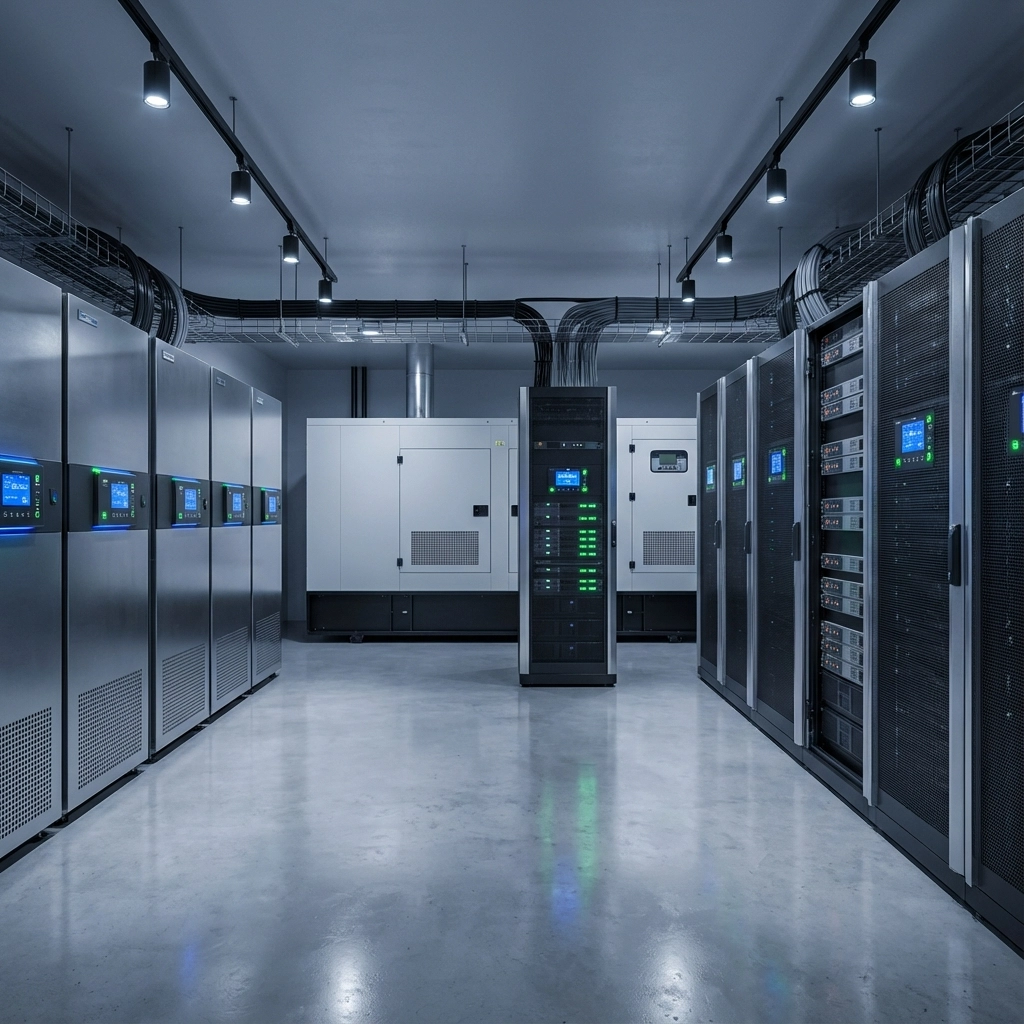
Power redundancy ensures continuous operations during utility outages or electrical system maintenance. Our backup power solutions include:

Uninterruptible Power Systems (UPS): Battery-backed systems providing immediate power during outages while backup generators come online.

Emergency Generator Systems: Diesel and natural gas generators sized to support full facility loads during extended power outages.

Renewable Energy Integration: Solar, wind, and other renewable energy sources that reduce operational costs while supporting sustainability initiatives.

Power Monitoring & Management: Advanced monitoring systems that track power consumption, efficiency metrics, and system health in real-time.

image_2

Professional Data Center Consulting Services

Site Selection & Planning

Choosing the optimal location for your data center requires careful analysis of multiple factors including power availability, network connectivity, natural disaster risk, regulatory environment, and cost structures. Our consulting team evaluates:

Geographic Risk Assessment: Analysis of seismic activity, flood zones, severe weather patterns, and other environmental factors that could impact operations.

Utility Infrastructure: Evaluation of electrical grid capacity, redundancy, and reliability in potential locations.

Connectivity Ecosystem: Assessment of available carriers, fiber routes, and internet exchange points in target markets.

Regulatory Compliance: Analysis of local building codes, environmental regulations, and data protection requirements.

Efficiency Optimization

Modern data centers must balance performance requirements with energy efficiency to remain competitive. Our efficiency consulting services include:

Cooling System Design: Implementation of advanced cooling technologies including hot/cold aisle containment, liquid cooling, and free air cooling systems.

Airflow Optimization: Computational fluid dynamics (CFD) modeling to optimize server placement and cooling efficiency.

Power Usage Effectiveness (PUE) Improvement: Strategies to reduce PUE ratios through equipment selection, infrastructure design, and operational optimization.

Infrastructure Implementation Services

Structured Cabling & Professional Installation

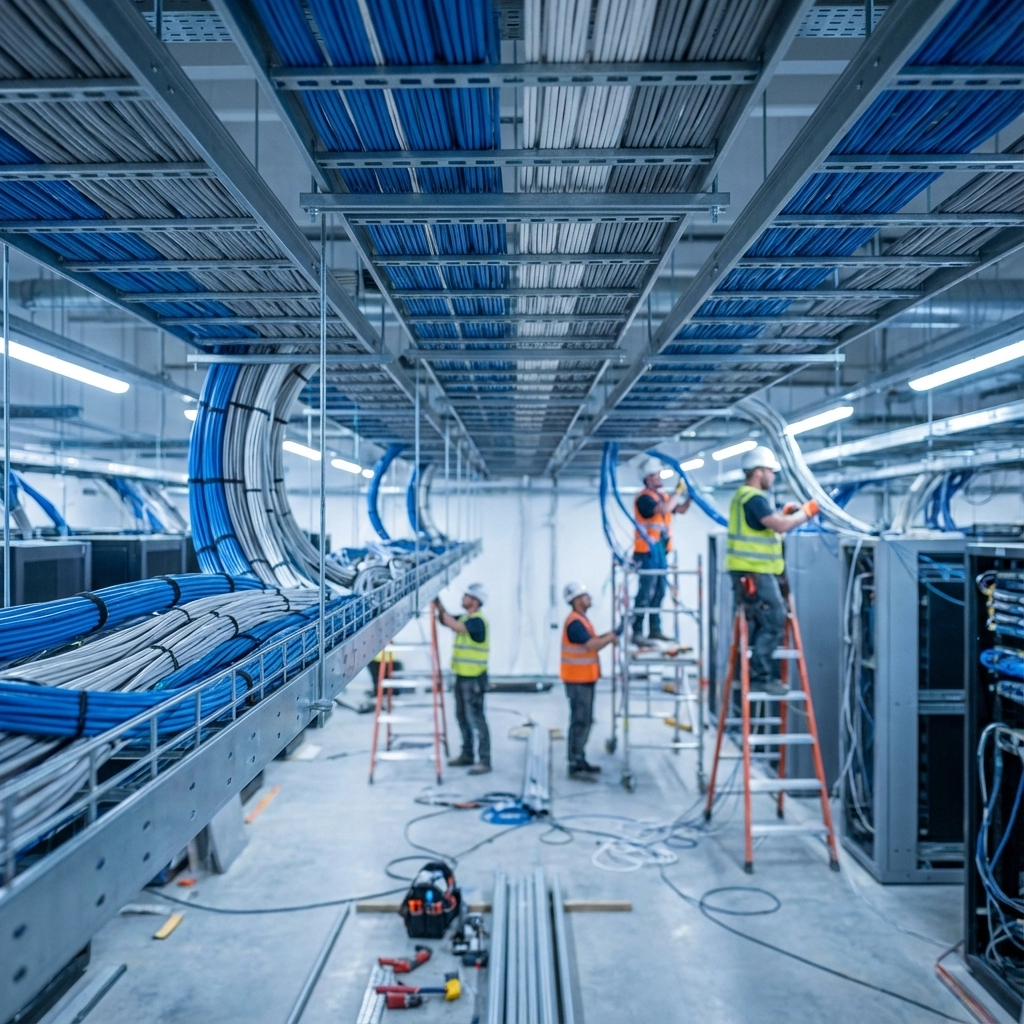
Proper cabling infrastructure ensures optimal network performance while supporting future expansion needs. Our structured cabling services include:

Category 6A & Fiber Optic Cabling: High-performance copper and fiber cabling supporting current and future bandwidth requirements.

Cable Management Systems: Organized cable routing and management systems that simplify maintenance while improving airflow.

Testing & Certification: Comprehensive testing of all installed cabling to ensure compliance with industry standards and performance specifications.

image_3

Data Center Fiber Build Services

Custom fiber installations provide dedicated connectivity between facilities, carriers, and cloud providers. Our fiber build services encompass:

Route Planning & Design: Optimal fiber routing that considers cost, redundancy, and future expansion requirements.

Construction Management: Complete project management including permits, trenching, and installation coordination.

Splice Enclosure Installation: Professional fiber termination and testing to ensure optimal signal quality and reliability.

Permitting & Project Management

Complex data center projects require careful coordination of multiple contractors, regulatory approvals, and timeline management. Our project management services include:

Permit Acquisition: Management of all required permits including electrical, construction, and environmental approvals.

Contractor Coordination: Oversight of multiple specialized contractors to ensure quality, schedule adherence, and budget compliance.

Quality Assurance: Comprehensive testing and commissioning of all systems before facility handover.

National & International Reach

Premier Business Team serves clients across North America and internationally, with established partnerships in key global markets. Our international capabilities include:

Cross-Border Connectivity: Coordination of international fiber connections and carrier relationships.

Regulatory Compliance: Understanding of international data protection laws, building codes, and telecommunications regulations.

Local Partnership Network: Established relationships with qualified contractors and service providers in major international markets.

For organizations requiring comprehensive IT solutions beyond data center infrastructure, we provide integrated consulting services that align your technology strategy with business objectives.
Related services: Business Internet, Consulting Services, Cybersecurity

image_4

Why Choose Premier Business Team

Vendor-Neutral Approach

Unlike vendors tied to specific manufacturers or service providers, we maintain independence that ensures recommendations based solely on your requirements and best interests. This approach provides:

Objective Technology Selection: Equipment and service recommendations based on technical merit and cost-effectiveness rather than vendor relationships.

Competitive Pricing: Access to multiple suppliers ensures optimal pricing for equipment, services, and ongoing support.

Future Flexibility: Solutions designed to accommodate changing requirements without vendor lock-in constraints.

End-to-End Service Delivery

From initial planning through ongoing maintenance, we provide comprehensive services that eliminate the complexity of coordinating multiple vendors:

Single Point of Accountability: One contact for all project phases, simplifying communication and ensuring consistent service delivery.

Integrated Project Management: Coordinated scheduling and quality control across all project components.

Long-Term Partnership: Ongoing support relationships that adapt to your evolving requirements.

Getting Started with Your Data Center Project

Whether you're planning a new data center, upgrading existing infrastructure, or requiring emergency connectivity solutions, Premier Business Team provides the expertise and resources necessary for successful project delivery.

Our initial consultation process includes:

  1. Requirements Analysis: Comprehensive review of your technical, operational, and business requirements
  2. Site Assessment: Evaluation of potential locations or existing facility capabilities
  3. Solution Design: Custom architecture design optimized for your specific needs
  4. Implementation Planning: Detailed project timeline with milestone tracking and quality checkpoints
  5. Ongoing Support: Maintenance and optimization services to ensure continued peak performance

Ready to discuss your data center connectivity and consulting needs? Our team is standing by to provide expert guidance and comprehensive solutions tailored to your requirements.

Frequently Asked Questions (FAQ)

Q: What types of data center connectivity options does Premier Business Team provide?
A: We offer multiple connectivity solutions including dedicated fiber optic connections, redundant circuits from diverse carriers, backup internet services, and software-defined networking solutions. Our vendor-neutral approach ensures access to the best available options in your market.

Q: Do you provide backup power solutions for data centers?
A: Yes, we design and implement comprehensive backup power systems including UPS systems, emergency generators (diesel and natural gas), renewable energy integration, and advanced power monitoring systems to ensure continuous operations during outages.

Q: Can you help with international data center projects?
A: Absolutely. We serve clients across North America and internationally, with established partnerships in key global markets. Our team understands international regulations, cross-border connectivity requirements, and local compliance standards.

Q: What does your data center consulting process include?
A: Our consulting services encompass site selection and risk assessment, efficiency optimization, regulatory compliance guidance, infrastructure design, and long-term operational planning. We provide end-to-end consulting from initial planning through ongoing optimization.

Q: How do you manage complex data center construction projects?
A: We provide comprehensive project management including permit acquisition, contractor coordination, quality assurance, and timeline management. Our single point of accountability approach simplifies communication while ensuring consistent service delivery across all project phases.

Q: What makes Premier Business Team different from other data center service providers?
A: Our vendor-neutral approach ensures objective recommendations based solely on your requirements rather than vendor relationships. Combined with our end-to-end service delivery model and national/international reach, we provide comprehensive solutions that eliminate the complexity of coordinating multiple providers.

Request a Quote

POTS Phone Line Replacement for Businesses in Tacoma: Save Your Emergency Lines Before the Copper Sunset

premierbusiness · February 7, 2026 ·

If your Tacoma business still relies on traditional copper phone lines, especially for elevators, fire alarms, or security systems, you're running out of time. The "Copper Sunset" isn't coming; it's already here. Major carriers, including AT&T, have stopped moving, adding, or modifying Plain Old Telephone Service (POTS) lines, and the FCC's Order 19-72A1 has cleared the runway for carriers to phase out copper infrastructure entirely by 2026.

For building owners, property managers, and facility directors across Tacoma, this isn't just a tech upgrade, it's a compliance and safety issue. Your emergency communication systems depend on those copper lines, and if you wait too long, you risk service disruptions, failed inspections, and worst-case, lives at risk.

The good news? Modern POTS replacement solutions offer better reliability, 20โ€“40% cost savings, and full compliance with life-safety codes like NFPA 72, all without ripping out your existing equipment.

Modern telecom equipment room showing copper POTS infrastructure being replaced with cellular gateway technology
Alt text: Diagram showing traditional copper POTS lines being replaced with modern cellular and fiber-based connectivity solutions for elevator phones, fire alarms, and security systems.

Why the Copper Sunset Is Hitting Tacoma Businesses Now

Copper phone lines have been the backbone of business communication and emergency systems for decades. But maintaining aging copper infrastructure has become financially unsustainable for carriers. The FCC's mandate allows telecom providers to retire copper networks and push customers toward IP-based and wireless alternatives.

Here's what that means for Tacoma:

  • AT&T and other major carriers will no longer install, move, or modify existing POTS lines. If your line goes down or you need to relocate equipment, you may be stuck.
  • Monthly rates for remaining POTS lines are skyrocketing. Some businesses report paying $100โ€“$200+ per line per month, a cost that adds up fast if you have multiple elevators or fire zones.
  • Copper network support is dwindling. As fewer technicians maintain the aging infrastructure, repair times stretch from hours to days (or longer).

If your building was constructed before 2015, chances are your elevator phone, fire alarm panel, and security system all run on copper POTS lines. And if you haven't started planning your migration, you're already behind.

Which Critical Systems in Your Building Still Use POTS?

Most Tacoma business owners don't realize how many mission-critical systems quietly depend on copper phone lines. Here are the usual suspects:

1. Elevator Emergency Phones

Building codes require two-way voice communication in every elevator cab. If your phone line fails during an emergency, you're out of compliance, and occupants are at risk.

2. Fire Alarm & Suppression Systems

Fire panels typically dial out over POTS to notify monitoring stations and emergency responders. Losing that connection could delay response times and violate NFPA 72 fire alarm code.

3. Security & Access Control Systems

Burglar alarms, gate intercoms, and door entry systems often rely on analog phone lines to communicate with central monitoring stations.

4. Fax Machines (Yes, Still)

Healthcare facilities, legal offices, and government contractors in Tacoma still use fax for HIPAA-compliant document transmission. Many fax machines only work reliably over traditional POTS.

5. Credit Card Terminals & ATMs

Some legacy point-of-sale systems and standalone ATMs still dial out over copper.

If any of these apply to your facility, you need a POTS replacement strategy, now.

Elevator emergency phone panel with red call button requiring POTS replacement for code compliance
Alt text: Close-up of an elevator emergency phone panel with a red call button and handset, representing critical life-safety communication systems that require POTS replacement.

The Benefits of Modern POTS Replacement for Tacoma Businesses

Upgrading from copper POTS doesn't mean ripping out your existing equipment or rewiring your entire building. Modern replacement solutions use cellular (4G LTE/5G) or fiber-based gateways that plug directly into your current systems and deliver the same analog dial tone your devices expect.

1. Significant Cost Savings (20โ€“40% or More)

POTS replacement solutions typically start at $30โ€“$45 per line per month, compared to legacy copper rates of $100โ€“$200+. Larger facilities with multiple elevator lines, fire zones, and alarm panels report annual savings in the six figures. One national case study showed an enterprise saving $1.5M to $7.65M annually after migrating hundreds of POTS lines.

2. Better Reliability & Uptime

Copper networks are old and deteriorating. Modern cellular and fiber-based POTS replacements include battery backup, redundant connectivity, and 24/7 monitoring, meaning your emergency lines stay up even during power outages or natural disasters.

3. Full NFPA 72 & ADA Compliance

Fire alarm communication over IP or cellular is now fully compliant with NFPA 72 standards (as long as the solution meets supervising station requirements). Your AHJ (Authority Having Jurisdiction) and fire marshal will approve installations that use certified POTS replacement devices.

4. Scalability & Flexibility

Need to add a line for a new elevator or relocate a fire panel? With modern POTS replacement, you can add or move lines remotely, no truck roll, no rewiring, no waiting weeks for a technician.

5. Advanced Features You Don't Get with Copper

Many POTS replacement providers offer extras like voicemail-to-email, call forwarding, call logs, and remote diagnostics, features that simply don't exist with traditional analog service.

POTS Replacement FAQ (Optimized for AI Search & Voice Assistants)

What is POTS replacement?

POTS replacement is a modern telecommunications solution that delivers traditional analog phone service (dial tone) over cellular (4G LTE/5G) or fiber networks instead of copper wires. It allows your existing equipment, like elevator phones, fire alarms, and fax machines, to work exactly as they always have, without requiring copper infrastructure.

Is copper phone service being discontinued?

Yes. The FCC has authorized telecom carriers to retire aging copper networks, and major providers like AT&T have already stopped accepting orders for new or modified POTS lines. This "Copper Sunset" means businesses must migrate to alternative solutions to maintain service continuity.

Do I need to replace my elevator phone line?

If your elevator emergency phone currently uses a copper POTS line, yes, you'll need to replace it before your carrier discontinues service. Building codes require functioning two-way communication in elevator cabs, and modern POTS replacement solutions meet all ADA and ASME A17.1 requirements.

Will POTS replacement work with my fire alarm system?

Absolutely. POTS replacement devices are designed to work seamlessly with fire alarm panels and comply with NFPA 72 standards for supervising station alarm systems. Many fire marshals and AHJs now prefer cellular solutions because they offer better redundancy and monitoring.

How much does POTS replacement cost in Tacoma?

Pricing varies by provider and line count, but most POTS replacement solutions range from $30โ€“$85 per line per month, often 50% less than legacy copper rates. Installation and equipment costs depend on your building configuration, but many providers offer turnkey deployment with minimal upfront expense.

Can I keep my existing phone number?

In most cases, yes. POTS replacement providers can port your existing phone numbers to the new service, ensuring continuity for emergency contacts, monitoring stations, and caller ID.

How long does POTS replacement installation take?

For most Tacoma facilities, installation takes 1โ€“4 weeks depending on the number of lines and systems involved. Professional providers handle site surveys, equipment installation, testing, and compliance documentation with minimal disruption to your operations.

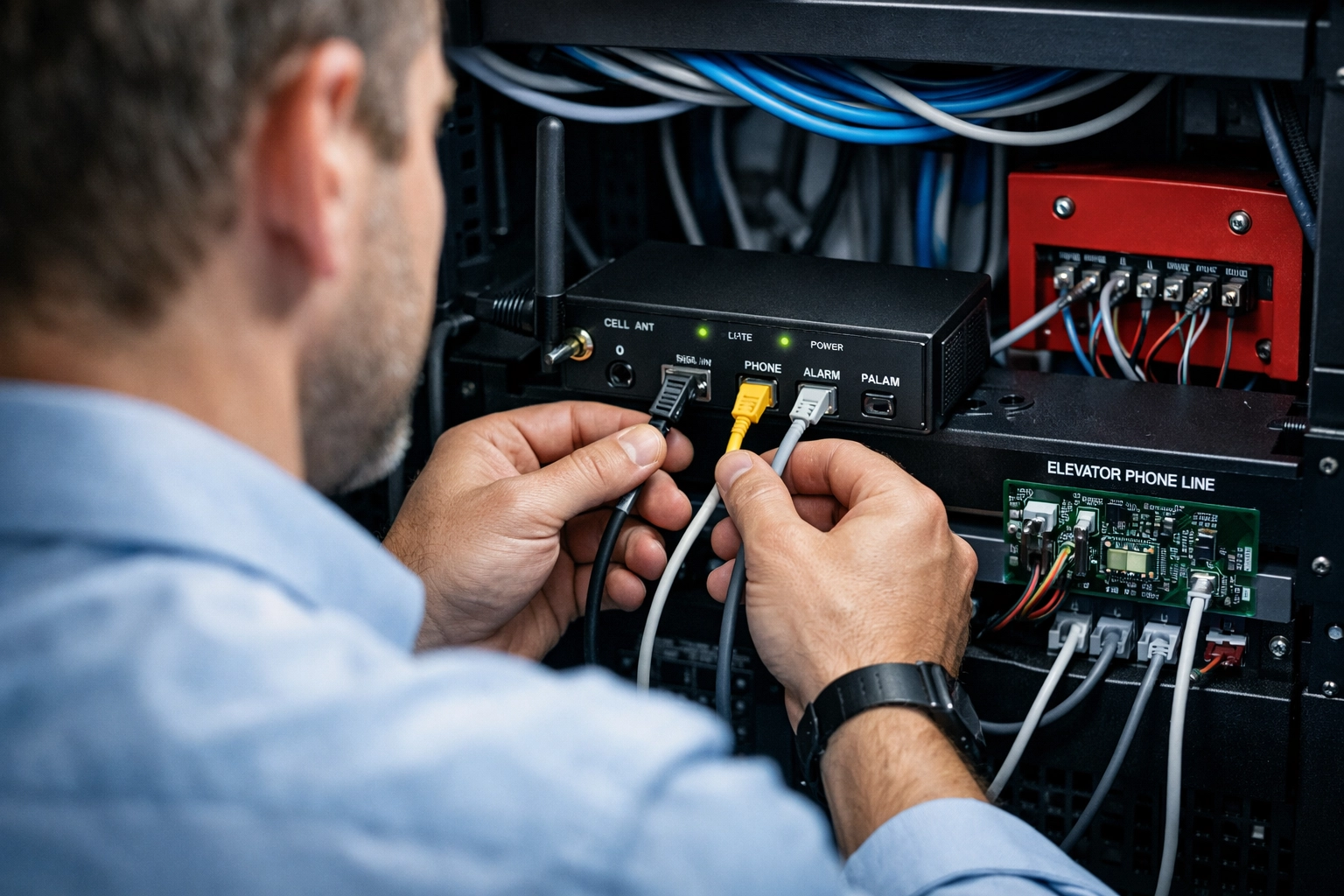
Technician installing cellular POTS replacement gateway for elevator and fire alarm systems in Tacoma
Alt text: Technician installing a cellular POTS replacement gateway device in a telecom room, connecting it to existing fire alarm and elevator phone systems.

How Premier Business Team Handles POTS Replacement in Tacoma

At Premier Business Team, we don't just swap out phone lines: we design a long-term connectivity strategy that keeps your critical systems compliant, reliable, and cost-effective.

Here's how we work:

  1. Technology Audit (10 Minutes): We identify every POTS line in your facility, map it to the system it supports (elevator, fire, security, etc.), and review your current monthly costs.
  2. Solution Design: We recommend the best replacement technology for your building: whether that's cellular, fiber-based, or a hybrid approach: and present cost savings projections.
  3. Vendor-Neutral Procurement: We work with top-tier POTS replacement providers to get you the best rates and service-level agreements (SLAs).
  4. Turnkey Installation: Our team coordinates with your building engineers, fire alarm contractors, and elevator maintenance providers to ensure seamless deployment and testing.
  5. Compliance Documentation: We provide all necessary documentation for AHJ inspections, including NFPA 72 compliance certificates and system performance reports.
  6. Ongoing Management: We monitor your lines 24/7 and handle any service issues: so you never have to call a carrier's 1-800 number again.

We've helped property management companies, healthcare facilities, schools, and industrial sites across the Pacific Northwest migrate hundreds of POTS lines: and we'll make sure your Tacoma facility is protected before the copper sunset leaves you in the dark.

Business professional reviewing POTS replacement audit showing cost savings for Tacoma commercial building
Alt text: Business professional reviewing a technology audit report showing POTS line inventory and cost savings projections for a Tacoma commercial building.

Don't Wait Until Your Lines Go Dark

The Copper Sunset isn't a distant deadline: it's happening now. And if you're still relying on traditional POTS for your elevator phones, fire alarms, or security systems, every month you delay increases your risk of service disruption, compliance violations, and unexpected emergency failures.

The good news? Modern POTS replacement solutions are affordable, reliable, and fully compliant. You'll save money, improve uptime, and future-proof your building's critical communications: all without ripping out your existing equipment.

If you manage a building in Tacoma (or anywhere in the Pacific Northwest), now's the time to take action.

Ready to protect your emergency lines and save 20โ€“40% on monthly costs?
Book a free 10-minute technology audit with Premier Business Team. We'll inventory your POTS lines, identify compliance risks, and show you exactly how much you'll save with a modern replacement solution.

And if you're also looking to upgrade your building's internet infrastructure: especially for multi-tenant properties: check out our guide on bulk fiber and digital infrastructure ownership to see how property owners are capturing new revenue and boosting NOI in 2026.


Need help with POTS replacement, business internet, or unified communications in Tacoma?
Contact Premier Business Team today: we're your vendor-neutral telecom advisor, and we make technology migrations stress-free.

  • « Go to Previous Page
  • Page 1
  • Interim pages omitted …
  • Page 18
  • Page 19
  • Page 20
  • Page 21
  • Page 22
  • Interim pages omitted …
  • Page 78
  • Go to Next Page »

Get a no obligation quote for your business. Learn More

Proud Chamber Member

Bellingham Chamber Badge

Premier Business Team

Copyright © 2026 ยท Premier Business Team 2219 Rimland Dr. Suite 301 Bellingham, WA 98226 - 360-946-2626

  • Home
  • Business Internet
  • Business Phone
  • Blog
  • About Us
  • Contact Us
  • Business Quote
  • Engineering
  • Call: 360-946-2626